
 Image 1 of 1
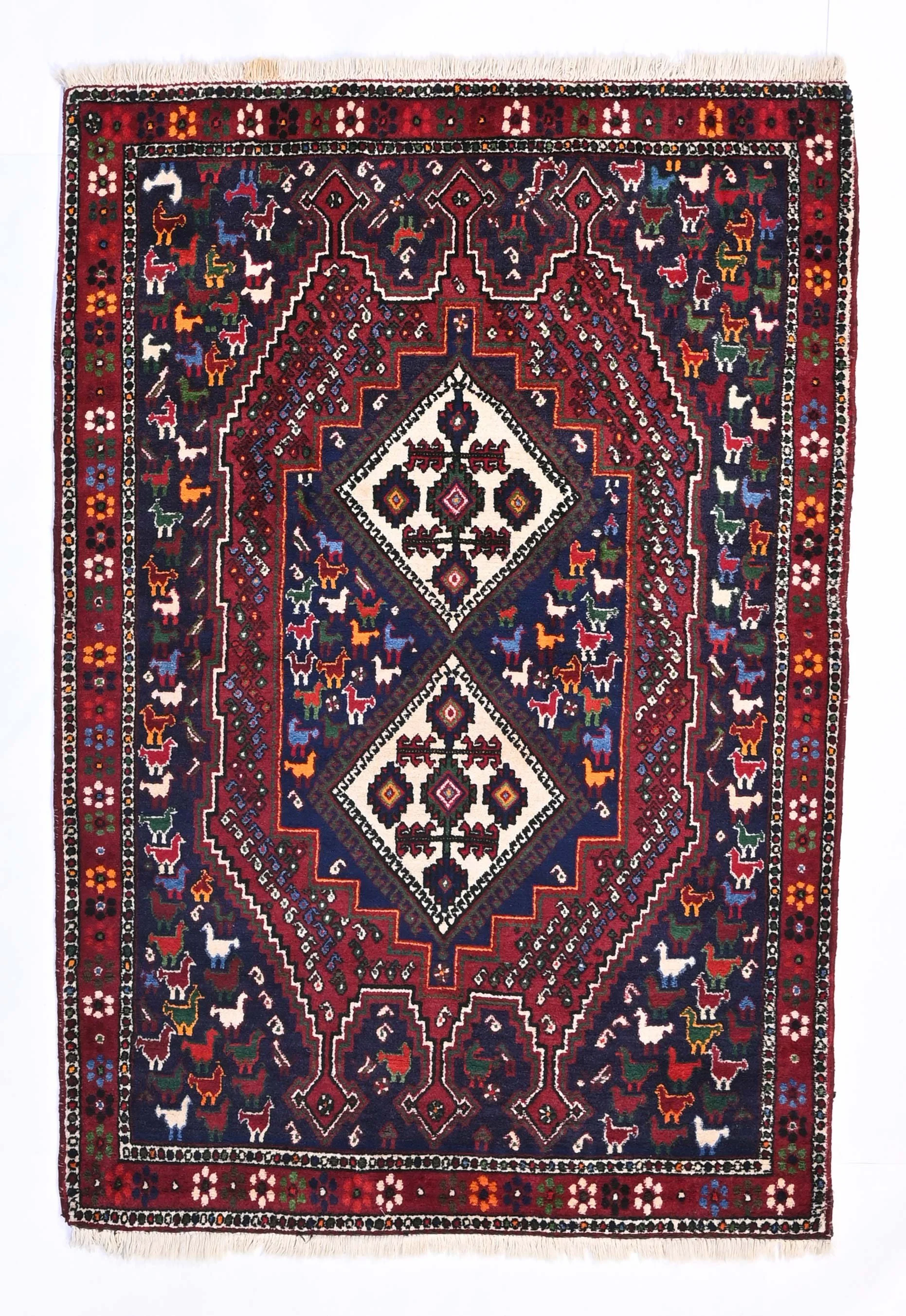
A Shahre Babak Afshar rug.
Village rug.
Wool on a cotton base.
The Afshar tribes were among the most prominent nomadic groups of Iran, known for their strong character, independence, and deep tribal identity. Their name became especially significant in Iranian history through the rise of Nader Shah Afshar, the charismatic military leader who later became king and succeeded in uniting Iran during one of its most turbulent periods. His military campaigns, particularly the famous invasion of India, left a lasting cultural influence across the region and strengthened the presence of Persian culture far beyond Iran’s borders.
This carpet was woven by Afshar tribes settled in the small town of Shahr-e Babak in southeast Iran. Although these communities once lived a fully nomadic life, many gradually settled in villages and towns while preserving their weaving traditions and inherited designs.
The rug reflects those traditions beautifully. It is woven using fine local wool produced in the area and carries the geometric patterns and rich colour combinations long associated with Afshar tribal weaving. What makes this particular piece remarkable is its extraordinary vibrancy and balance of colours, qualities that give the carpet both strength and elegance.
Like many authentic tribal rugs, this piece is not merely decorative. It carries history, identity, and the memory of a people whose culture was shaped through movement, resilience, and craftsmanship. It is a rug that can last for generations while adding not only beauty to a room, but also depth, meaning, and cultural character.
The Afshar tribes were among the most prominent nomadic groups of Iran, known for their strong character, independence, and deep tribal identity. Their name became especially significant in Iranian history through the rise of Nader Shah Afshar, the charismatic military leader who later became king and succeeded in uniting Iran during one of its most turbulent periods. His military campaigns, particularly the famous invasion of India, left a lasting cultural influence across the region and strengthened the presence of Persian culture far beyond Iran’s borders.
This carpet was woven by Afshar tribes settled in the small town of Shahr-e Babak in southeast Iran. Although these communities once lived a fully nomadic life, many gradually settled in villages and towns while preserving their weaving traditions and inherited designs.
The rug reflects those traditions beautifully. It is woven using fine local wool produced in the area and carries the geometric patterns and rich colour combinations long associated with Afshar tribal weaving. What makes this particular piece remarkable is its extraordinary vibrancy and balance of colours, qualities that give the carpet both strength and elegance.
Like many authentic tribal rugs, this piece is not merely decorative. It carries history, identity, and the memory of a people whose culture was shaped through movement, resilience, and craftsmanship. It is a rug that can last for generations while adding not only beauty to a room, but also depth, meaning, and cultural character.
A Shahre Babak Afshar rug.
Village rug.
Wool on a cotton base.
