Kilims,
nomadic bags & artefacts.
The most fascinating creations by migratory nomads for their nomadic life.
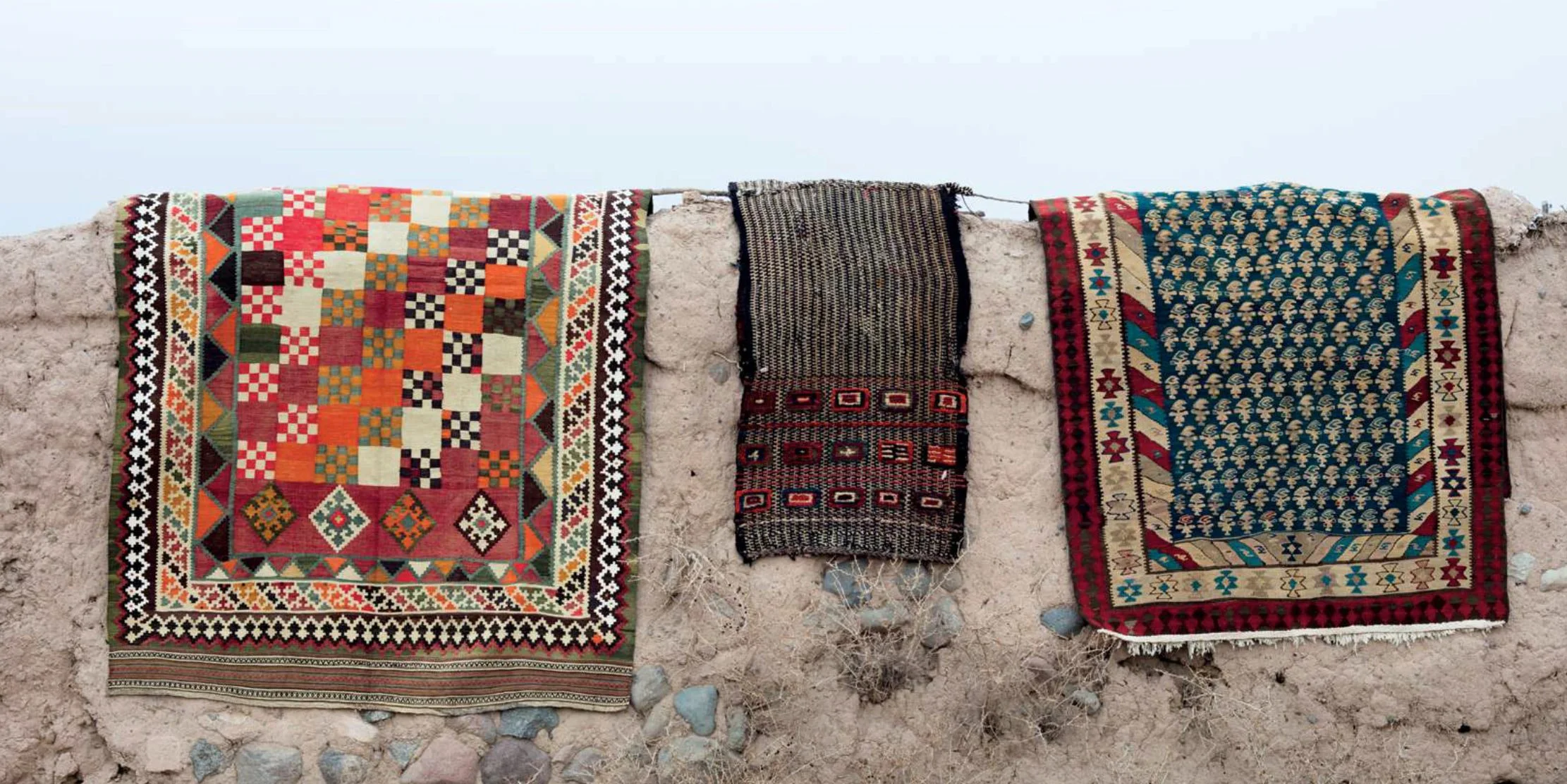
Among all nomadic weavings, kilims remain one of the least commercialised forms of textile art. Unlike the pixel-like structure of knotted carpets, the flatweave technique of kilims makes it difficult to produce precise custom designs. Traditionally, the weavers create them from memory, guided by inherited traditions, instinct, and imagination rather than detailed patterns.
Because of the limitations of the weaving technique and the primitive horizontal looms used by nomadic tribes, the designs often emerge in bold, abstract forms and in sizes limited by the loom's width. These natural limitations are precisely what give kilims their honesty and charm.
The result is a deeply authentic art form, woven reflections of a disappearing way of life, the surrounding nature, and the creative subconscious of the weavers themselves. Each kilim carries the quiet spontaneity and individuality that make tribal weavings so timeless and compelling.
Every kilim is a reflection of a
beautiful mind.
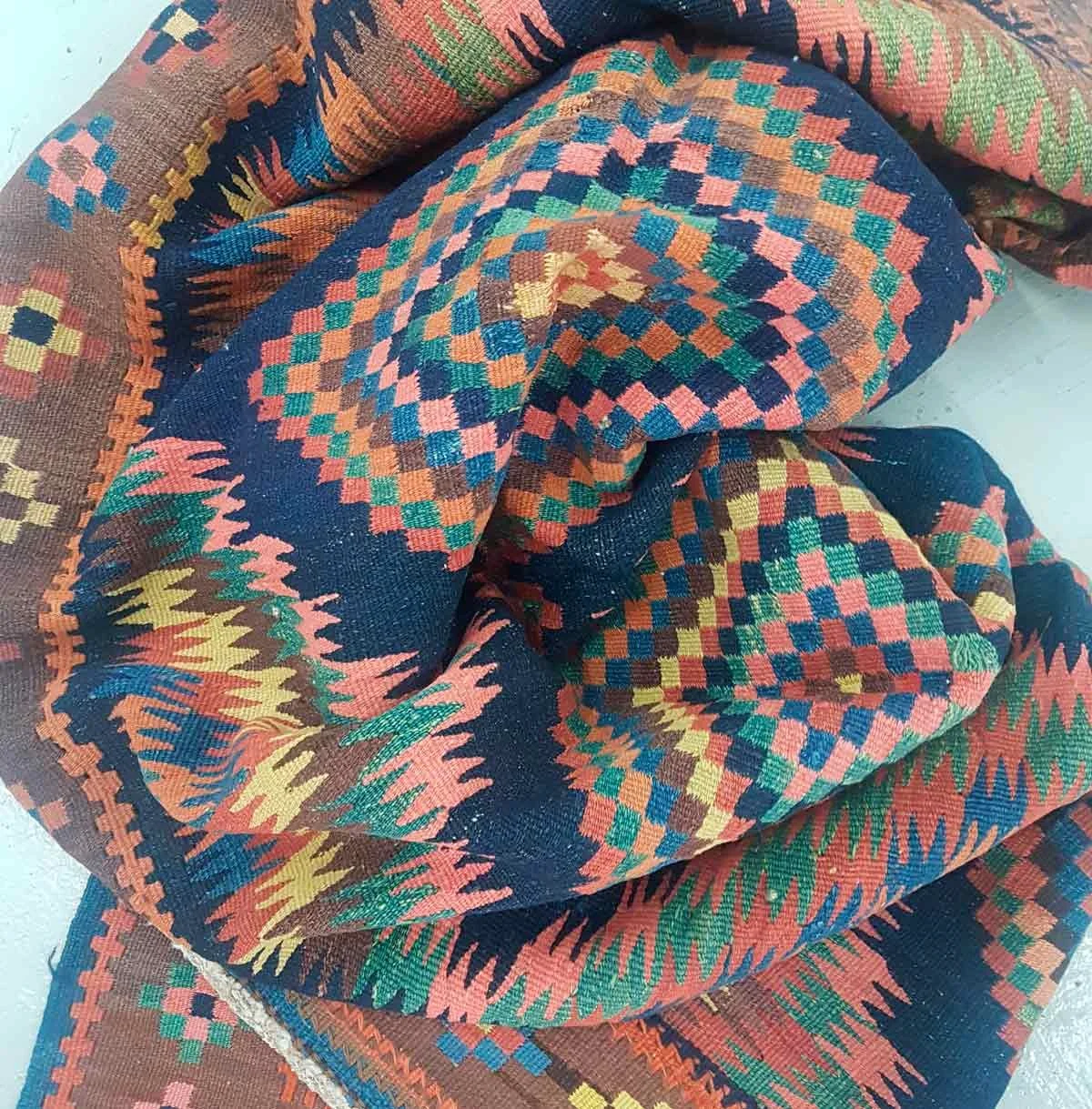
Most knotted rugs are the result of a collaboration between a designer and a weaver. Even in the case of nomadic rugs, where the weaver is both designer and maker, the knotting technique allows far greater flexibility in translating ideas into recognisable depictions.
With kilims, however, the weaving technique offers far fewer possibilities for such precision. As a result, ideas often emerge in abstract forms, leaving much room for the viewer’s own interpretation. This limitation is precisely what makes kilims so interesting, spontaneous, and expressive, often carrying a raw honesty that distinguishes them from knotted rugs.
Kilims
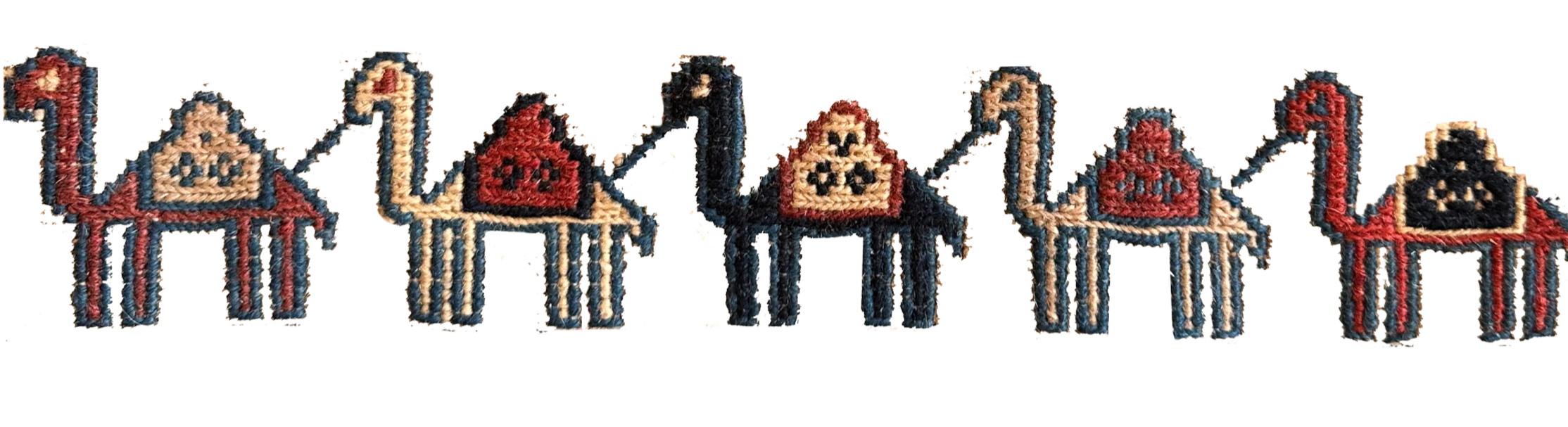
were traditionally produced from materials that emerged naturally from nomadic life itself. The men herded the sheep and provided the wool, while the raw fleece was washed in natural streams before being passed to the women of the tribe for hand-spinning. The yarn was then dyed in small pots over wood fires, using natural and vegetal elements gathered during migrations from one grazing ground to another.
This slow and deeply connected process of preparing the yarn helped preserve the natural qualities of the wool, retaining its original sheen, softness, and strength. The result is a weaving that not only reflects the life of the nomads aesthetically, but also physically carries the character of the landscape, the movement, and the rhythm of their world.

This antique kilim from Bijar in the Kurdistan region of western Iran is a beautiful example of Kurdish tribal craftsmanship. The Kurds of the western slopes of the Zagros Mountains are among the oldest ethnic communities of the region, with cultural roots that extend deep into the ancient lands of Mesopotamia. With such a long and rich heritage, it is no surprise that Kurdish weaving traditions are among the most refined and enduring in the Persian textile world.
This kilim was woven in the late 19th century or around the turn of the 20th century and remains in remarkable condition. It is constructed entirely of wool on a wool foundation, a characteristic often seen in older tribal weavings.
One of the most distinctive qualities of Kurdish kilims from this region is the exceptional wool produced in the highlands of Kurdistan. Because of the altitude and climate, the wool fibres tend to be long, strong, and naturally oily. This gives the yarn a subtle sheen and produces textiles that are both durable and pleasantly textured.
The design is a beautiful demonstration of the weaver’s sense of colour and composition. Kilims woven from memory naturally rely on geometric forms, as the flatweave technique limits the creation of curves and elaborate motifs. Most elements must follow straight horizontal, vertical, or diagonal lines. Despite these structural limitations, Kurdish weavers achieve remarkable visual richness through thoughtful colour combinations and balanced compositions.
The result is a minimalistic yet expressive pattern that reflects both the weaver’s individual taste and the colours of the natural landscape surrounding her.
With its fine wool, harmonious colours, and authentic tribal character, this antique Bijar kilim represents a beautiful synthesis of craftsmanship, cultural heritage, and artistic expression. It is a durable textile that can continue to serve and enrich an interior space for generations.
Material: Wool flatweave on wool foundation
Origin: Bijar region, Kurdistan, western Iran
Age: Late 19th – early 20th century
Size: 313 × 130 cm
Item No.: 16012
P102


Kilims are among the most authentic creations of nomadic life, often woven spontaneously without any drafted pattern or naqsha. For this reason, the designs that appear in such weavings frequently reflect symbols that the weaver has inherited subconsciously through generations.
This particular kilim originates from the Azerbaijan region of Iran and was woven by Shahsavan weavers around the village of Namin. Its composition is simple yet striking, centred on a stylised bird-like motif that, in some interpretations, resembles an eagle with open wings. Such imagery may suggest ascendance or power, though the original meaning has likely evolved through generations of memory-based weaving.
The rug is approximately 70 to 80 years old. Its narrow and elongated format, together with slight irregularities in size, reflects the realities of nomadic weaving on portable horizontal looms, which could be dismantled and carried from one camp to another.
The outer border displays a rhythmic pattern often interpreted as either “running dogs” or waves of water; in this case, the latter reading seems particularly convincing.
A durable and authentic tribal weaving, this kilim carries the charm of nomadic life and can easily bring character and cultural depth to a space.
Material: Wool on a cotton base.
Origin: Namin region, Azerbaijan province, Iran.
Age: Circa 1940s–1950s.

This remarkable kilim is a beautiful example of the creativity of the nomadic Qashqai tribes of southern Iran, who have long been known for producing some of the most fascinating tribal weavings using entirely natural materials.
The wool used in this piece comes from the tribe’s own sheep and was spun by hand into fine yarn before being dyed using natural elements gathered during seasonal migrations. The colours are created from a small but powerful palette of natural dyes — madder root, indigo, and the plant prangos, which grows abundantly in the surrounding landscape. With only these materials, the weaver achieved the full range of colours seen in this striking composition.
The result is a classic tribal kilim with a remarkably minimalistic aesthetic. Its simplicity and strong colour harmony give it an appearance that can easily resonate with modern interiors while still carrying the authenticity of traditional nomadic craftsmanship.
Woven in the late 19th century, the piece remains in excellent condition, retaining its original fringes and displaying an exceptional texture created by finely hand-spun wool. Pieces of this kind were often woven by young tribal women as part of their dowry, reflecting both skill and pride in their work.
A rare and collectible kilim that combines natural materials, traditional knowledge, and timeless design.
Material: Hand-spun wool.
Dyes: Natural dyes including madder root, indigo, and prangos.
Origin: Qashqai tribes, southern Iran.
Age: Late 19th century.
P102

This kilim, handwoven in the village of Harsin in Kurdistan (western Iran, Kermanshah province), embodies a vanishing world of nomadic creativity. Once essential for tents and homes, kilims like this were born from a lifestyle now largely faded tribes once isolated by rugged terrain now connected by roads, many drawn to cities for modern ease, abandoning ancestral lands and traditions.
In the past, long nights without screens allowed weavers, often women, to lose themselves in the rhythmic motion of the loom. Patterns emerged subconsciously, reflecting inner dreams, memories, and the soul of an ancient people tracing back to Mesopotamia's dawn. Free from market pressures or commercial intent, these pieces arose purely as functional accessories and ways to pass time, yielding careless yet stunning creativity: curious, mysterious motifs full of hidden secrets, bold geometric designs, and charming colours derived solely from natural dyes.
Harsin remains a renowned hub for such Persian Kurdish kilims, celebrated internationally for their vibrant, durable flat-weaves, often featuring medallions, diamonds, stylised animals or birds, tribal symbols, and harmonious earthy palettes that age with grace.
This particular kilim carries the authentic spirit of that era: a timeless artefact of Kurdish heritage, inviting reflection on a profound cultural legacy while bringing warmth, mystery, and grounded beauty to any modern space.
Wool on a cotton base.
P106
Sumak
and the difference with kilims
Kilim is a pileless flatweave produced through a simple interweaving of warp and weft threads, creating a light and flexible textile with a completely flat surface on both sides. In the nomadic weavings of Iran, kilims are usually woven in separate colour areas, with the wefts turning back at the edges of the motifs, sometimes creating small vertical openings or slits. Slits are avoided in some weaving traditions through interlocking techniques. This structure naturally produces bold geometric forms and abstract patterns.
Sumak differs technically in that the coloured wefts are wrapped around the warp threads before passing beneath them. Additional structural wefts are often inserted between rows to strengthen the textile. This wrapping technique creates a denser and heavier weave with a slightly raised, embroidered character on the face and loose floating threads visible on the reverse. Unlike kilims, the wrapped wefts secure the threads in place, giving the weaver greater flexibility in forming patterns and allowing more fluid and intricate drawing.


Such flat-weaves are in the sumak technique which gives the weavers more flexibility with design. Therefore, one can see various stylised animals in geometric motifs in such rugs that are far more complicated than other flat-woven floor coverings.
Weavers of such rugs make them from memory and create the pattern spontaneously as they weave; hence, one can find many symbols and archetypes in such artefacts that reflect an ancient culture and old souls.
Hand-woven in sumak technique | Silk on a cotton base.


Creating a rug in this style is a daunting task. The weaver must be skilled in both sumak weaving and knotting techniques, and, more importantly, be proficient in combining the two. Only through this balance can consistency be achieved and the spontaneous pattern emerge correctly within the weave's structure.
Utility and Soul
Creations of a nomadic past, collectables of today.
Woven for Life
Among the most fascinating expressions of nomadic weaving are the utility pieces created for daily life, saddlebags, saltbags, horse covers, bedding bags, pillows, storage sacks, and sofrehs. Unlike rugs woven for trade, these objects were made for the weaver’s own world, for her tent, her animals, her marriage, her journeys, and her family. They were not created as commodities, but as extensions of life itself.
In the tribal cultures of Iran, beauty was never separated from utility. A saddlebag carrying belongings across mountains, a horse cover prepared for ceremonies, or a sofreh spread on the ground for sharing meals could receive the same artistic attention as a great carpet. The weavers, often young women and girls, transformed necessity into art through instinct, memory, and emotion.
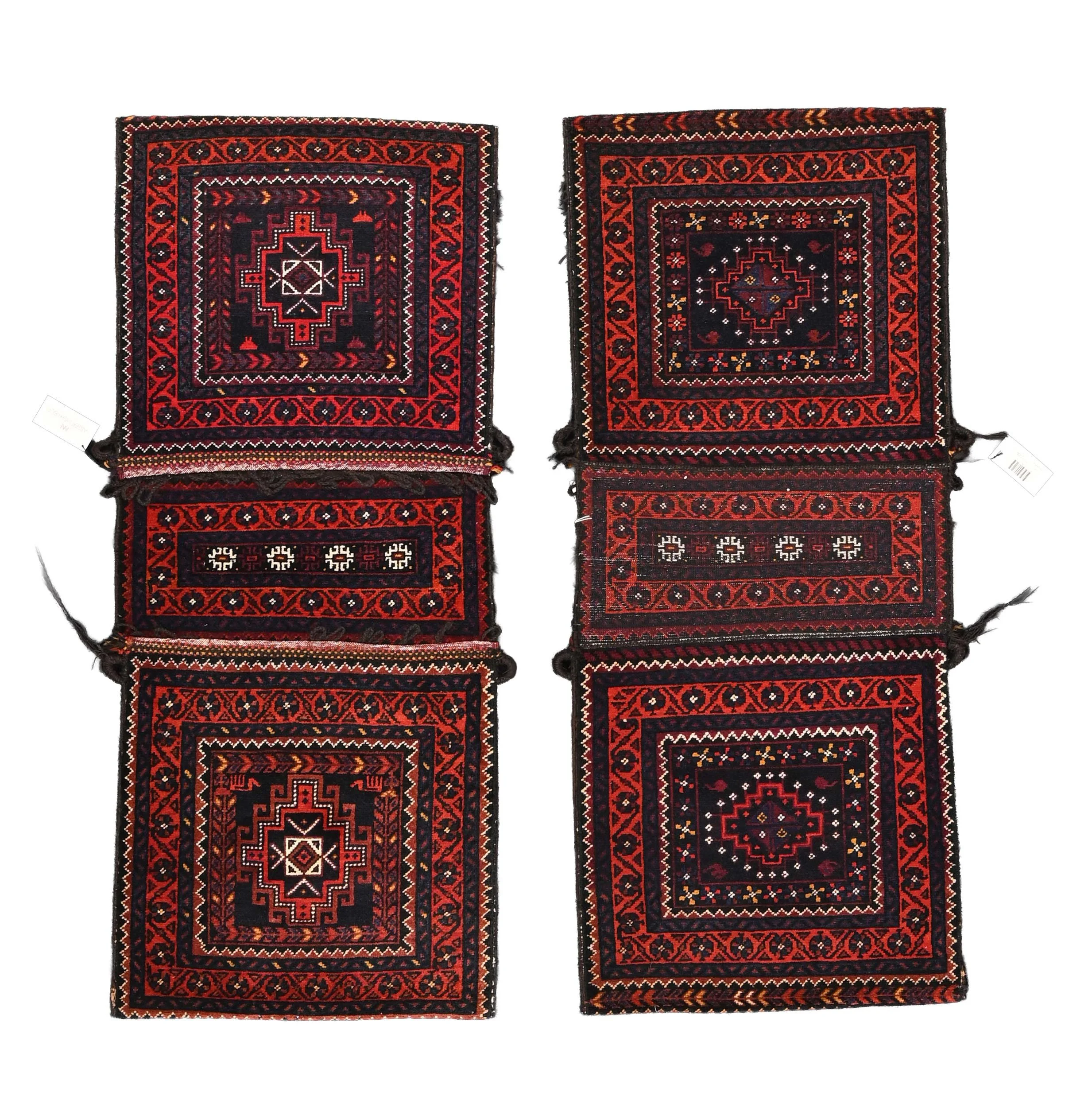

Sofreh in Farsi refers to a meal spread. Among nomadic tribes, the term is also used for small flatweaves like the one shown here, woven to be spread on the ground when serving food.
This particular example is a Qashqai sofreh woven using hand-spun wool and natural dyes. The wool comes from the tribe’s own sheep and is spun by hand before being dyed with colours extracted from herbs and plants gathered during seasonal migrations between camps.
The design is simple and beautifully minimalistic, allowing the rich colours and texture of the wool to speak for themselves. The subtle variations in tone, created by natural dyes and hand-spun yarn, give the textile a lively character that machine-made pieces can never reproduce.
Such pieces are woven on small horizontal nomadic looms that can easily be dismantled and carried during migrations. Originally intended for practical use, they have today become fascinating decorative textiles.
A piece like this can easily draw attention in an interior, becoming a source of conversation while also bringing the calm and quiet beauty associated with nomadic life.
Material: Hand-spun wool
Dyes: Natural plant dyes
Origin: Qashqai tribes, southern Iran

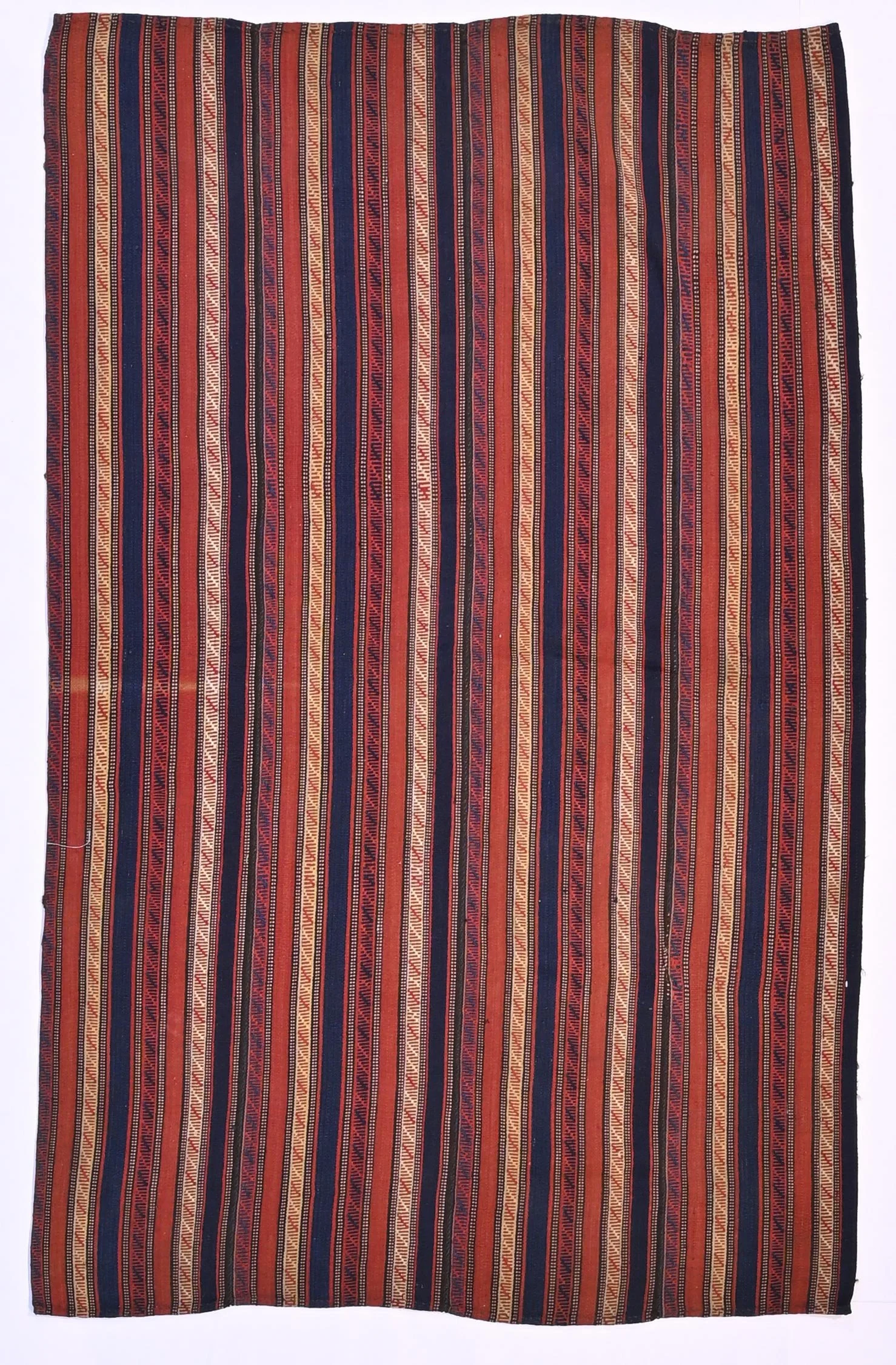
This remarkable piece is the work of the Milanlu Kurds of Khorasan in northeastern Iran. Traditionally, these textiles were woven in long narrow strips using a technique that is now almost forgotten. Once the weaving was completed, the strip would be cut into several sections and then carefully joined together to create a wider flat-weave. In this example, the original strip has been divided into three sections and tastefully stitched together.
Such pieces were primarily made as multipurpose household textiles. They could serve as covers, floor coverings, or as a sofreh, a textile spread on the ground to serve meals to guests. Their practical use made them an essential part of nomadic and village life.
The lively colours and the charming small pom-poms in the field suggest that this particular piece was most likely woven as part of a dowry. Dowry textiles were often preserved carefully and used during important family ceremonies, which explains the excellent condition in which such examples survive.
Woven with high-quality wool spun by hand, the piece has a wonderfully rich texture and a substantial weight that allows it to function equally well as a decorative textile or as a functional rug.
A rare and collectible tribal weaving that combines authenticity, cultural significance, and decorative appeal.
Material: Hand-spun wool.
Origin: Milanlu Kurdish tribes, Khorasan province, Iran.
Age: Early 20th century.
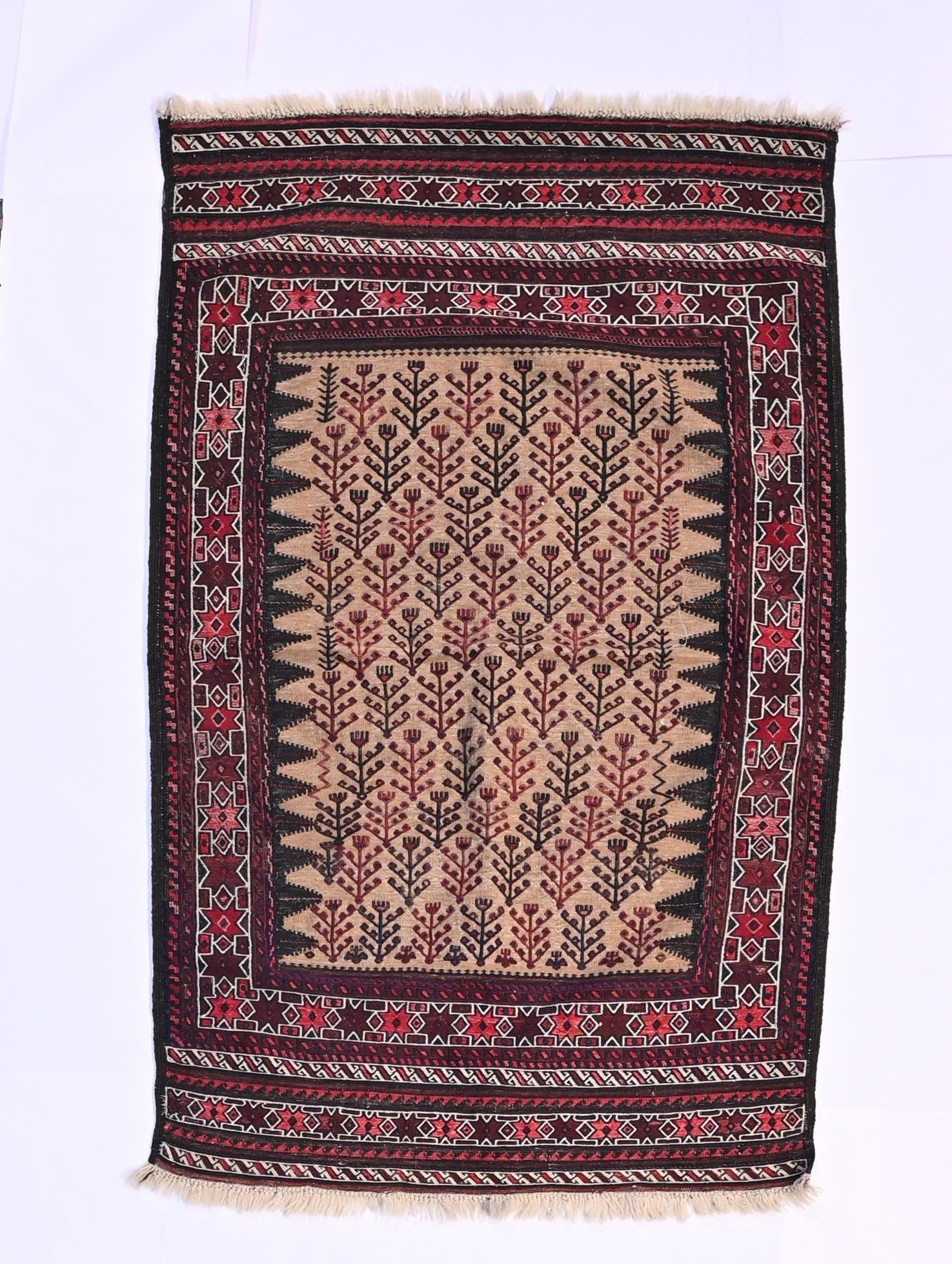
Beauty Beneath the Tent
Technically, these weavings reveal the remarkable adaptability of nomadic life. Portable ground looms, consisting of little more than wooden poles fixed into the earth, imposed limitations that the weavers overcame with ingenuity. Wider pieces were often woven in separate sections and later joined together. Wool came from tribal flocks, yarns were hand-spun, and dyes gathered from roots, plants, insects, and earth during migration.
Today, many of these objects survive long after the way of life that produced them has largely disappeared. They remain among the most moving tribal creations because they preserve something beyond craftsmanship, the quiet union of beauty, utility, love, and daily existence.
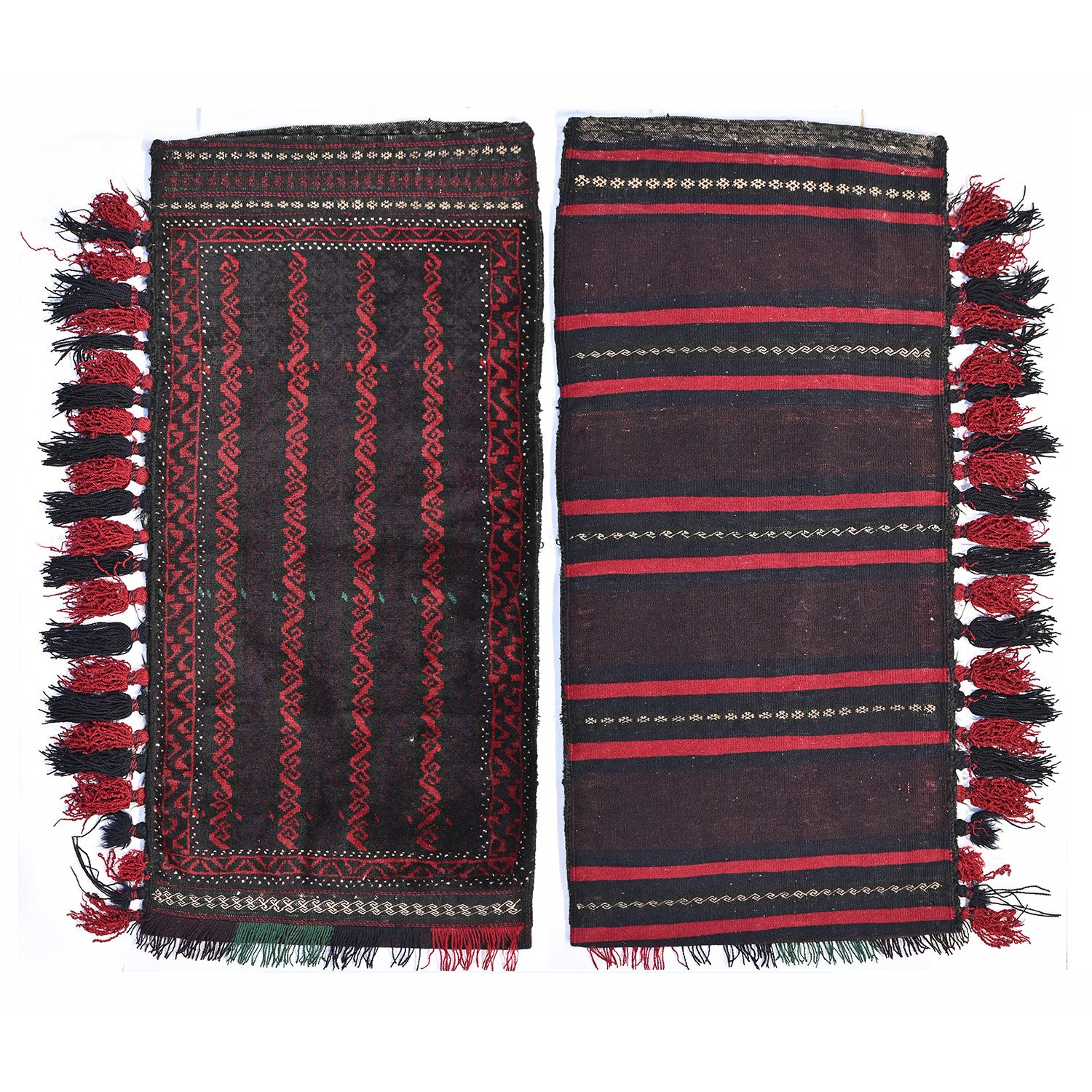
Nurturing beauty is most impressive when it comes naturally and spontaneously, often arising from the subconscious. Such an innate taste points to the depth of a culture among the Baluchi weavers that stretches back thousands of years, perhaps as far as the ruins of the nearby Shahri Sokhta (The Burnt City), circa 3200 BC.
It is therefore no surprise to encounter such charm in an everyday utility item such as this tribal Baluch baleshti (pillow), circa 1930s.
Equally striking is the contrast between men and women. The men, remembered as warriors—tough, pragmatic, and inflexible—were bound to the harsher demands of survival and conflict. The women—the weavers—sheltered within tents and traditions, remained the quiet artists and creators. Through their hands, beauty was woven into necessity; art was not an ornament but a natural and inseparable part of life.
Though echoes of this way of life can still be found among a few today, the making of such pieces has largely ceased. This baleshti stands as a reminder of a time when beauty and utility were one, and when art was inseparably bound to daily living.
Baluch Baleshti, ca. 1930s. Wool. 115x55cm
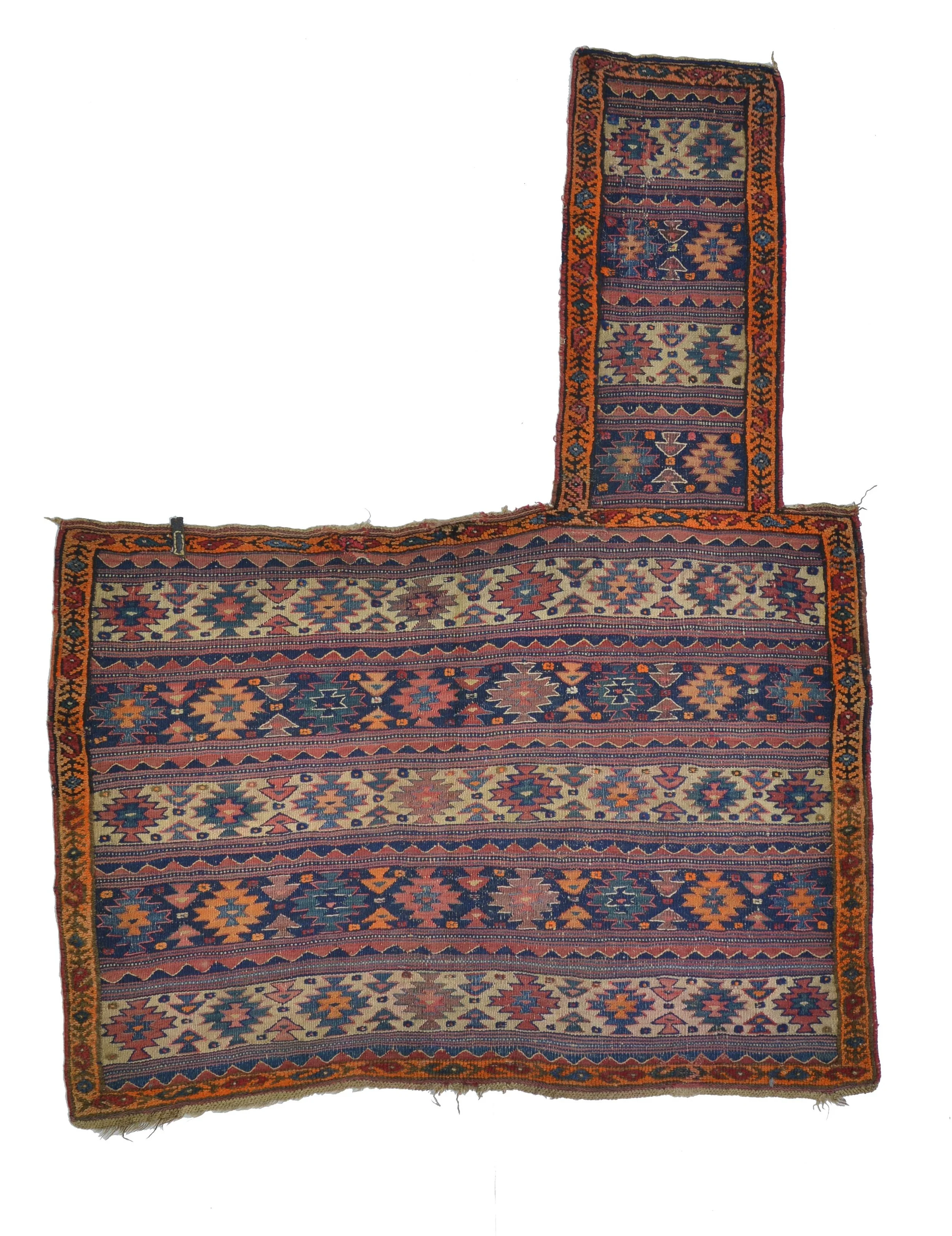
Hands
That Remembered
These pieces are often the most intimate of all nomadic weavings. Many were woven as part of dowries, carrying traces of affection, longing, pride, and hope for a future life. The irregularities in shape, the spontaneity of the drawing, and the deeply personal colour choices give them a vitality rarely found in workshop productions. One senses that the weaver was not merely producing an object, but leaving a part of herself within it.
Their hands worked not under commercial instruction, but through inherited taste shaped over centuries of migration, storytelling, and living close to nature. What emerged was not simply decoration, but subconscious cultural memory woven into form.