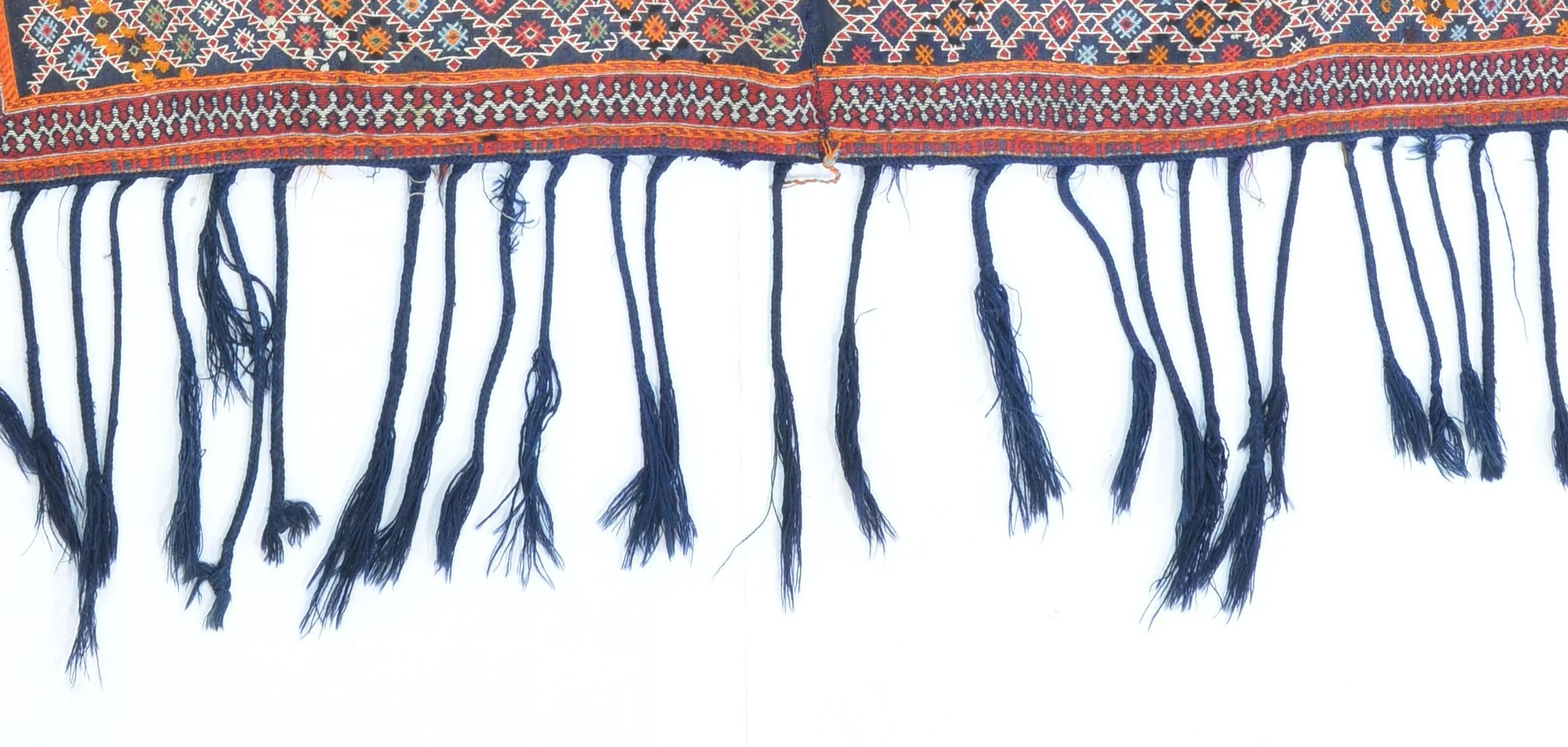
By us!
We create unique rugs in original designs through years of experience, a wealth of family heritage, and a deep understanding of culture, tradition, and centuries-old techniques. Our main objective is to introduce a collection that can meet and work with modernity without sacrificing the centuries-old cultural heritage.
A family of weavers
since 1750":
“Ours is a family shaped by rugs for generations. Growing up, I often heard stories of the famine of 1917, when my great-grandmother would hold a lantern through the night so her four sons could continue weaving. At dawn, she would bake bread, hide it beneath her chador, and quietly leave to feed those in need.
Those orphaned boys became the fourth generation of a family that produced and traded rugs out of Tabriz, the city that once stood as the bridge between Iran and the West. The tradition was later passed to my father, and then to me.
Perhaps this is why rugs have never felt like mere objects in our family. The love for them runs deep in our blood and continues to materialise in the rugs we produce and the collections we curate.”


Our Arasbaran collection was created in the Arasbaran region, a beautiful mountainous area in the Azerbaijan province of Iran. This lush and green landscape has long been home to skilled weavers and rich weaving traditions. The idea behind this collection was simple yet ambitious: to reinterpret traditional patterns by adjusting their colours, proportions, and orientations so that they could retain the spirit of the old designs while fitting naturally into modern interiors. To achieve this, we placed particular emphasis on selecting the finest materials. The wool used in these rugs was sourced from the highlands of Kurdistan, where sheep produce exceptionally fine and slightly oily fleece. This wool, known for its strength and natural sheen, was hand-spun in Kurdish villages using traditional methods. Once the yarn was prepared, it was sent to Shiraz, where it was dyed using natural vegetable pigments under the supervision of Master Abbas Sayyahi, one of the most respected dye masters of recent decades. Abbas Sayyahi became widely known in Iran as the figure who revived traditional natural dyeing methods and reintroduced them to contemporary Persian carpet production. His work played a crucial role in restoring the beauty and authenticity of naturally dyed carpets. The designs for this collection were developed by our own designers under the supervision of Nishaburis, carefully adapting historic motifs into compositions that harmonise easily with modern living spaces. The result is a series of rugs that combine traditional craftsmanship with contemporary sensibility. Their natural dyes, fine wool, and thoughtful designs create textiles that are both visually striking and wonderfully tactile. These carpets are not only beautiful decorative pieces but also durable works meant to be enjoyed in everyday life. With time and use, the colours will settle and mature, the texture will become even more pleasing, and the rugs will gain the character that makes true handwoven carpets so treasured. These pieces represent a continuation of tradition while looking confidently toward the future, the antiques of tomorrow.
P104
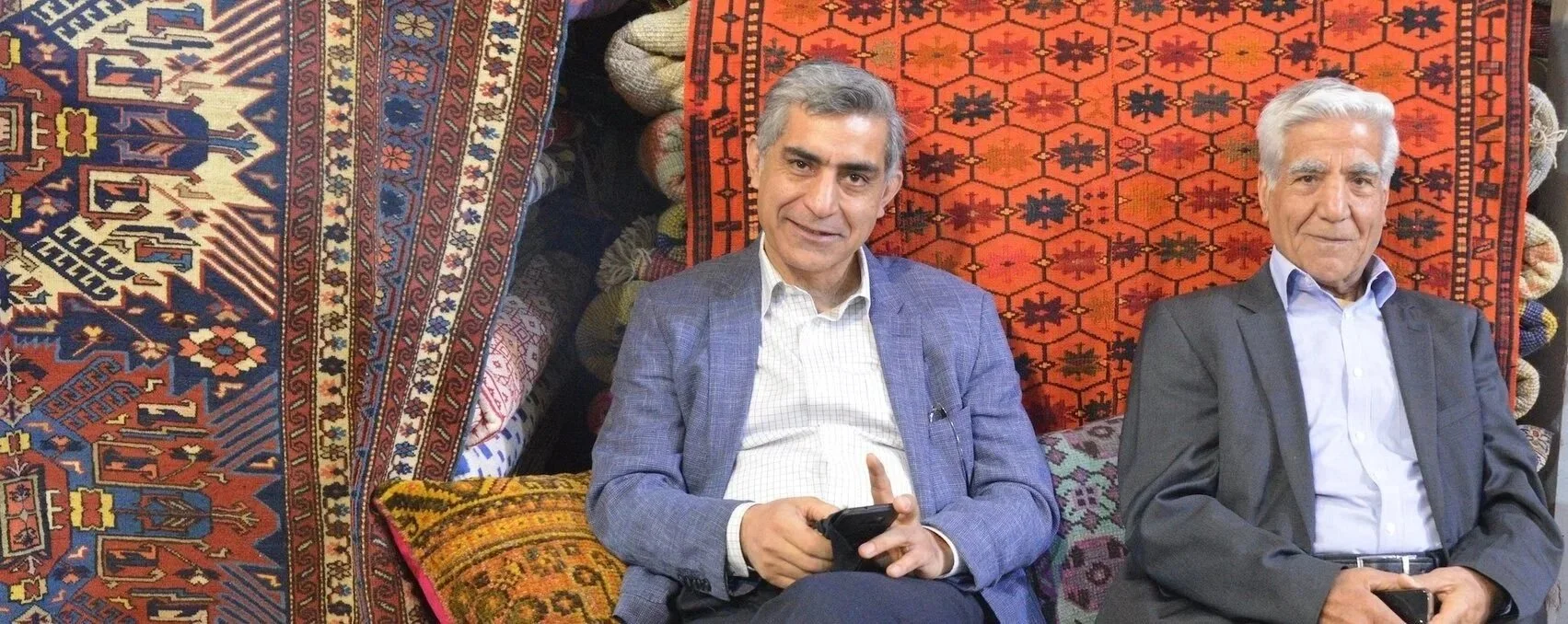
Abbas & Nasser Nishaburi
A transitional collection
The collection is a unique body of work that represents a cross-generational transition of a remarkable heritage. A master and apprentice collaboration that imbues each piece with an aura of love and integrity.
Arasbaran Collection
Village looms
reloaded
Natural dyes | Hand-spun wool
Contemporary today | Antiques tomorrow

Made in the beautiful mountainous valleys of Mount Sabalan, this remarkable rug is one of our own creations, designed to answer the demand of those who appreciate classic Persian rugs yet seek fresh colours and new interpretations of traditional patterns.
Each piece was conceived with the utmost care to suit modern interiors, while remaining deeply rooted in tradition. The materials were prepared with obsessive attention, using only hand-spun wool and natural dyes, chosen to create rugs that not only last, but grow more beautiful with time and use.
This rug is an outstanding example, with an open, spacious field framed by an elaborate and finely balanced border. It is a piece for aesthetes, for those seeking a rug that sits comfortably in a contemporary setting while quietly elevating the space.
At the same time, it becomes a subtle point of focus, inviting curiosity and thoughtful conversation, not only about the rug itself but about the culture and history from which such works emerge. A source of pride, elegance, and lasting fascination for a home.

Azerbaijan Collection � Arasbaran Our Azerbaijan collection was created in the Arasbaran region, a beautiful mountainous area in the Azerbaijan province of Iran. This lush and green landscape has long been home to skilled weavers and rich weaving traditions. The idea behind this collection was simple yet ambitious: to reinterpret traditional patterns by adjusting their colours, proportions, and orientations so that they could retain the spirit of the old designs while fitting naturally into modern interiors. To achieve this, we placed particular emphasis on selecting the finest materials. The wool used in these rugs was sourced from the highlands of Kurdistan, where sheep produce exceptionally fine and slightly oily fleece. This wool, known for its strength and natural sheen, was hand-spun in Kurdish villages using traditional methods. Once the yarn was prepared, it was sent to Shiraz, where it was dyed using natural vegetable pigments under the supervision of Master Abbas Sayyahi, one of the most respected dye masters of recent decades. Abbas Sayyahi became widely known in Iran as the figure who revived traditional natural dyeing methods and reintroduced them to contemporary Persian carpet production. His work played a crucial role in restoring the beauty and authenticity of naturally dyed carpets. The designs for this collection were developed by our own designers under the supervision of Nasser Nishaburi, carefully adapting historic motifs into compositions that harmonise easily with modern living spaces. The result is a series of rugs that combine traditional craftsmanship with contemporary sensibility. Their natural dyes, fine wool, and thoughtful designs create textiles that are both visually striking and wonderfully tactile. These carpets are not only beautiful decorative pieces but also durable works meant to be enjoyed in everyday life. With time and use, the colours will settle and mature, the texture will become even more pleasing, and the rugs will gain the character that makes true handwoven carpets so treasured. These pieces represent a continuation of tradition while looking confidently toward the future�the antiques of tomorrow.
P104

Azerbaijan Collection
Arasbaran Our Azerbaijan collection was created in the Arasbaran region, a beautiful mountainous area in the Azerbaijan province of Iran. This lush and green landscape has long been home to skilled weavers and rich weaving traditions. The idea behind this collection was simple yet ambitious: to reinterpret traditional patterns by adjusting their colours, proportions, and orientations so that they could retain the spirit of the old designs while fitting naturally into modern interiors. To achieve this, we placed particular emphasis on selecting the finest materials. The wool used in these rugs was sourced from the highlands of Kurdistan, where sheep produce exceptionally fine and slightly oily fleece. This wool, known for its strength and natural sheen, was hand-spun in Kurdish villages using traditional methods. Once the yarn was prepared, it was sent to Shiraz, where it was dyed using natural vegetable pigments under the supervision of Master Abbas Sayyahi, one of the most respected dye masters of recent decades. Abbas Sayyahi became widely known in Iran as the figure who revived traditional natural dyeing methods and reintroduced them to contemporary Persian carpet production. His work played a crucial role in restoring the beauty and authenticity of naturally dyed carpets. The designs for this collection were developed by our own designers under the supervision of Nasser Nishaburi, carefully adapting historic motifs into compositions that harmonise easily with modern living spaces. The result is a series of rugs that combine traditional craftsmanship with contemporary sensibility. Their natural dyes, fine wool, and thoughtful designs create textiles that are both visually striking and wonderfully tactile. These carpets are not only beautiful decorative pieces but also durable works meant to be enjoyed in everyday life. With time and use, the colours will settle and mature, the texture will become even more pleasing, and the rugs will gain the character that makes true handwoven carpets so treasured. These pieces represent a continuation of tradition while looking confidently toward the future, the antiques of tomorrow.

Azerbaijan Collection � Arasbaran Our Azerbaijan collection was created in the Arasbaran region, a beautiful mountainous area in the Azerbaijan province of Iran. This lush and green landscape has long been home to skilled weavers and rich weaving traditions. The idea behind this collection was simple yet ambitious: to reinterpret traditional patterns by adjusting their colours, proportions, and orientations so that they could retain the spirit of the old designs while fitting naturally into modern interiors. To achieve this, we placed particular emphasis on selecting the finest materials. The wool used in these rugs was sourced from the highlands of Kurdistan, where sheep produce exceptionally fine and slightly oily fleece. This wool, known for its strength and natural sheen, was hand-spun in Kurdish villages using traditional methods. Once the yarn was prepared, it was sent to Shiraz, where it was dyed using natural vegetable pigments under the supervision of Master Abbas Sayyahi, one of the most respected dye masters of recent decades. Abbas Sayyahi became widely known in Iran as the figure who revived traditional natural dyeing methods and reintroduced them to contemporary Persian carpet production. His work played a crucial role in restoring the beauty and authenticity of naturally dyed carpets. The designs for this collection were developed by our own designers under the supervision of Nasser Nishaburi, carefully adapting historic motifs into compositions that harmonise easily with modern living spaces. The result is a series of rugs that combine traditional craftsmanship with contemporary sensibility. Their natural dyes, fine wool, and thoughtful designs create textiles that are both visually striking and wonderfully tactile. These carpets are not only beautiful decorative pieces but also durable works meant to be enjoyed in everyday life. With time and use, the colours will settle and mature, the texture will become even more pleasing, and the rugs will gain the character that makes true handwoven carpets so treasured. These pieces represent a continuation of tradition while looking confidently toward the future�the antiques of tomorrow.
P104

Azerbaijan Collection Arasbaran
Our Azerbaijan collection was created in the Arasbaran region, a beautiful mountainous area in Iran's Azerbaijan province. This lush and green landscape has long been home to skilled weavers and rich weaving traditions. The idea behind this collection was simple yet ambitious: to reinterpret traditional patterns by adjusting their colours, proportions, and orientations so that they could retain the spirit of the old designs while fitting naturally into modern interiors. To achieve this, we placed particular emphasis on selecting the finest materials. The wool used in these rugs was sourced from the highlands of Kurdistan, where sheep produce exceptionally fine and slightly oily fleece. Known for its strength and natural sheen, this wool was hand-spun in Kurdish villages using traditional methods.
Once the yarn was prepared, it was sent to Shiraz, where it was dyed using natural vegetable pigments under the supervision of Master Abbas Sayyahi, one of the most respected dye masters of recent decades. Abbas Sayyahi became widely known in Iran as the figure who revived traditional natural dyeing methods and reintroduced them to contemporary Persian carpet production. His work played a crucial role in restoring the beauty and authenticity of naturally dyed carpets.
Our designers developed the designs for this collection under the supervision of Nasser Nishaburi, carefully adapting historic motifs into compositions that harmonise easily with modern living spaces. The result is a series of rugs that combine traditional craftsmanship with contemporary sensibility. Their natural dyes, fine wool, and thoughtful designs create textiles that are both visually striking and wonderfully tactile. These carpets are not only beautiful decorative pieces but also durable works meant to be enjoyed in everyday life. With time and use, the colours will settle and mature, the texture will become even more pleasing, and the rugs will gain the character that makes true handwoven carpets so treasured. These pieces represent a continuation of tradition while looking confidently toward the future, the antiques of tomorrow.
p109

Tradition, Retold
The collection begins where tradition already stands. The patterns we inherit, the materials we trust, and the techniques refined over generations form its foundation. Yet within that foundation lies space for interpretation, for rethinking, and for reimagining.
Drawing from the language of classical rugs, the collection allows tradition to evolve through a contemporary lens.
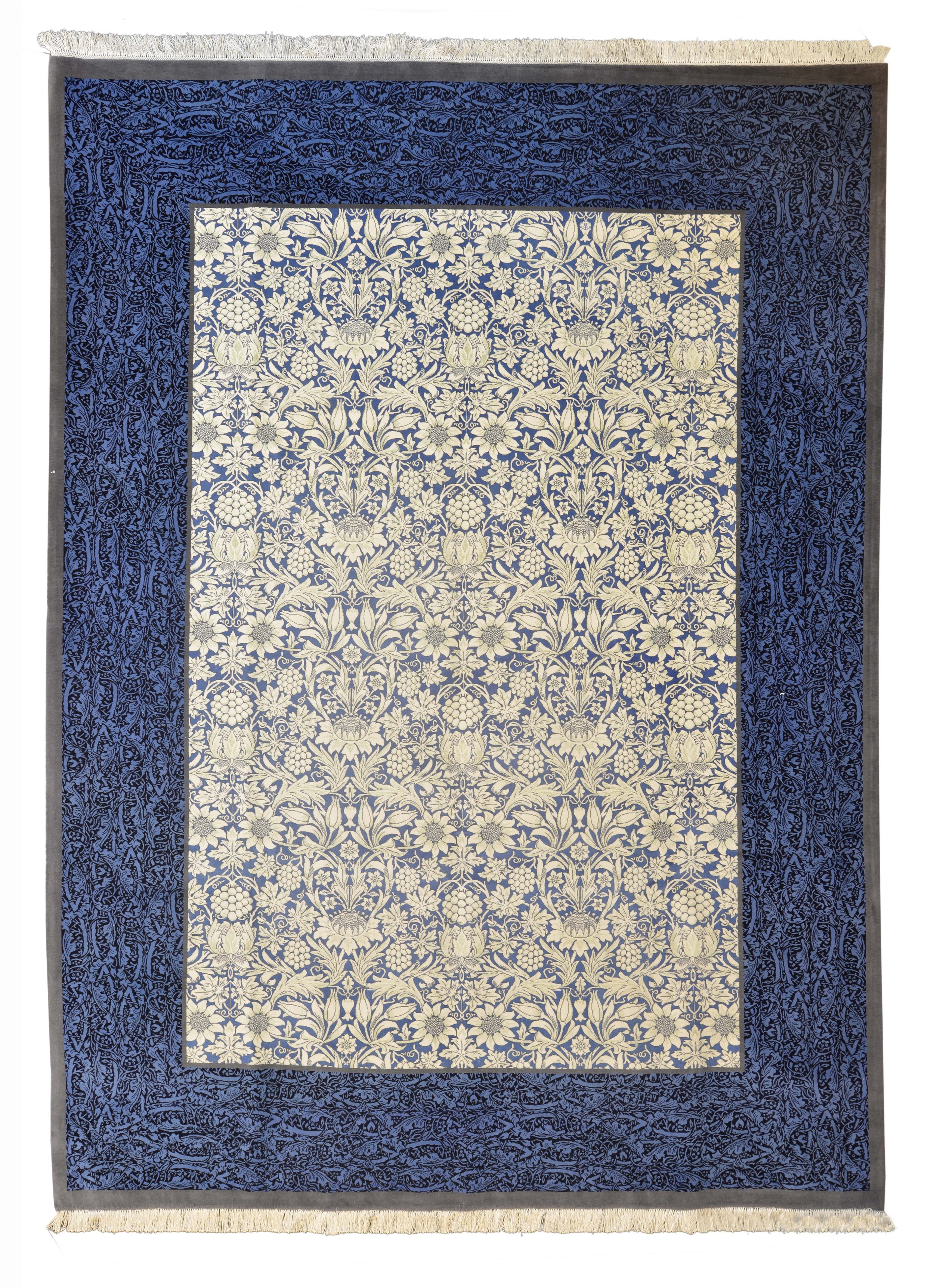
D-WM-0001

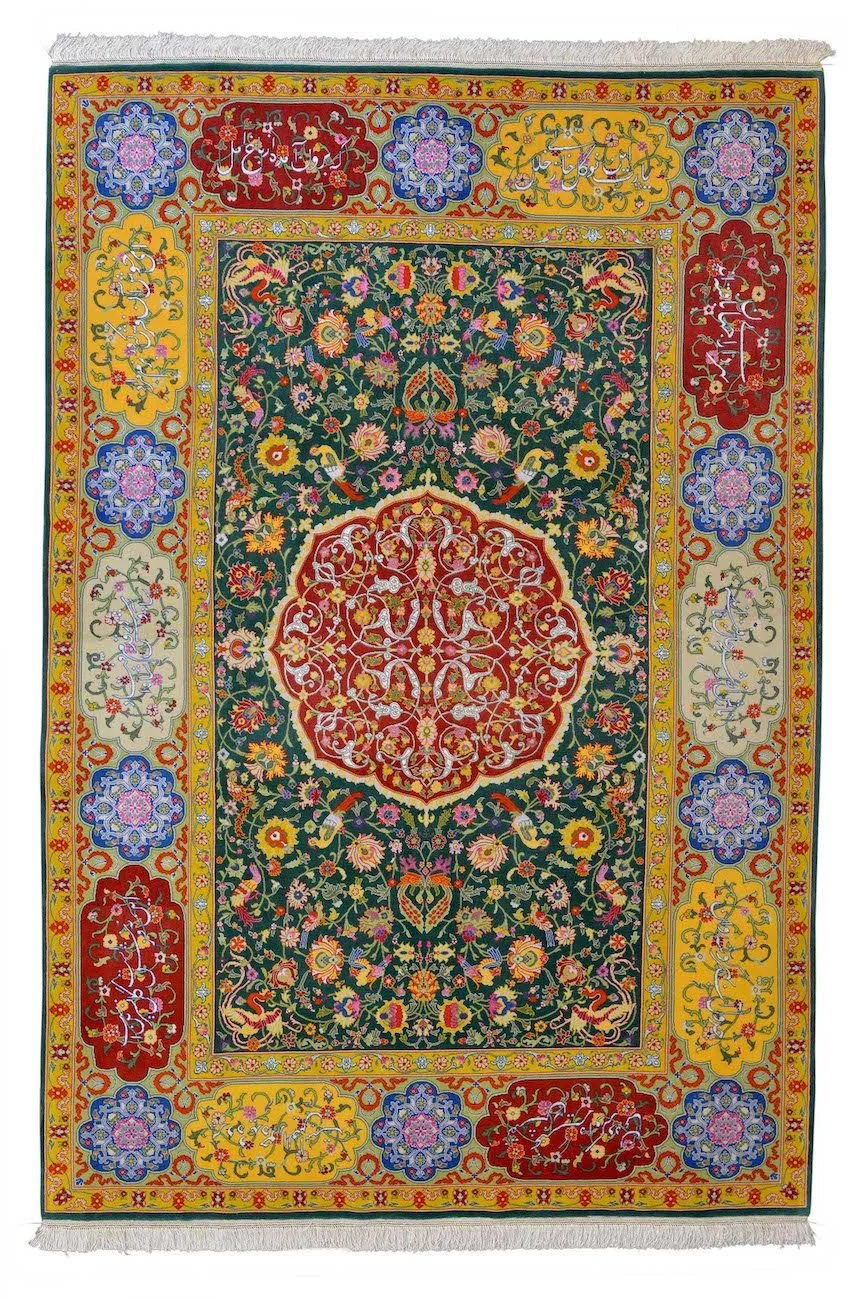
The inspiration for this unique rug comes from a similar pattern that Nasser Nishaburi�s great-uncle used to produce in Tabriz around the turn of the 20th century. It was created in our workshop in Azerbaijan by our skilled weavers using the best quality wool and natural dyes. The colours have been thoughtfully combined to achieve a softer aesthetic, and natural dyes have resulted in a delightful range of hues in the field, ranging from green to blue.
The bouquets depicted in four corners are in a beautiful combination reminiscent of autumn shades. This carpet can last the test of time and gracefully age to be a marvellous carpet, even for generations to come.
D-SG-0005
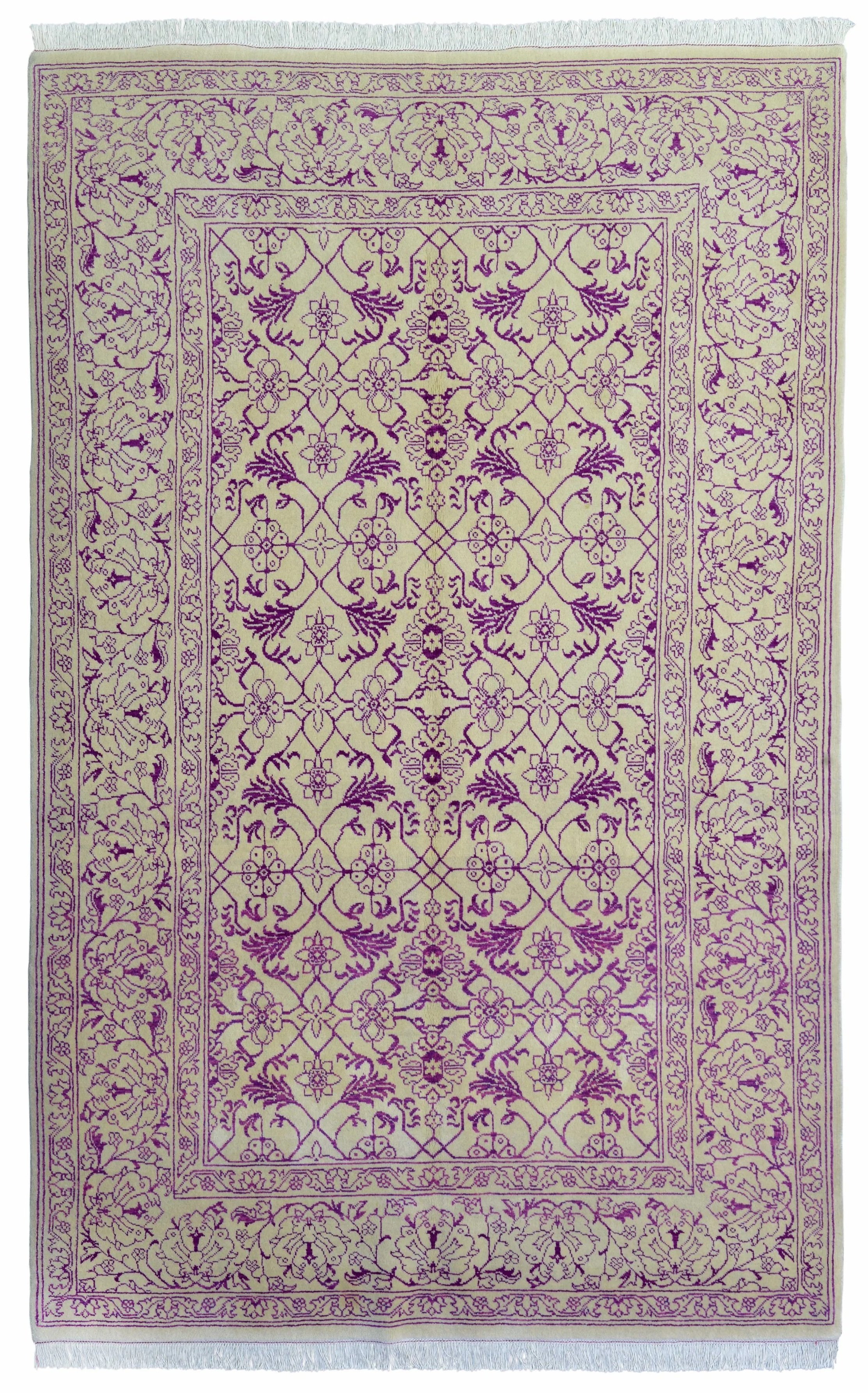
D-TZ-0039
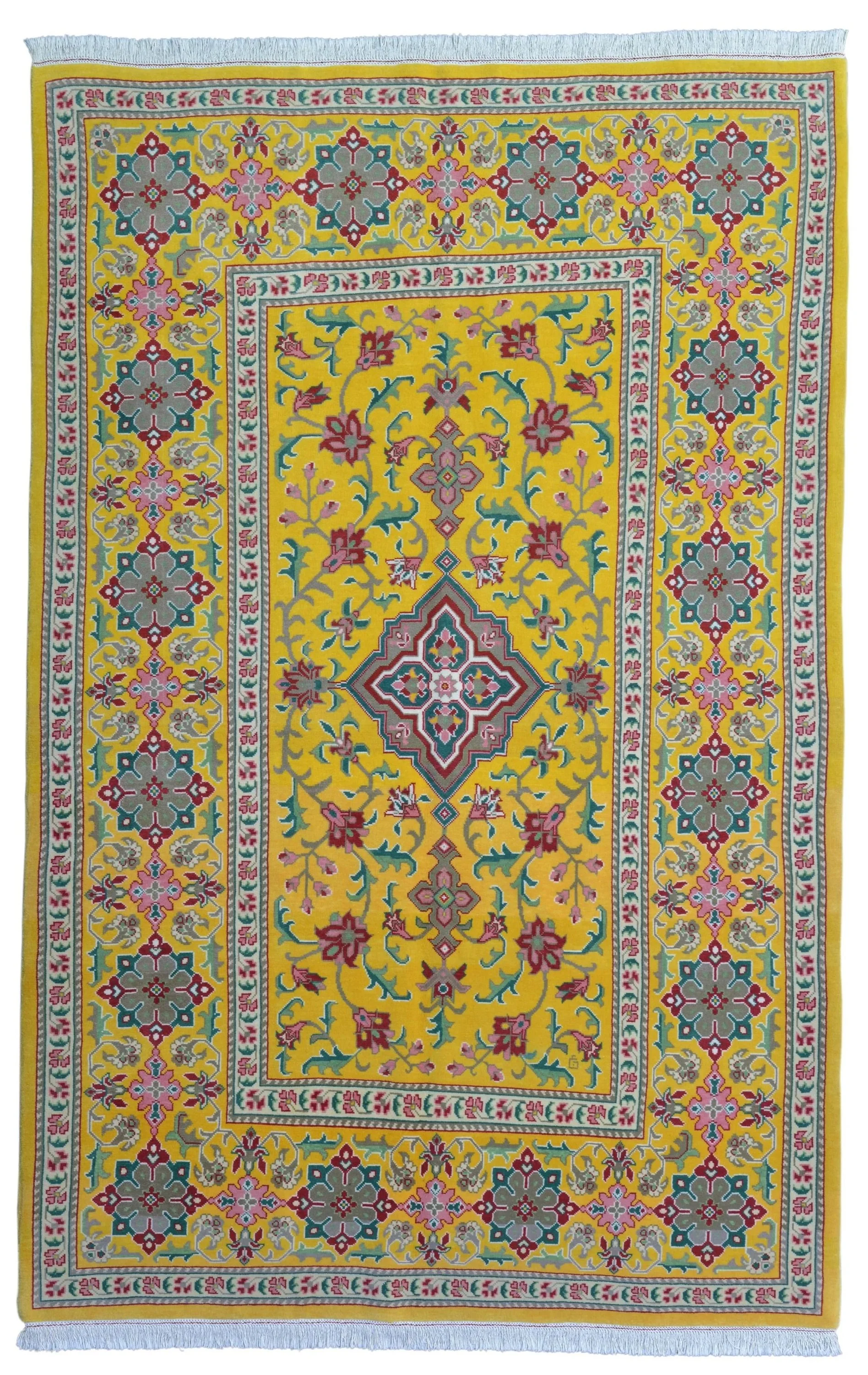
D-ZN-0019
Tradition, Retold collection
Produced in our own workshop in Tabriz, the Tradition, Retold collection reflects our own designs and interpretations, rooted in generations of weaving knowledge and craftsmanship. Drawing from inherited patterns and traditions, each piece is reimagined through a contemporary lens while preserving the integrity and spirit of the originals. While we always keep a selection of pieces in stock, in different colours and designs.
Customization:
We also gladly work with our customers on customised sizes and palettes to create one-of-a-kind, exclusive pieces, thoughtfully crafted to suit a tasteful space.

Often, the transformation of a classic design into a contemporary one occurs through the introduction of a different colour combination. Due to long-standing traditions and cultural biases, designers and weavers often confine themselves to specific colour palettes. This carpet represents a rebellion against such dogmas. The incorporation of shades of green and fuchsia in this rug has transformed it into a piece that can truly stand out and create an exuberant impact within an interior space. This carpet is intended for aesthetic designers who favour the creative use of colours over the monotony of the ordinary. With this carpet, one can fashion a room that is sure to spark discussions and leave a lasting impression on viewers.
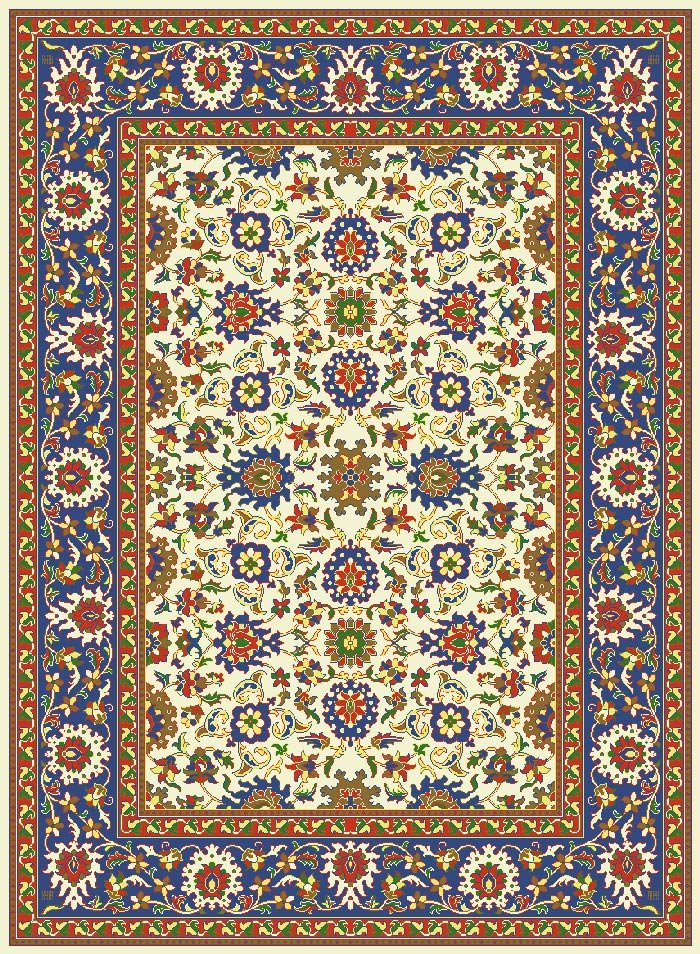
D-SK-0021
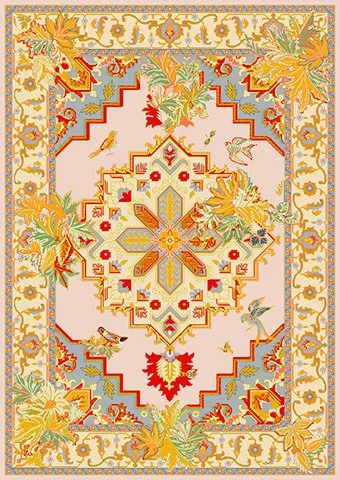
D-HZ-0012
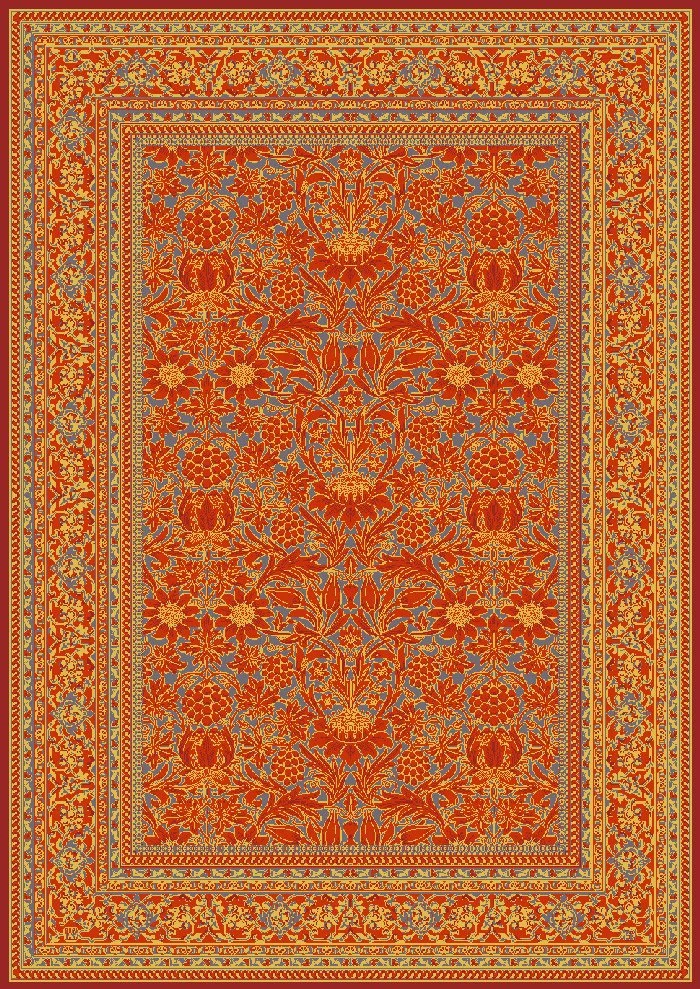
D-WM-0008
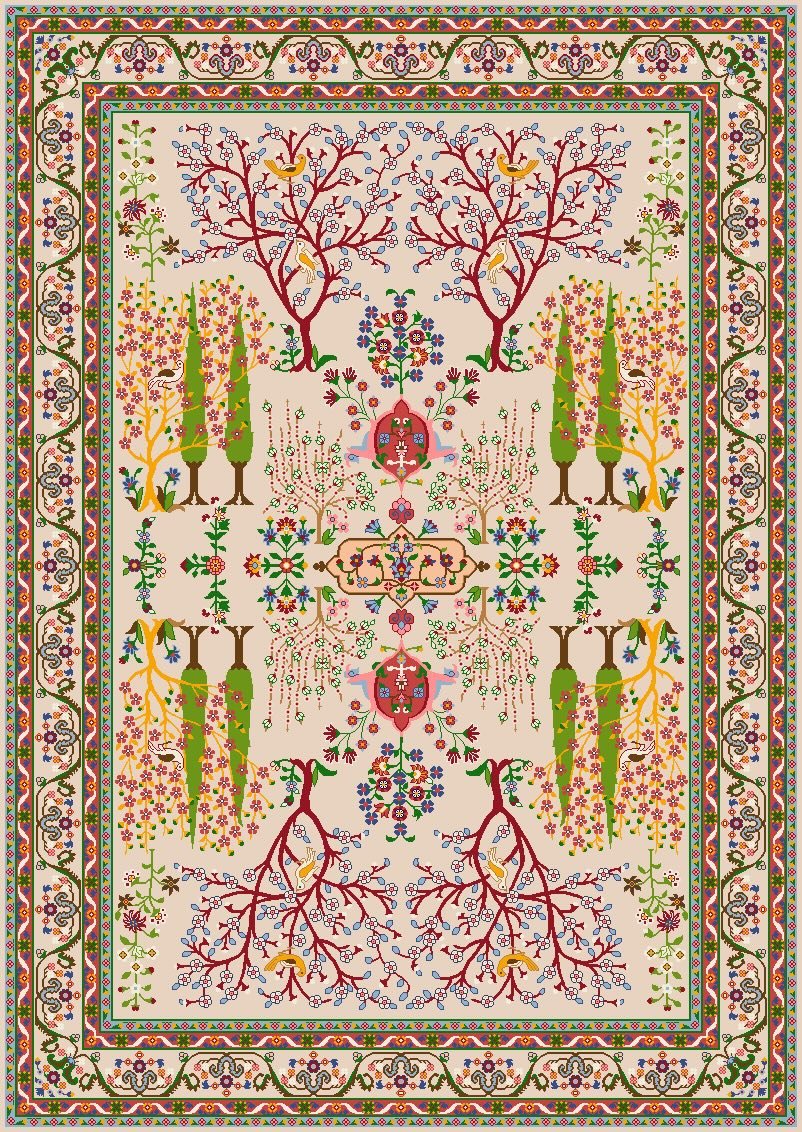
D-TZ-0033
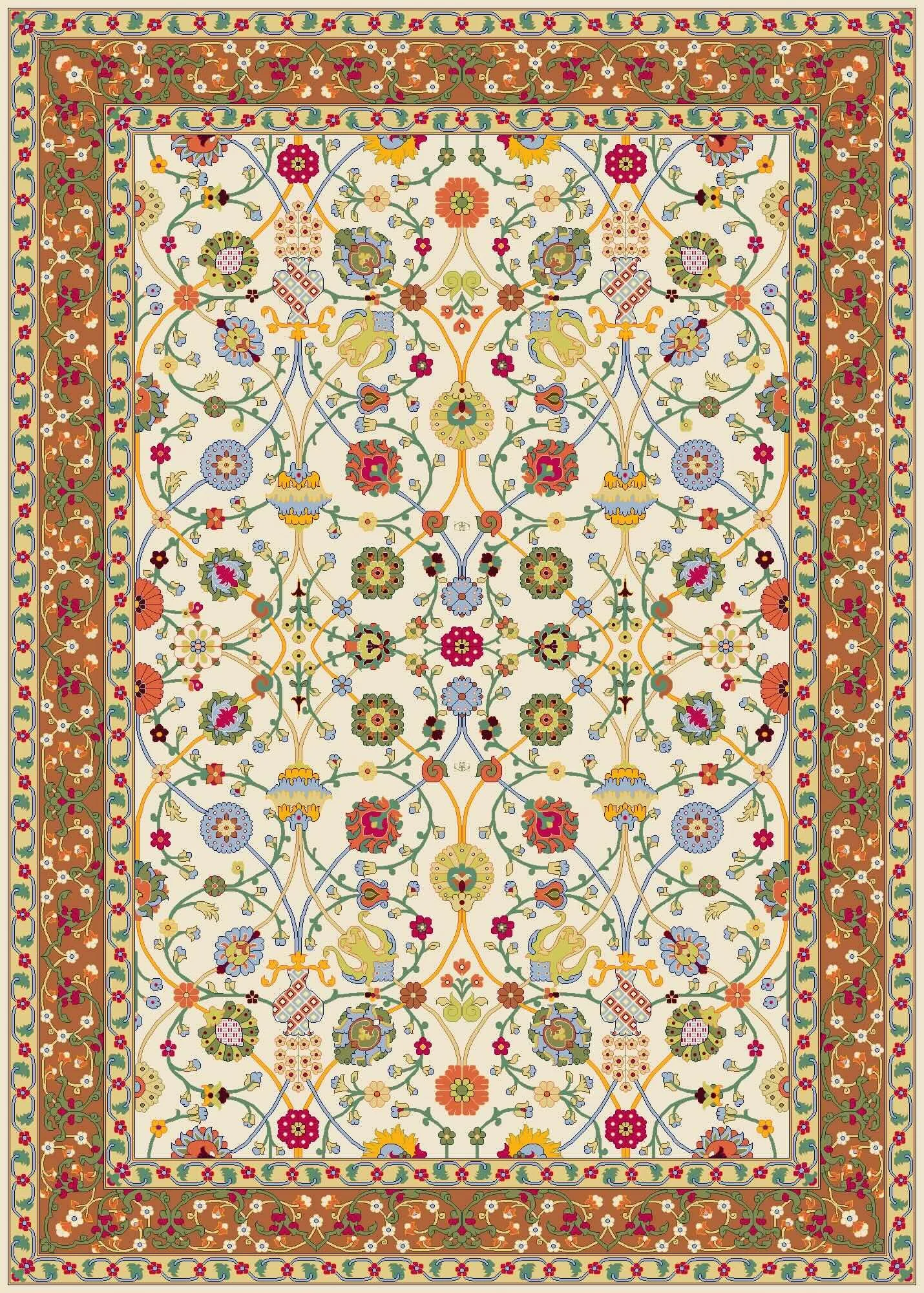
D-TZ-0029
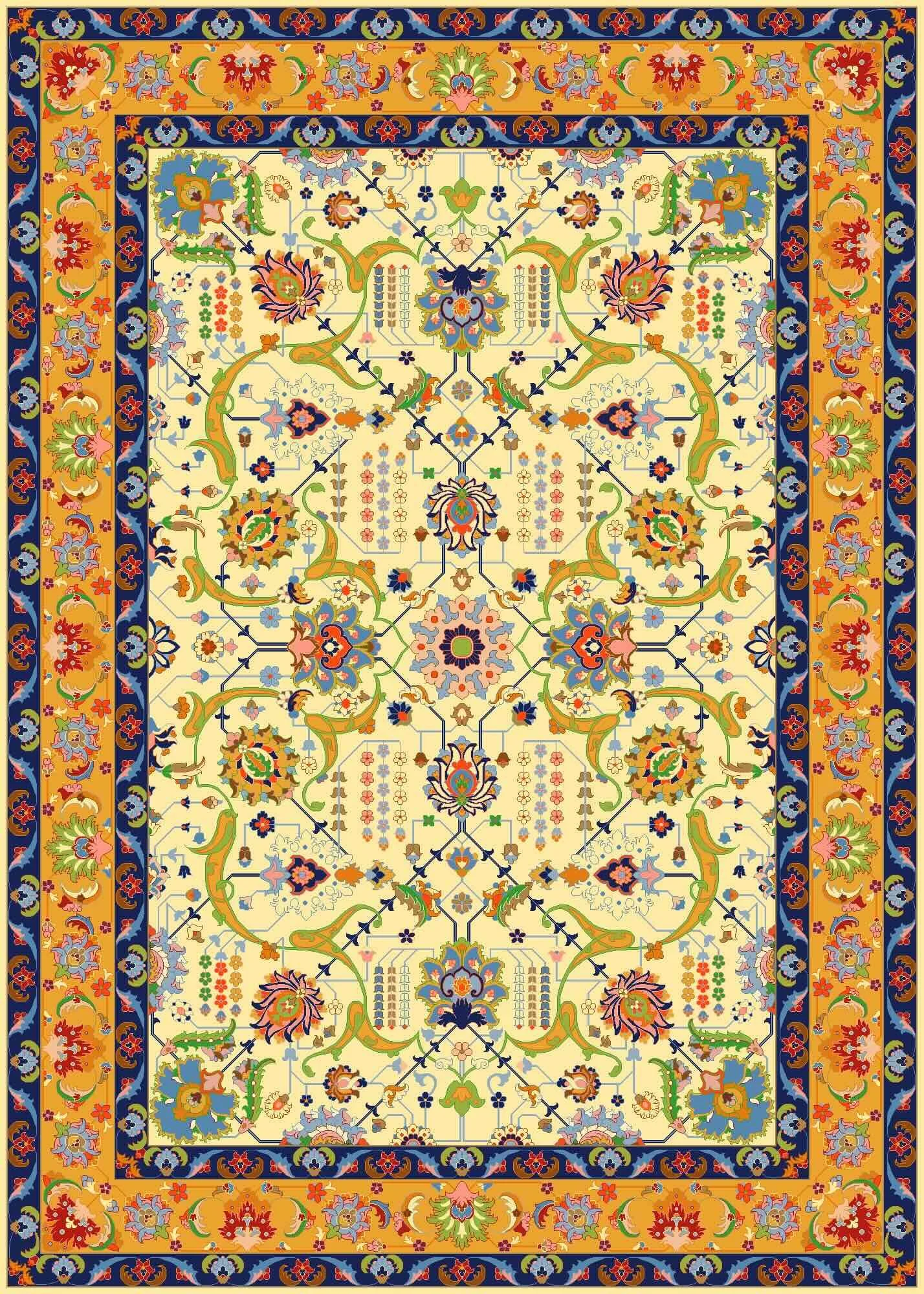
D-TZ-0023
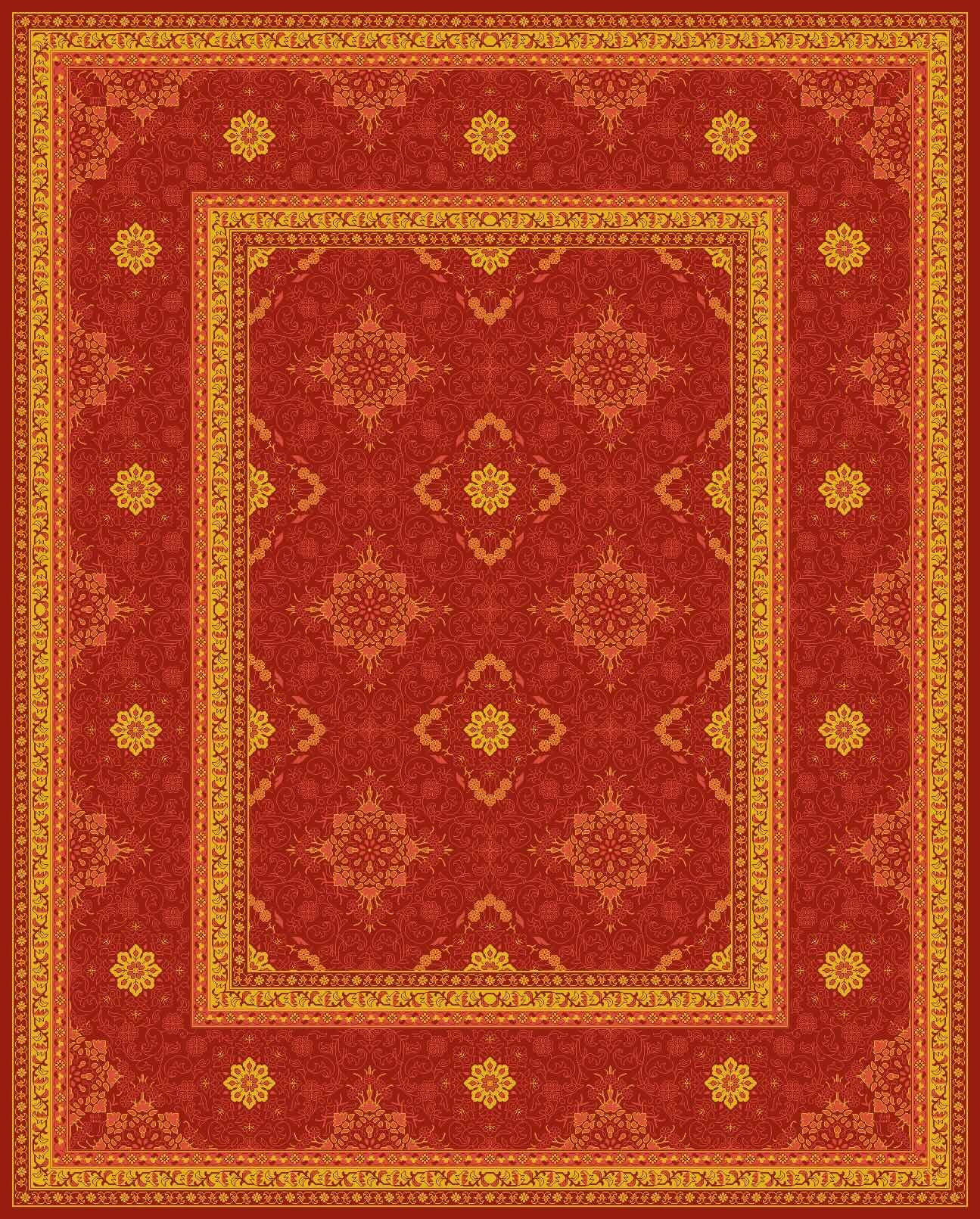
D-KN-0123
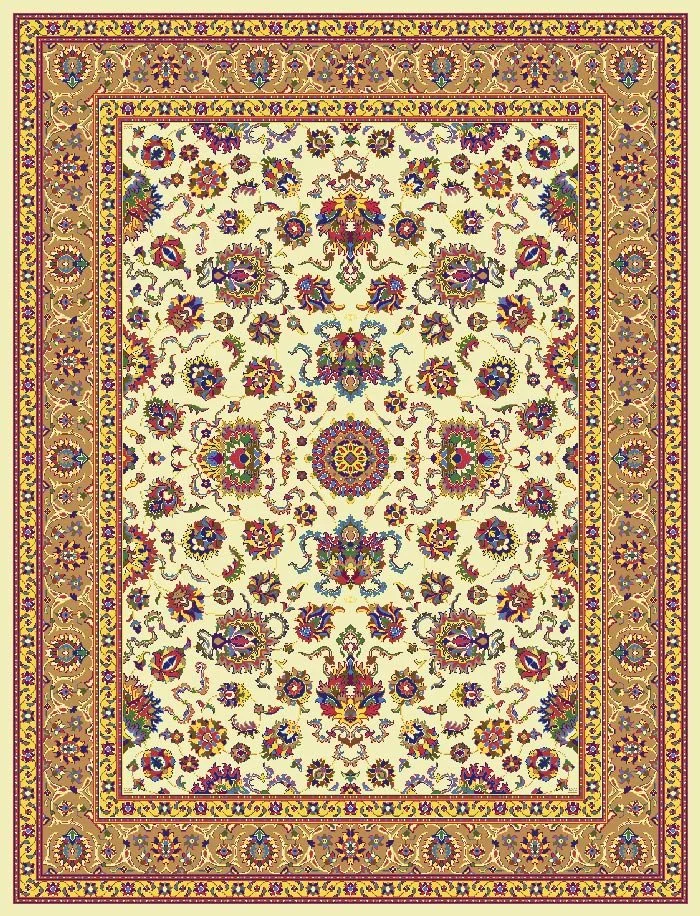
D-KN-0121
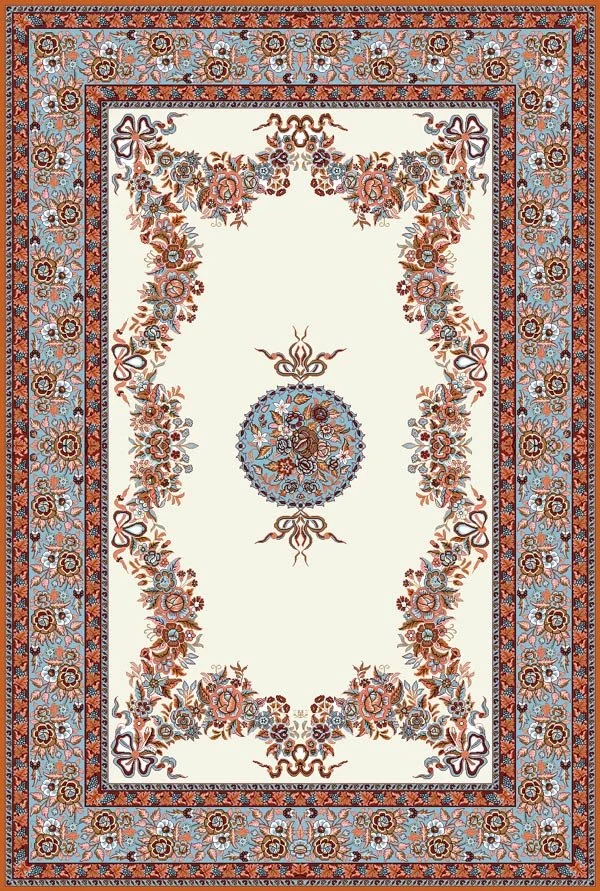
D-HN-0053
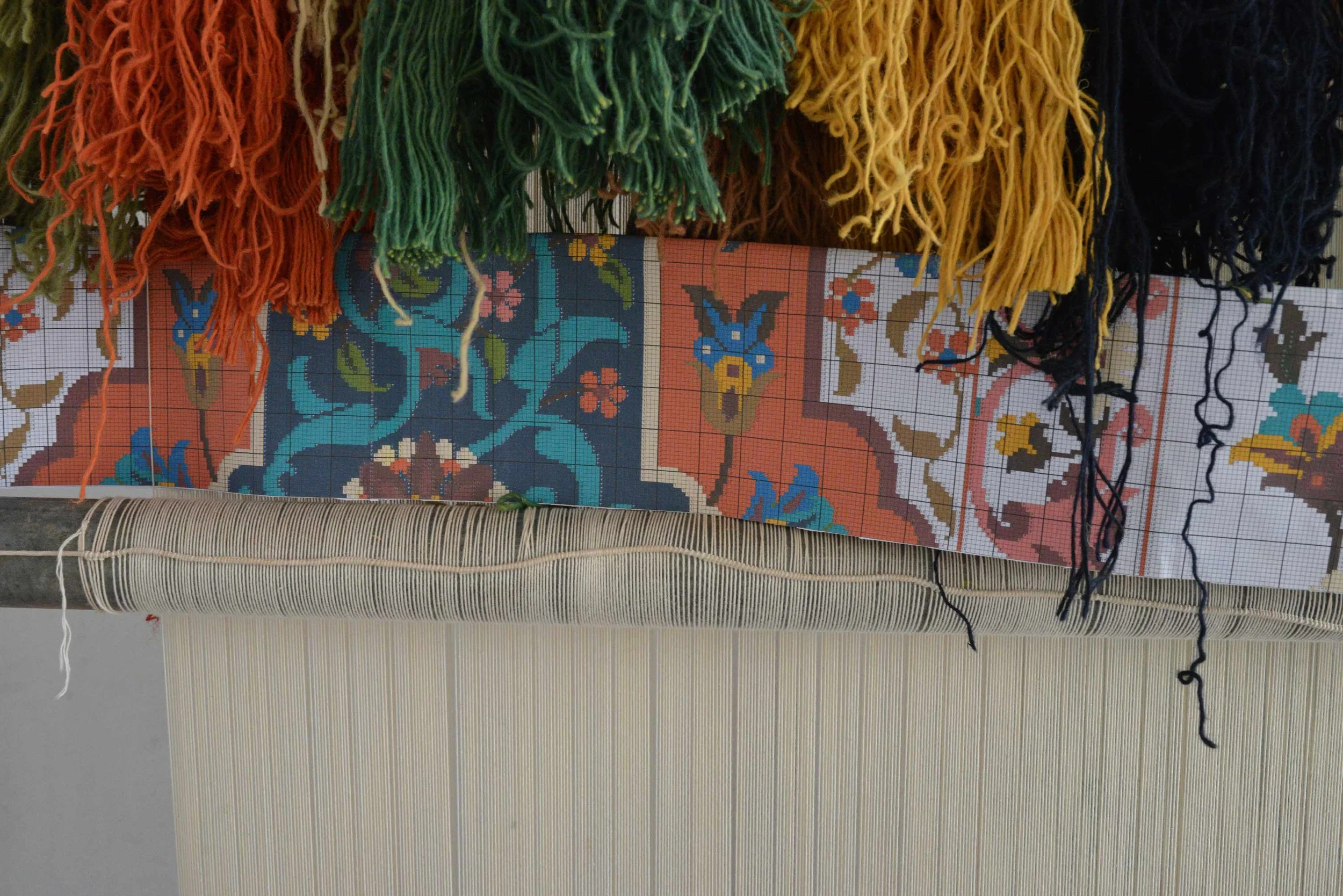
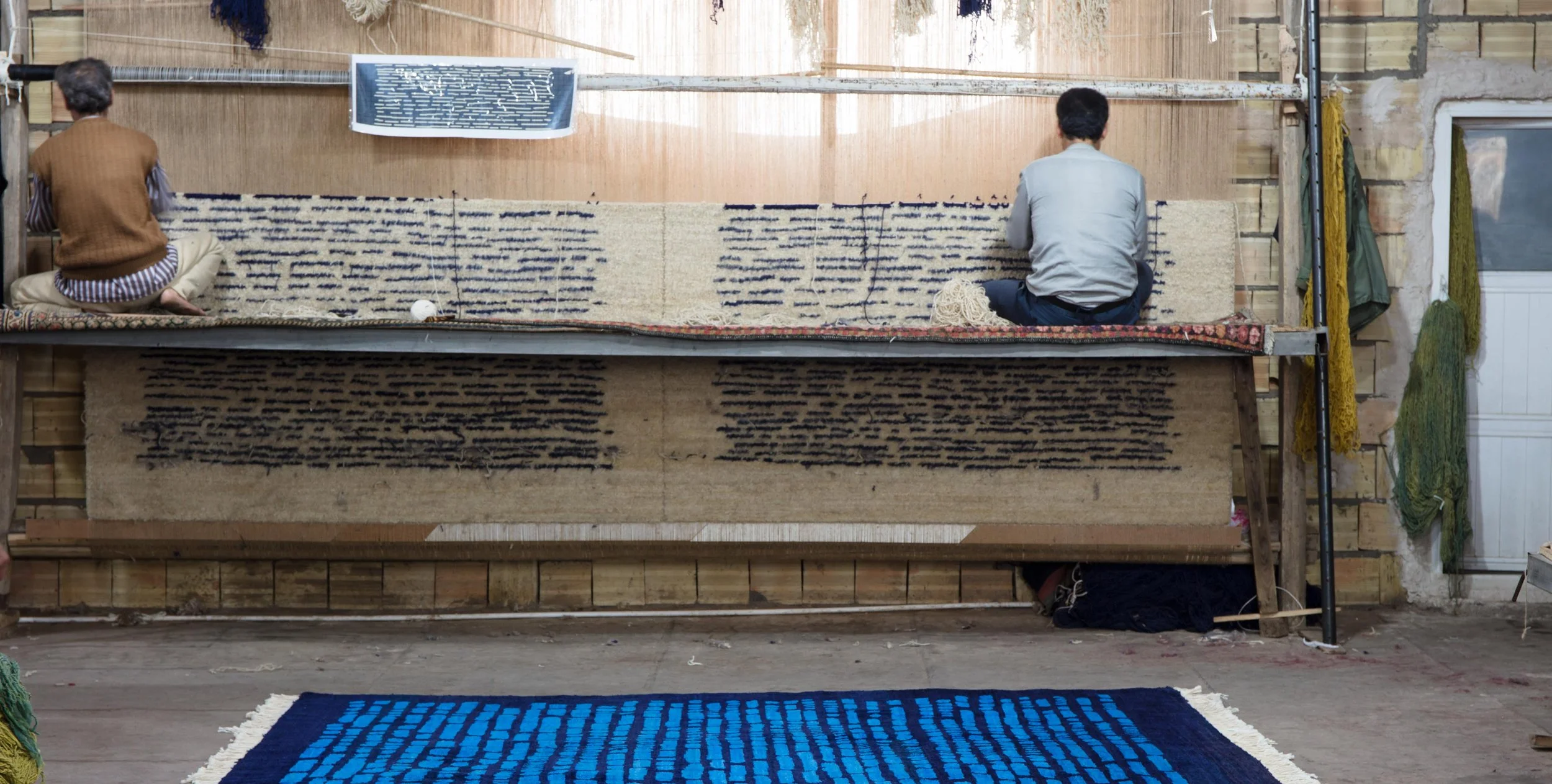
Creating a rug
is a long and demanding journey, from the birth of an idea and its form on paper, to the choice of materials and colours, and finally the tying of countless knots into a living piece. Yet the joy of creation makes every effort worthwhile. The result becomes part of your soul, a one-of-a-kind piece to live with you and yours for generations.
Knotifed
Souls
Feelings, myths, and stories
woven into modern rugs.
BEYOND DECORATION
In today’s world of increasingly uniform interiors and trend-driven aesthetics, this collection is an attempt to reintroduce meaning, emotion, and human expression into the language of rugs. These works are not conceived merely as floor coverings to complement furniture, but as pieces with presence, memory, and soul, capable of contributing atmosphere, identity, and narrative to a space.

Designed by Nasser Nishaburi, this rug expresses the emotional resonance surrounding the walls that confine us, whether self-imposed or imposed by others, visible or non. These barriers prevent us from soaring and transcending beyond set boundaries, limiting our view of the infinite horizons of possibilities beyond.
Such walls are all around us, experienced and felt by all, igniting a deep-seated desire to break them down, smash them and fly beyond their constraints.
This rug could serve as a reminder to keep the inner flame burning, to maintain our spirit, and to believe unwaveringly that these walls can be overcome and crossed, for we stand taller than the walls that seek to confine us.
Technique: Hand-knotted, Tibetan weave | Material: wool and silk on cotton

HOPE
It's remarkable how even a small splash of colour amid a neutral palette of black, white, and grey can breathe life into a rug and elevate it to a sophisticated and uplifting carpet.
The vivid red hue woven into this rug represents hope and a spirited drive to beautify our world. While the subdued colour scheme lends versatility to the piece, it's the red accent that sets it apart. The rug exudes optimism and vibrancy and can transform any space into an exquisite and distinct environment.
Crafted from natural Himalayan wool and silk, the rug features an array of undyed shades ranging from white to black. The red hues are dyed using traditional and artisanal techniques exclusively for this piece. Expertly woven by Tibetan weavers in Nepal, this rug is a testament to their skill and artistry.
Hand-knotted | wool & silk on cotton base
THE SONG
BENEATH THE KNOTS
For centuries, Persian rugs intrigued curious minds with their mysterious aura, as if they carried cryptic messages sung through incomprehensible melodies. Within their motifs lived inherited symbols, emotions, myths, poetry, and fragments of collective memory. With the commercialisation of rugs, many of those songs slowly faded, as rugs increasingly became commissioned products designed for distant markets and changing trends.

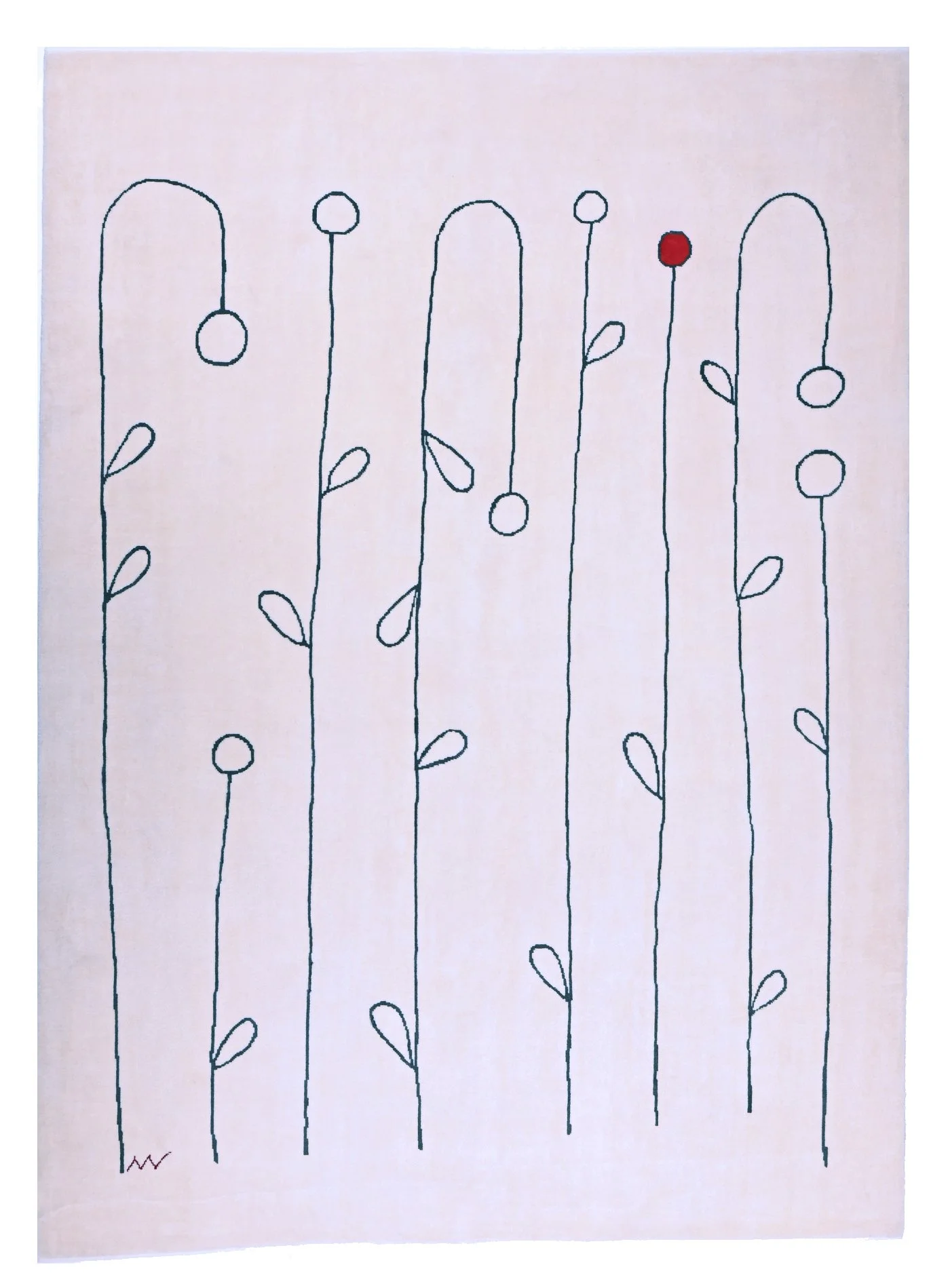
Simplicity is a virtue.
Neat lines, a clear idea, and a quiet dash of colour representing the one that stands apart, the one that chooses to rise, glow, and remain true to itself.
This minimalist piece was woven in the city of Tabriz using the symmetric Turkic knot, a weaving technique long associated with the honest and durable structure of the region’s carpets.
What makes this rug fascinating is its restraint. There is no unnecessary complexity, no overcrowding of motifs, only a few elegant lines gently rising like stems, ending in delicate blossoms. And among them, a single red flower quietly interrupts the harmony, immediately drawing the eye.
That one flower changes everything.
It becomes a subtle statement about individuality, divergence, and the courage to remain different within repetition and order. The composition is calm and disciplined, yet deeply expressive.
Wool on a cotton base.
P104
“To hell with rhyme and rythem!”

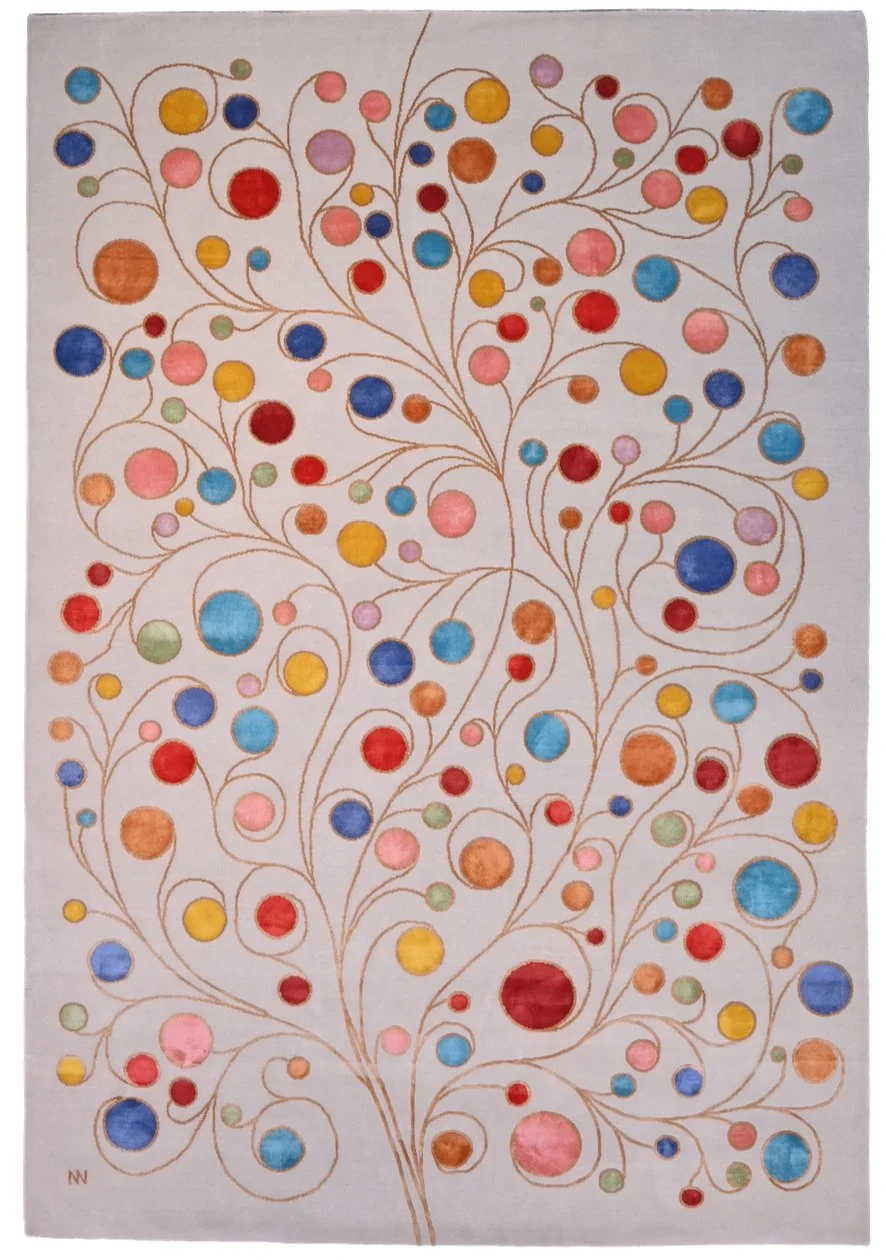
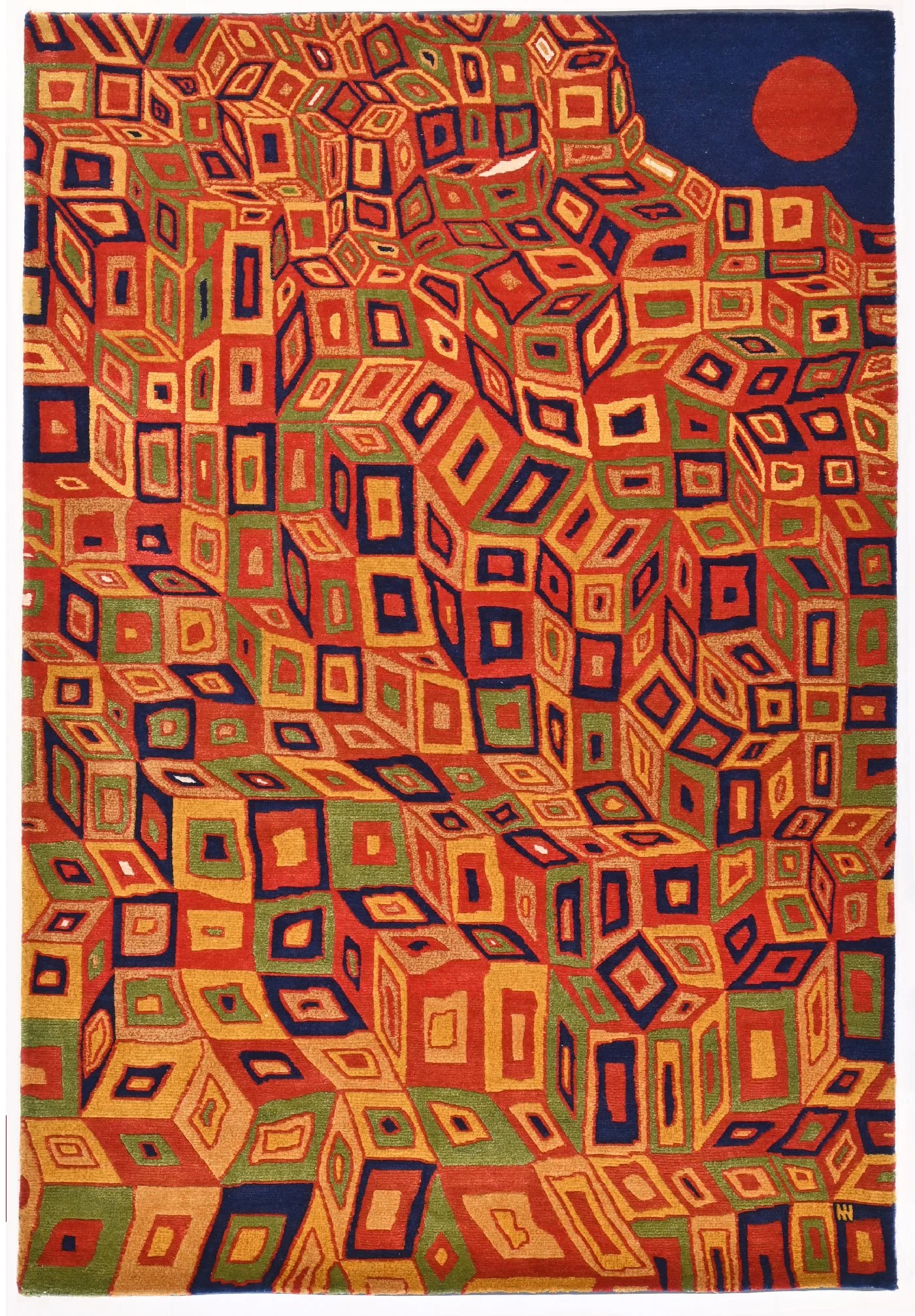
The Tree of My Life: A Personal Reflection.
Among the countless symbols that humanity has carried through the ages, few have travelled as deeply through cultures and civilisations as the Tree of Life. In Persian mythology, perhaps the closest parallel is the Tree of All Seeds mentioned in the Bundahishn, the mythical mother of all vegetation in the world, standing beside the sacred Haoma tree in the middle of the cosmic sea of Farakhkart. From there, the idea travelled and transformed across cultures, reappearing in different forms throughout history.
For centuries, Persian weavers have interpreted this symbol in endless ways. Some depicted paradise, others eternity, fertility, renewal, or spiritual ascendance. Yet every interpretation ultimately became a reflection of the weaver’s own understanding of existence.
This carpet is my own interpretation, something I chose to call The Tree of My Life.
My tree does not begin within the borders of the rug, nor does it end there. Like existence itself, it arrives from an unknown infinity and disappears into another beyond my understanding. The branches twist, scroll, and wander freely, much like life itself, unpredictable, imperfect, and alive.
The fruits scattered across the tree are intentionally different in colour and size. Some appear vibrant, others quieter, some larger, some barely visible. Together, they represent moments, experiences, people, emotions, successes, losses, memories, and traces left behind through a lifetime.
There are exactly 184 fruits on the tree. The number was not accidental. Through the old Abjad system of assigning numerical values to letters, 184 corresponds to the word Vahed, meaning “One.” Many fruits, many colours, many experiences, yet ultimately one origin and one existence.
What fascinates me most about the ancient Tree of Life symbol is that, despite all cultural differences, it almost always points toward the same mystery, the relationship between multiplicity and unity, between the visible and invisible, between the temporary and the eternal.
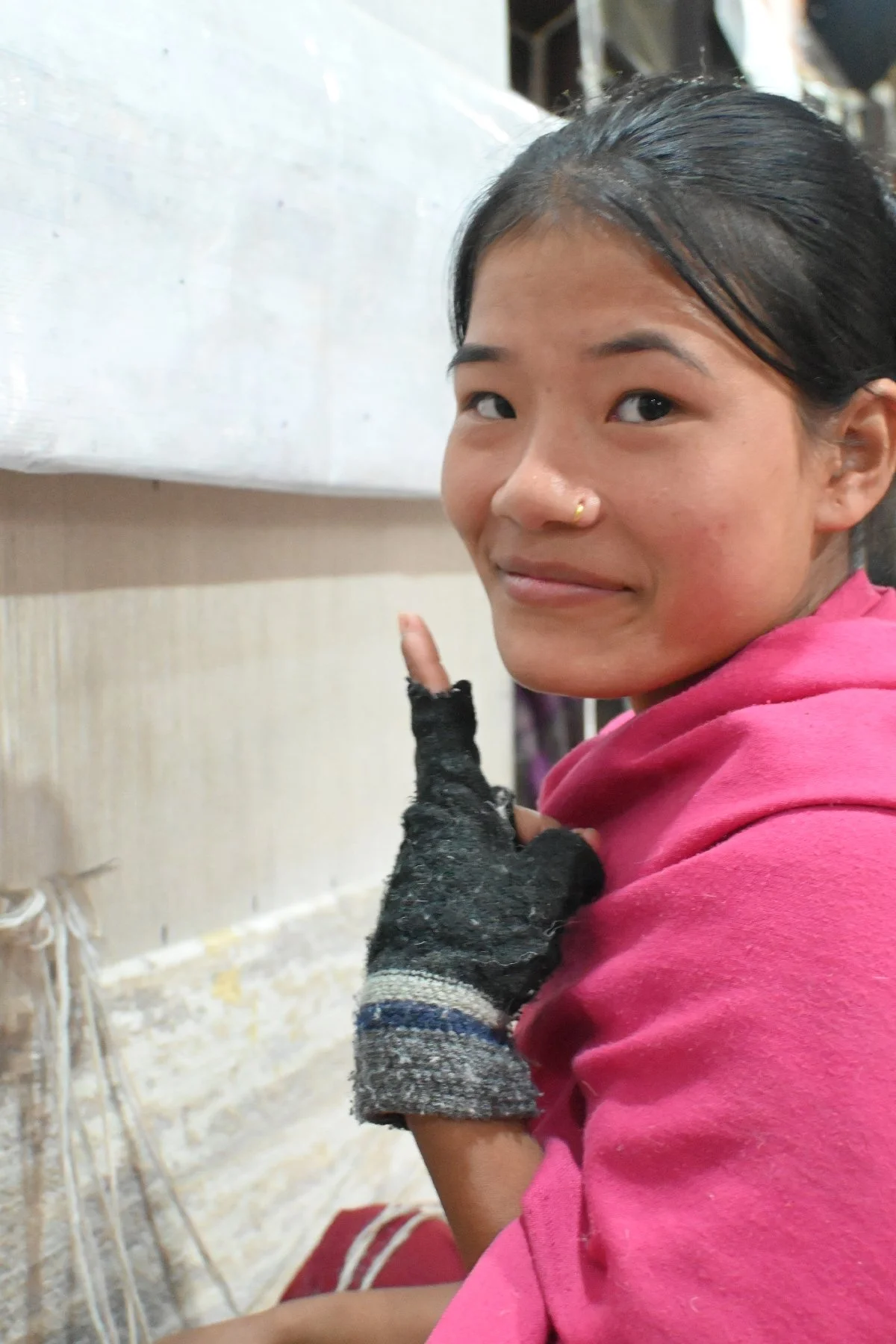
The carpet itself was woven in Nepal by three sisters from the Tamang clan, Shanti, Kamala, and Sunita, whose patience and care became part of the piece's soul. Their contribution reminds me that even deeply personal ideas can only come into existence through human connection and shared effort.
Natural wool, silk, and cotton were used throughout the carpet, while the yarn was prepared and dyed traditionally in small quantities with minimal undesirable environmental impact. The materials were chosen to age gently and honestly, allowing the piece to mature over time, much like the life it seeks to portray.
This carpet is not meant merely to decorate a space. It is a meditation on existence, an attempt to translate thoughts that cannot easily be expressed in words into form, colour, and movement.
Wool and silk on a cotton base.
A SEARCH FOR MEANING
This collection is my personal attempt to revive some of that lost charm and spirit by reintroducing meaning and expression into contemporary rugs. The motifs draw from feelings, literature, old stories, and conversations heard from elders, transformed into a visual language intended for those who seek beauty beyond decoration alone.
At its heart, this collection reflects a personal struggle, a cultural dilemma, and a philosophical debate, a resistance to reducing rugs into meaningless decorative surfaces. Through these works, I attempt to create art for the floor, pieces that could nourish the mind as much as the eyes, elevate the spirit of a space, and remind us that beauty can still make us feel deeply human.

Contemporary design often seeks simplicity, clarity, and balance. Yet achieving simplicity is rarely simple. It requires restraint, confidence, and a careful understanding of what can be removed without losing character. This rug is an example of such an approach.
Woven in Nepal using predominantly silk with carefully placed wool accents, the piece draws inspiration from classical Persian carpet designs while presenting them in a distinctly contemporary form. The traditional pattern remains visible, but only partially. Portions of the design appear faded, softened, and deliberately erased, allowing fragments of the original composition to emerge and disappear across the surface like distant memories.
The restrained palette contributes greatly to the rug's character. Using only subtle tones, the design relies not on colour contrasts but on texture, light, and material. Silk reflects light differently from wool, creating layers of depth and movement that change throughout the day. As light falls across the surface, details emerge and recede, giving the carpet a quiet yet dynamic presence.
The interplay between preservation and disappearance is what makes this rug particularly intriguing. It carries echoes of traditional Persian ornamentation while embracing the aesthetics of contemporary design. The result is elegant, understated, and sophisticated.
More than a floor covering, this is a piece designed to create atmosphere. Its calm palette and subtle pattern allow it to integrate effortlessly into modern interiors while adding texture, refinement, and visual interest. It is a rug that does not demand attention, yet rewards those who take the time to look closely.
A contemporary creation that balances tradition and modernity through simplicity, texture, and light.
Beyond every complication lies simplicity,
a depth of simplicity that is
beyond sophistication.
Hope
is sometimes a ray of light, a dash of colour,
or a smile.
HOPE
It's remarkable how even a small splash of colour amid a neutral palette of black, white, and grey can breathe life into a rug and elevate it to a sophisticated and uplifting carpet.
The vivid red hue woven into this rug represents hope and a spirited drive to beautify our world. While the subdued colour scheme lends versatility to the piece, it's the red accent that sets it apart. The rug exudes optimism and vibrancy and can transform any space into an exquisite and distinct environment.
Crafted from natural Himalayan wool and silk, the rug features an array of undyed shades ranging from white to black. The red hues are dyed using traditional and artisanal techniques exclusively for this piece. Expertly woven by Tibetan weavers in Nepal, this rug is a testament to their skill and artistry.
Hand-knotted | wool & silk on cotton base
This shall pass too!
Wool and silk, Nepal. (50×50cm)
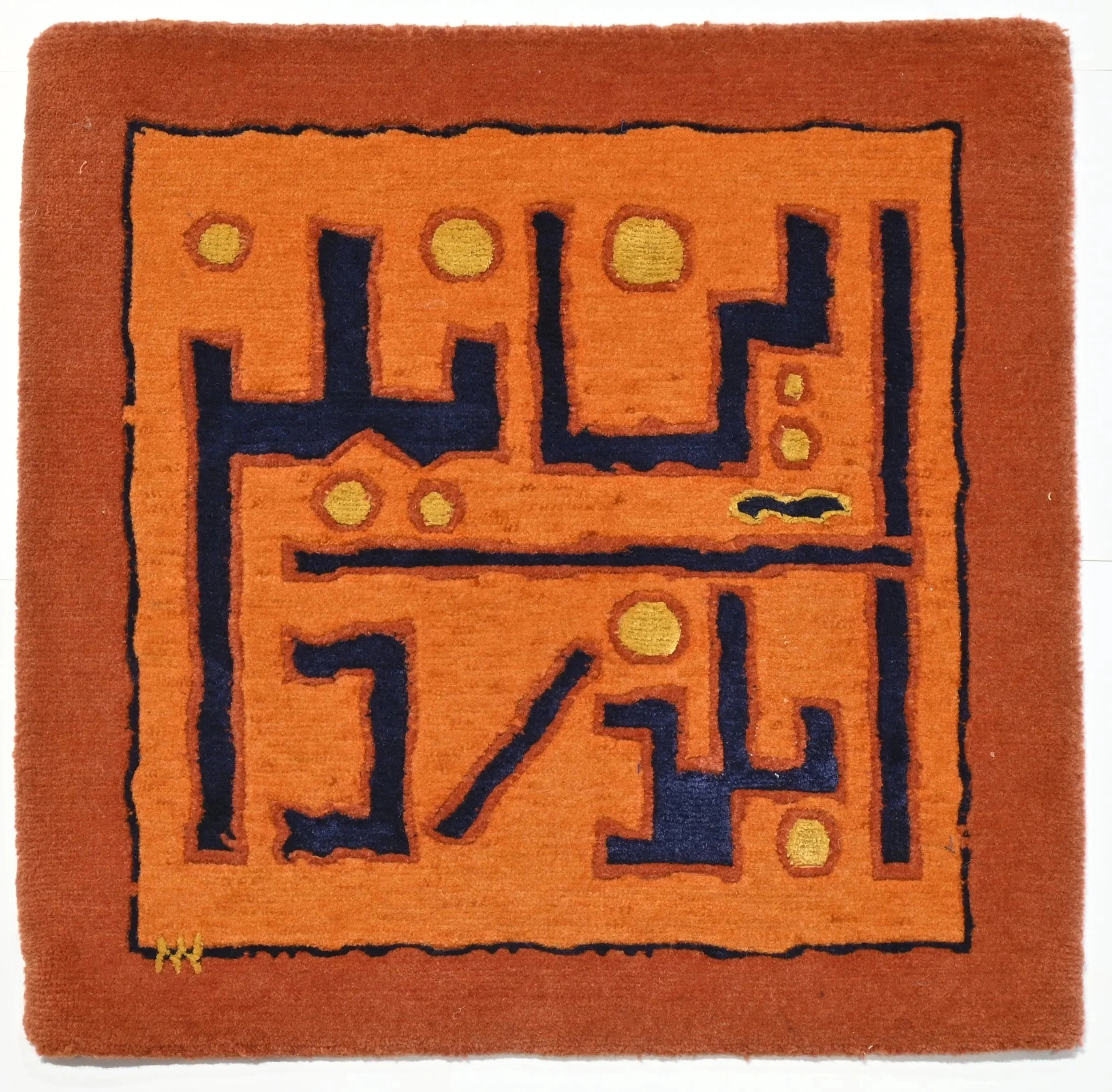
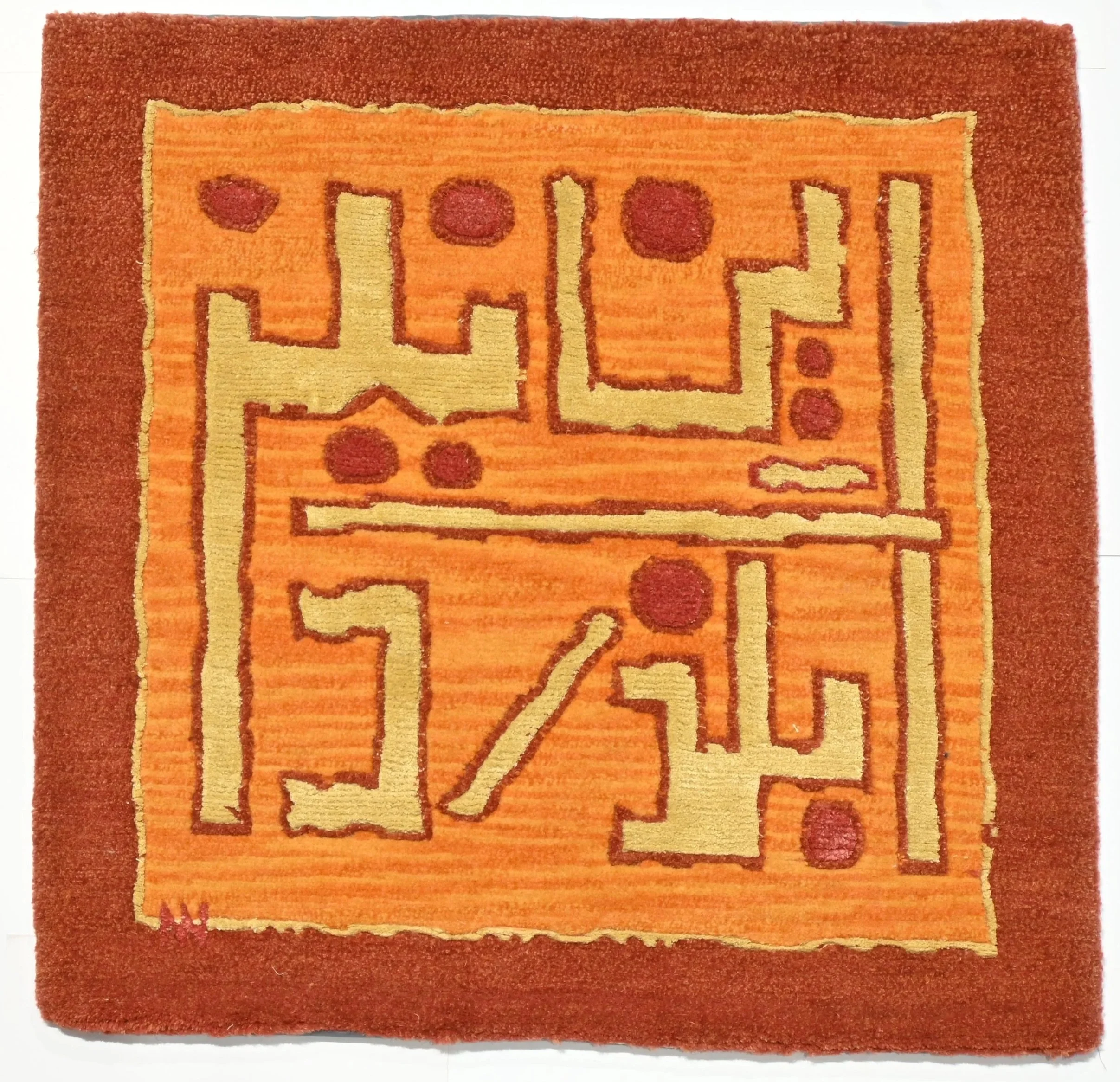
When one transcends the cognitive struggle of lines, angles, shapes, and forms once perceived as restraints, a sense of peace emerges through the discovery of the true self. This rug was woven in Nepal employing age-old techniques by a solitary weaver, without whose dedication the design would have remained confined to paper, never taking the form of a rug.
Wool and silk on cotton.
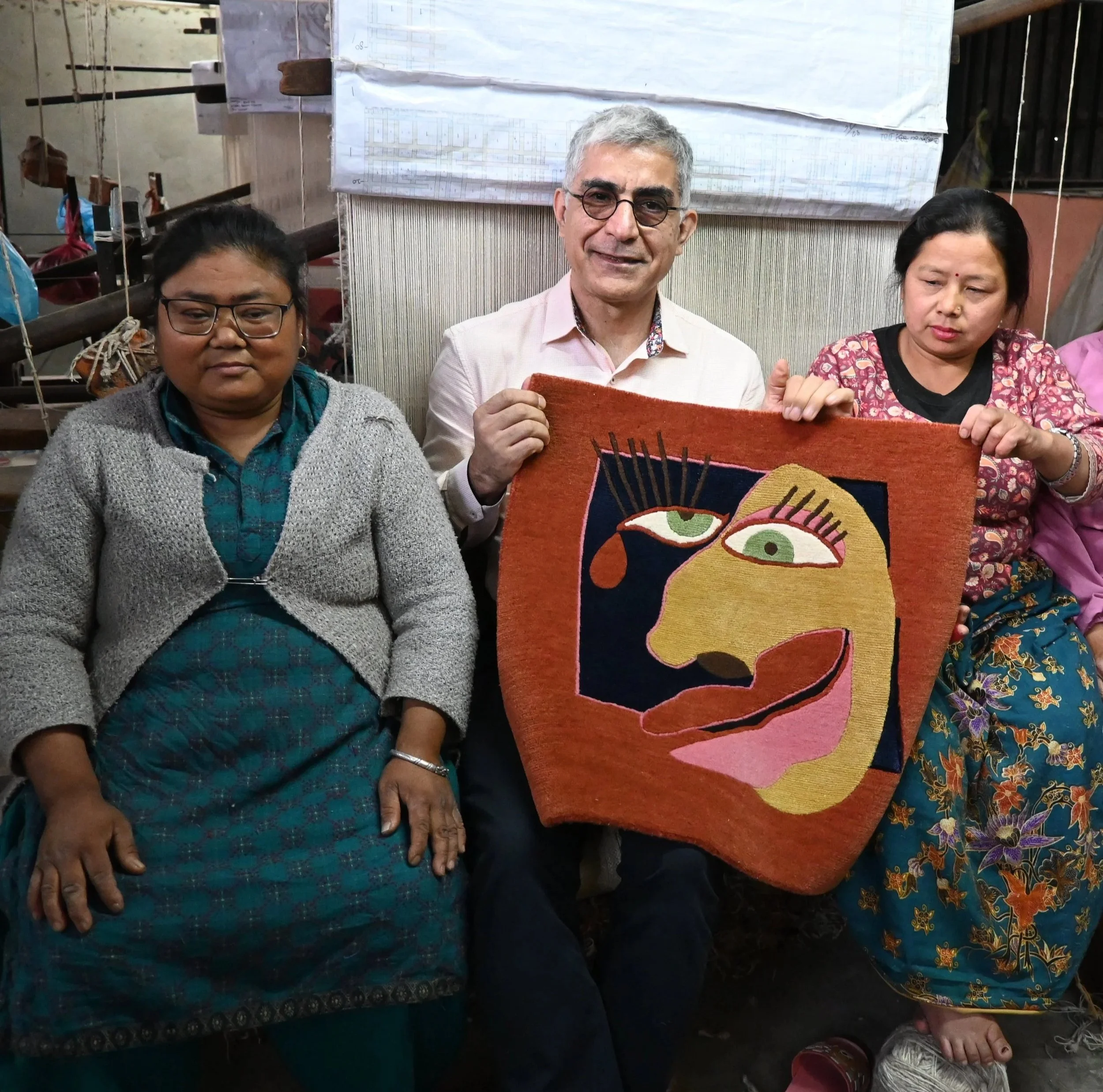
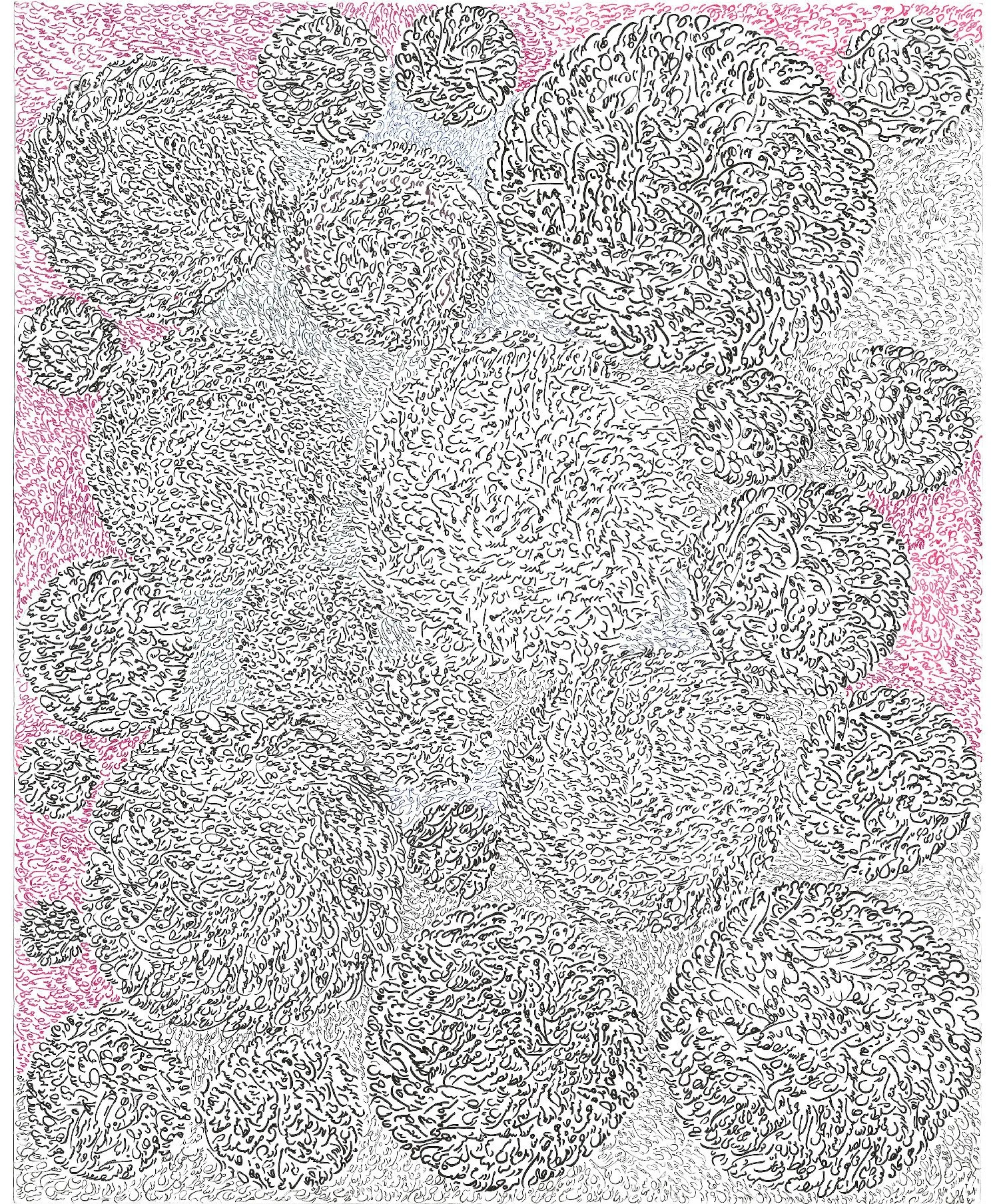
I just took a pen and wrote my heart out!
The outflow of emotions can imbue words with movement and dance. After only a few strokes of the pen, writing becomes a form of meditation, allowing the hand to move freely and create abstract expressions of emotion. Words flow effortlessly into curvilinear forms that glide across the page, eventually taking on circular movements reminiscent of the whirling dance of the dervishes.
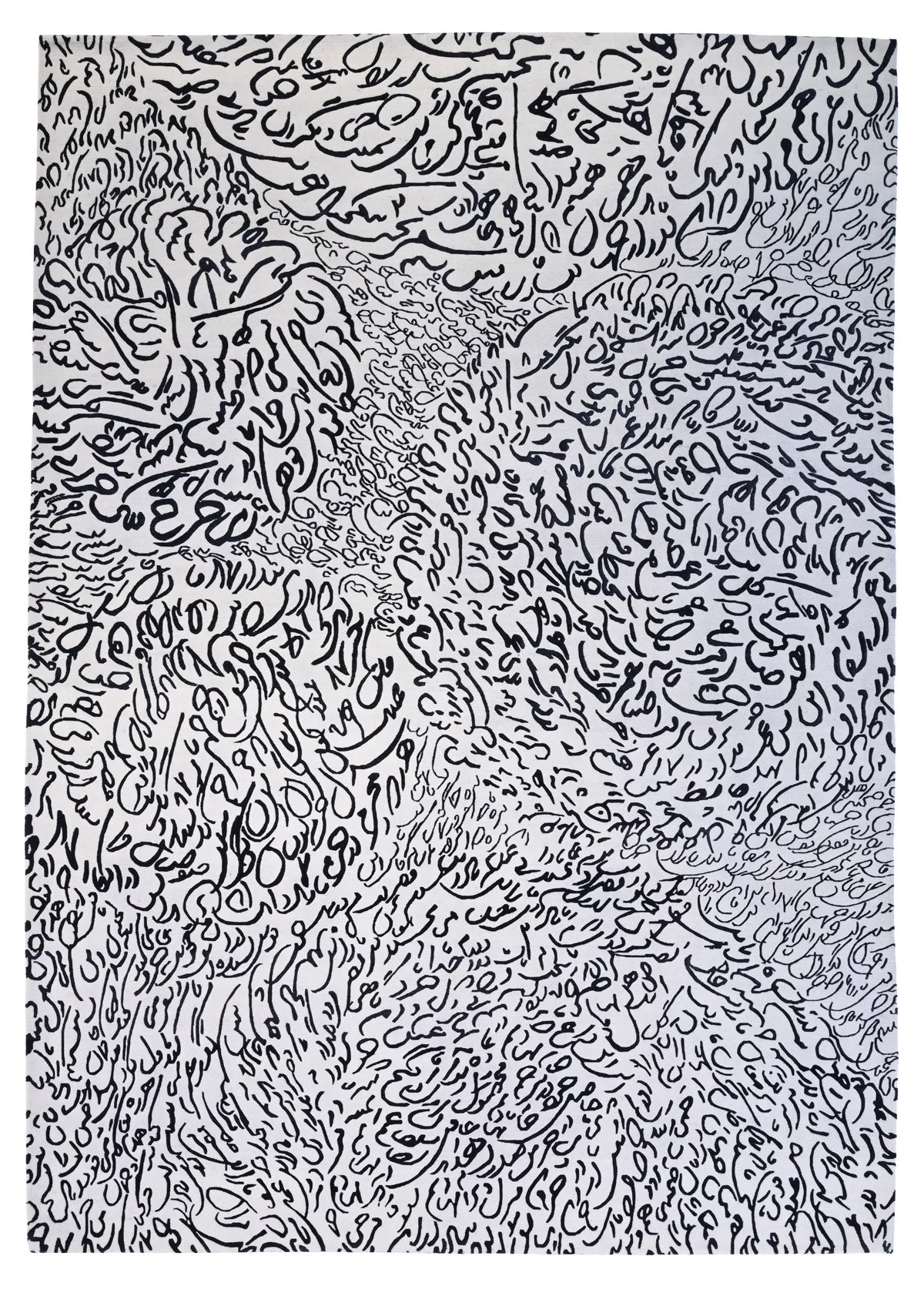
This meditative process became a pathway towards a deeper level of consciousness and a closer connection with the inner self. In order to free the work from the constraints of formalism and tradition, I consciously omitted the dots that form an integral part of the Persian language script, resulting in a more abstract and less legible visual language, a personal diary of emotions expressed beyond conventional calligraphy.
The hypnotic movement of these swirling lines and forms eventually inspired me to translate a fragment of the work into a rug. The piece was woven in Nepal by exceptionally skilled Tibetan weavers, whose patience and craftsmanship transformed the design into a finely woven carpet. The result is a work that attempts to preserve the spirit of the original calligraphy, its movement, abstraction, and emotional rhythm, in the form of art for the floor.

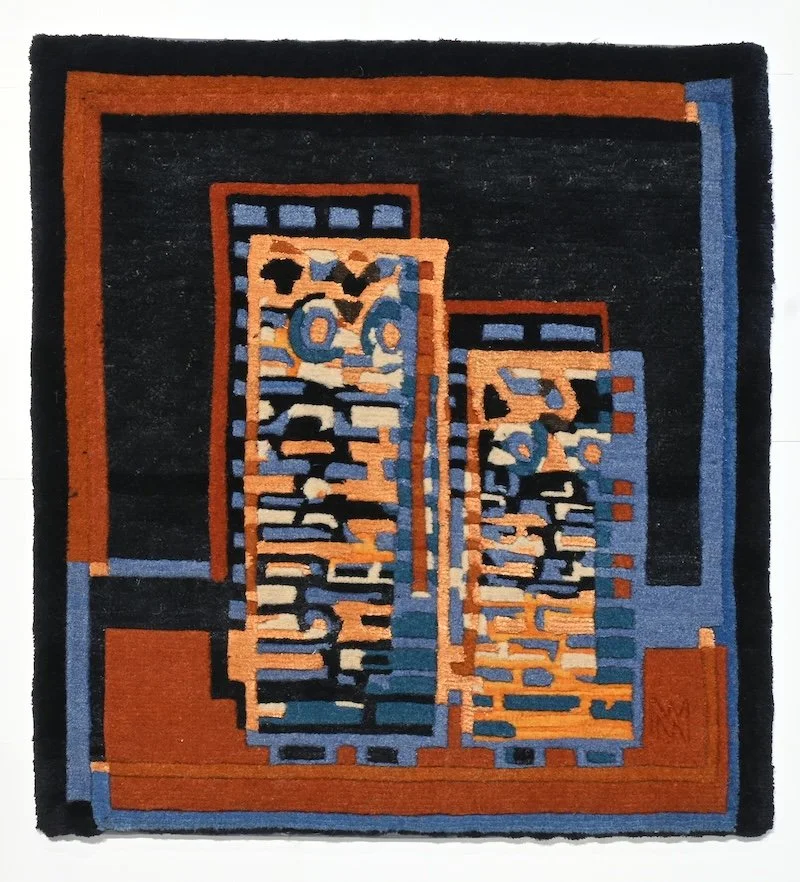
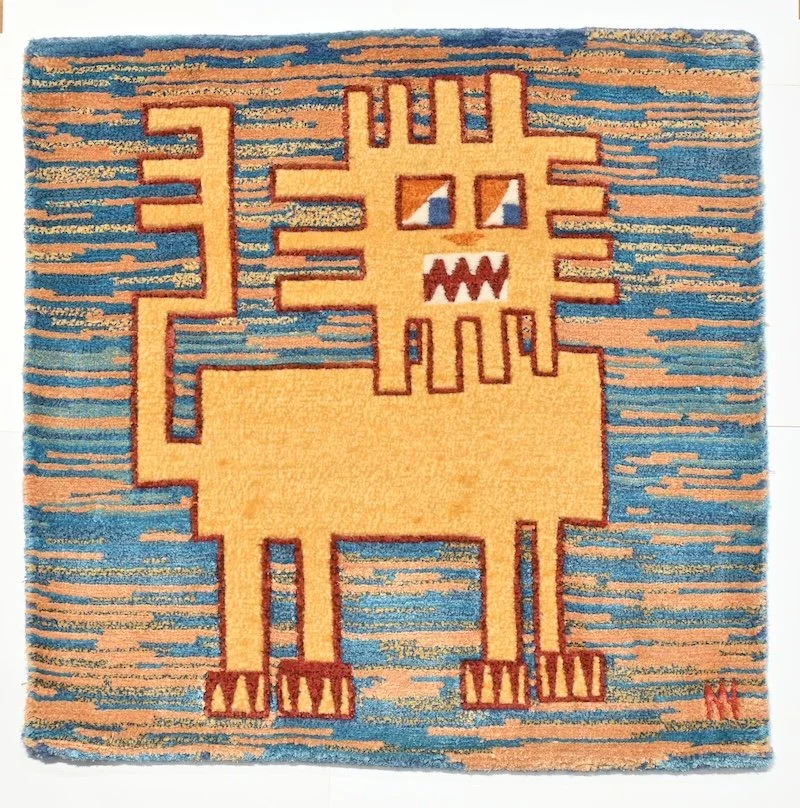
Dost knot hideth
thy arrogance?
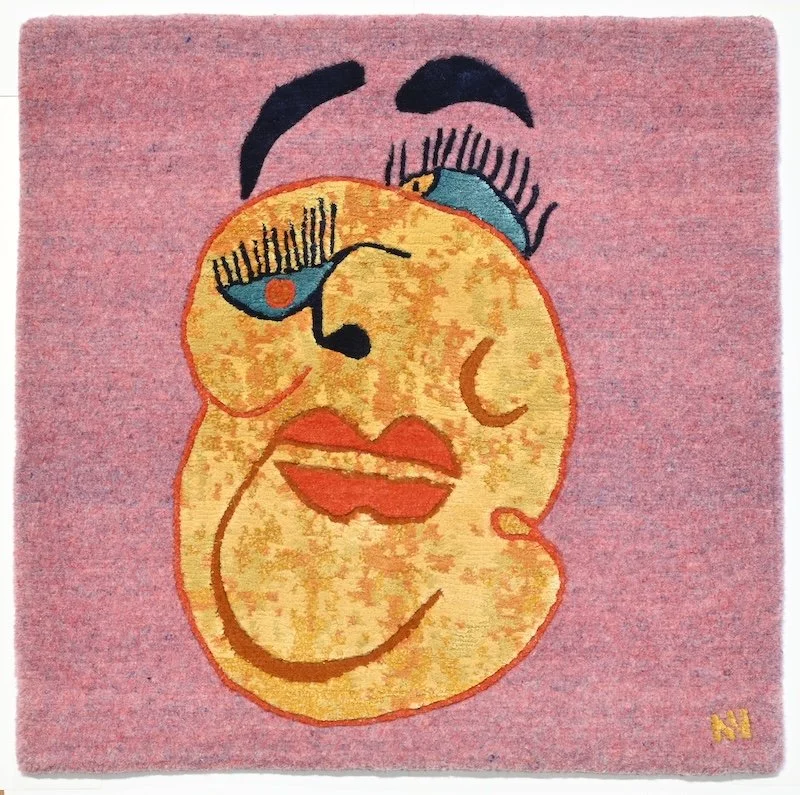
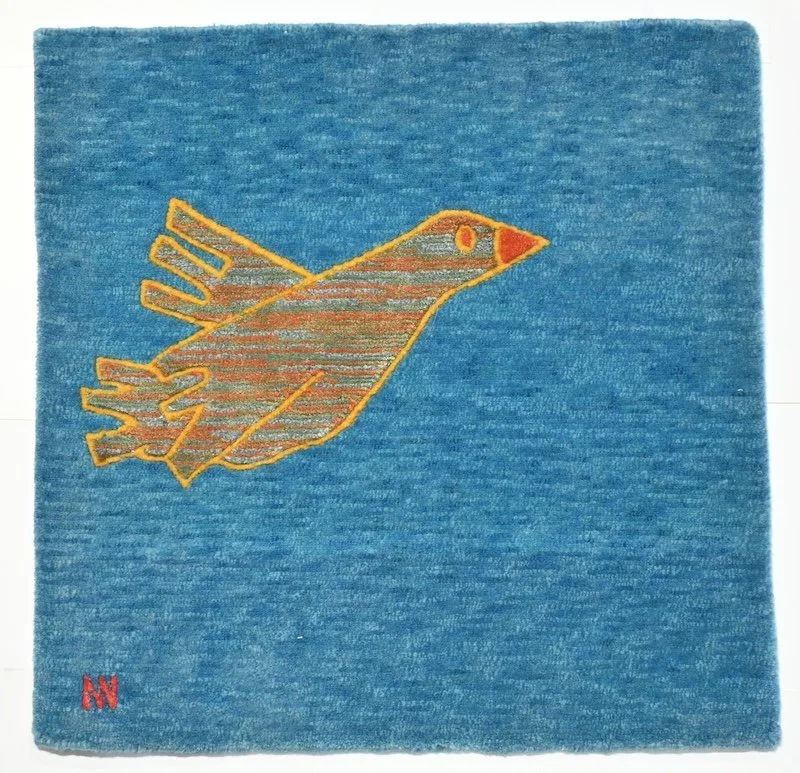
Toil with thy hands, and thou art a labourer.
Make with thy mind and hands,
and thou art a craftsman.
Create with thy hands, mind, and love, and thou art an artist.
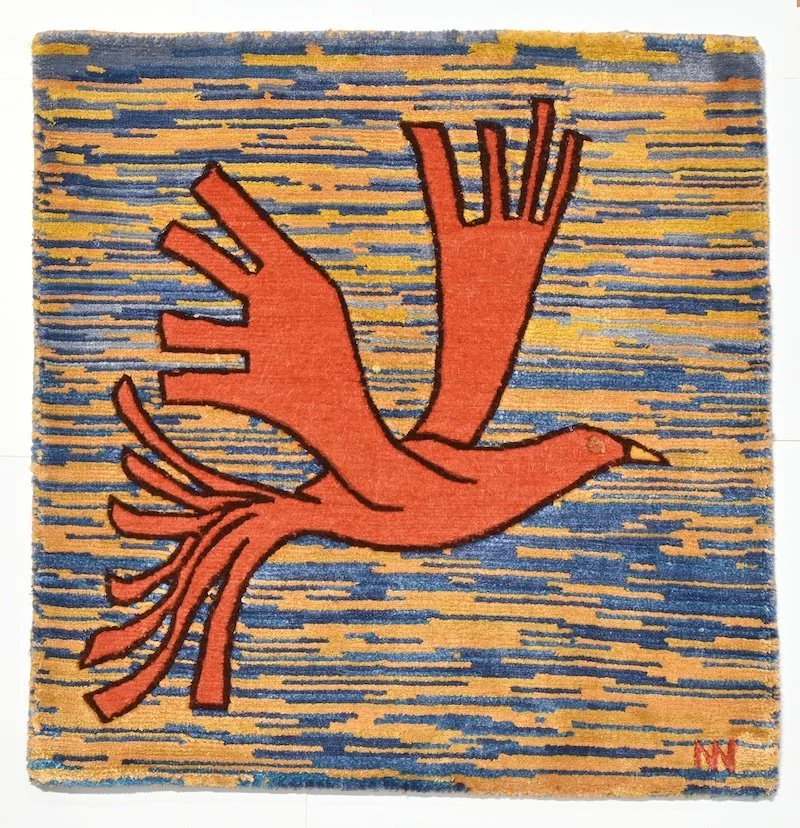
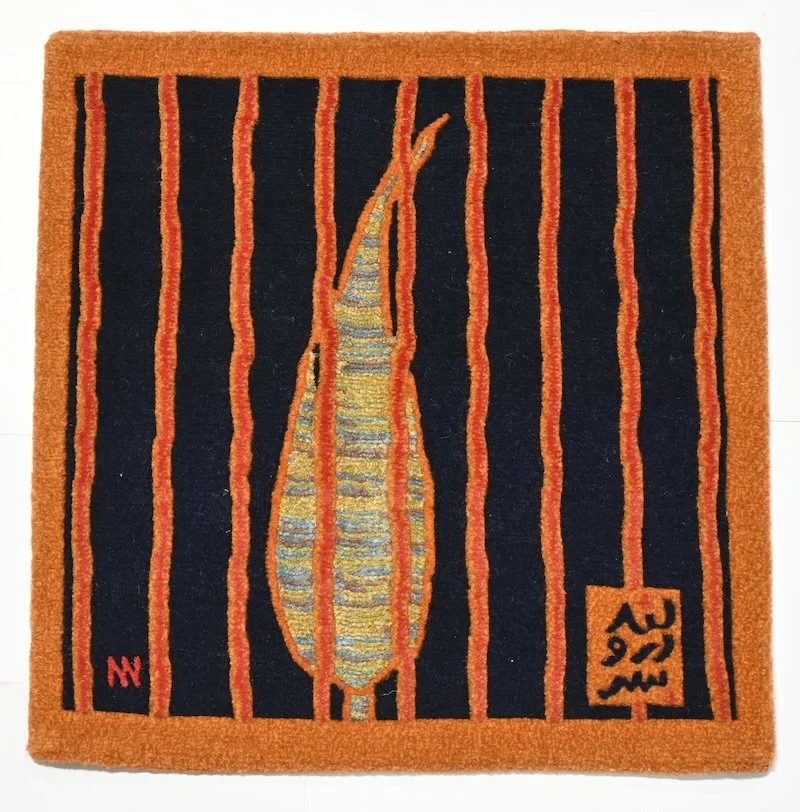
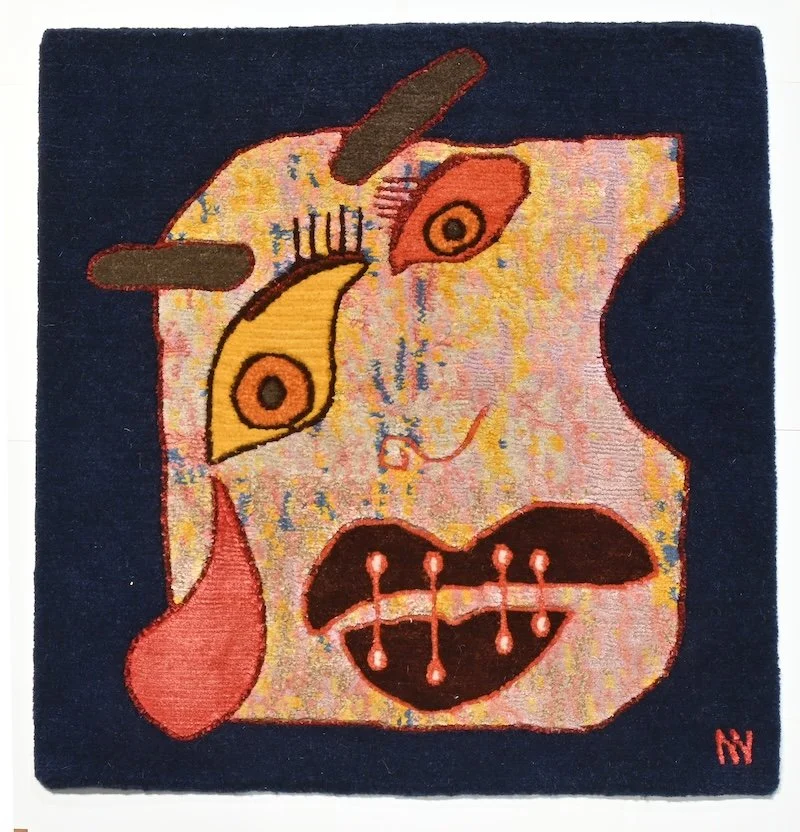
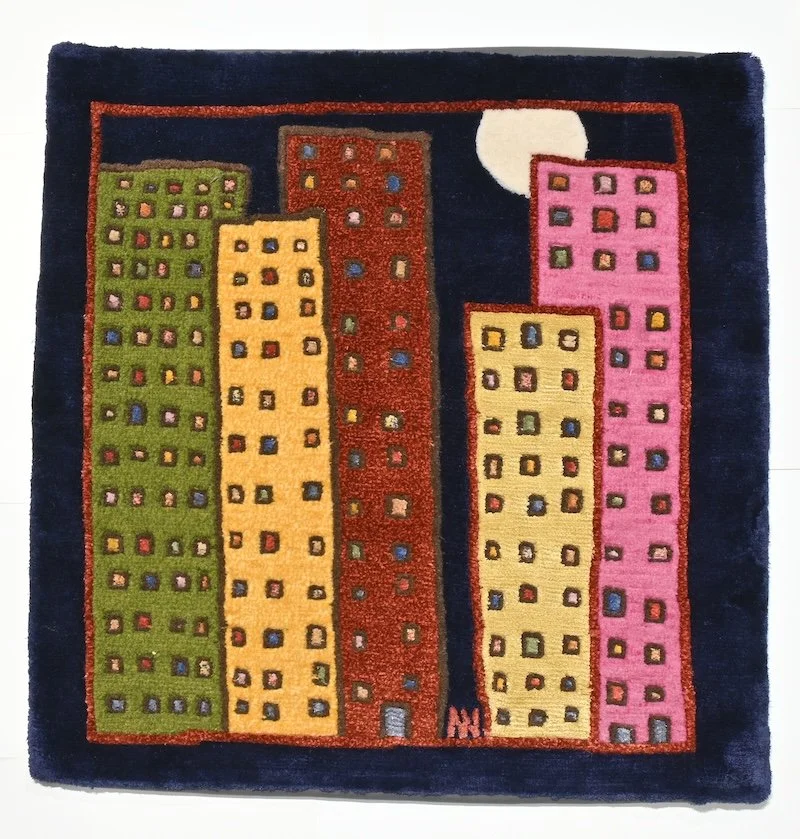
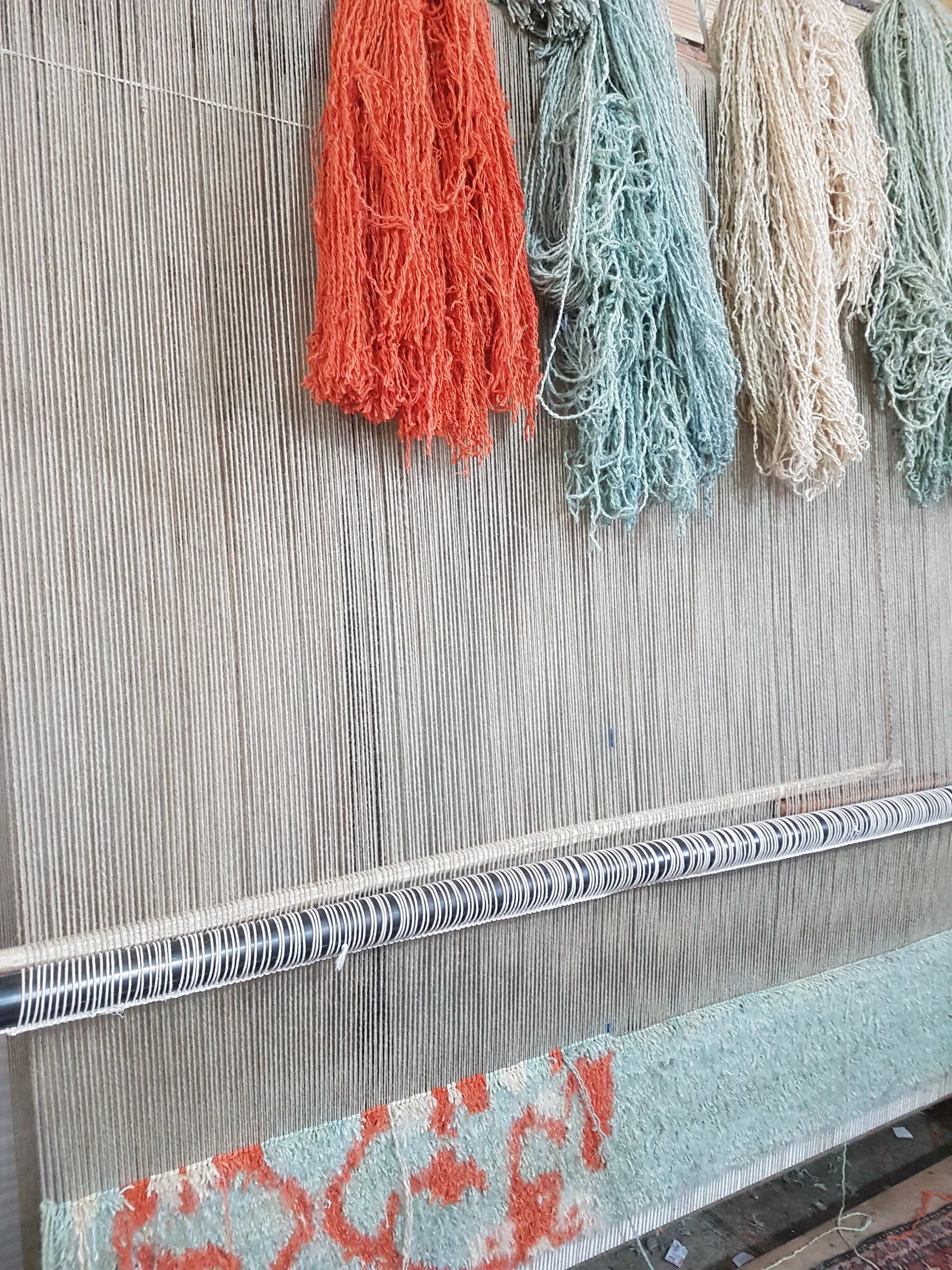
Texture as Art
Beyond the Eye
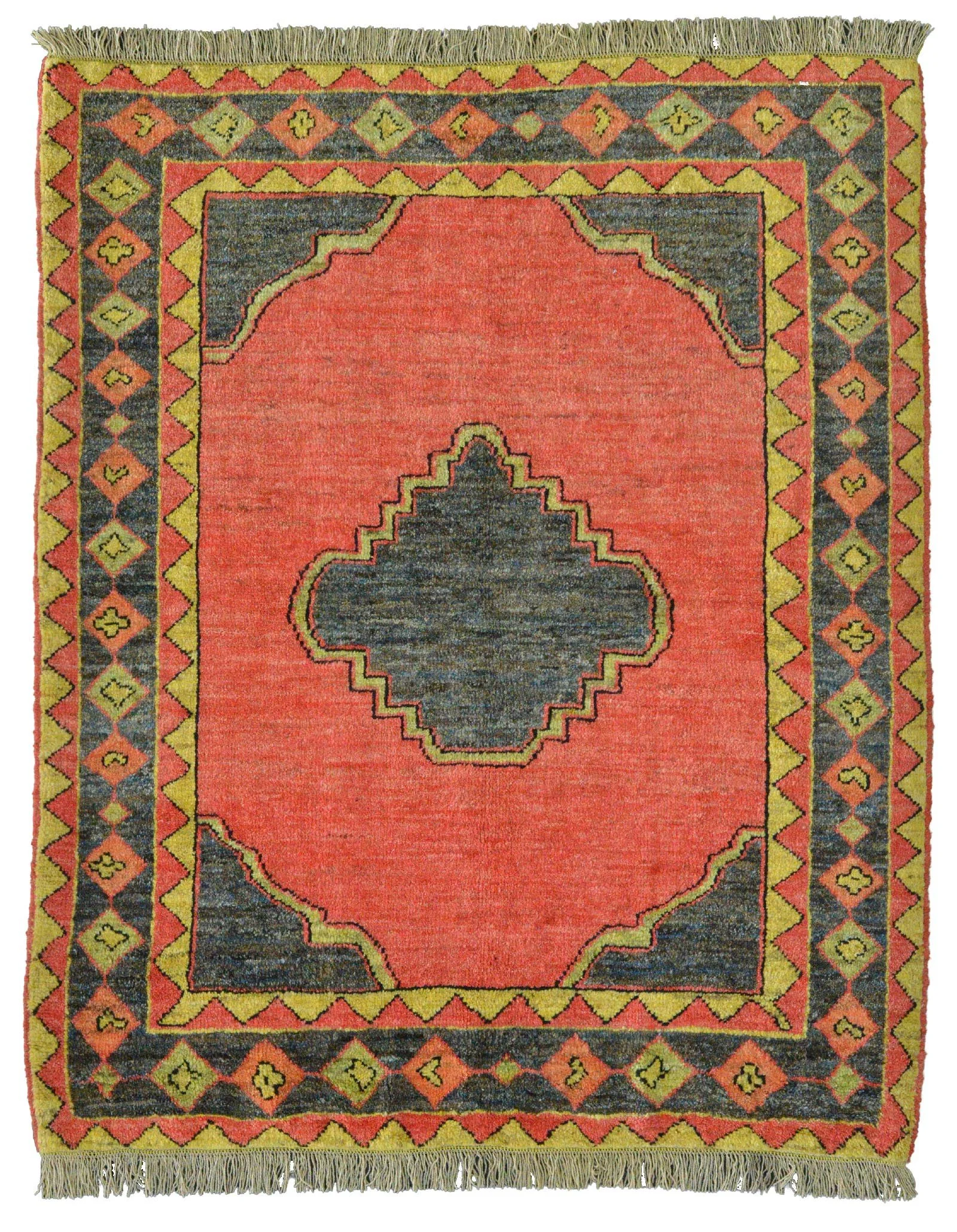
Beauty is a complex phenomenon. Sometimes it is felt with the eyes, sometimes with the soul. It can be seen, felt, and at times even touched. Creating a rug that appeals equally to sight and touch is a challenge, particularly when simplicity is the goal.
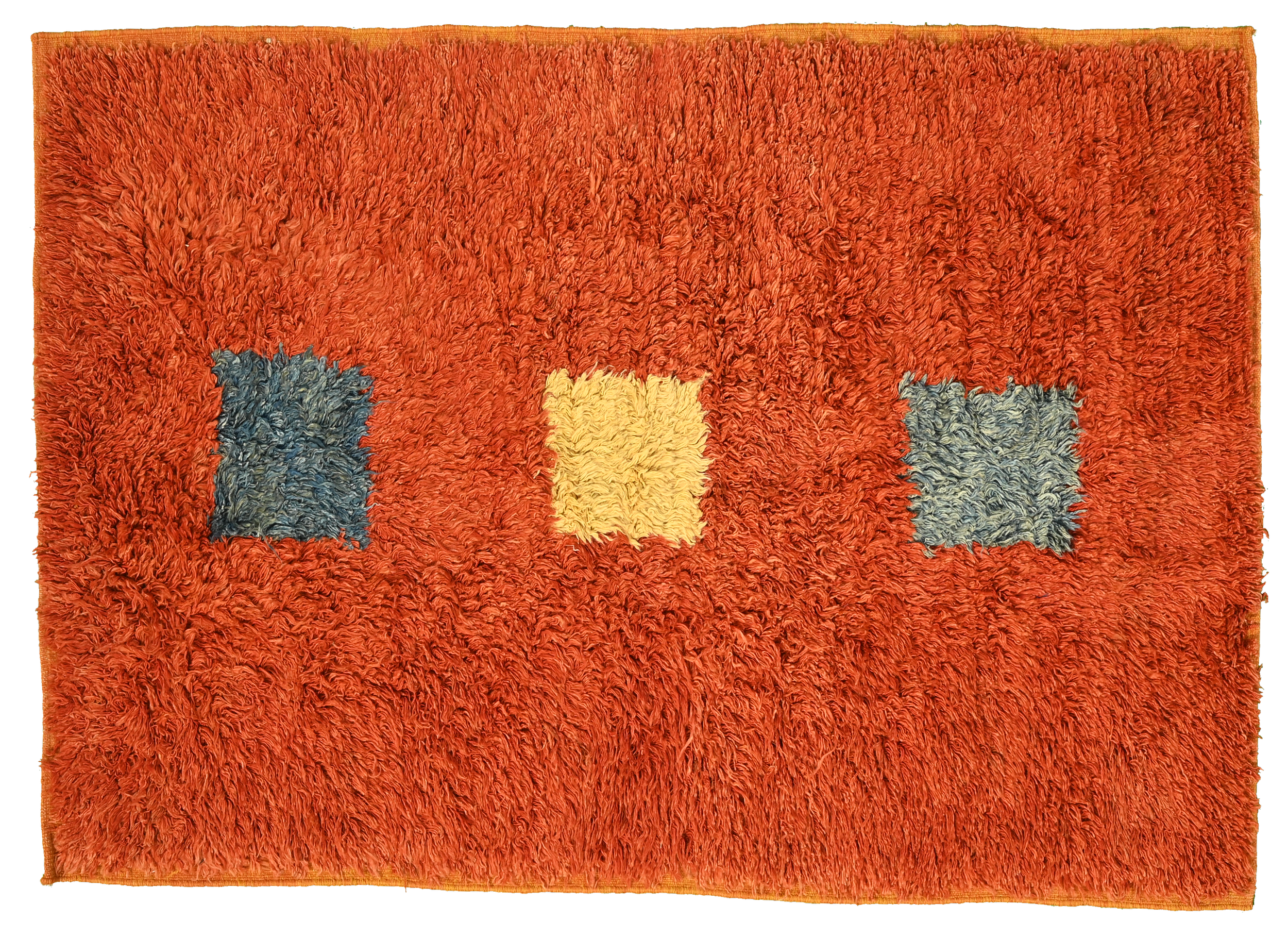
This carpet was created in our workshop in Tabriz with exactly that intention. Inspired by the directness and honesty of old tribal weavings, the design embraces the idea that less is more. A few bold geometric forms, a limited palette, and an uncluttered composition create a piece that feels both primitive and timeless.
What gives the rug its special character is not only the design but also its texture. Hand-spun wool, dyed in a highly artisanal manner, produces subtle variations of colour that bring life and movement to the surface. The coarse weave and large knots create a tactile quality that invites touch, allowing the texture itself to become part of the aesthetic experience.
Achieving such simplicity is deceptively difficult. Every element, from the choice of wool and colours to the scale of the knotting, must be carefully balanced. The result is a rug that feels relaxed, approachable, and honest. It possesses a quiet confidence, neither demanding attention nor disappearing into the background.
There is something friendly about this piece. It feels casual, welcoming, and unpretentious. A rug one can comfortably live with. Equally suited to contemporary and traditional interiors, it demonstrates how simplicity, good materials, and thoughtful craftsmanship can create beauty that is both seen and felt.
P104
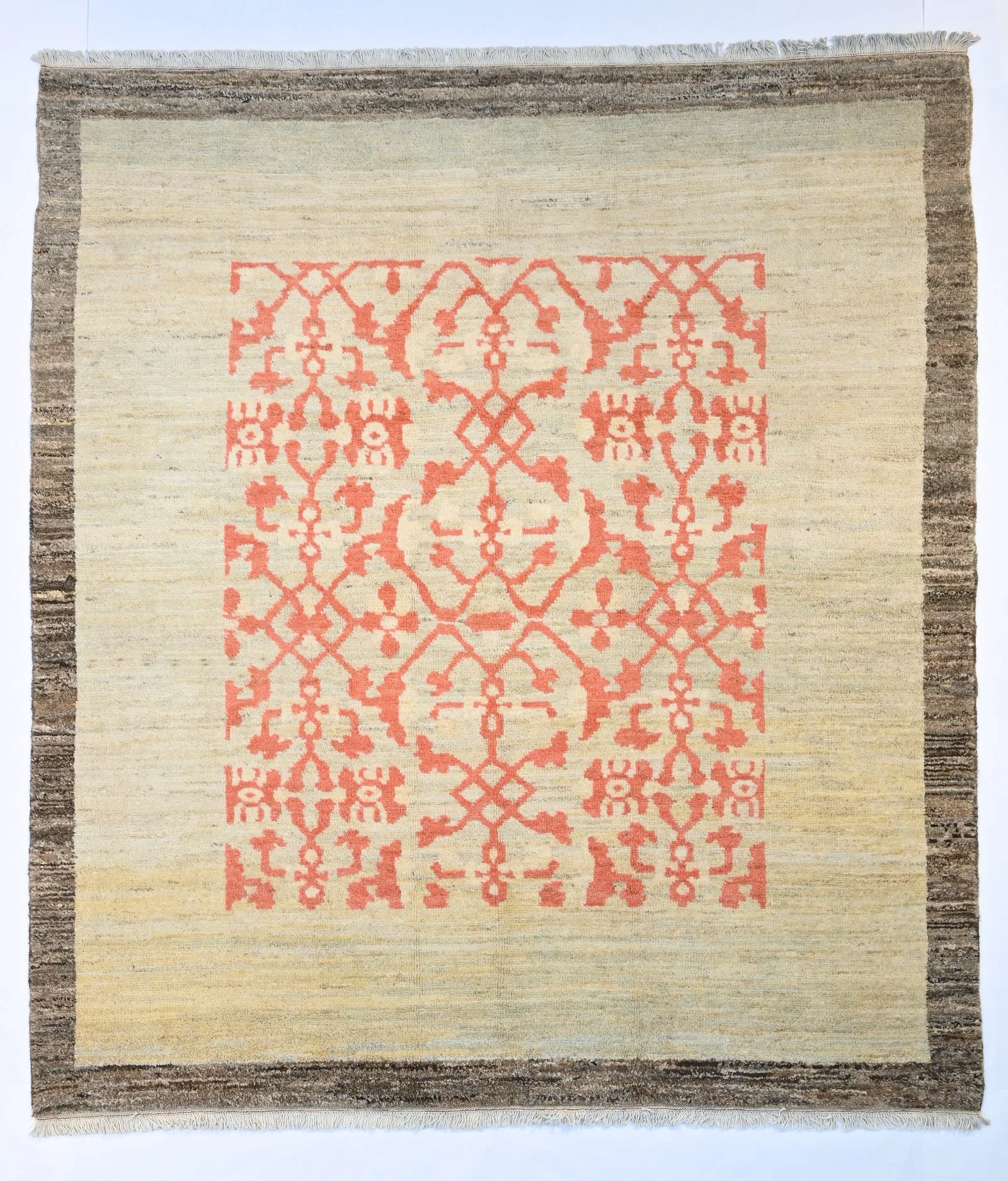
There exists a vast treasury of rug designs that have travelled through centuries, carrying with them beauty, symbolism, and the collective memory of generations. Their intricate motifs and rich compositions are among the qualities that make traditional rugs so captivating. Yet to the minimalist eye of contemporary design, such abundance can sometimes appear overwhelming.
The challenge, therefore, is not to abandon tradition but to reinterpret it.
This rug draws its inspiration from the celebrated Herati, or Fish, pattern, one of the most enduring motifs in Persian carpet weaving. Rather than reproducing the design in its traditional form, the pattern has been distilled to its essence and placed within a spacious composition. The result is a quieter and more contemporary expression that retains the character of the original while allowing it to breathe within a modern interior.
The generous open field gives prominence to the central motif, transforming what was once a repeating pattern into a focal point. The restrained palette, combined with the texture of hand-spun wool and the subtle variations created by artisanal dyeing, lends the rug a calm and inviting presence. The border, woven in naturally shaded wool, frames the composition gently without competing for attention.
Woven in Tabriz using traditional craftsmanship, the rug bridges two worlds: the depth and cultural richness of Persian design, and the simplicity sought by contemporary living spaces. It is a piece that speaks softly, yet carries within it centuries of accumulated knowledge and aesthetic refinement.
A modern rug rooted in tradition, designed for those who appreciate both heritage and simplicity.
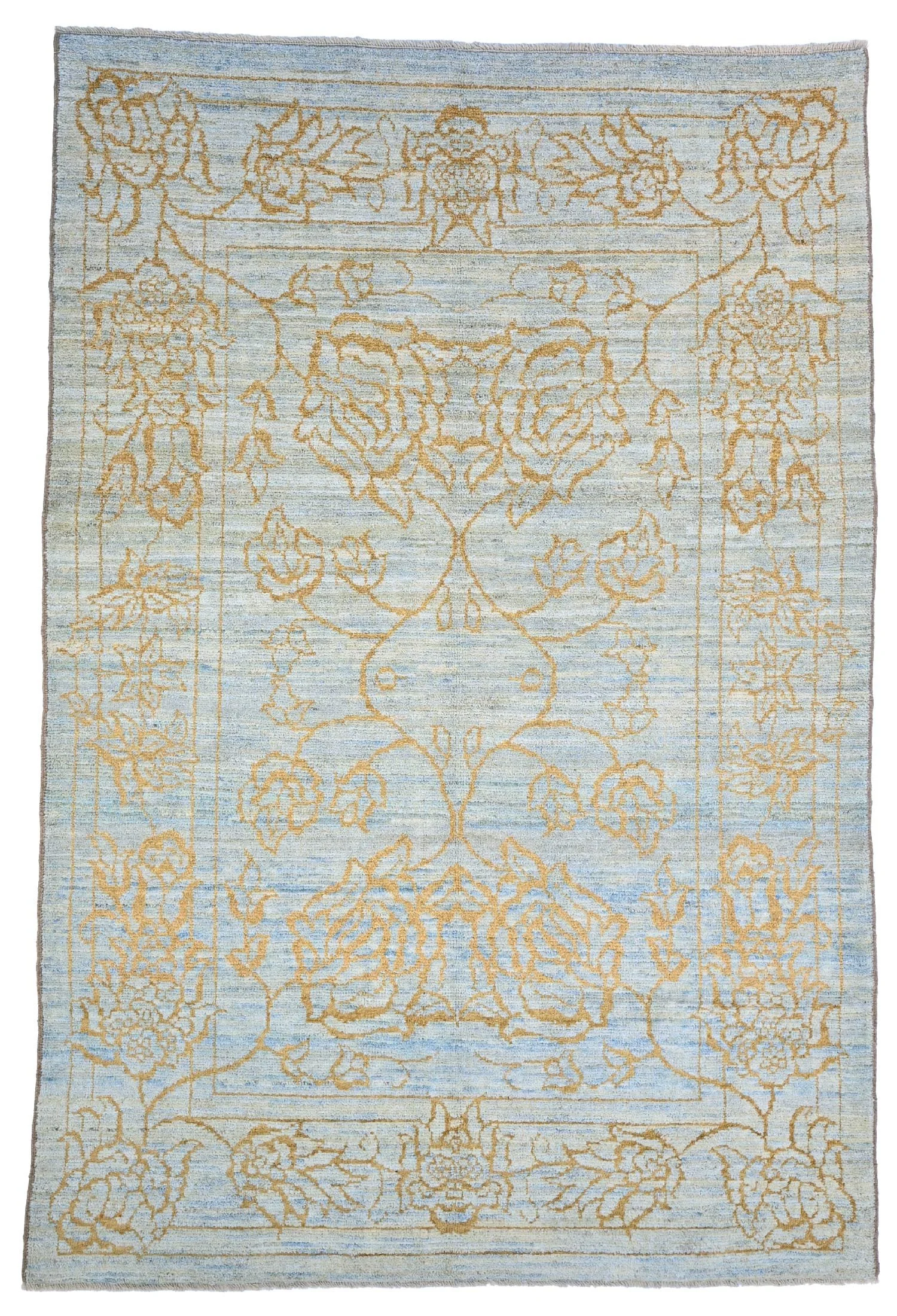
This beautiful carpet was meticulously designed and handcrafted in our workshop in Azerbaijan. Crafted using the finest quality wool and natural dyes, this sizable piece exudes a soothing array of colours, imparting a tranquil ambience to your living space. Its large-scale abstract floral patterns and pleasing hues make it a charming addition that seamlessly complements both modern and classic decor styles.
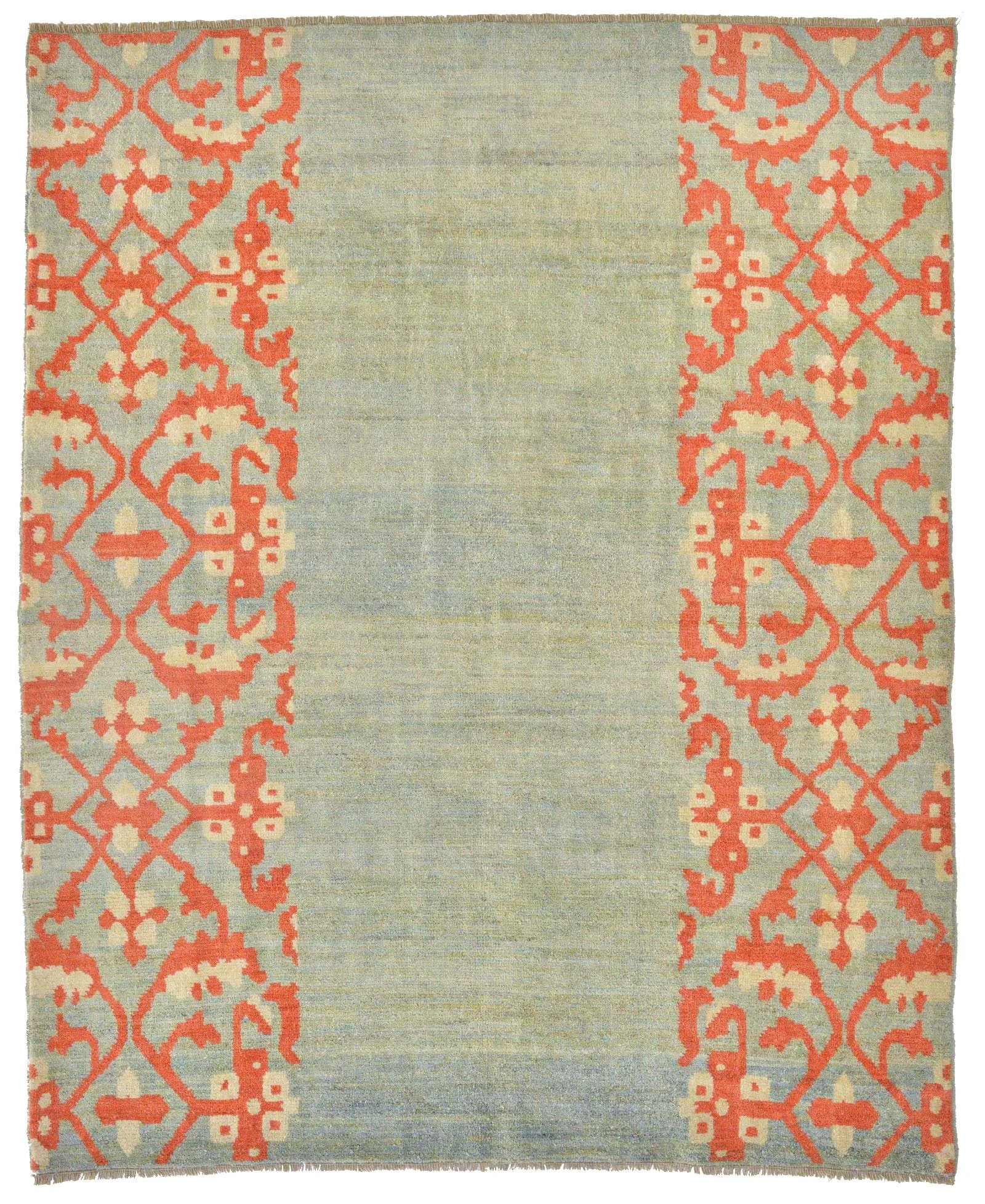
Tradition is not preserved by repetition alone. Sometimes it survives because someone dares to question it, simplify it, rearrange it, and see it from a different perspective. This rug is an exploration of that idea.
Drawing inspiration from the ancient Herati, or Fish, pattern, one of the most enduring motifs in Persian carpet weaving, the design distils a complex traditional pattern into a bold contemporary statement. Rather than spreading the motif across the entire field, it is deliberately pushed towards the edges, leaving a vast open space at the centre.
The empty space becomes as important as the pattern itself. The eye is no longer occupied by an elaborate composition. Instead, the motifs appear almost like fragments of memory, quietly framing the field while allowing the rug to breathe. The result is unconventional and intentionally eccentric, challenging traditional expectations while remaining firmly rooted in a centuries-old Persian design vocabulary.
Woven in Tabriz from hand-spun wool and naturally dyed yarns, the rug possesses the subtle colour variations and rich texture that only artisanal materials can provide. The soft palette, spacious composition, and tactile surface create a sense of calm and balance, making the piece particularly suited to contemporary interiors.
This rug represents an attempt to look at a familiar tradition from a new angle. By reducing, isolating, and repositioning the motif, it reveals possibilities hidden within a pattern that has been woven for centuries. It is a piece that embraces simplicity while retaining the depth and cultural memory of its origins.
A contemporary Persian rug for those who appreciate tradition, yet are equally drawn to innovation and individuality.

Dying the wool is done in the slow traditional way.
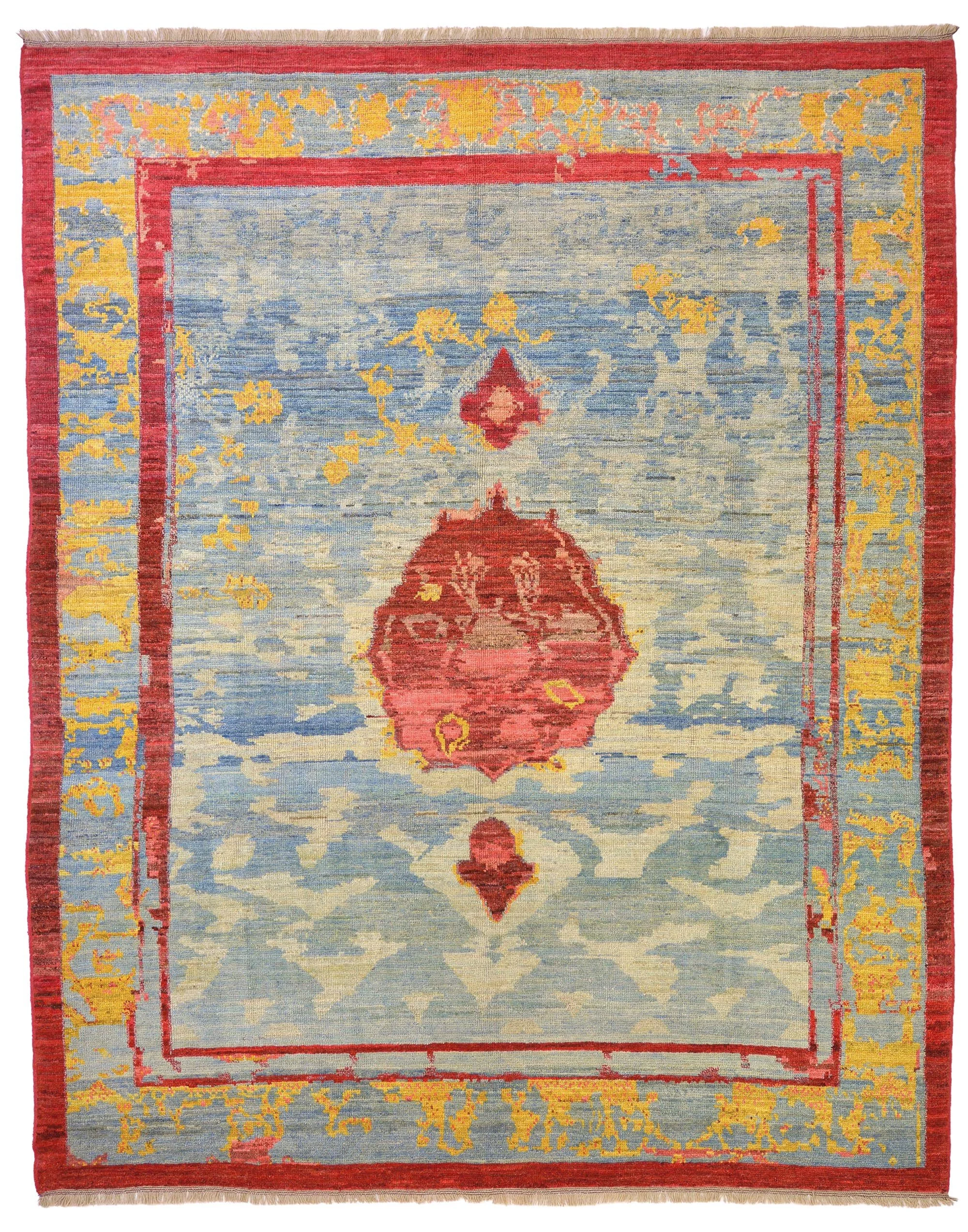
One of the most fascinating ways of engaging with tradition is not to abandon it, but to reinterpret it. This rug begins with the familiar language of classical Persian carpets, a border, a medallion, and a balanced composition, yet these elements have been reduced, softened, and abstracted into something entirely contemporary.
The design preserves the memory of a traditional carpet while stripping it to its essentials. Forms dissolve into colour, outlines become suggestions, and ornament gives way to atmosphere. The result is neither a reproduction nor a rejection of tradition, but a reinterpretation, a familiar melody played in a different key.
Part of the character of this piece comes from the materials themselves. Hand-spun wool, naturally dyed in small batches, produces subtle variations in tone that enrich the surface and create remarkable depth. Shades of blue, gold, orange, and crimson interact with one another, allowing the rug to shift in appearance as light changes throughout the day. The coarse weave further enhances this effect, giving the surface a tactile quality that invites both sight and touch.
Like others in this collection, the rug was created through a slow and highly artisanal process. The irregularities and tonal variations are not imperfections but evidence of the human hand and the natural materials from which the piece is made. They give the carpet a personality that cannot be replicated by industrial production.
The result is a rug that exists somewhere between traditional carpet and contemporary artwork. Its colours are uplifting, its composition calm yet intriguing, and its texture rich and inviting. It is a piece capable of transforming an interior space while quietly carrying within it echoes of centuries of Persian weaving tradition.
A modern creation rooted in ancient craftsmanship, unique, expressive, and impossible to reproduce exactly.
100-character SEO Description
Contemporary Tabriz rug with abstracted medallion design, hand-spun wool, and natural dyes.
400-character SEO Description

A Rug of Your Own?
Contact Us for customisation