
Tribal and village rugs
Tribal Rugs, The First Home
Rugs are not merely objects within a nomadic life; they are at its very centre.
Everything about tribal life revolves around movement, the constant search for fresh grazing grounds for sheep, goats, horses, and other animals. Life unfolds in flux, and with movement comes necessity, versatility, portability, and ease of use.
The home itself reflects this condition.
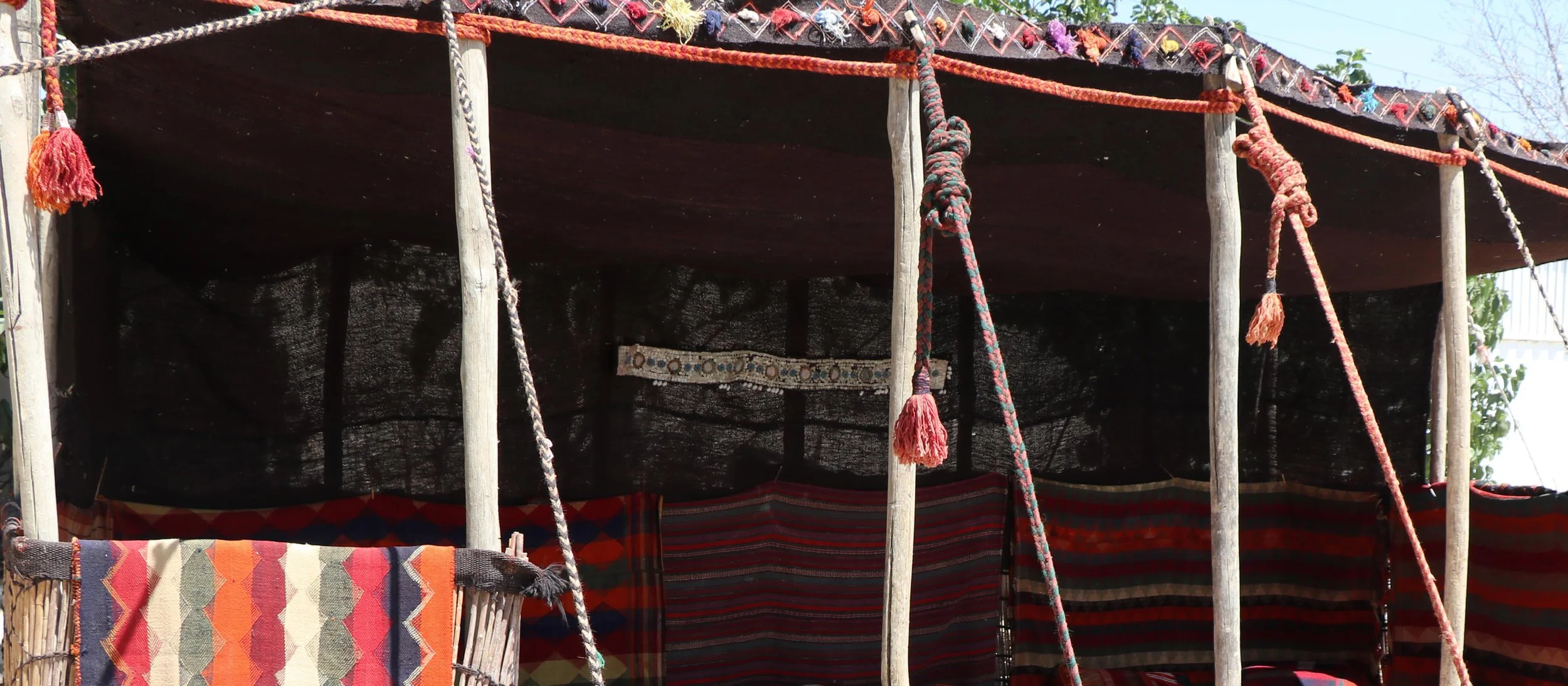
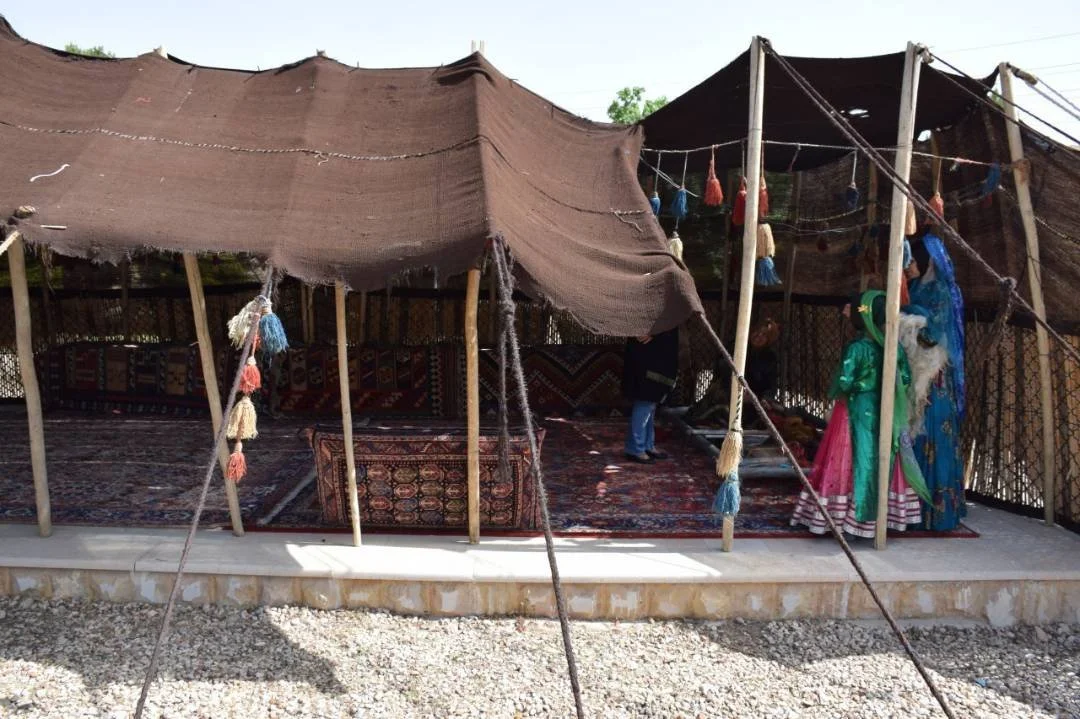
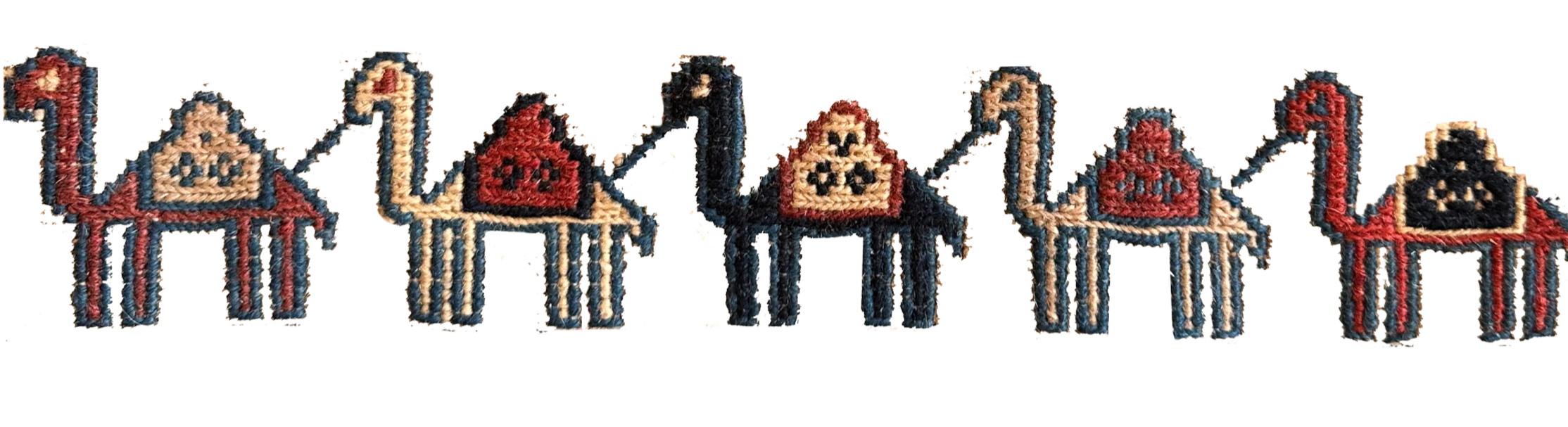
Tents are folded, loaded onto camels or mules, and carried from one landscape to the next. Along with them travel the essentials, pots, bedding, and simple belongings, among which perhaps the most vital is the rug.
Once the tent is raised, the rug completes the space. It is laid on the ground to transform the earth into a place of living. It is where one sits, eats, sleeps, and gathers. In many ways, the rug becomes the focal point of the home, not as an object of decoration, but as a necessity of existence.
A nomadic home can be reduced to a single truth, a rug beneath, and life unfolds upon it.

One of the most fascinating aspects of tribal rugs is how cultures blend over time. Through migrations, intermarriages, and settlements, different nomadic traditions meet, influence one another, and give rise to entirely new expressions.
A remarkable example of this is the story of the Armenian communities who were moved to Central Iran in the early 17th century, during the conflicts between the Persian and Ottoman Empires. Over time, many of them settled among the Bakhtiari and Lori tribes in areas around Isfahan. Living side by side for generations, their artistic traditions gradually merged, each influencing the other, resulting in a unique group of weavings often referred to as Armenian Bakhtiari, or locally as Armeni-Baf.
This rug is a beautiful reflection of that cultural dialogue. The presence of the cross in the border and the distinctive dress of the human figures point clearly to Armenian heritage, while the structure and spirit of the weaving remain deeply rooted in Bakhtiari and Lori traditions. Woven in the late 19th century, it seamlessly carries both identities.
In character, it holds all the qualities of a true nomadic piece, hand-spun wool, natural dyes, and a wool foundation, each element contributing to its authenticity. It belongs to the group often referred to as Lori Gabbeh or Bakhtiari Gabbeh, yet stands apart for its rare layering of cultural influences.
This is a very rare specimen, highly collectable, and in excellent condition. More than anything, it is a quiet testament to how cultures meet, blend, and leave their mark through the hands of a weaver.

Nomadic Nazar Rug
This particular rug is a wonderful example of nomadic weaving at its most spontaneous. There is no fixed plan or pre-drawn naqsha, the weaver works from memory, allowing the design to emerge naturally. What appears reflects instinct, personal taste, and the quiet language of the subconscious.
The beauty of the piece lies in its minimalism. The entire composition revolves around a single, simple element, the lozenge form, which often resembles an eye. Across much of Mesopotamia and Iran, this motif is associated with protection against the evil eye, what we commonly refer to as the Nazar, a very common amulet deeply rooted in both Mesopotamian and Iranian cultures.
Woven roughly a hundred years ago, the rug carries a striking sense of modernity. Its simplicity, balance, and quiet confidence make it feel almost contemporary, despite its age.
Pieces like this are genuine expressions of nomadic art. They carry within them a different time, a different rhythm of life, one that is closely tied to nature and necessity. To live with such a rug is, in a way, to remain connected to that simpler world, where function, memory, and beauty were all woven together.
P103

The Kurdi tribes of Khorassan have a rich history as descendants of the Medes, who inhabited the valleys of Mount Zagros in the eastern region of Mesopotamia (western Iran) since the 11th century BC.
During the 16th and 17th centuries, a large group of Kurds from Kurdistan, western Iran, were relocated to this area under the orders of Safavid kings to protect Iran against the steppes' inhabitants beyond eastern borders.
Centuries of coexistence with neighbouring Baluch and Torkuman nomads and intermarriage between these groups have led to the development of a distinct ethnic identity among the Kurdi tribes of Khorassan, setting them apart from the Kurds of Kurdistan.
The unique designs and weaving techniques employed by the weavers of Kudi rugs in this region are remarkable consequences of this cultural and ethnic transformation.
This rug is a gorgeous example of their weaving.
Origins in Movement
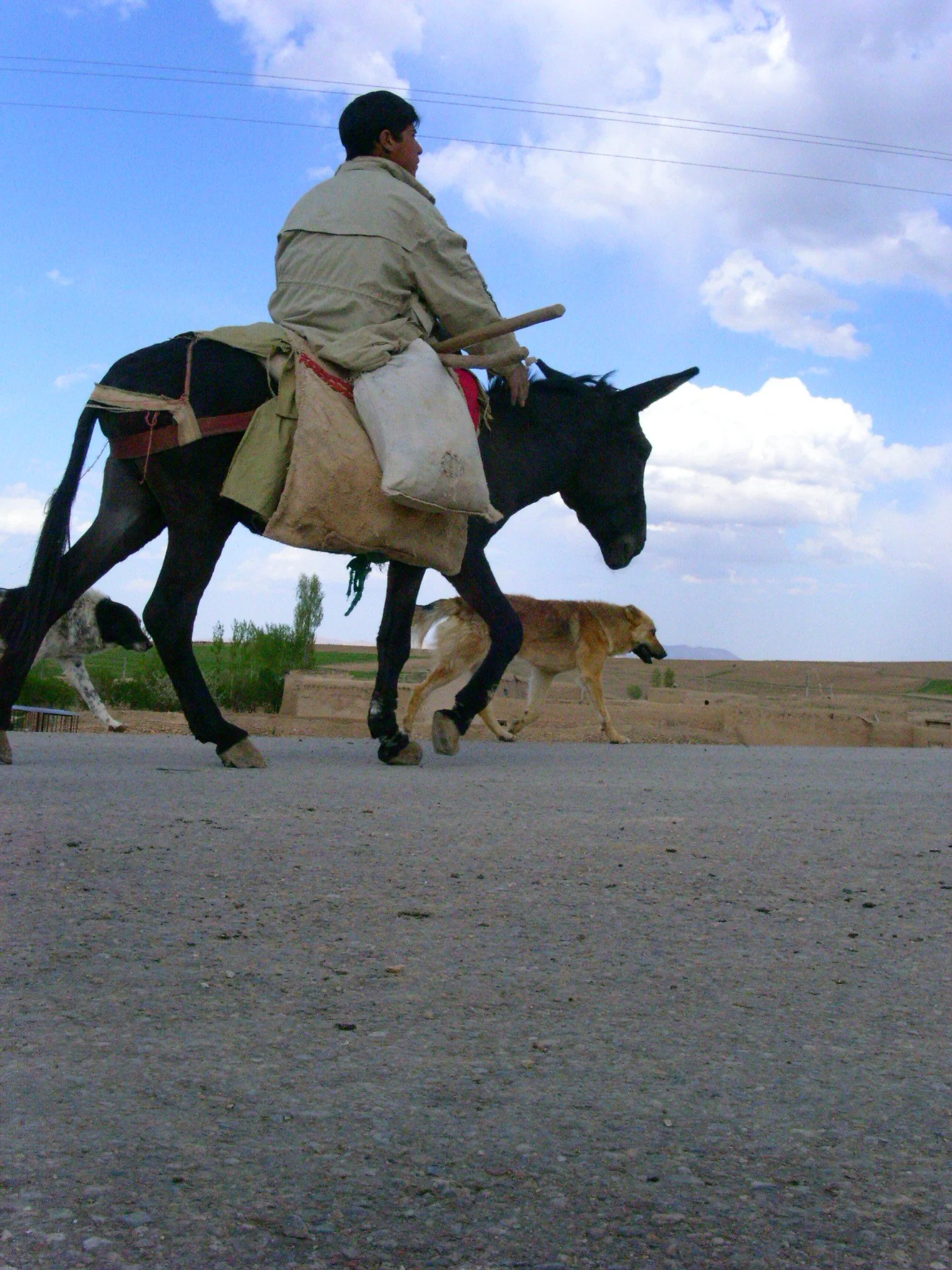
It is not difficult to imagine that the earliest woven rugs emerged from this very need.
Before weaving, there were animal skins laid on the ground of caves and tents. As skills developed, these evolved into woven forms, more versatile, more adaptable, and more expressive.
The Iranian plateau, with its long history of nomadic life, became one of the great landscapes where this craft matured.
For centuries, people moved across its vast terrains. Even Persian rulers maintained seasonal courts, shifting between regions according to the climate. While not nomads in the tribal sense, this tradition of movement reflects a deeper cultural familiarity with mobility and adaptation.
Within this context, weaving did not arise as an art separate from life, but as a direct response to it.
The Hand That Remembers
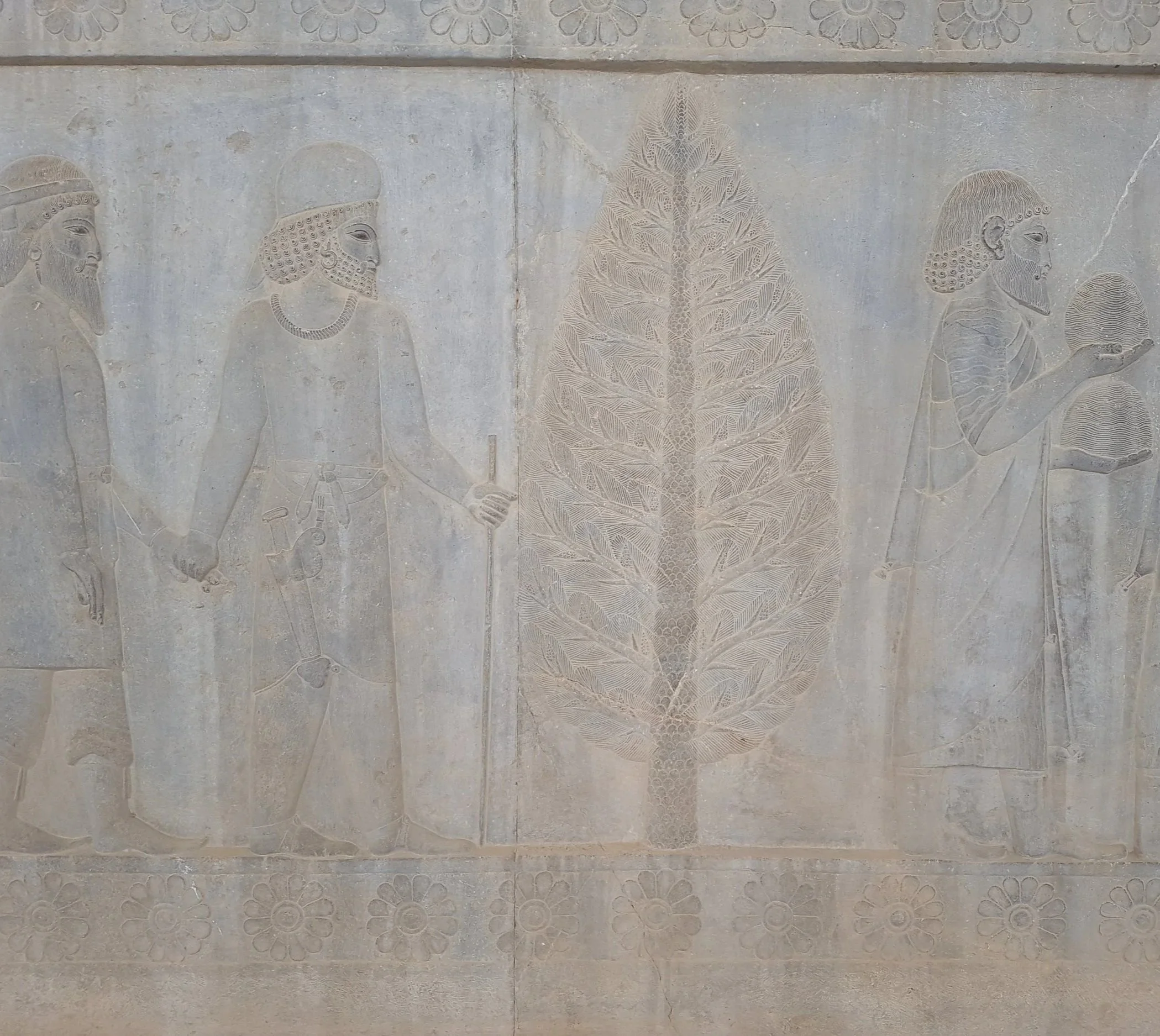
A tribal rug is rarely pre-designed.
There is no strict naqsha placed before the weaver. The design exists within memory, shaped by generations, carried not on paper but within the mind and the hand.
Weaving, in this sense, becomes something close to meditation.
Once immersed in the process, the rhythm of knotting takes over. The hands begin to move almost independently, guided by memory, instinct, and a quiet familiarity with form. Colours shift, motifs emerge, patterns evolve.
What appears on the loom is not simply planned; it is revealed.
From memory, from surroundings, from the lived experience of the weaver. From what has been inherited, what is observed in nature, and what lies deeper within.

Village rugs, such as the Borujerd Kurdish rug shown here, are remarkable for the wealth of symbols and motifs they exhibit. This becomes even more intriguing when one learns that young girls who created these carpets did not follow any pre-prepared pattern; instead, they wove them spontaneously from memory. Some motifs are inspired by what they observed in other weavings, while others emerge from the weavers' subconscious as they work on the rugs. The weaving process generally has a meditative effect on the weavers. Therefore, such creations are extraordinary expressions of archetypes and ancient symbols, as exemplified by the cypress tree in this rug.
Technique: hand-knotted | Material: wool on cotton base
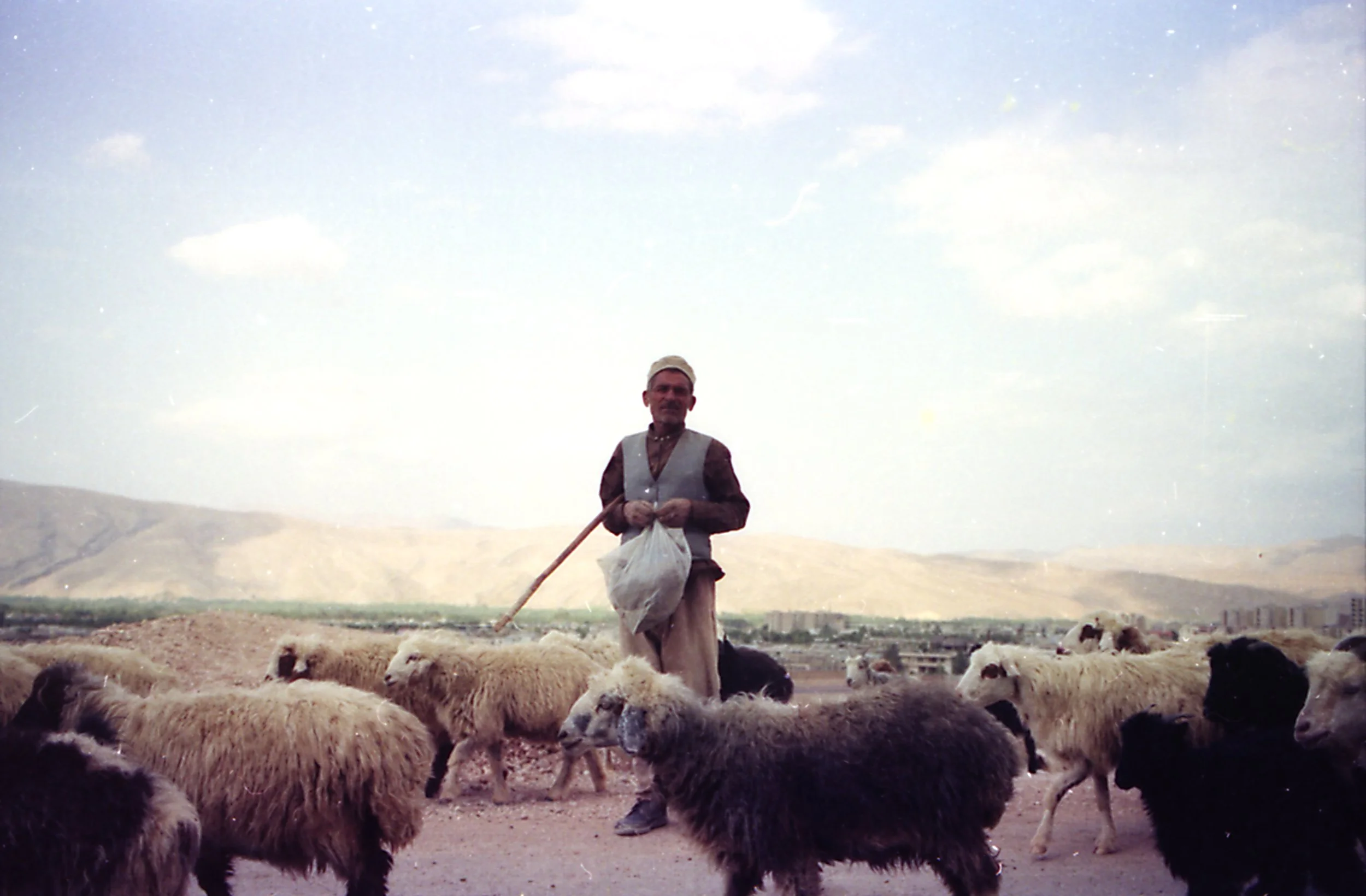

The cypress motif is one of the most ancient and enduring symbols found in tribal rugs. It is a motif that has travelled through generations of weavers, carried not through written instruction, but through memory and tradition. The Serv appears as early as the reliefs of Persepolis, dating back to around 500 BC, and continues through Persian literature such as the Shahnameh of Ferdowsi, as well as earlier Zoroastrian texts.
In Persian literature dating back over a thousand years, particularly in the Shahnameh of Ferdowsi, there is a reference to Zoroaster bringing two cypress trees from heaven. One of these was planted in the city of Kashmar in northeast Iran, where he began his invitation to Zoroastrian belief. According to the story, the tree grew into a magnificent symbol, later associated with a fire temple. Centuries afterwards, during the Abbasid period, it is said that the caliph ordered the tree to be cut and brought to Baghdad.
Stories like these remain in cultural memory and gradually find their way into visual expression. Motifs such as the cypress become more than decorative elements; they become carriers of memory, belief, and identity.
This rug is a fine example of that tradition. Woven by Lori Bakhtiari, nomads of Central Iran, it presents a beautifully stylised cypress tree, surrounded by complementary ornamental elements. The composition is balanced and confident, enhanced by a rich and harmonious colour palette.
Dating to the early 20th century, this piece combines excellent quality wool, natural dyes, and a refined sense of design. It remains in very good condition and stands as a strong example of how ancient symbolism continues to live through tribal weaving traditions.
P103
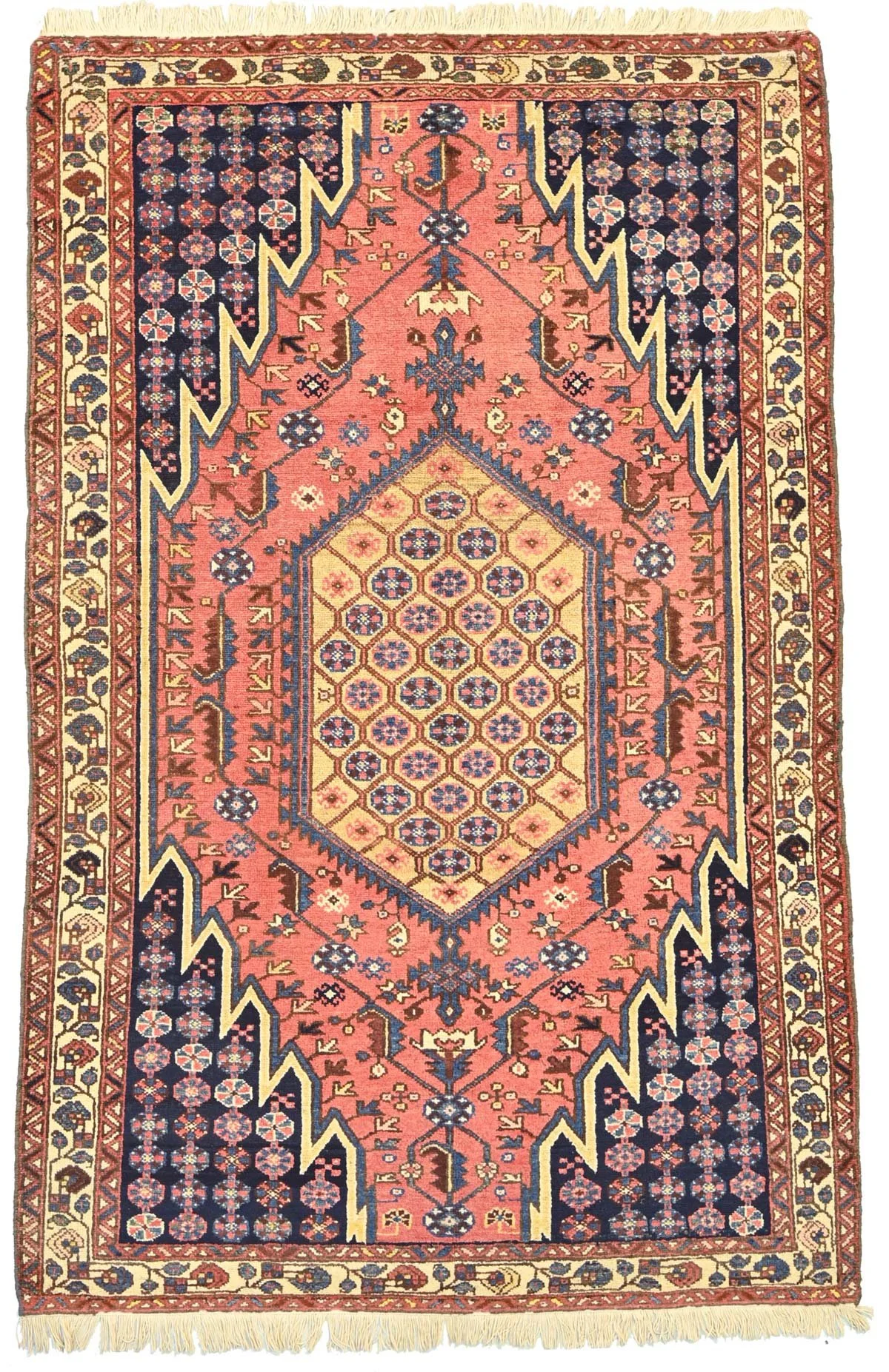
The lightning bolt is the first image that comes to mind when looking at this remarkable Shahsavan rug from Mazlaghan village, and indeed, this is the name collectors commonly use for such pieces. The true origin of the pattern remains a mystery, yet one cannot rule out lightning itself as the initial inspiration behind the earliest form of this striking motif, created at an unknown point in the past.
This rug is a fascinating example of the group, enriched with a variety of other stylised symbols, including cypress trees, wheels of time and abstracted forms that reflect a long lineage of inherited imagery. Like many Shahsavan weavings, it was created spontaneously and without a naqsha, the motifs emerging from memory and from the weaver’s subconscious, shaped by traditions passed down through generations.
The richness of tribal rugs lies not only in their visual presence but in what they carry beneath the surface.
Motifs that have travelled across generations appear again and again, a form repeated, a structure echoed, a rhythm maintained.
Yet their meanings are not always consciously articulated.
The weaver may not explain them, yet continues to weave them. The knowledge is embedded, passed through doing rather than describing.
This is why these rugs often feel layered.
They carry history without narration, culture without declaration, and a depth that cannot always be translated into words.
Symbols Without Explanation

This rug comes from the village of Saisan near Tabriz, a place that no longer exists today, and it stands as a fascinating example of how ancient and mysterious symbols continue to live through weaving traditions.
The most striking element in this piece is a figure known as “Ali Belinda”, a Turkish term describing a figure standing with hands on the waist. This form is widely understood as a representation of a mother goddess, a motif with roots going back millennia in Mesopotamian and Iranian cultures, particularly in northwest Iran.
What makes this motif even more intriguing is that its meaning has, in many cases, been lost over time. The weavers continue to reproduce it, often without knowing its origin or symbolic depth. In societies that are no longer matriarchal, yet still hold a deep reverence for motherhood, this figure survives quietly, woven into carpets as a memory carried across generations.
The rug itself is remarkable for its colour palette, composed entirely of natural dyes that have matured beautifully over time. Woven over a hundred years ago, it displays a spontaneous design approach, where the weaver worked without a fixed plan, drawing instead from inherited patterns and subconscious expression.
The result is a unique and deeply personal composition, rich in character and meaning. Pieces like this are not only visually captivating but also culturally significant, making them highly desirable for collectors who appreciate authenticity, symbolism, and history.
This is a rare and charming example of tribal artistry, a piece that carries within it layers of time, memory, and quiet mystery.

This remarkable carpet is woven by Kordi tribes who were relocated from western Iran to the northeastern province of Khorasan in the early 17th century. Over time, these communities carried their traditions with them while gradually absorbing influences from the cultures of northeast and eastern Iran, resulting in a distinctive and layered weaving style.
The design of this rug is rich with ancient and mysterious symbols. Among them are variations of an S-shaped motif, the eight-pointed star with roots going back thousands of years to ancient Mesopotamian symbolism associated with figures such as the goddess Ishtar, stylised double-headed birds, fish motifs, and a range of other nomadic elements whose meanings have largely been lost over time.
These motifs are not placed through strict planning, but emerge from memory and inherited knowledge. The weaver draws unconsciously from a deep cultural reservoir, repeating forms that have been passed down through generations, often without a clear understanding of their original meaning.
The result is a composition that feels both ancient and alive, carrying within it fragments of distant histories and forgotten beliefs. Such rugs invite contemplation, offering layers of meaning that reveal themselves slowly over time.
Pieces like this are not only visually compelling but intellectually engaging, holding within them echoes of past civilisations and the enduring continuity of human expression through weaving.
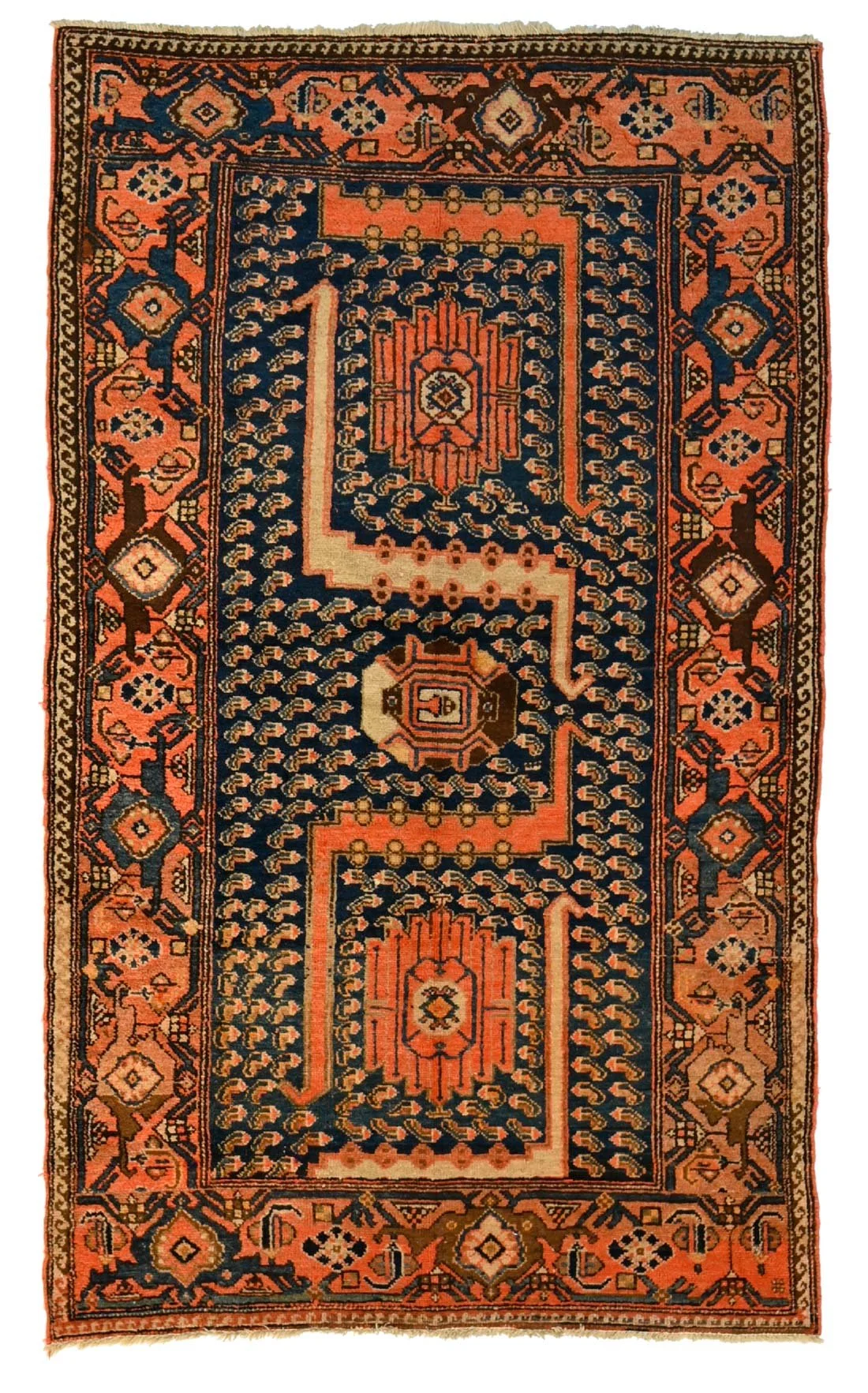
This antique Malayer rug represents a weaving tradition that has almost vanished. Such pieces were not produced from formal naqshas but were created spontaneously at the loom, emerging from the weaver’s subconscious and from a deep reservoir of inherited visual memory. The designs reflect a synthesis of ancestral teachings and personal imagination, giving rise to archetypal symbols and remarkably intricate detail.
In this rug, the central floral motif can be interpreted as a stylised lion’s face, a powerful image rooted in Persian symbolism and often associated with strength, protection, and authority. The surrounding field and borders unfold organically, reinforcing the sense of movement and intuitive balance that defines early Malayer weaving.
Woven in wool on a cotton foundation and preserved in mint condition, this rug is a rare and authentic example of a deeply expressive village tradition, one that speaks quietly yet profoundly to collectors and lovers of genuine tribal art.
Material: Wool pile on cotton foundation
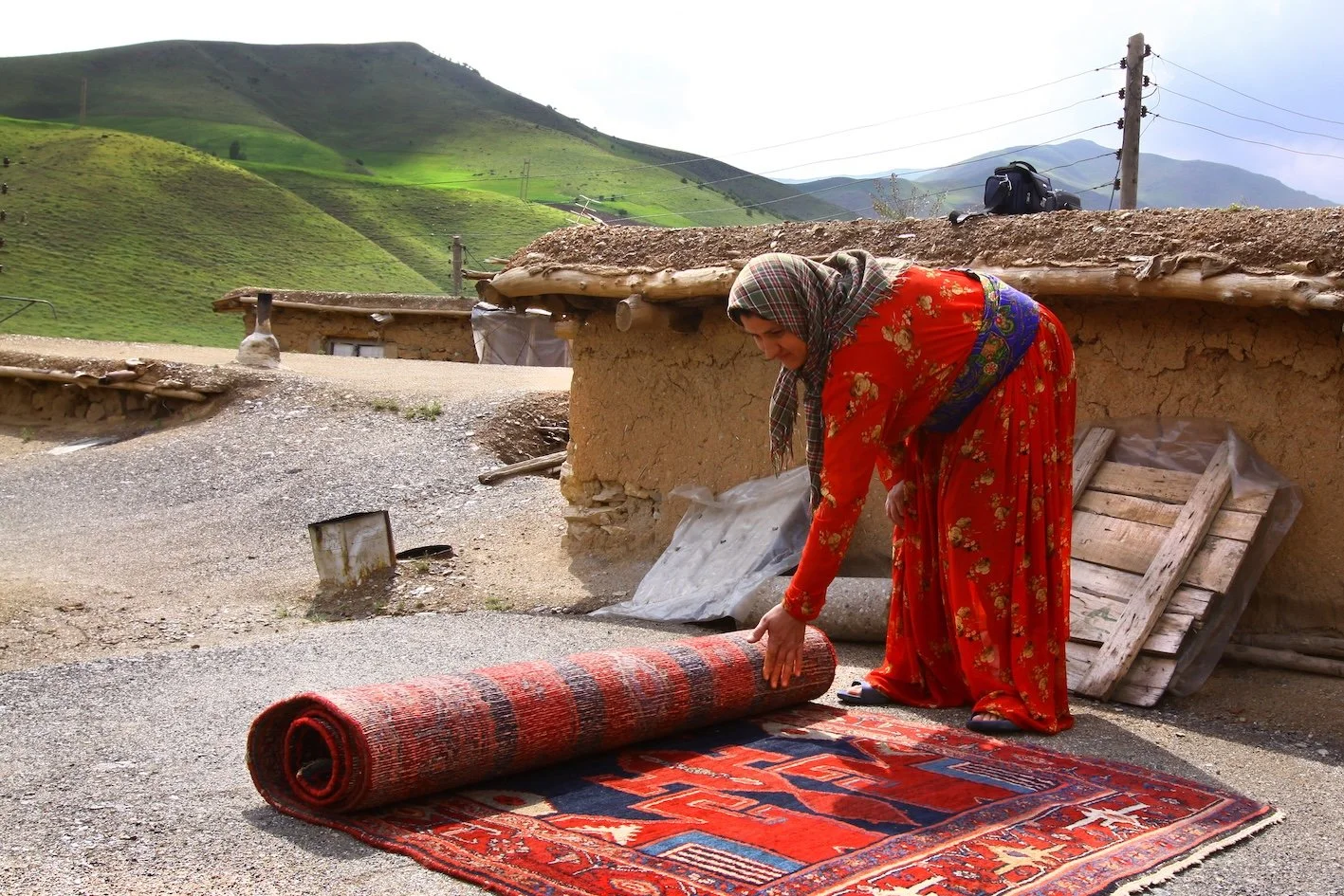
Expression in Isolation
There are moments when one encounters a tribal rug woven in complete isolation, far from markets, far from commissions, and far from expectation.
In such pieces, something remarkable appears.
A form of pure expression.
Not made to satisfy a buyer, not shaped by trends, but woven as an extension of life itself, a translation of surroundings, emotions, and memory into form.
These are not designed objects in the conventional sense. They are expressions.
And perhaps that is why some of the most compelling rugs emerge from the most remote places.
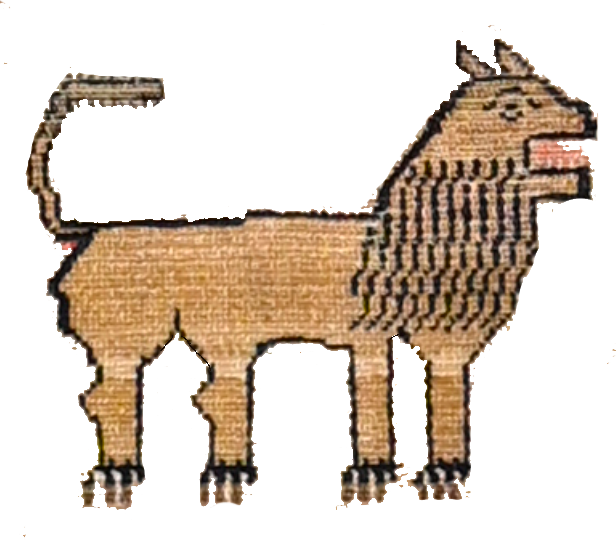

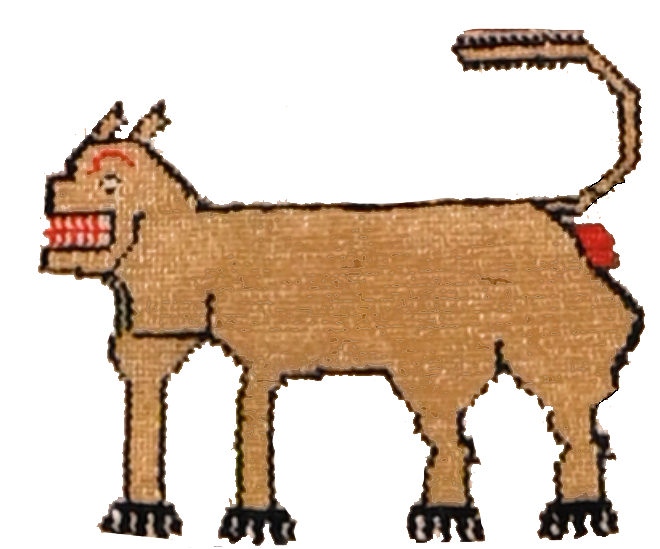
This Malayer rug from the third quarter of the 19th century is a beautiful piece in remarkable condition, and a powerful example of how rugs can serve as a medium of personal expression.
In many traditional societies, especially in the past, weavers, often young women, did not always have the freedom to express their thoughts and emotions openly. In such cases, the rug became their voice.
In this piece, the symbolism is striking. The lionesses are confined to the corners, their expressions appearing tense and restrained, while the lions move freely across the field. A similar contrast can be observed in the depiction of the peacocks, where the male appears more dominant and free, while the female's presence feels more restricted.
This contrast suggests a subtle yet powerful expression of the weaver’s inner feelings, possibly reflecting the frustrations and limitations experienced by women in that society.
Rugs like this go beyond decoration; they become narratives. They carry messages, emotions, and quiet forms of protest, communicated through symbols rather than words.
Such clarity of expression is rare, and it speaks to the sensitivity and intelligence of the weaver. This piece stands not only as a beautiful carpet but as a deeply human work of art, connecting the viewer to the voice of its creator across time.

Regardless of our opinions, it is always fascinating to observe the remedies and protections that primitive societies have developed for the evil eye and how people in modern times still utilize them. One of the most intriguing outcomes of ancient superstition is the creation of amulets. The oldest anti-evil eye charms discovered to date back to 3500 BC were found in Tell Barak, Syria, and countless other talismans and artefacts have been created to fight the "eye".While Persians were not an exception in their belief in such charms and the creation of amulets, what sets them apart is the incorporation of these beliefs into their rugs, such as this old Luri nomadic rug (circa the 1920s). One wonders how beautiful and fortunate the girl who had woven this rug was to incorporate so many protective symbols to save her life against the evil eye.
A Living Surface
A tribal rug does not remain as it was on the loom.
The colours settle, the wool softens, and the surface begins to reflect the life lived upon it.
It gathers not only dust, but time.
It becomes part of the interior space, absorbing moments, conversations, and silences. Travelling with its owner, it carries fragments of each place it has been.
In this way, the rug is not static, it evolves.
Why They Endure
Tribal rugs endure because they are rooted in necessity, shaped by life, and guided by memory.
They are not perfect.
They are not uniform.
They are not repeatable.
And that is precisely their strength.
They remind us of a way of making that is deeply human, a way of living where function and expression are not separate, but one and the same.
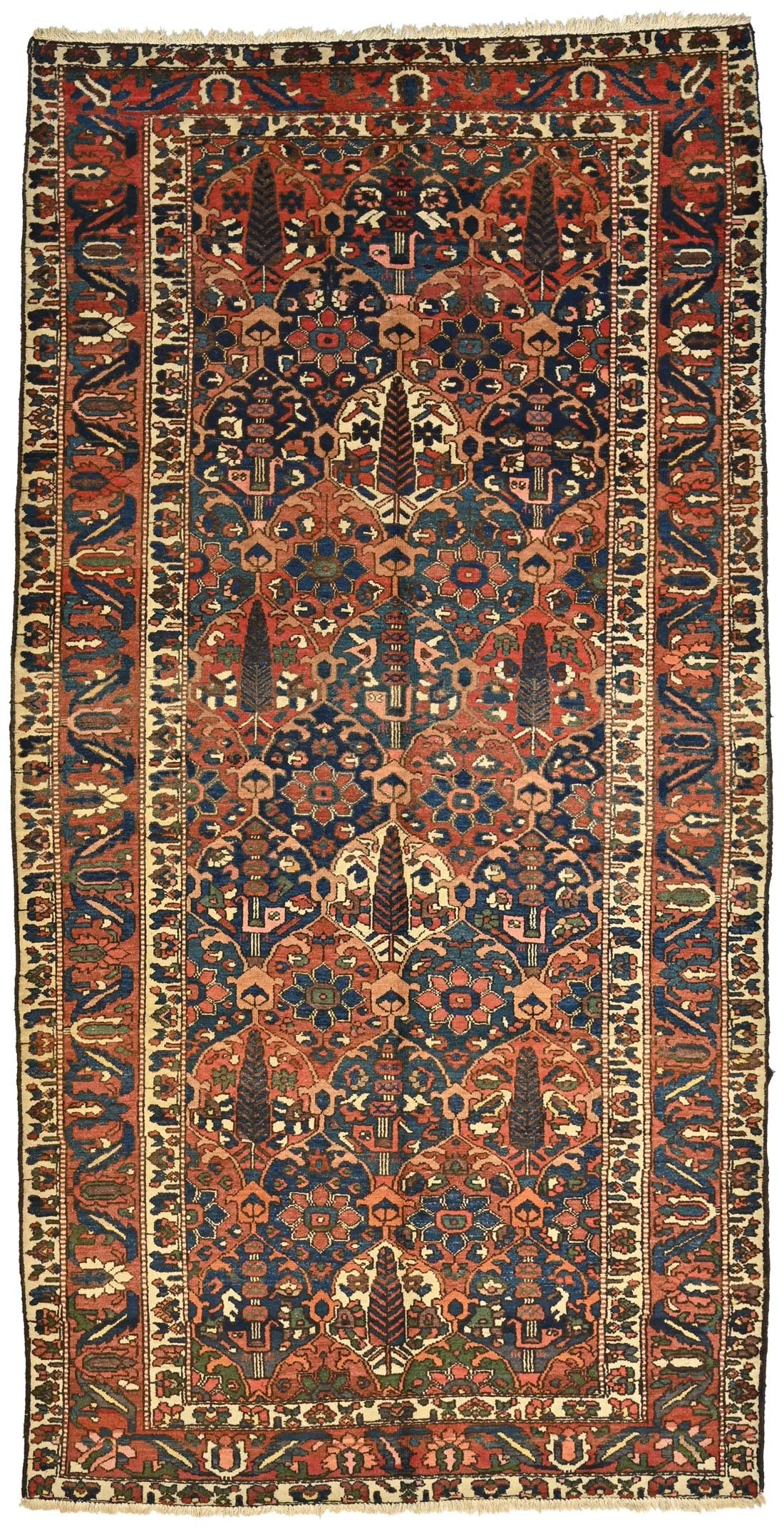
Design: Spontaneously created from memory, based on local traditions and the weaver’s inherited collective and personal subconscious memory. The “sarv” motif, meaning “cypress tree” in Persian, represents longevity, youth, and beauty, and is introduced in Zoroastrian scripture as a tree from heaven.
Size: 294x152cm
Material: 100% hand-spun wool on a cotton foundation
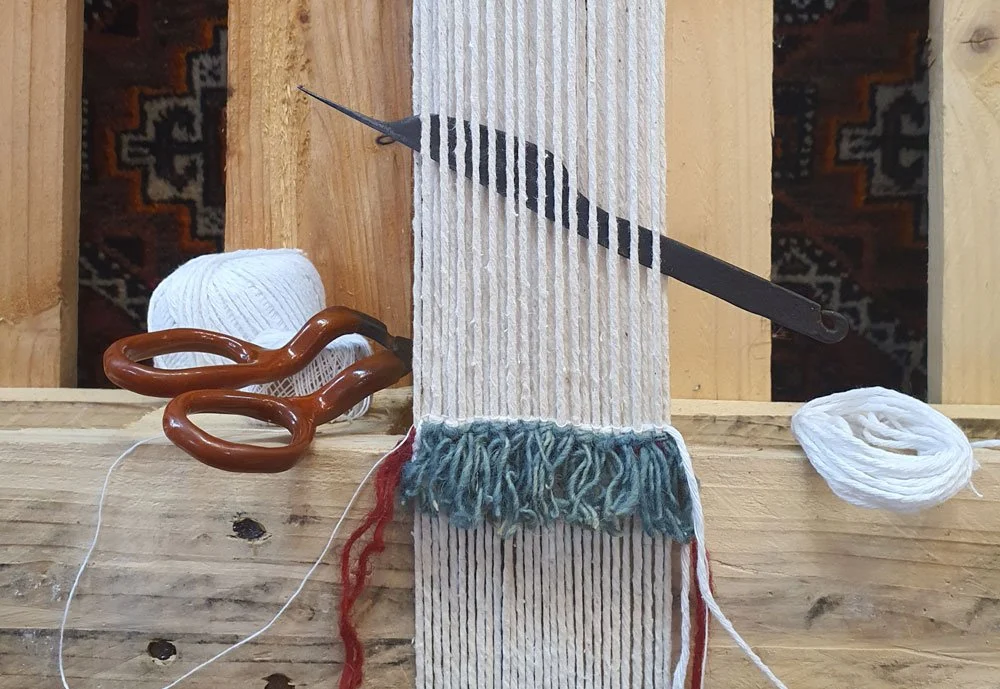
Technique: Hand-knotted on a primitive horizontal tribal loom.
Age: Circa 1900s
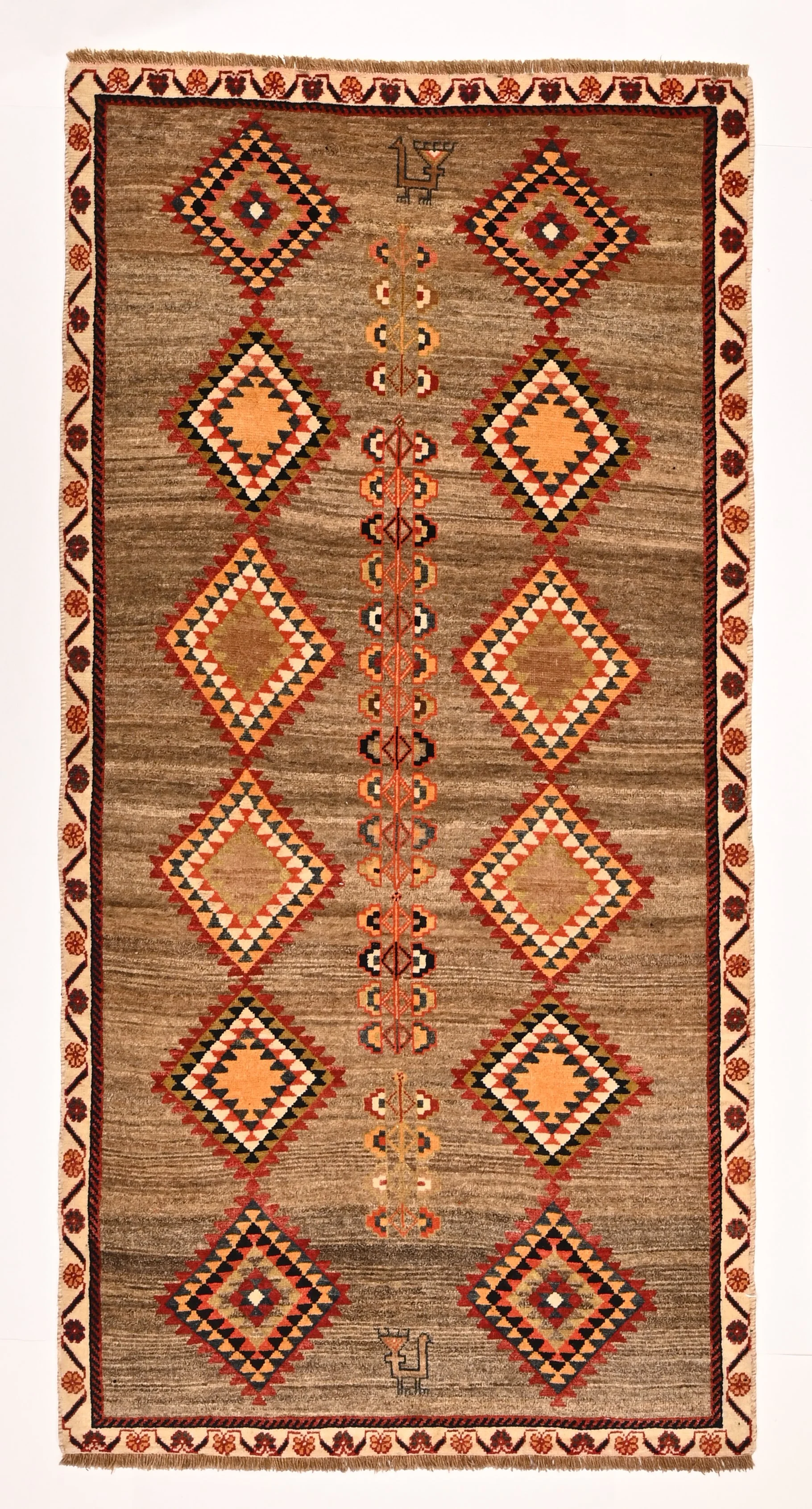
A mid-20th-century Gabbeh rug with a field of undyed wool framing a vibrant, geometric design. Gabbehs are known for their simplicity, durability, and expressive use of colour. Made with honest materials and natural dyes, this rug brings warmth, character, and a timeless presence, making it suitable for both modern and classic interiors.
172849-202x100cm
Wool on a wool base.
Materials, From Life Itself
In a nomadic setting, everything required to make a rug exists within the cycle of life itself.
Nothing is imported, nothing is external. The materials are gathered, prepared, and transformed within the same world in which the rug will live.
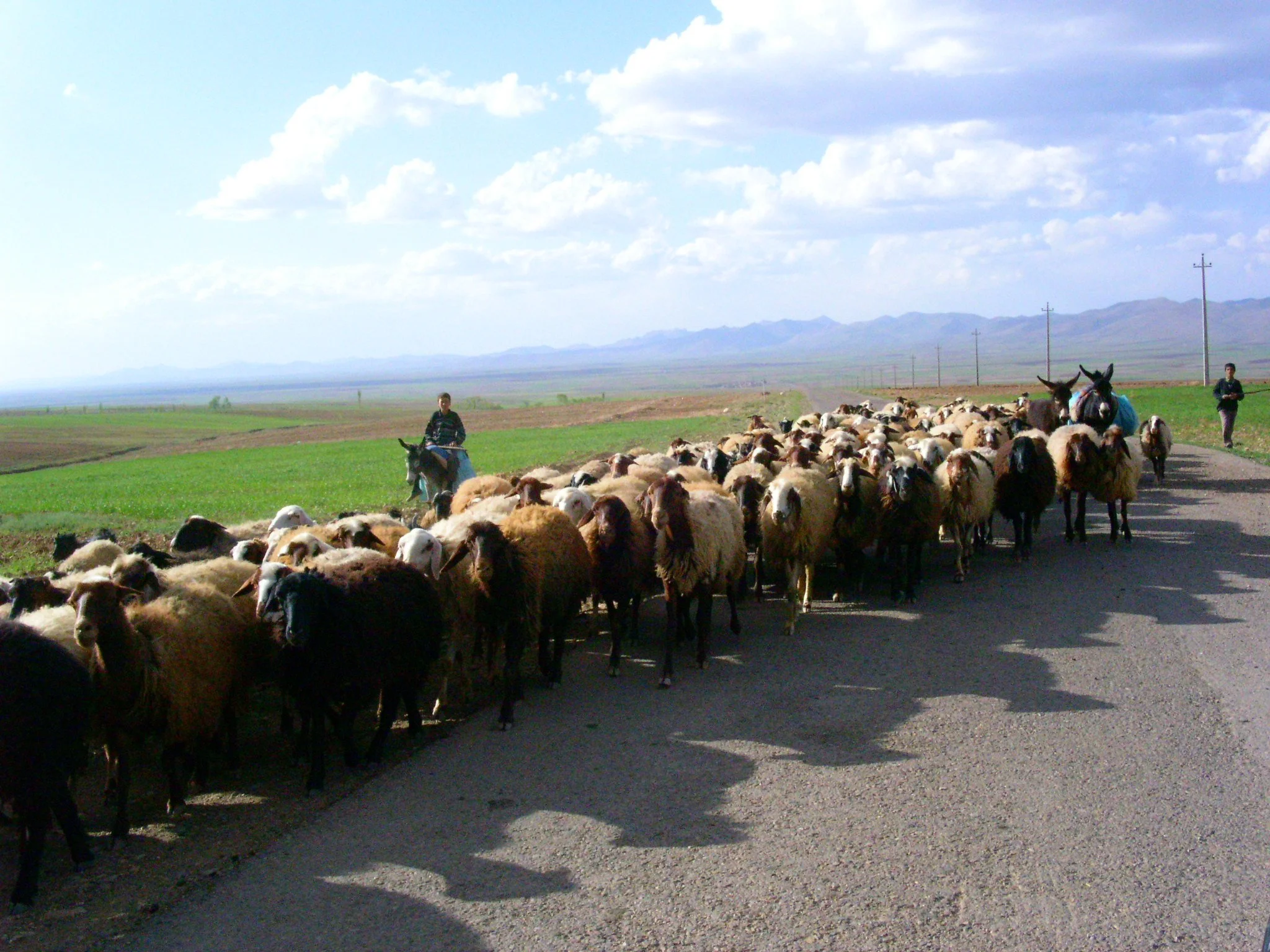
The wool comes from their own sheep, breeds that have adapted over centuries to the conditions of the Iranian plateau. This wool possesses a particular quality, long fibres, strength, and resilience, making it exceptionally suitable for rug weaving. It is one of the defining characteristics of Persian carpets, the inherent suitability of the wool itself.
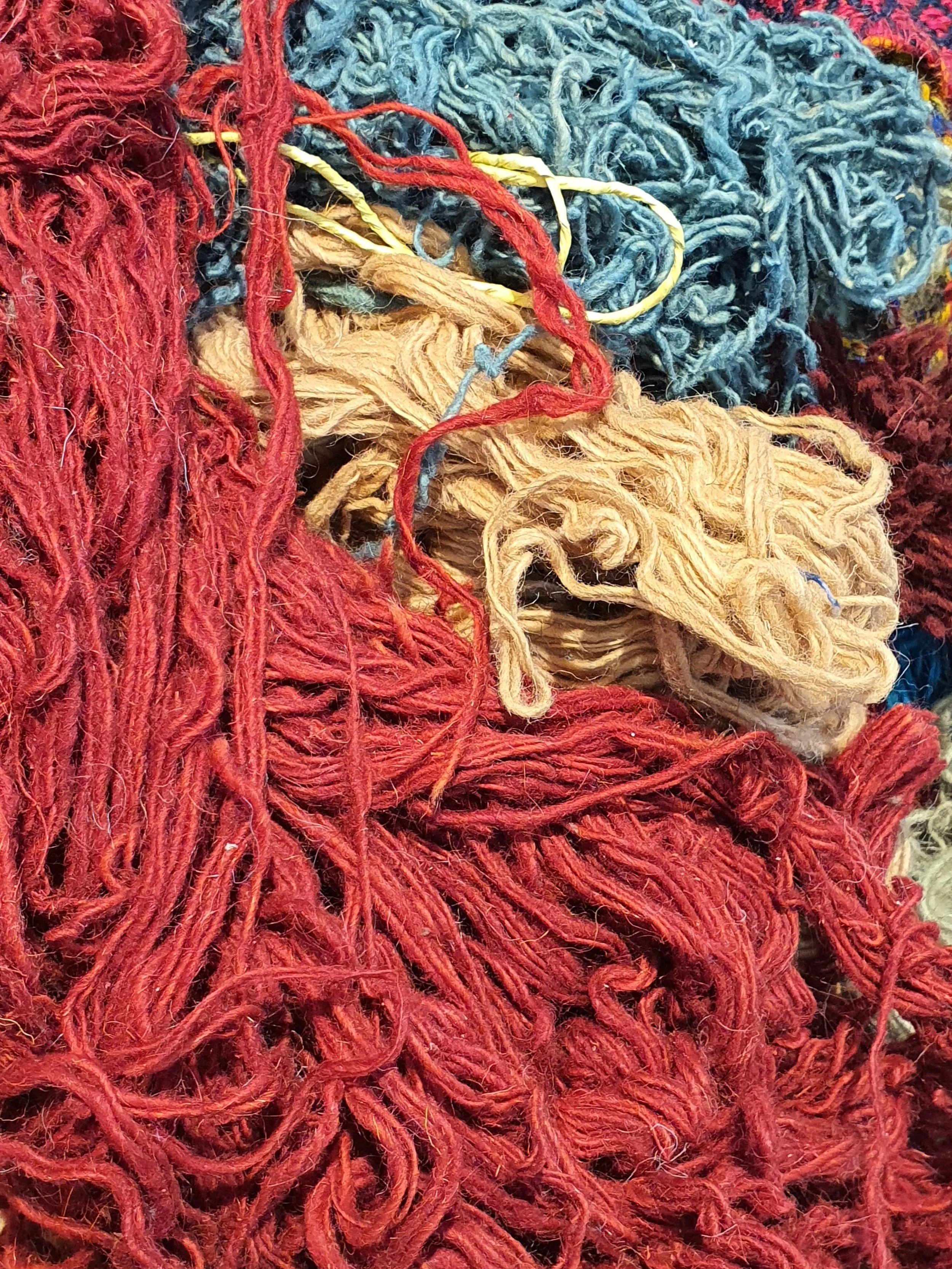
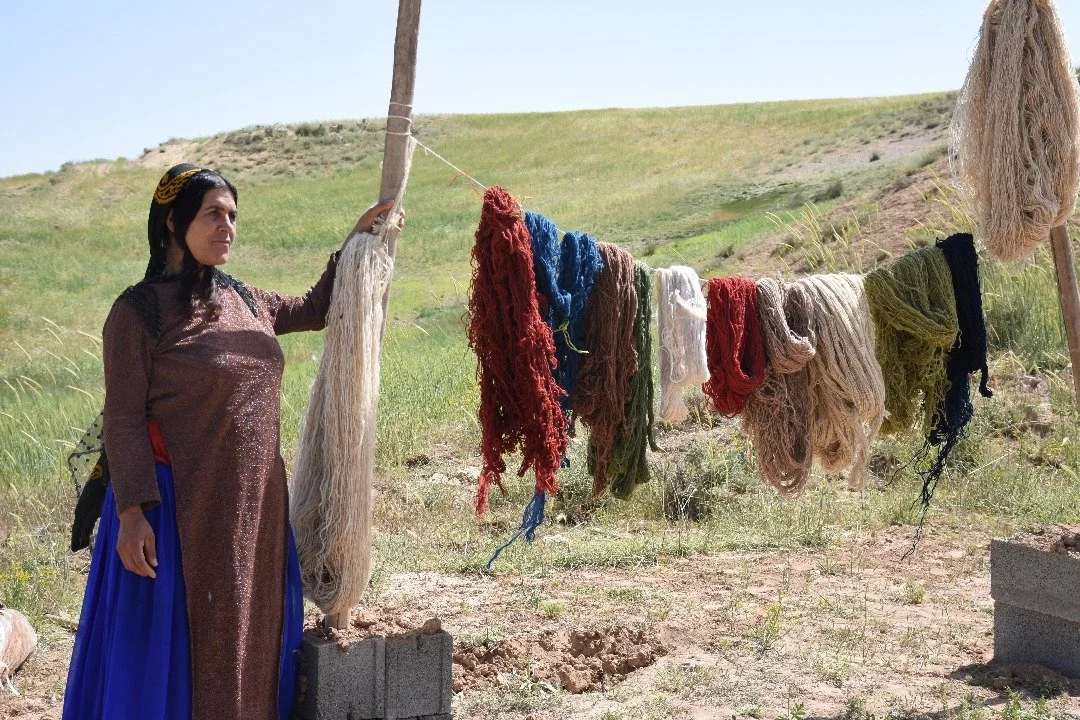
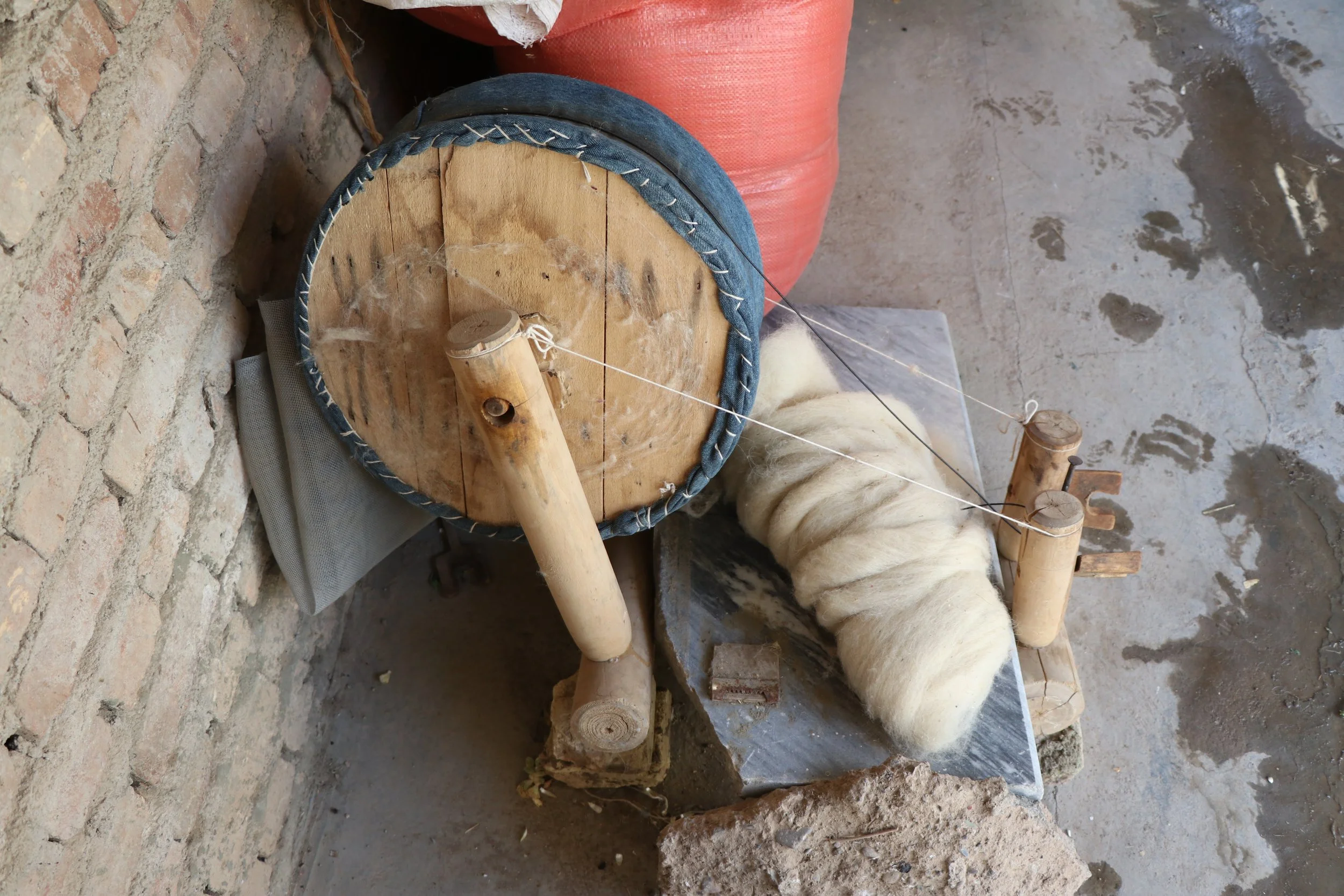
Within these communities, there exists an ancient and continuous skill: hand-spinning wool into yarn.
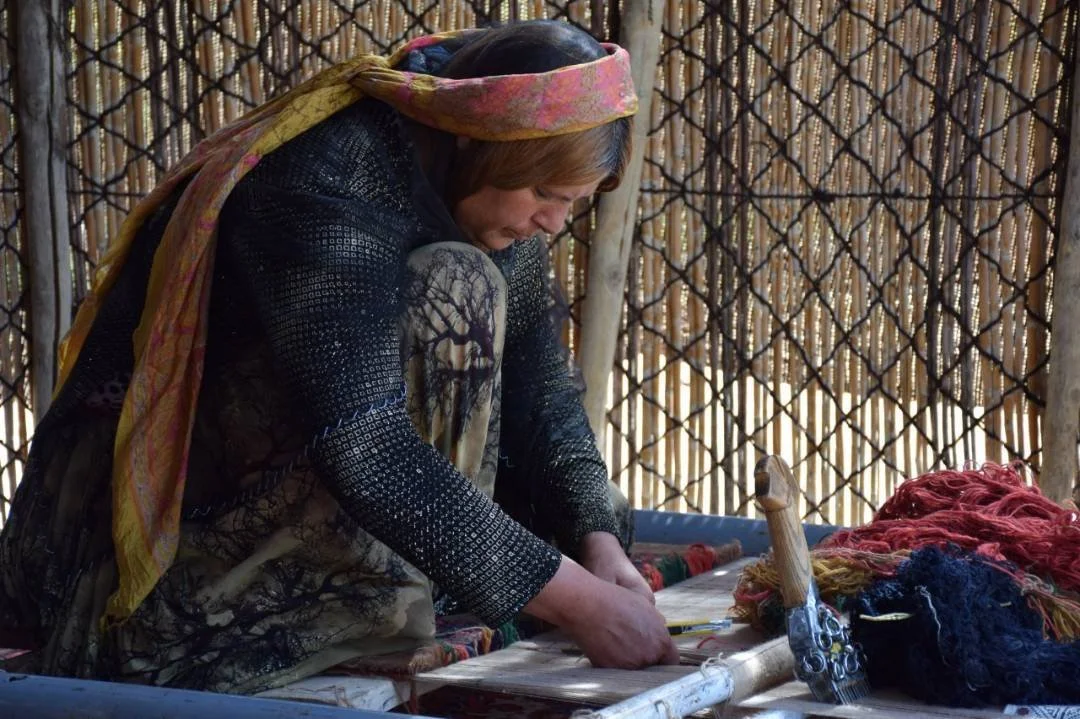
One often sees elder women, in moments between daily tasks, spinning wool by hand. This process, repeated across generations, is not merely functional. It imparts character.
Hand-spun yarn carries a natural inconsistency. Slight variations in thickness, subtle irregularities that, when woven, give life to the surface of the rug. This is what creates that remarkable texture, a depth that cannot be replicated by industrial uniformity.
Once the yarn is prepared, it is dyed.
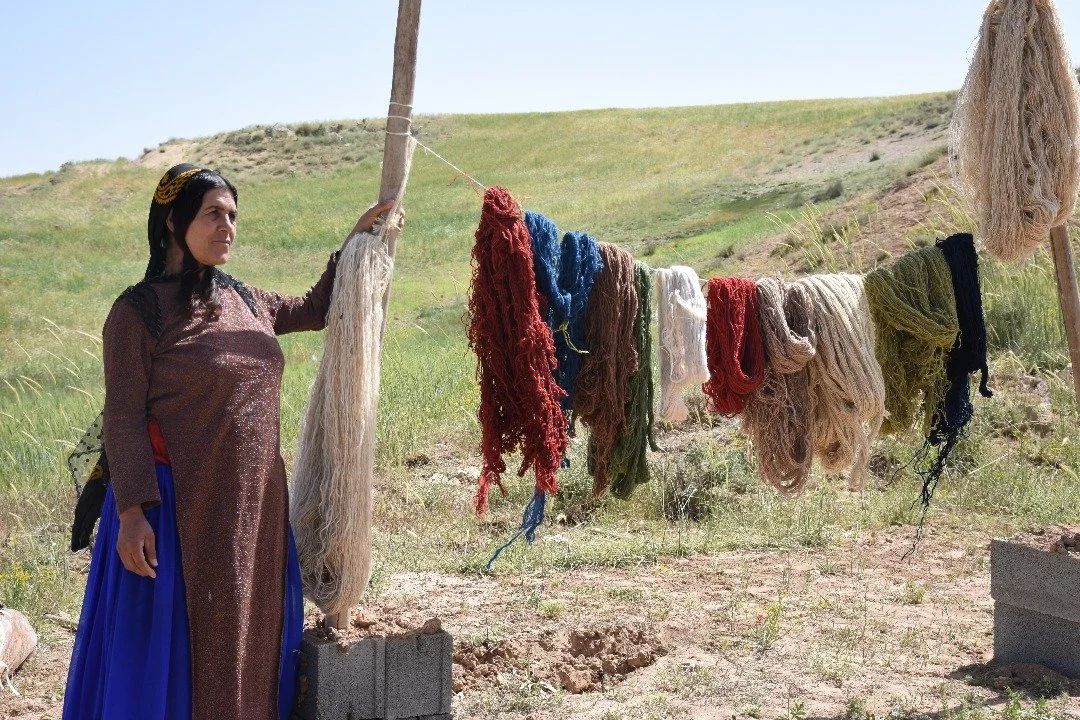
The colours are drawn from nature itself, from roots, leaves, stems, fruits, and at times minerals gathered along migratory routes. These materials are collected during movement, during grazing, during daily life. The dyeing is often done in small batches, over simple charcoal fires, using knowledge passed down through generations.
The result is a spectrum of hues within a single colour. Not a flat tone, but a living range, subtle shifts that create movement within the rug. This variation, often described as abrash, gives the rug a quiet movement. It allows the surface to breathe, to shift gently under light, and to reveal itself over time rather than all at once.
Equally important is what this process preserves.
Because the dyeing is done at relatively low temperatures, in small batches, the natural oils of the wool, the lanolin, remain within the fibre. This gives the yarn a soft sheen, a certain vitality, and, most importantly, durability. The fibre remains strong, supple, and capable of ageing gracefully.
In contrast, industrial dyeing is carried out at very high temperatures and often under pressure. The result is a yarn that is uniform, even, and predictable, but at the cost of character. The natural oils are largely stripped away, and the fibre, though visually consistent, lacks the same depth, resilience, and life.
What emerges from the nomadic process is therefore something fundamentally different.
A material that is not standardised, but alive.
A surface that is not flat, but layered.
A colour that does not sit still, but continues to evolve.
And in this, one begins to understand that the beauty of these rugs does not lie in perfection, but in the quiet complexity of how they are made.

Some designs remain mysterious. They are woven for generations, each weaver inheriting the form from those before her. Perhaps the original meaning is partly lost in time, yet such motifs continue to intrigue the curious mind.
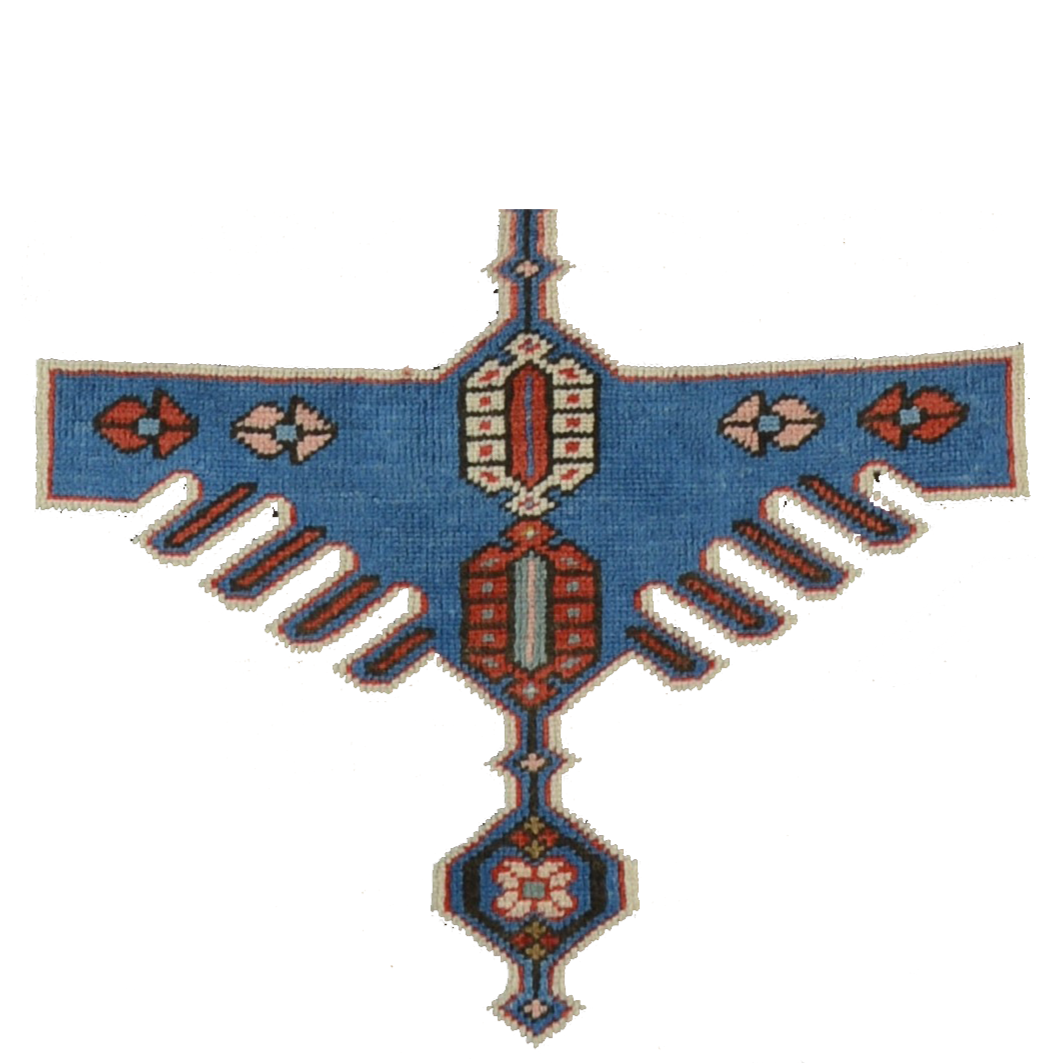
This remarkable piece is a Barjid from a village near Mount Sabalan in Azerbaijan. Its main design appears as an old motif resembling a bird with open wings. Naturally, birds have long been associated with flight, ascendance, and freedom, so it would not be surprising if this motif once carried the wish to rise, to reach higher states, perhaps even spiritual heights.
This interpretation feels especially meaningful in a region where Sufi traditions have had a strong presence. In Sufi language, birds are often used as figures of speech for the soul, spiritual journey, and ascendance. One is reminded of Attar’s Conference of the Birds, where birds become symbols of souls in search of truth.
The rug, therefore, is not merely an aesthetic object. Its beauty is more than surface decoration. It carries traces of culture, belief, myth, and old stories, all translated into wool by a weaver who may have inherited the form without necessarily knowing its full ancient meaning.
With its strong colours, bold geometry, and repeated wing-like forms, this rug has a powerful presence. It is a piece that can invite both visual pleasure and deeper contemplation, the kind of rug that keeps speaking quietly the longer one lives with it.
P103

This is a fantastic tribal rug. These rugs are the creation of a fascinating culture with a history that spans over 3,000 years. The minimalistic patterns and optimal colour combination make them comparable to the modern art of the early 20th-century European artists, such as Piet Mondrian.
However, what makes such pieces interesting is the total isolation of the Lori tribes at the time. The work offered here is pure, original, and an honest creation of an aesthetic tribal girl who knew nothing of modern art.
Handknotted | wool on cotton base | natural dyes
P103

This particular piece comes from the village of Faridan in central Iran. The village has long been home to Armenian communities, who have lived in the area since the early 17th century and became known for producing carpets of exceptional quality.
The design is rich and lively, filled with floral elements, stylised birds, and, most intriguingly, the depiction of a clock tower. This unusual motif suggests a moment of personal experience, perhaps the weaver’s encounter with urban life, most likely in a city such as Tabriz, where similar towers exist. Rather than following a formal naqsha, such details often emerge from memory, making the rug deeply personal.
The wool used in this carpet is of excellent quality, and the dyes are entirely natural, derived from plants gathered in the surrounding landscape. The colours have a depth and harmony that only such materials can achieve.
Dating to the early 20th century, this piece is both visually captivating and culturally layered. It carries within it the story of migration, settlement, and adaptation, while still preserving the spirit of its nomadic roots.
It is a refined and elegant carpet that can transform a space, not only through its beauty, but through the history and meaning woven into every part of it.
From Nomadic
to Village Life
With time, and with the gradual progress of society, particularly over the past seventy years or so, many nomadic communities in Iran began to settle. They formed villages and small towns, each establishing its own way of living, adapting inherited traditions to a more stationary life.
Village rugs, in one form or another, have existed for a long time, often through communities that were themselves descendants of nomads. But with this widespread settlement, a broader and more defined category of village weaving began to emerge.
Across hundreds of villages throughout Iran, each community developed its own character. Each retained inherited patterns, yet interpreted them through its own environment, its own rhythm of life, and its own evolving traditions.
What emerged was not a departure from nomadic weaving, but a continuation of it in a different setting.
Village rugs carry the same depth of memory, the same instinctive design language, and the same personal expression found in tribal pieces. For this reason, the boundary between nomadic and village rugs is often unclear. It is not a fixed line, but a grey area, where one gradually transforms into the other.
It is for this reason that, on this website, we refer to this category as tribal and village rugs.
Materials, Structure,
and Change
Village rugs, however, do begin to show certain differences, particularly in materials and structure.
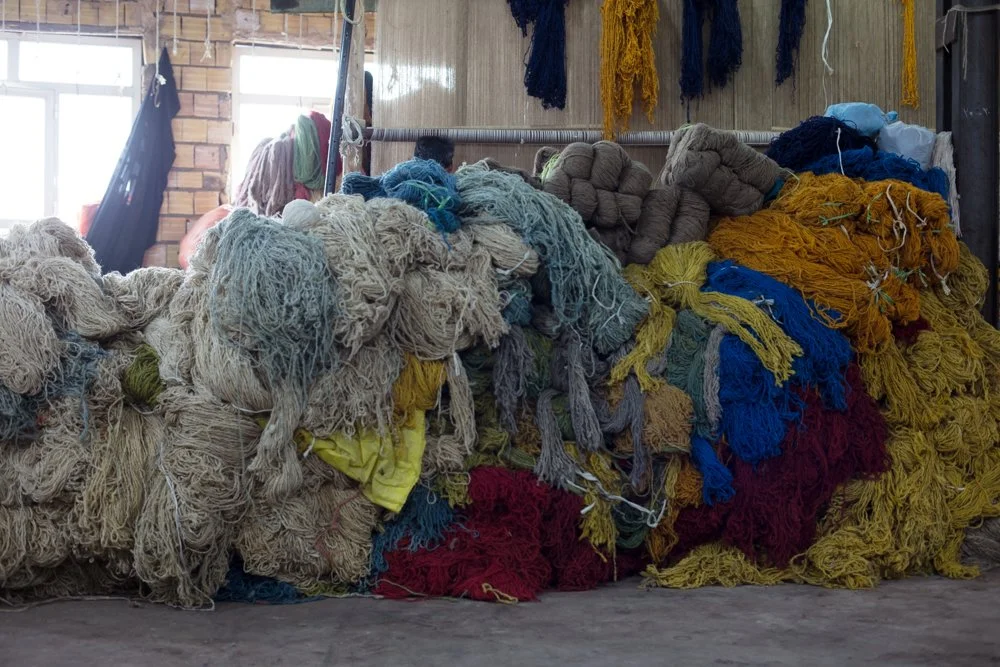
While many villages still produce their own wool, spin yarn by hand, and use natural dyes, access to markets has introduced new possibilities. Some weavers now purchase wool or pre-spun yarn, and cotton is often used for the foundation, as it provides a firmer and more stable base for weaving.
The loom itself also changes.
Nomadic weavers traditionally use horizontal looms, set directly on the ground. These are simple, portable, and suited to a life in motion. Space is not a limitation in the open landscape.
In villages, however, space becomes more confined. Homes are smaller, and as a result, vertical looms become more practical. They occupy less floor space and allow for more controlled weaving conditions.
With settlement also comes access.
Village weavers are more easily reached by traders and merchants. With this accessibility, commissions and orders begin to influence production. Designs may be guided, colours suggested, and sizes standardised.
In this sense, commercialisation has had a deeper influence on village rugs than on nomadic weavings.
Yet despite these changes, the essence remains.
The hand is still present.
The memory is still active.
And within each rug, there remains a dialogue between tradition and adaptation.
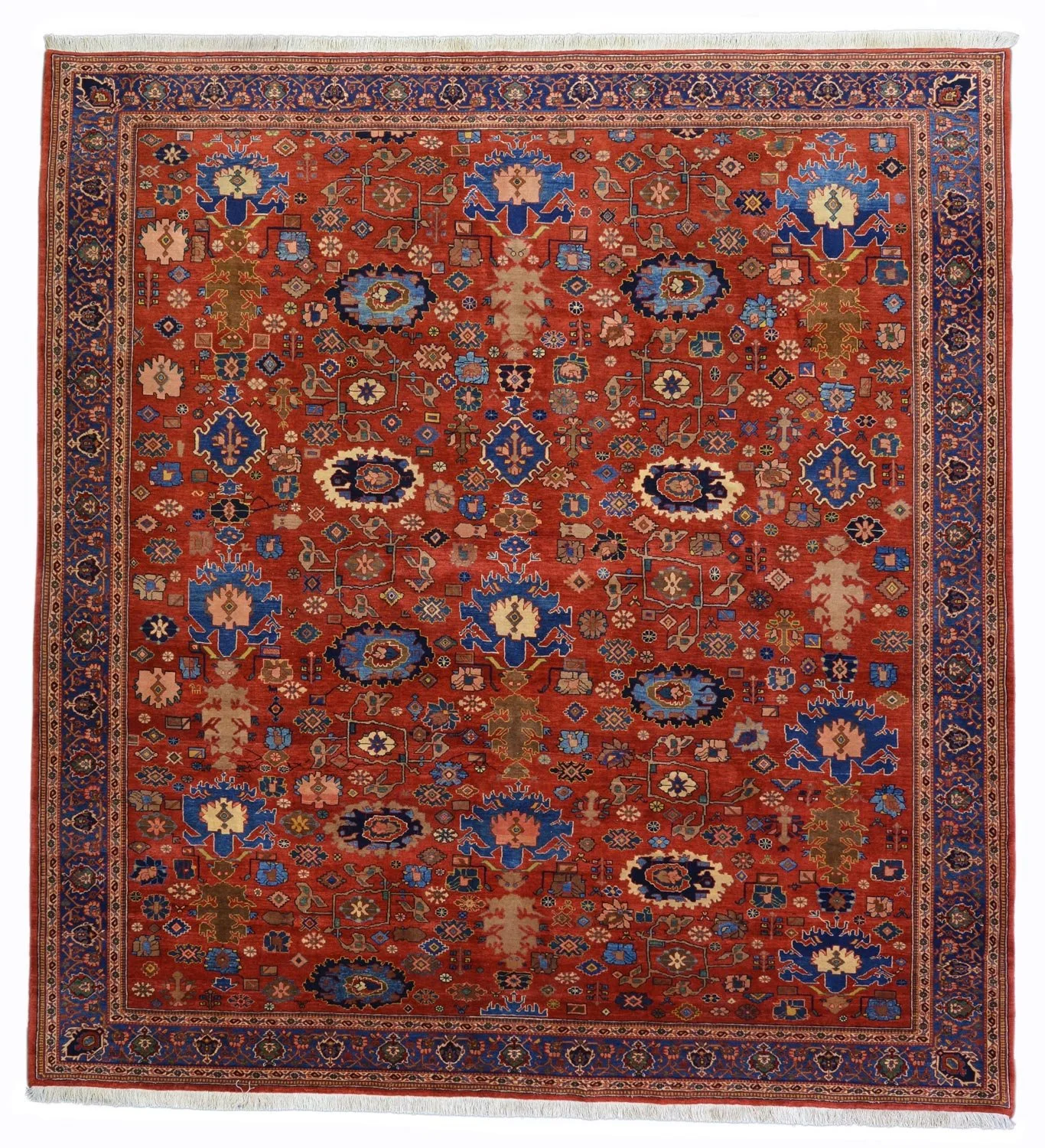
No. 26562 273 x253 cm
A Bijar- Garrus rug. Handspun wool, natural dyes.
Wool on a cotton base
Kurdish weavers of Bijar are renowned for producing compact, impeccably constructed rugs, so durable that they earned the nickname “iron rugs” in the market. The piece shown here belongs to the older style of Bijar weaving, known as Garrus, a group celebrated for its natural dyes, refined patterns and remarkable longevity.
Such carpets can endure for decades without fail and grow more beautiful with time. Their enduring strength lies in their sound structure and, above all, in the use of the finest hand-spun wool and magnificent natural dyes. These traditions reach back thousands of years, inherited from their ancestors, the Medes, natives of eastern Mesopotamia on the western slopes of the Zagros Mountains, whose deep connection to nature shaped their materials, colours and aesthetic sensibilities.

Bakhtiari Garden Rug (Armani Baf)
The Bakhtiari are among the oldest peoples of Iran, inhabiting the rugged Zagros Mountains of central and southwestern Iran for thousands of years. Their pastoral way of life, seasonal migrations, and deep connection with nature shaped one of Persia's richest weaving traditions. Their carpets are renowned for their remarkable durability, lively colours, and the freedom with which each weaver interprets inherited designs from memory.
This beautiful rug belongs to a special group known as Armani Baf, literally meaning woven by Armenians. During the reign of Shah Abbas the Great (1587–1629), many Armenian craftsmen were relocated from Julfa to central Iran, where they established thriving communities. Their exceptional skills, refined taste, and artistic sensitivity left a lasting mark on Persian carpet weaving, particularly in the Bakhtiari region. Their work is still admired today for its distinctive elegance and superb craftsmanship.
The design depicts a Persian garden, a subject cherished in Iranian culture for over two thousand years. The remains of the royal gardens of Pasargadae, laid out by Cyrus the Great in the sixth century BC, testify to the antiquity of this tradition. Persian gardens were never merely places of pleasure; they represented an earthly reflection of paradise, where order, water, trees, flowers, and shade came together in perfect harmony.
Here, the weaver has divided her imagined garden into orderly compartments, each containing a different arrangement of flowers, trees, and symbolic motifs. The composition resembles a living botanical manuscript, woven entirely from memory rather than from a drawn pattern.
Among the most prominent motifs are the cypress trees. The cypress is one of the oldest symbols in Iranian culture. It appears in the reliefs of Persepolis and occupies a special place in Zoroastrian tradition, where the legendary Cypress of Kashmar was believed to have been brought from heaven by Zarathustra himself. In Persian poetry, the sarv, or cypress, became the eternal metaphor for the beloved—graceful, upright, forever youthful, and evergreen.
The weeping willow, another recurring motif, carries a different poetry. Persian poets often liken the willow's flowing branches to the beautiful hair of the beloved, gently moving in the breeze. Beside them appear vine leaves and clusters of grapes, long associated with joy, abundance, and celebration. As the fruit from which wine is made, grapes have symbolised happiness and the enjoyment of life throughout Persian literature for centuries.
These motifs reveal that the carpet is far more than a decorative object. It is a woven language, carrying memories, symbols, and emotions passed down through generations.
The carpet was woven around the beginning of the twentieth century using hand-spun wool coloured entirely with natural dyes. The passing of a century has softened the colours and created the remarkable patina and texture that only time can produce. Because the wool retains its natural oils and lustre, it has aged gracefully and will continue to do so for many decades to come.
Like many Bakhtiari village rugs, this piece was woven entirely by heart. The weaver was not simply following a design but recreating one that lived in her memory, enriching it with her own sense of colour, balance, and imagination. That individuality is what gives these carpets their unmistakable soul.
Today, antique Armani Baf Bakhtiari rugs have become increasingly difficult to find. They belong to a period when carpets were woven not for fashion or mass production, but as expressions of culture, craftsmanship, and personal pride. This is not merely a beautiful antique carpet—it is a century-old work of art that continues to grow in beauty with age.
Material: Hand-spun wool on a cotton foundation, coloured entirely with natural dyes.
