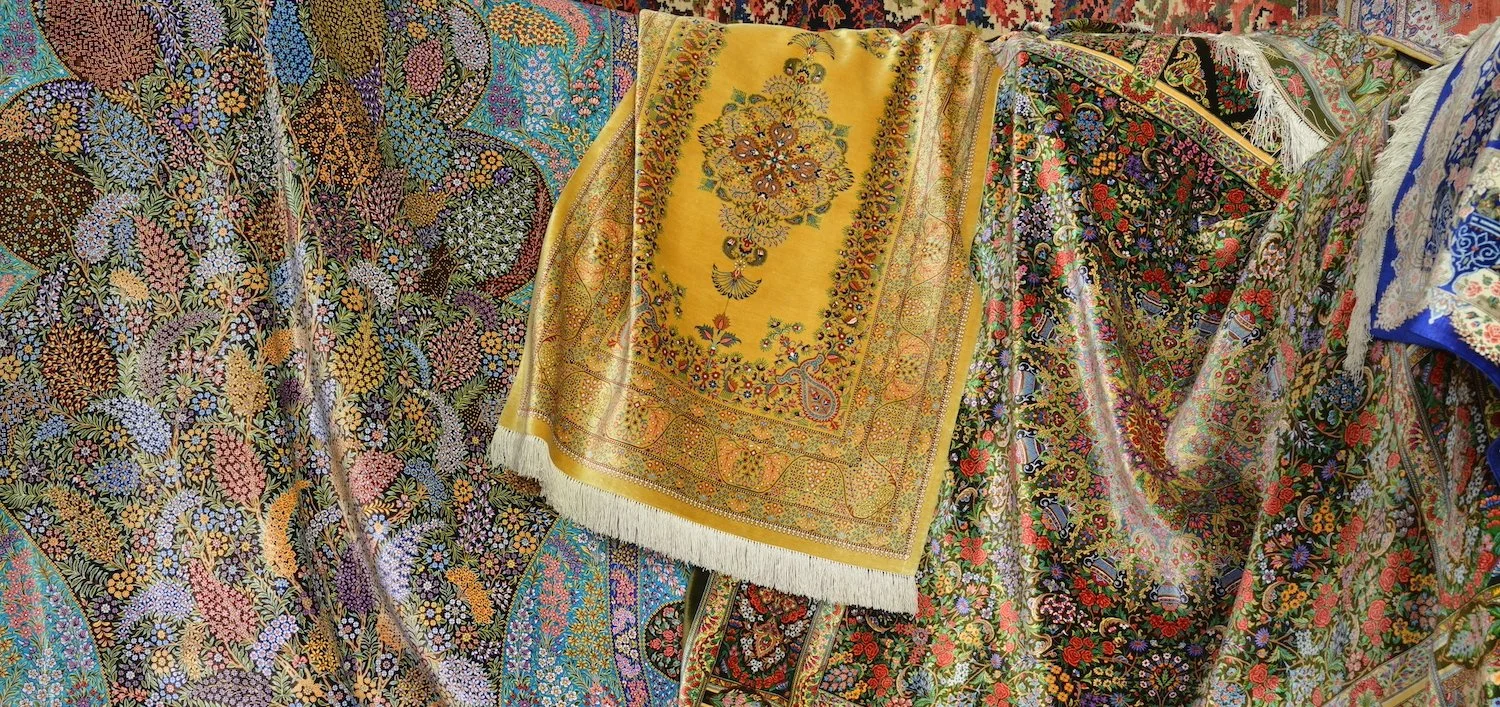
Classic Rugs
When a Rug Becomes an
Orchestra
Village and tribal rugs are often the work of a single weaver or family. City carpets are different. They are the result of many minds and many hands working in harmony.
Before a single knot is tied, a designer spends weeks or months drafting a naqsha. Master dyers prepare dozens, sometimes hundreds, of colours. Wool merchants select the finest fibres. Spinners transform wool into yarn. Weavers spend months, and occasionally years, translating the design knot by knot into a finished carpet.
A city carpet is therefore not simply woven. It is orchestrated.
Every participant contributes a chapter to the final work. The designer determines the rhythm of the composition. The dyer creates its palette. The weaver gives it life. What finally appears on the loom is the result of a remarkable synchrony of skills refined through generations.
Perhaps this is why great city carpets possess a sense of balance that is difficult to describe. Every element appears exactly where it belongs. Every colour supports another. Every curve flows naturally into the next.
Like a symphony, one may admire the whole without immediately noticing the many artists behind it.
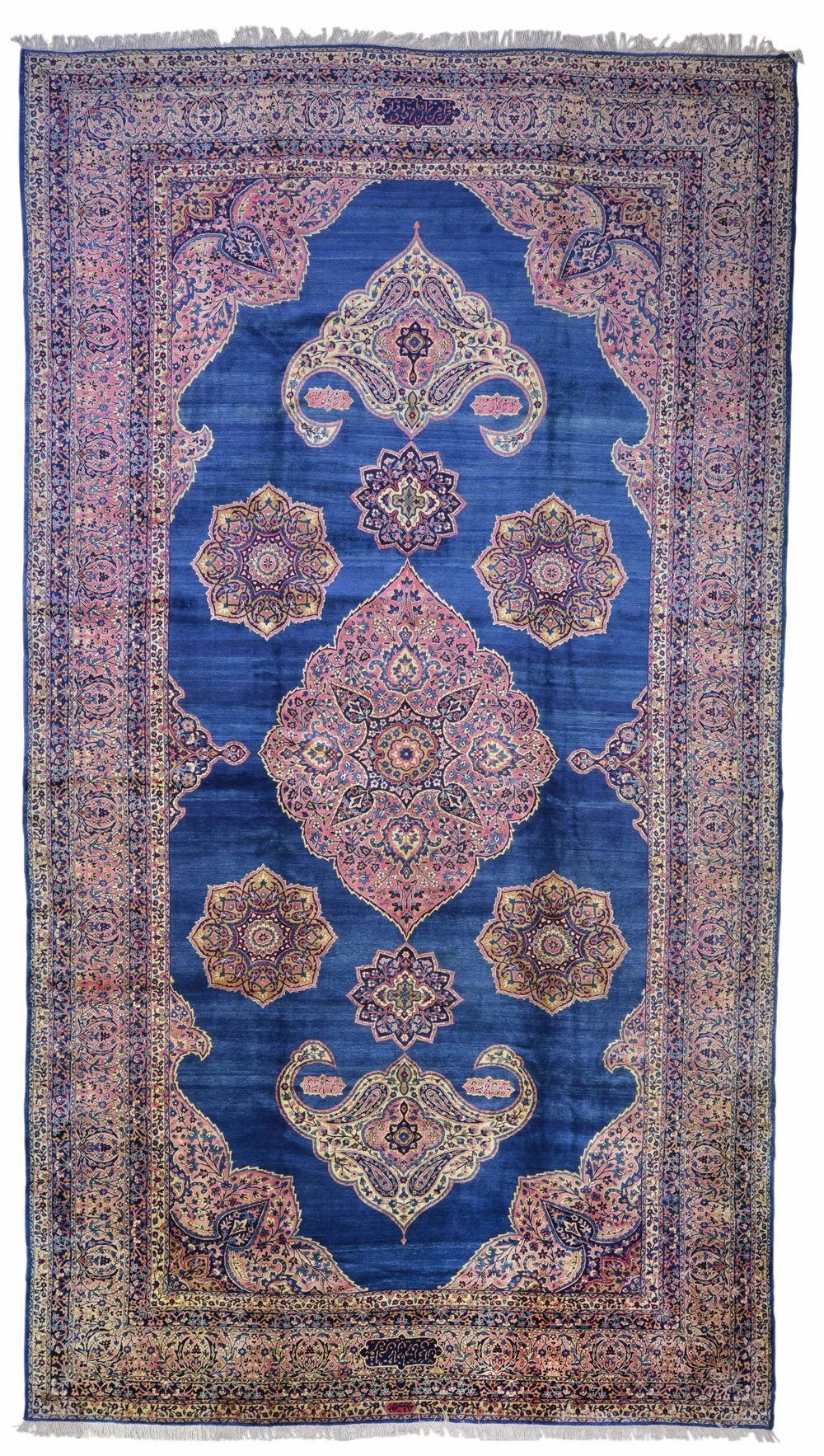
The first decades of the twentieth century marked a remarkable chapter in the history of Persian carpet weaving. As the demand for Persian carpets grew throughout Europe and North America, a number of international companies established workshops across Iran, working closely with local master weavers to produce carpets of exceptional quality while preserving traditional Persian craftsmanship. Among the most influential of these companies was the Overseas Carpet Manufacturers (OCM), founded in London in 1907.
One of the central figures behind OCM was Cecil A. Edwards, widely regarded as one of the foremost authorities on Persian carpets. His monumental work, The Persian Carpet, remains one of the most important references on the subject. Although parts of the book inevitably reflect the colonial attitudes of its time, it remains an invaluable historical record of Persian weaving during the early twentieth century. Edwards travelled extensively throughout Iran, documenting regional traditions while supervising the production of carpets that are today considered among the finest commercial weavings ever produced.
This magnificent carpet is signed OCM (اسیم) and is documented by Edwards himself as a Mashad carpet of the 1920s, inspired by an earlier nineteenth-century Farahan design. It therefore represents not merely an outstanding carpet, but a documented piece of Persian carpet history whose provenance is firmly established in one of the field's most respected publications.
The design reflects the remarkable ability of Persian designers to reinterpret classical compositions rather than simply reproduce them. The spacious cobalt-blue field provides a dramatic stage upon which the elegant medallion and pendants seem almost to float. Four beautifully balanced floral rosettes reinforce the composition without disturbing its extraordinary sense of harmony. The restrained use of space gives the carpet a quiet grandeur seldom encountered in later productions.
The colour combination is equally exceptional. Rich blues, soft ivory, delicate rose, and subtle reds are perfectly balanced, creating an atmosphere of refinement rather than extravagance. Every colour is derived from natural dyes, whose gentle ageing has produced a luminous patina that only time can bestow.
Equally remarkable is the quality of the materials. The carpet is woven from exceptionally fine wool on a strong cotton foundation. The wool possesses the softness, lustre, and resilience characteristic of the finest Persian fleeces, while the weaving itself demonstrates the extraordinary technical standards maintained by the OCM workshops under the supervision of experienced Persian master weavers.
Perhaps most astonishing is its state of preservation. Nearly a century after it was woven, the carpet remains in outstanding condition. Such examples are becoming increasingly difficult to find, particularly in this size and quality. It is a carpet that has preserved not only its structure but also its dignity, elegance, and artistic presence.
This is a piece that beautifully illustrates how commerce, when guided by genuine respect for tradition and uncompromising standards of craftsmanship, can produce works of lasting artistic value. It occupies a unique place in the history of Persian carpets, standing at the meeting point of traditional Iranian craftsmanship and one of the most thoroughly documented periods of twentieth-century carpet production.
Today it remains a magnificent collector's piece—equally at home in a private collection, an important interior, or a museum devoted to the history of Persian art.
Material: Fine wool on a cotton foundation, coloured entirely with natural vegetable dyes.

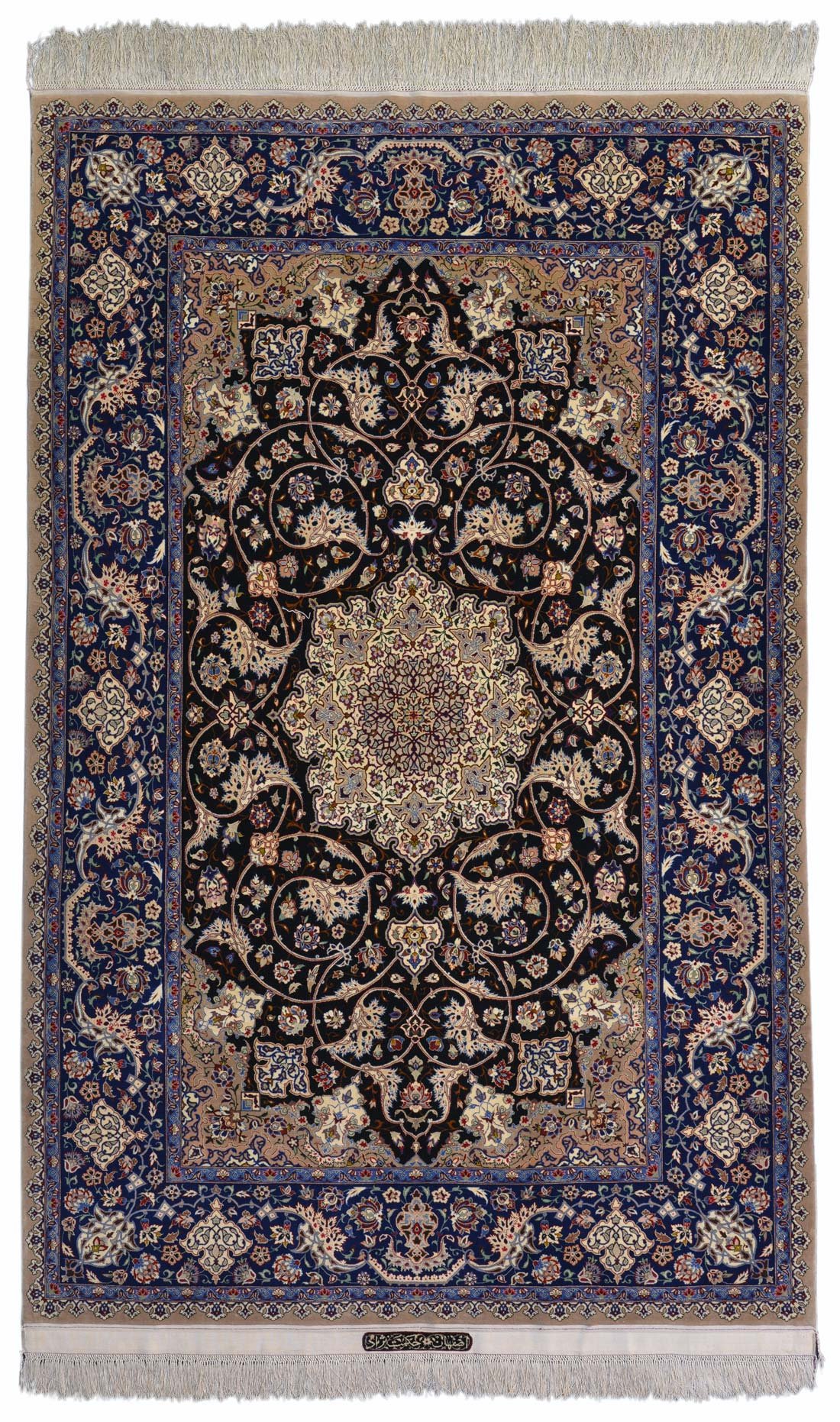
4361 – 241 × 152 cm
Wool and silk on silk foundation | Circa 1950s
During the Safavid Dynasty (1501–1736), mysticism and Sufi teachings rooted in the works of Hallaj, Attar, and Rumi reached their peak. Shah Ismail, the dynasty's founder, was a devoted Sufi who laid the foundation for a flourishing era in Persian art and culture—including carpet weaving, which saw its golden age in this period.
Among his successors, Shah Abbas I (1571–1629), known as Abbas the Great, had a particular passion for carpets. He introduced a now-iconic design named after him—“Shah Abbasi”—still woven today. At the heart of these carpets lies a fully blossomed central medallion symbolising the journey toward spiritual purity. The surrounding half-bloomed floral elements all lead inward, representing the path toward the divine or the self-realised form.
This stunning Isfahan carpet is a work by the master designer Hekmat Nezhad, one of the most celebrated names in 20th-century Persian weaving. Known for his distinctive contours and compositions, his rugs are recognisable even without his signature. Woven circa the 1950s, this piece is a true testament to the refinement of Isfahan artistry, marrying mystic symbolism with supreme craftsmanship.
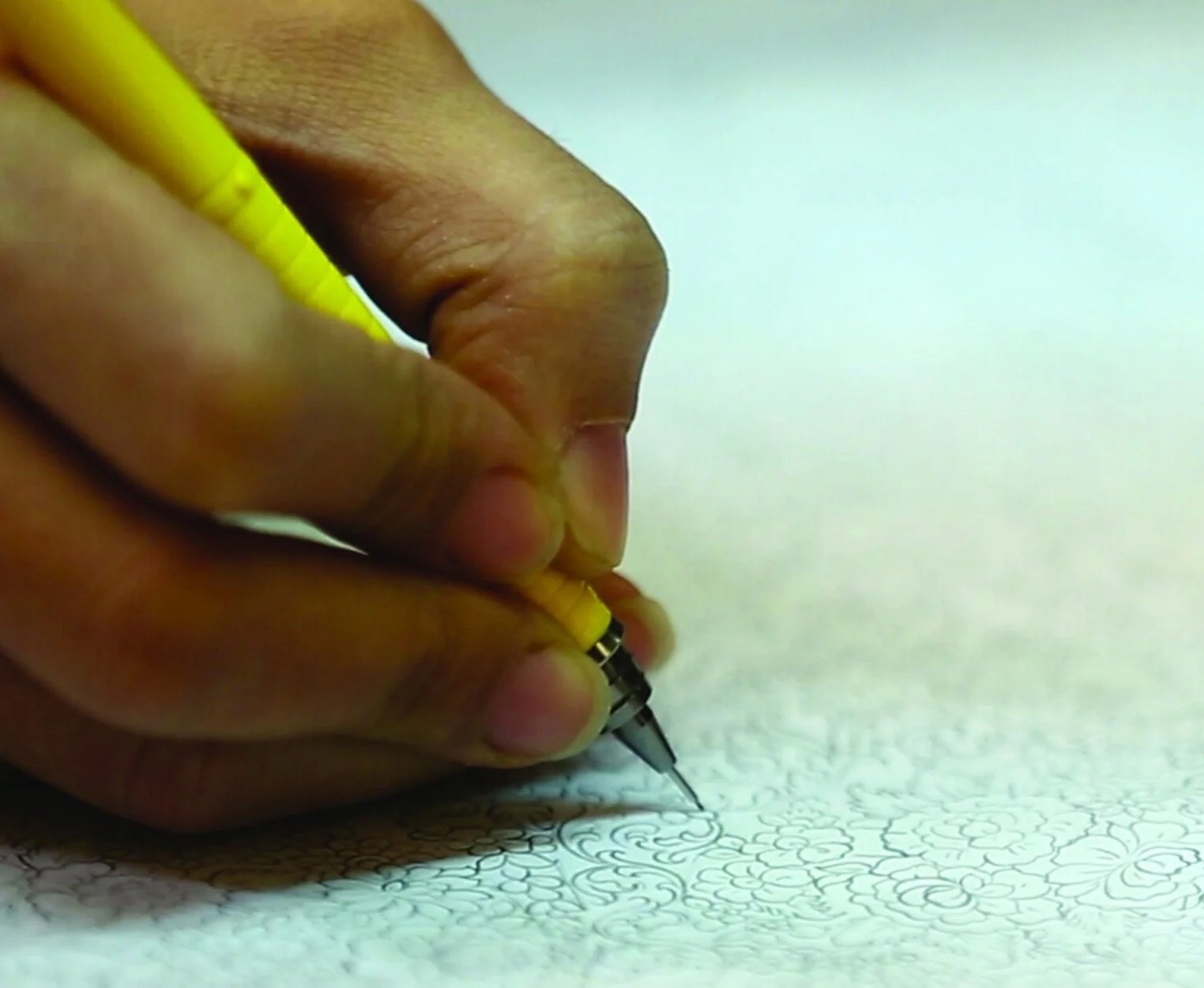
Drawing Infinity on Graph Paper
Every city carpet begins long before the loom.
Traditionally, the design is first drafted on graph paper, known as a naqsha. Each square represents a knot. A single large carpet may contain hundreds of thousands, sometimes millions, of these tiny squares.
The remarkable thing is that the designer is not merely drawing flowers, leaves, or medallions. He/she is creating a visual language that must survive translation through the hands of weavers.
Curves become rows of knots. Shadows become colours. Motion becomes pattern.
In cities such as Tabriz, Isfahan, Kashan, Qum and Nain, generations of designers refined this language to extraordinary levels of sophistication. Some patterns have been passed from master to apprentice for centuries, while others emerged from the imagination of individual artists.
The finished carpet may appear effortless, but hidden beneath its surface are countless decisions concerning proportion, symmetry, colour, and movement.
A city carpet is therefore more than a textile. It is a drawing translated into wool and silk.
The Cities That Wove Their Identity
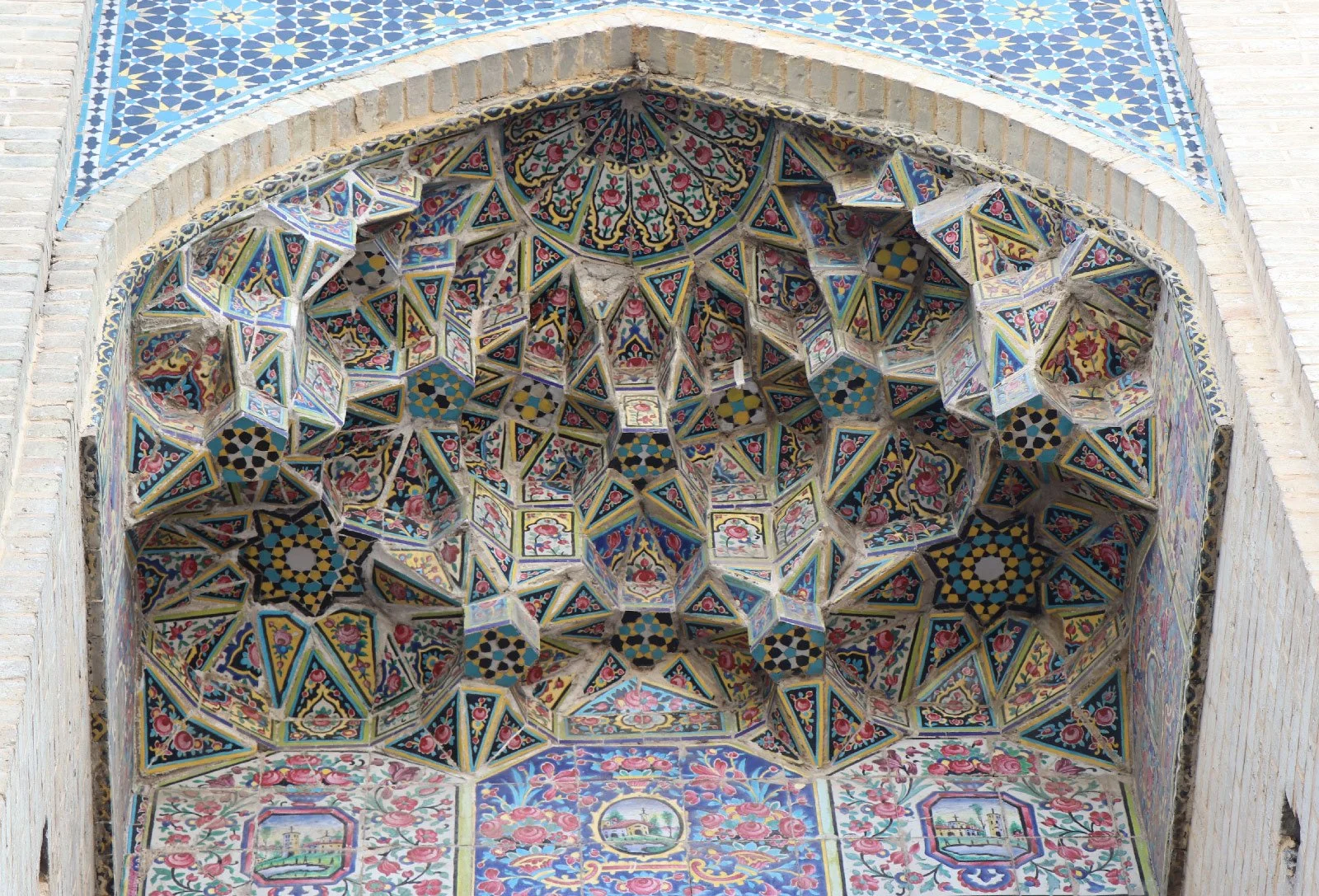
Certain cities became so closely associated with carpet weaving that their names eventually became synonymous with entire schools of design.
The elegance of Isfahan, the refinement of Qum, the architectural precision of Tabriz, the poetic floral compositions of Kashan, the strength of Bijar, each developed a distinct personality over centuries.
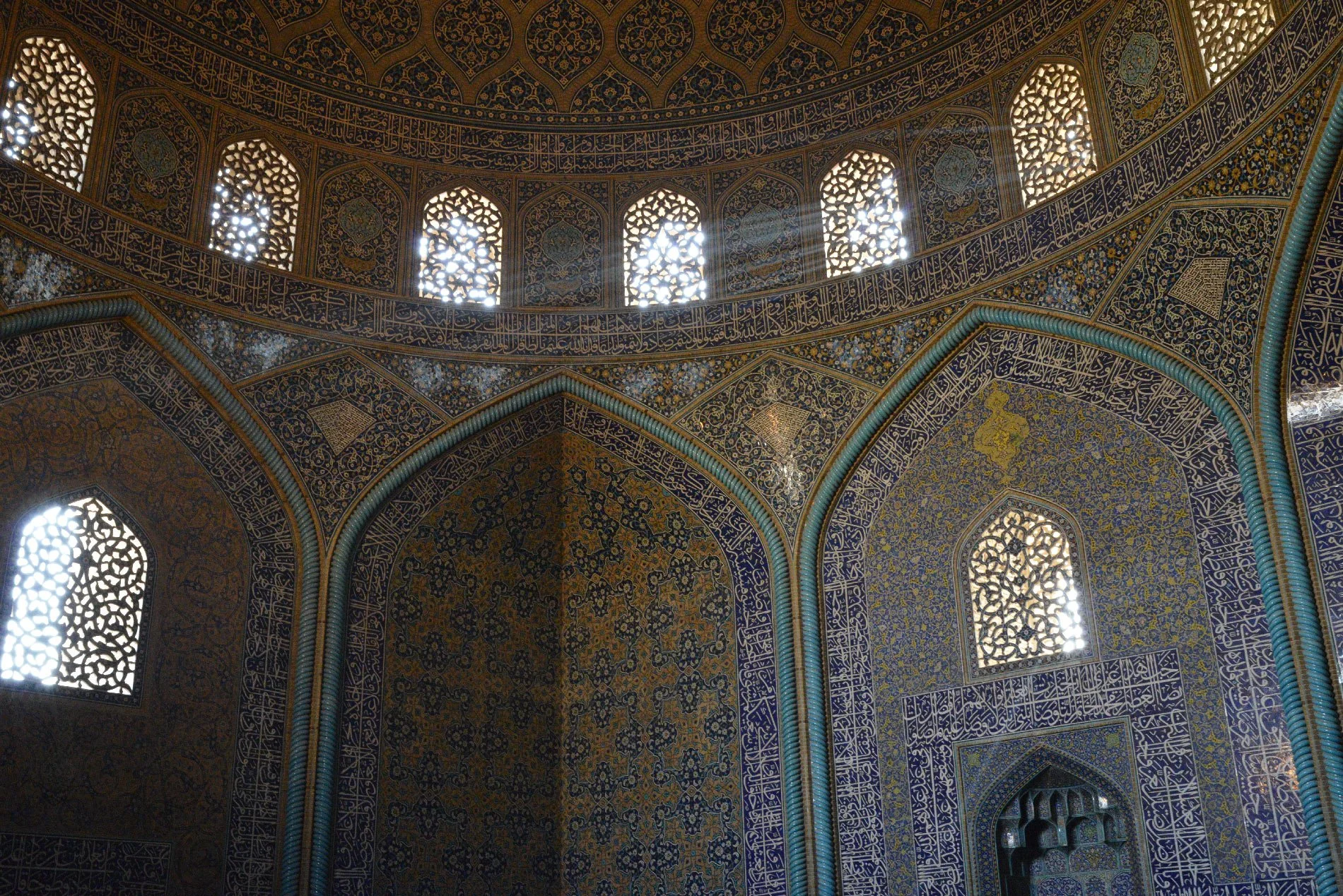
These carpets were shaped by the culture surrounding them. Architecture influenced their patterns. Gardens inspired their compositions. Poetry informed their sense of beauty. Even the colours reflected regional preferences and traditions.
To study city carpets is therefore to study cities themselves.
Their designs preserve fragments of history. They reveal changing tastes, artistic movements, and the ambitions of patrons who commissioned them. In some ways they function as visual archives, carrying memories from one generation to the next.
The great weaving centres of Persia were not merely producing floor coverings. They were creating a form of cultural memory.
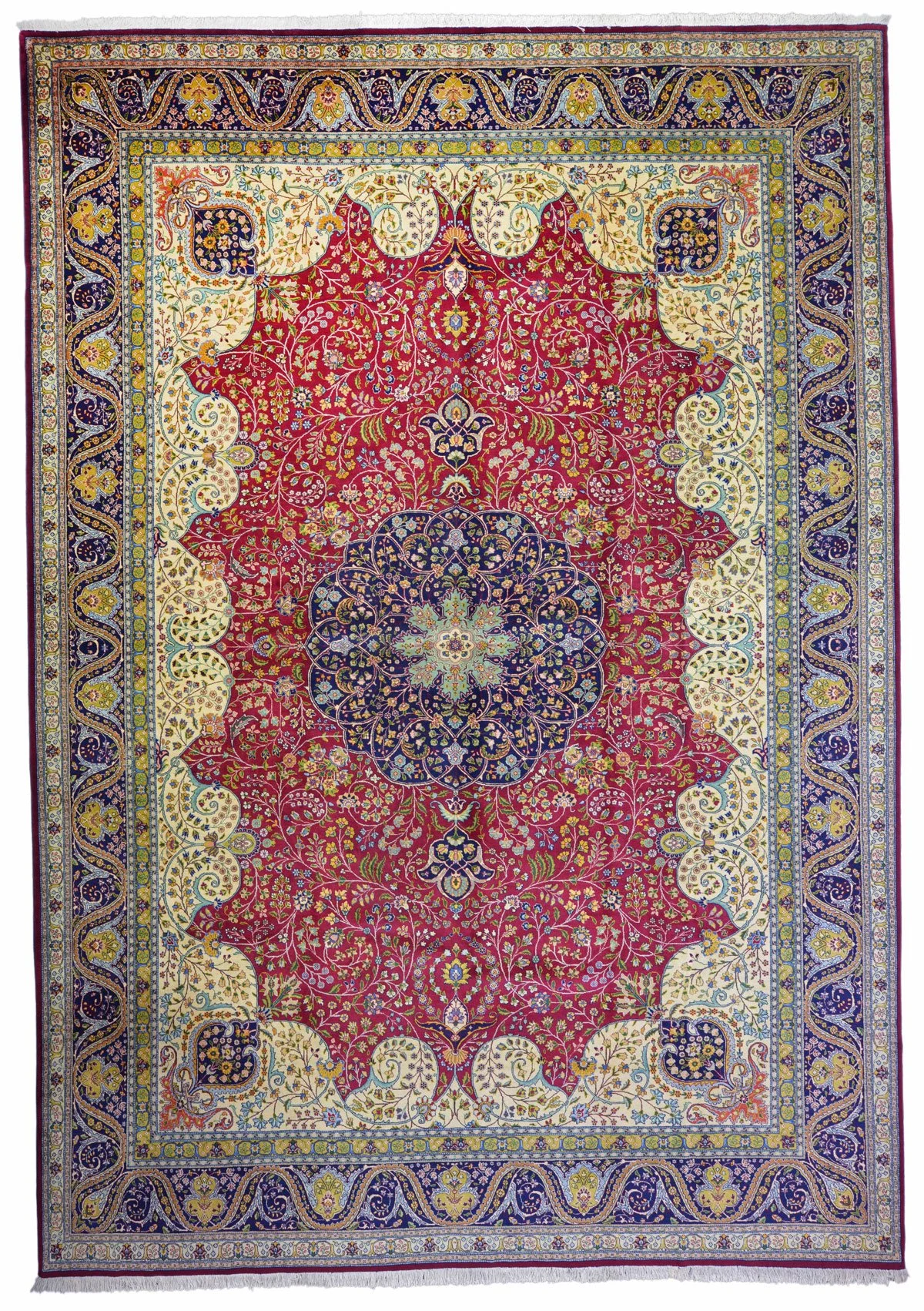
Few Persian cities have influenced the history of carpet weaving as profoundly as Tabriz. Situated in the northwest of Iran, where Persia historically met Anatolia and the Caucasus, the city became a crossroads of trade, ideas, and artistic traditions. Having served as the capital of Persia during different periods, Tabriz attracted master designers, calligraphers, painters, and craftsmen whose creativity shaped one of the world's greatest schools of carpet weaving.
Unlike many weaving centres that sought perfection primarily through symmetry and intricate repetition, the designers of Tabriz became celebrated for their imagination. They were visual storytellers who constantly developed new compositions while remaining deeply rooted in Persian artistic tradition. Every great Tabriz carpet reflects not only technical mastery but also the personality and creativity of its designer.
This magnificent carpet is a superb example of that tradition. The great floral medallion appears almost suspended within a field of rich crimson, surrounded by an extraordinary network of scrolling vines, blossoms, and arabesques. The composition possesses remarkable balance, yet nowhere does it feel rigid. Every element flows naturally into the next, creating a sense of movement that rewards prolonged observation.
The border frames the composition with equal elegance. Delicate floral scrolls unfold rhythmically, enclosing the field without overwhelming it. The deep indigo blues, rich crimson, soft ivory, and gentle greens create a colour harmony that has long been regarded as one of the hallmarks of the finest Tabriz workshops.
Like much of classical Persian ornament, the design is inspired by nature rather than by literal representation. Flowers, leaves, vines, and palmettes are stylised into an ideal garden, reflecting the Persian vision of paradise as a place of eternal beauty and harmony. The flowing arabesques seem almost alive, growing endlessly without beginning or end, a visual expression of continuity and renewal.
The remarkable refinement of the drawing reflects generations of accumulated artistic knowledge. Every curve, every blossom, and every proportion has been carefully considered. Such compositions required not only exceptional designers but also highly accomplished weavers capable of translating thousands upon thousands of knots into a seamless work of art.
Woven from the finest wool on a cotton foundation and coloured with carefully balanced dyes, this carpet possesses the softness, clarity, and elegance for which Tabriz has long been celebrated. Time has mellowed the colours beautifully, allowing the composition to acquire a quiet dignity that only age can bestow.
This is a carpet that effortlessly bridges the classical and the contemporary. Its timeless design allows it to become the centrepiece of a traditional interior while sitting equally comfortably within a modern architectural space. Like the finest works produced in Tabriz, it reveals more of itself with every viewing, inviting the eye to wander through an endless garden of flowers and ornament.
More than a beautiful furnishing, this carpet represents the artistic spirit of one of Persia's greatest cultural capitals—a city where literature, painting, architecture, and carpet design have flourished together for centuries.
Material: Fine wool on a cotton foundation.
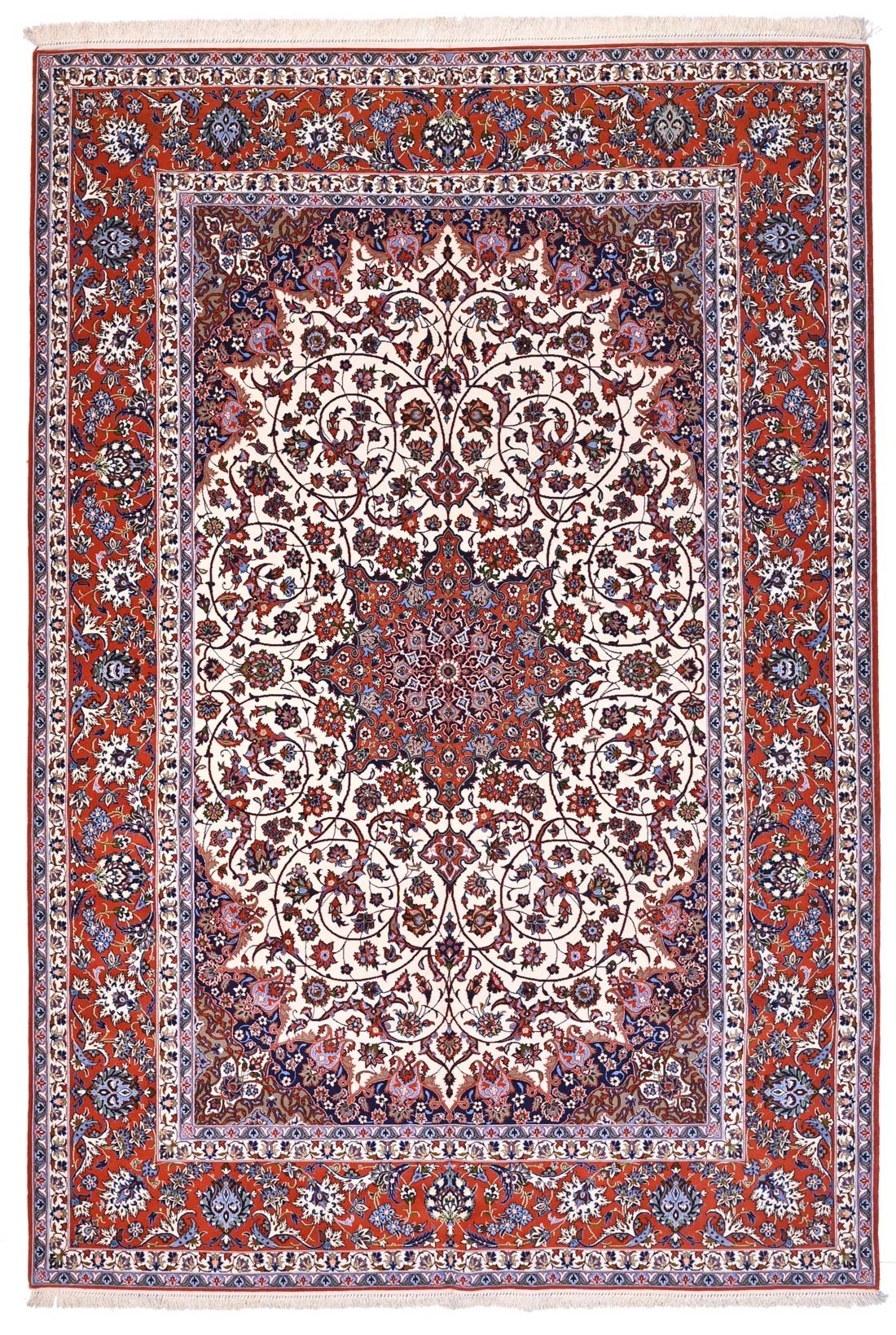
Isfahan, the crown jewel of Persian art and culture, is renowned for its magnificent palaces, intricate tile work, and timeless architectural wonders, a legacy born during the opulent Safavid era of the 16th and 17th centuries. Under the enlightened reign of kings like Shah Abbas I, art and craftsmanship flourished like never before. Among the most enduring achievements of this golden age are the breathtaking carpets that continue to inspire awe centuries later.
This exceptional piece is a masterfully woven, contemporary homage to that storied past. Inspired by a design originally commissioned by Shah Abbas himself, hence the revered "Shah Abbasi" motif, the carpet embodies the refinement and prestige of classical Persian artistry.
Meticulously handcrafted with over three million knots on a foundation of fine silk, this creation took more than a year to complete. Every detail reflects an extraordinary level of skill, passion, and heritage, making it not just a floor covering, but a true work of art.

"I once asked a bird, how is it that you fly in this gravity of darkness? The bird responded love lifts me.'"
Hafez (1350-1390 AD)
Persian poems and mystic scripts abound with metaphors, where birds, trees, wine, and more serve as analogies to describe profound subjects like mystical transcendence. Many weavers and designers from the past were raised within a deeply spiritual culture. The recitation of poems by Hafez, Rumi, Khayyam, and other eminent Persian poets was a cornerstone of entertainment at any gathering.
The enduring influence of this rich cultural backdrop is a fundamental element that defines antique Persian carpets as they are: timeless works of art that sing and dance for those who can comprehend their language.
The Tehran rug here is a fascinating example of such carpets from the late 19th century, beautifully arousing a feeling of an upward movement.
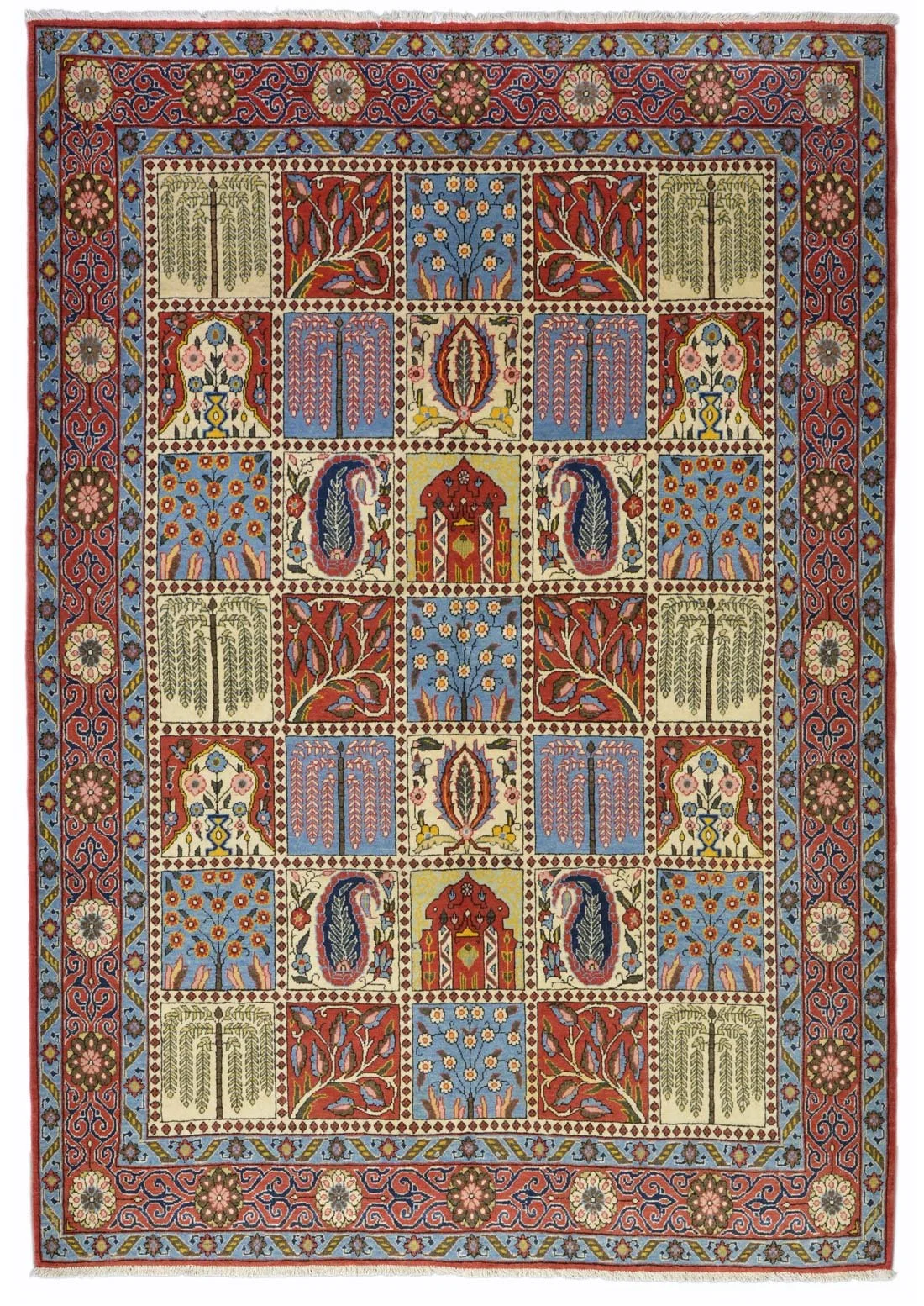
Persians have held gardens in exceptionally high regard for thousands of years. The remains of the royal gardens of Pasargadae, dating back to the 6th century BC, testify to a long cultural fascination with creating earthly reflections of paradise. This admiration found its way into poetry, architecture, and naturally into the art of carpet weaving.
This beautiful Qum carpet, woven around the 1930s, is a wonderful example of the Persian garden theme. The designer has organised the field into orderly compartments, each containing a stylised representation of trees, flowers, and plants, together creating an idealised garden in full bloom.
Among the most notable motifs are the cypress and the weeping willow. In Persian literature, the cypress often serves as a metaphor for the graceful figure of the beloved, while the weeping willow evokes the beauty and flowing charm of the beloved's hair. These symbolic trees appear alongside a rich variety of flowers, all rendered in elegant stylised forms.
Such garden carpets often carried deeply personal meanings. One can easily imagine a young girl weaving or commissioning such imagery for her dowry, filling the design with symbols of beauty, love, hope, and aspiration.
Woven in the city of Qum using fine materials and high-quality yarns dyed from natural sources, this carpet reflects both artistic refinement and cultural depth. Beyond its decorative beauty, it is a celebration of the Persian love of gardens, poetry, and the enduring relationship between nature and art.
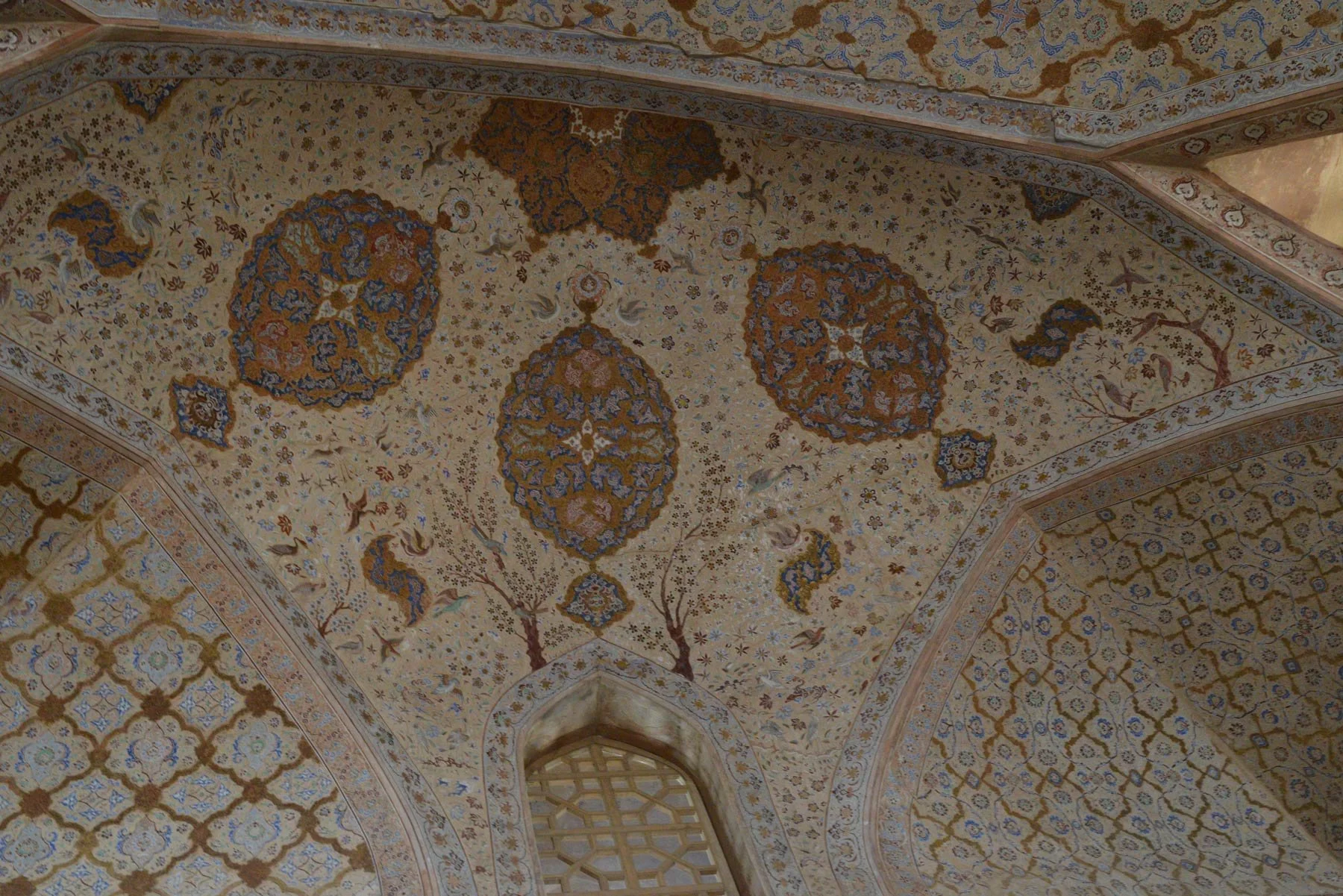
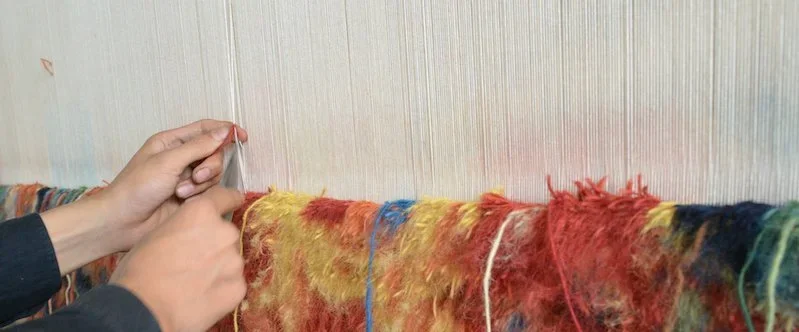
The Virtue of Slowness
One of the most remarkable aspects of city carpets is the precision with which they are made.
The knotting technique and the fineness of the knots allow the weaver to render graceful curves, delicate flowers, and intricate details with remarkable clarity. Some contain millions of knots and require years to complete.
However, the true achievement is not the knot count itself.
The real marvel lies in the patience: the slowness with which the work is done, and the way this measured pace allows the intentions and emotions of both designer and weaver to settle into the process, intertwining with the warp and weft and giving the carpet its depth and grace.
Day after day, month after month, the weaver sits before the loom, repeating movements learned through years of practice, almost like a dance. Progress is made slowly. Entire weeks may pass while only a small section of the carpet emerges.
What begins as a few coloured threads gradually reveals itself upon the blank field of warps stretched across the loom, becoming a flower, a medallion, a garden, or a world imagined long before the first knot was tied.
In a time increasingly defined by speed, Persian carpets remind us that some forms of beauty cannot be hurried; they require time to materialise and take shape.
Their existence depends upon time, concentration, and quiet dedication, all poured into the carpet with care and love.
Every knot is a small act of faith, tied in the belief that the final vision will one day emerge in its full splendour.
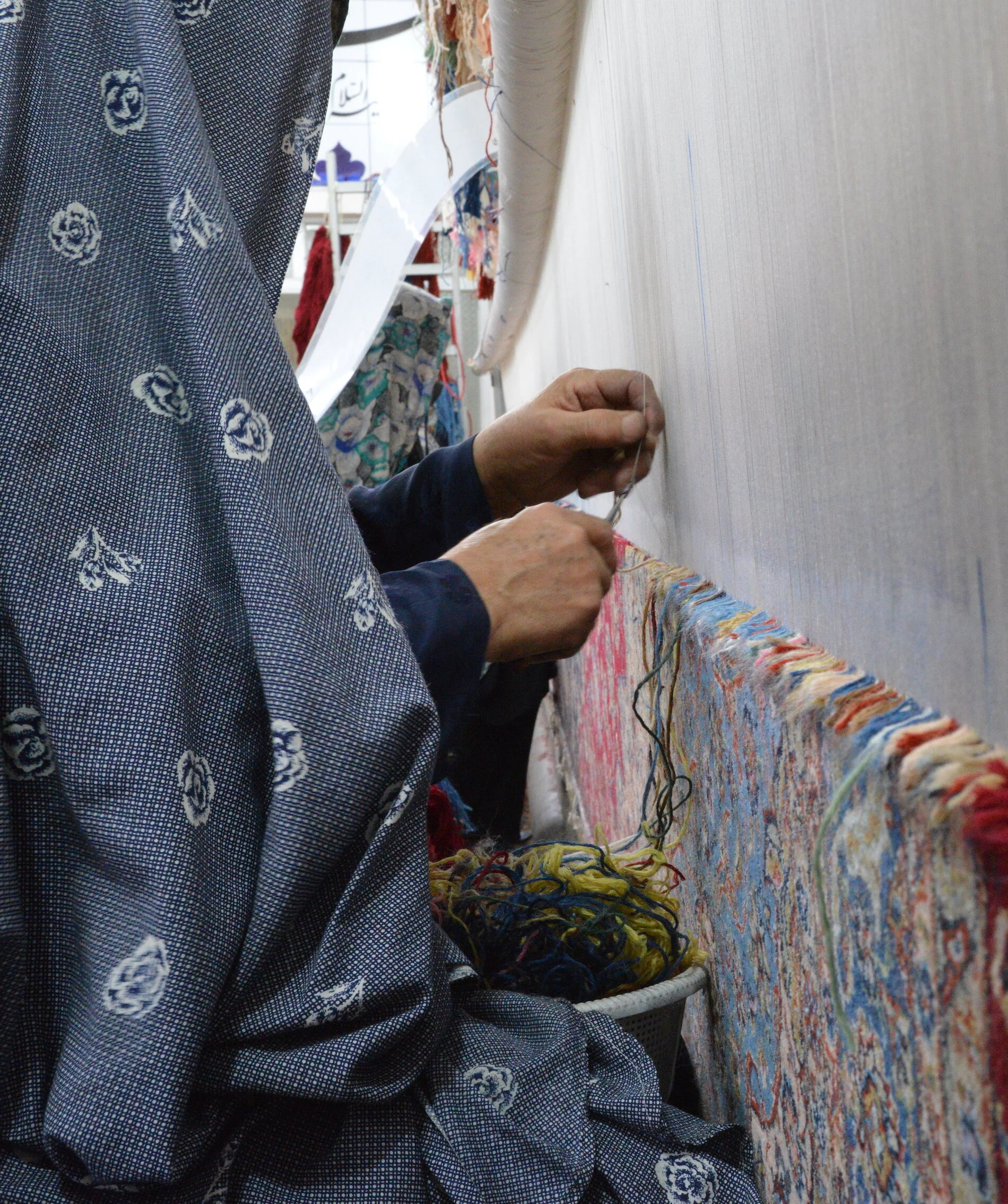
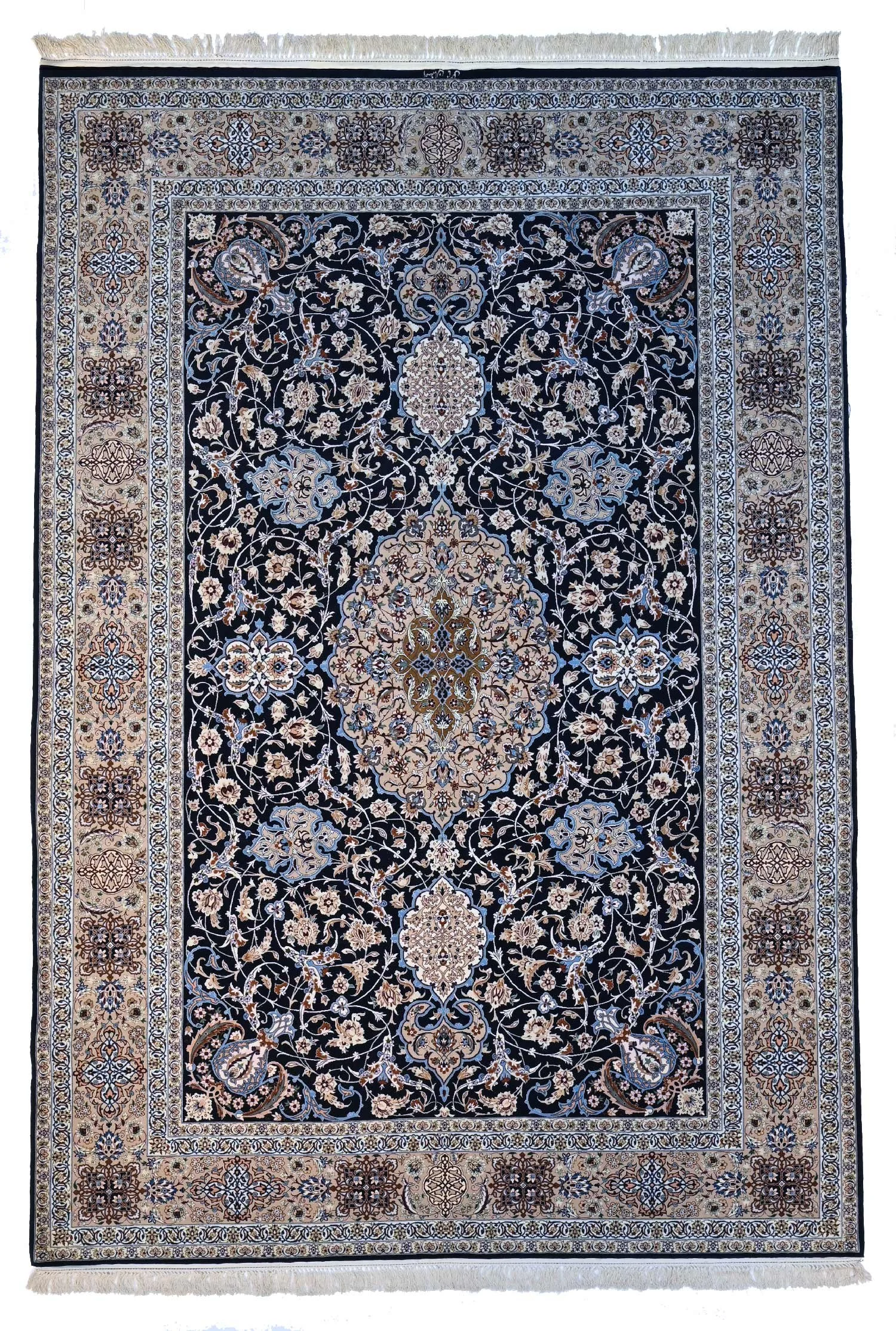
Almost two years of meticulous craftsmanship by several artisans ander the supervision of master Nael of Isfahan have culminated in a true masterpiece. The result is simply breathtaking.
The pattern and colour combination are unique, making this Isfahan rug a testament to centuries of excellence in craftsmanship and the mastery of the city’s renowned weavers. Designs such as this extraordinary example are part of a rich cultural heritage dating back to the 17th century, when the art of carpet weaving flourished under the reign of Shah Abbas the Great.
This carpet is an elegant manifestation of thousands of years of history and culture.
Woven with wool on a silk foundation, it has been masterfully crafted with over seven million tiny knots of wool and silk, achieving an incredible level of finesse.
Hand-knotted, Wool and silk, master-weaver: Nael
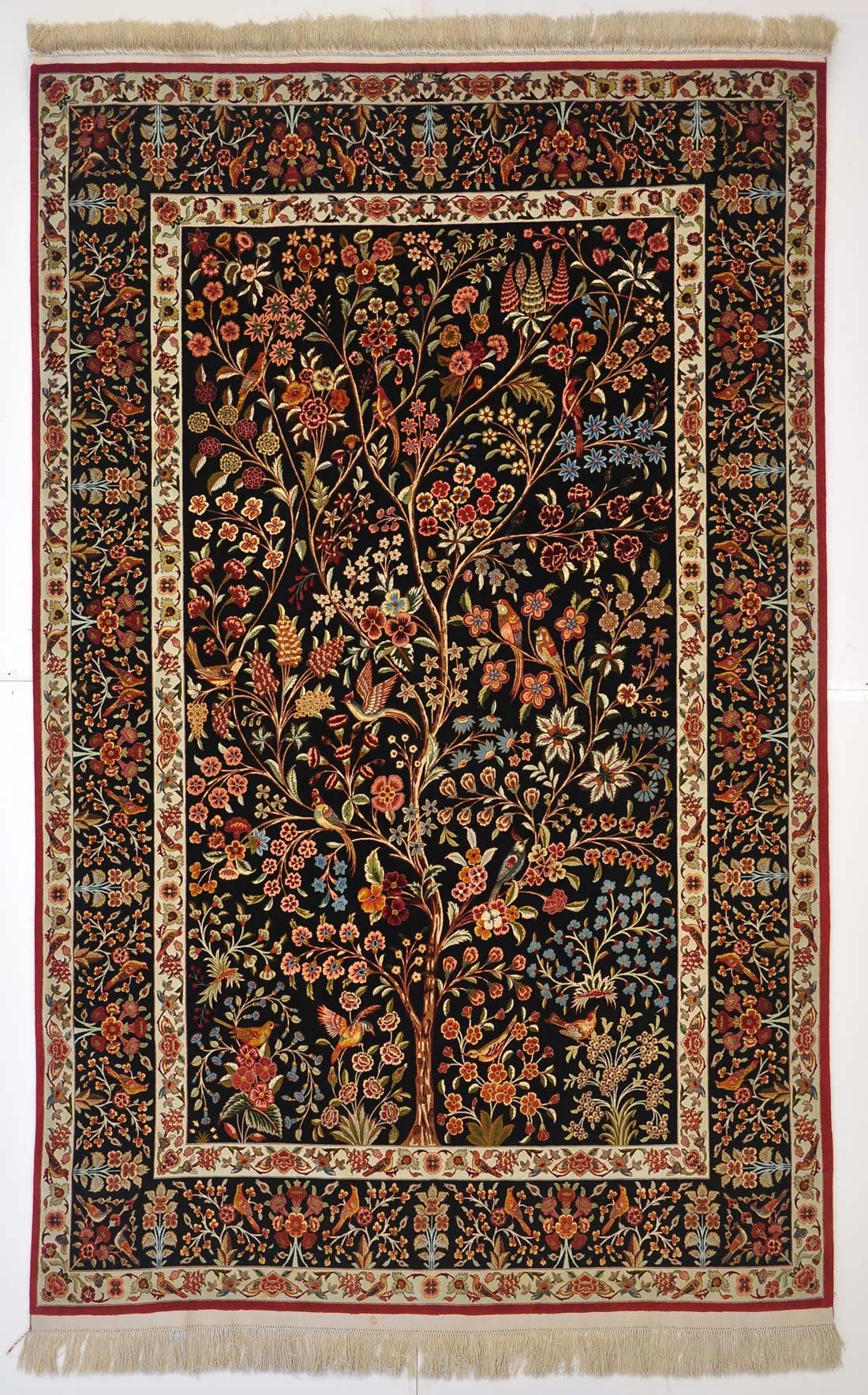
A Superfine Tabriz rug in tree of life design.
Number 6672 288x182
Wool and silk on a silk base.
The mythical Tree of All Seeds, or Tree of Life, is one of the most intriguing and enduring subjects in Persian legends. In Zoroastrian scripture, this sacred tree rises from the centre of a mythical sea, bearing every kind of fruit and flower. Upon its branches rests the nest of the legendary Simorgh, and each time the magical bird takes flight or returns to its perch, it scatters the seeds across the world, giving life to the vegetation that covers the earth. It is a symbol of creation, renewal and the unity of all living things.
This ancient concept has inspired countless Persian carpets, some woven with abstract or stylised interpretations, others rendered with remarkable intricacy and precision. After seeing innumerable examples over the past forty years, I can confidently say that the piece here is among the finest I have ever encountered. With more than seven million knots, it has been woven with extraordinary care to achieve a flawless and deeply expressive interpretation of the Tree of Life. The materials used are of the highest quality, and the colour harmony shows a level of refinement far beyond the ordinary.

Persian Nain.
Classic design in Blue
341�245
Wool pile with Silk highlights on a cotton foundation.
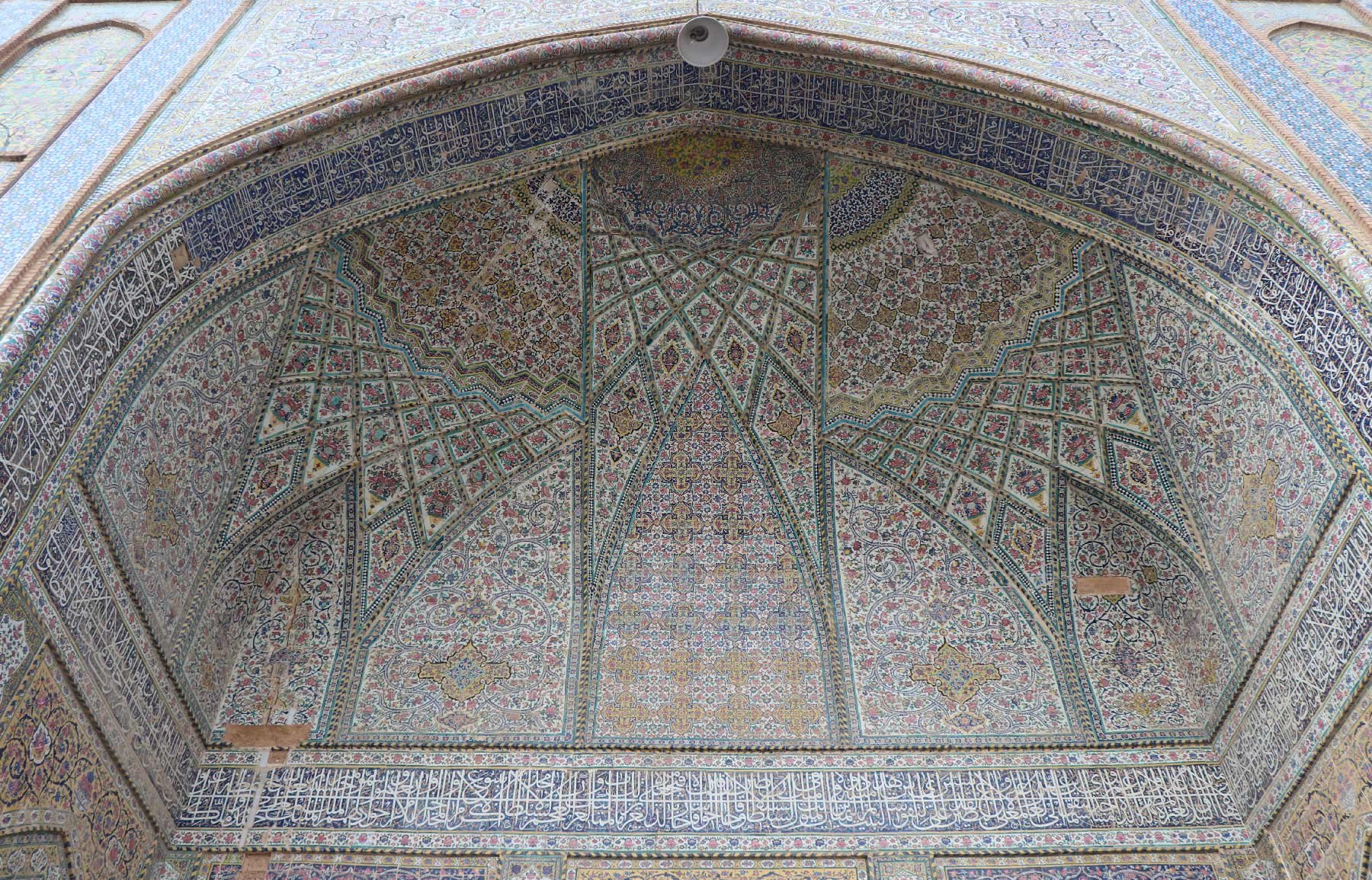
Rugs of Kings, Kings of Rugs
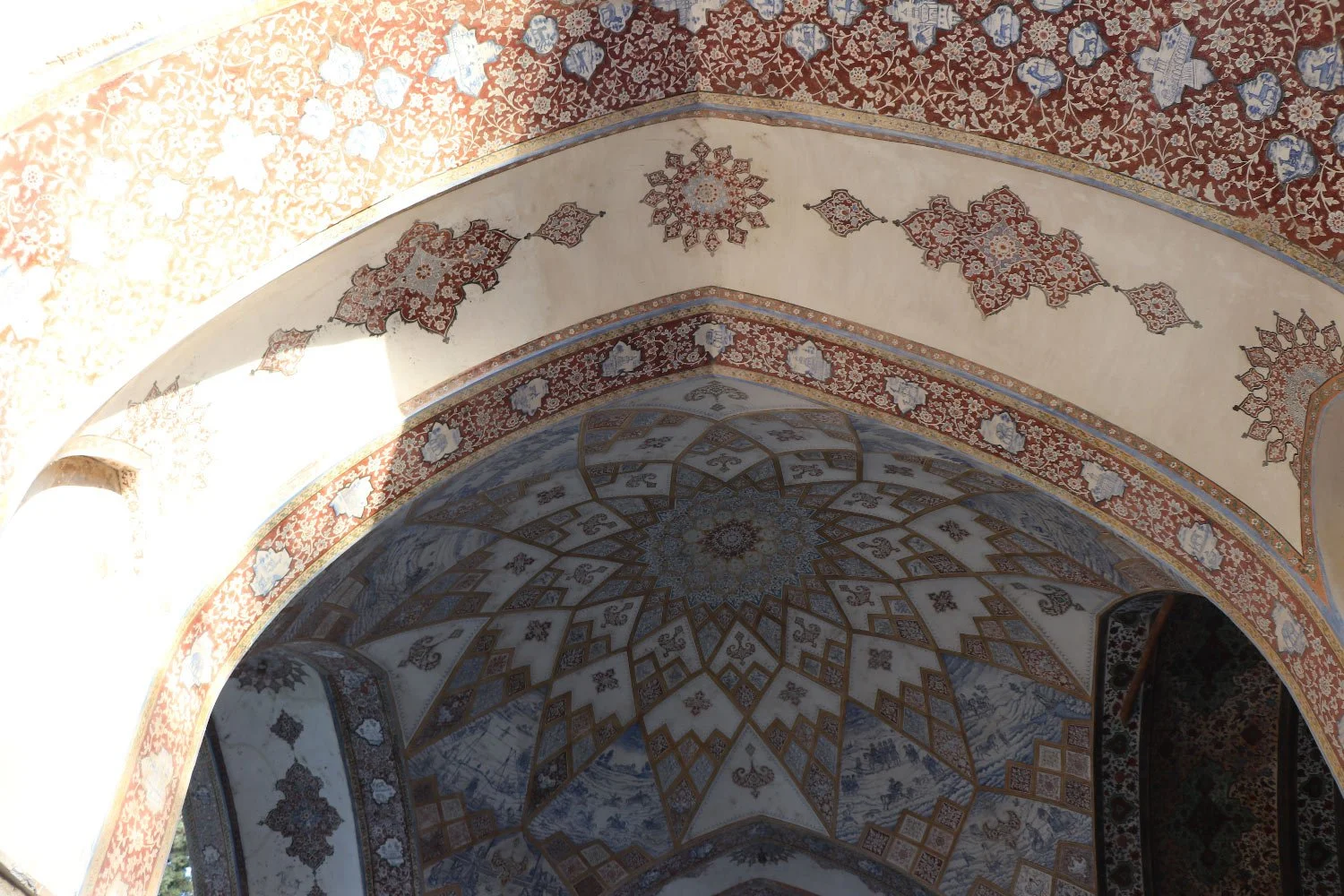
Safavid artists elevated Persian art to new heights that continue to astonish viewers even today. They built magnificent architecture adorned with elaborate murals, exquisite ceramic work, and splendid structures, as well as remarkable rugs to cover their floors.
Urban rug designs remain deeply influenced by the Safavid era, from which it has proven difficult to deviate even after four centuries. The Safavids established royal workshops in various cities, from Tabriz and Isfahan to Josheghan and Kashan, commissioning the finest artisans to create rugs according to their vision.
Before weaving began, court designers drafted patterns suited to the splendour of royal palaces in Iran and abroad. Safavid kings often impressed foreign envoys by presenting them with carpets as diplomatic gifts. These patterns were frequently designed by the same artists who created the motifs used in Persian architecture and ceramics, which explains why similar designs can often be seen on both rugs and buildings.
Whether Shah Abbas the Great and the Safavid court were the true inventors of the style we now call court carpets, or city carpets, cannot be stated with certainty, as very few examples from earlier periods have survived. There is, however, little doubt that the Safavids played a pivotal role in shaping and refining the aesthetic language of Persian carpets.
The influence of their vision remains alive today and is perhaps most clearly reflected in what we now recognise as the classic Persian rug.

The city of Kermanshah, in western Iran, has long been known for its rich cultural heritage and deep-rooted weaving traditions. The weavers of the region, many of them Kurdish, have produced carpets of exceptional quality for generations. Yet, unlike some of the major weaving centres of Iran, carpet production in Kermanshah was never carried out on a large scale. As a result, genuine older examples such as this one are relatively rare and highly sought after by collectors.
This magnificent carpet is remarkable not only for its rarity but also for its impressive size and extraordinary beauty. Woven using hand-spun wool and natural dyes, it displays the qualities that distinguish the finest Persian carpets. The natural dyes have matured gracefully over time, creating a depth and harmony of colour that synthetic dyes rarely achieve. Equally important, the use of hand-spun wool preserves the wool's natural lustre and vitality, giving the carpet a richness and character that continue to improve with age.
The design is particularly captivating. A lush field of stylised flowers, flowering shrubs, vines, and clusters of grapes unfolds across the deep blue ground. In Persian culture, the grape has long been associated with joy, abundance, and love, making its presence especially meaningful. The rhythm of the composition creates the impression of an endless garden in bloom, inviting the viewer to explore its countless details.
Creating a carpet of this size and complexity required immense dedication. One can easily imagine skilled weavers spending nearly two years at the loom, knot by knot, gradually transforming fine wool and colour into a work of lasting beauty.
Today, this Kermanshah carpet stands as a rare example of a distinguished weaving tradition. Rich in colour, exceptional in craftsmanship, and impressive in scale, it is a piece capable of transforming an interior while bringing with it layers of history, culture, and artistic achievement.


This magnificent Qum silk piece is the result of meticulous work by a skilled weaver who has tied over 1.6 million knots to create the intricate pattern of this rug. It exemplifies the reasons behind the worldwide fame of Persian carpets. The masterful hands of the weaver danced for nearly a year on the warp and weft of this rug, bringing to life its mesmerizing beauty.

Most city carpet designers are bound with the deep traditions and designs repeated in various forms. The work of those who break the norms and create an authentic design stands out as extraordinary as the example here. Although one can see the influence of the regional traditions and thus identify the work as one from Kashan the creative design and use of beautiful autumn hues are unusual and highly pleasing to the eye.

Close your eyes and listen.
Caress the pile and see.
Perhaps the greatest approach to appreciating a city carpet is not to view it merely as an object of decoration.
Behind every piece stand designers, dyers, spinners, weavers, merchants, and patrons, each contributing to a tradition that ultimately manifests as a representation of an ancient civilisation.
Rugs carry forward the collective memory of a culture that has lived for thousands of years. They possess a mysterious allure that may take years to decipher, and in the process, one becomes acquainted with the passion, humanity, humility, and honesty woven into every knot.
They carry the quiet presence of the people who made them, and through them, the echoes of a civilisation that continues to speak across centuries.
A beautiful Persian carpet not only nourishes the eyes but also enriches the soul.
So the next time you wish to enjoy a rug, pause for a moment. Close your eyes and listen. Caress the pile and see. Beneath your fingertips lies more than wool and colour. It is the living expression of a people, a history, and a civilisation woven into every thread.

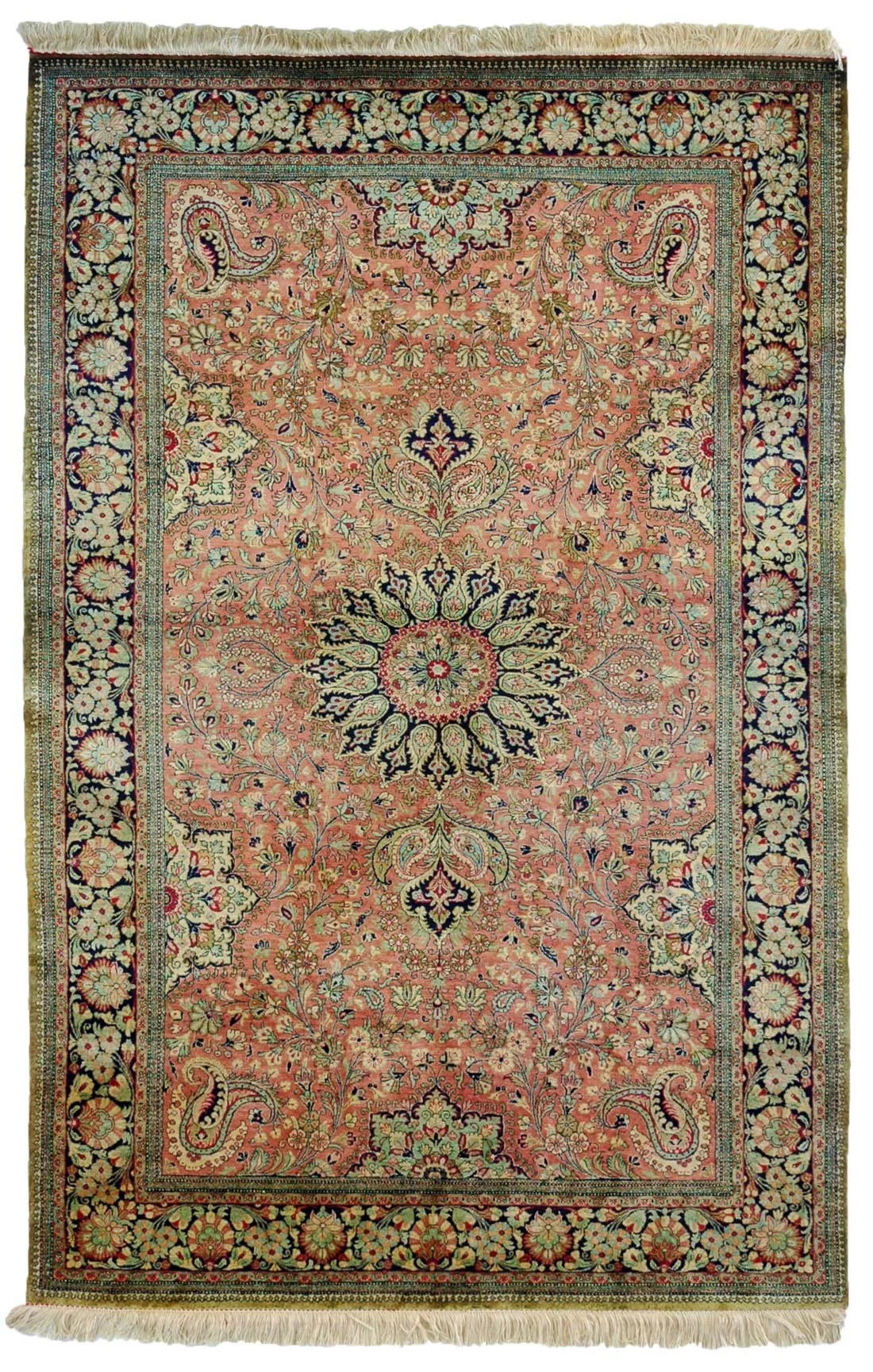
An early work from Qum’s emerging weaving tradition, shaped in the years when masters from neighbouring Kashan established workshops in the city and introduced their refined aesthetic. Though new to rug weaving at the time, Qum drew upon the millenary tradition of Persian carpet art that surrounded it, allowing its craftsmen to absorb, reinterpret and elevate centuries of knowledge. Woven in the 1930s with exceptionally fine silk cultivated in the Gorgan plains near the Caspian Sea, this piece reflects the creative dawn of carpet art in Qum, when the city's pioneering artists began shaping a new visual language inspired by the finest classical Persian designs.
The delicately drawn medallion, graceful floral sprays and luminous palette express the artistic sensibility that came to define Qum’s celebrated silk weaving. A rare example from this formative era, it continues to enchant with its quiet sophistication, sheen and meticulous beauty.
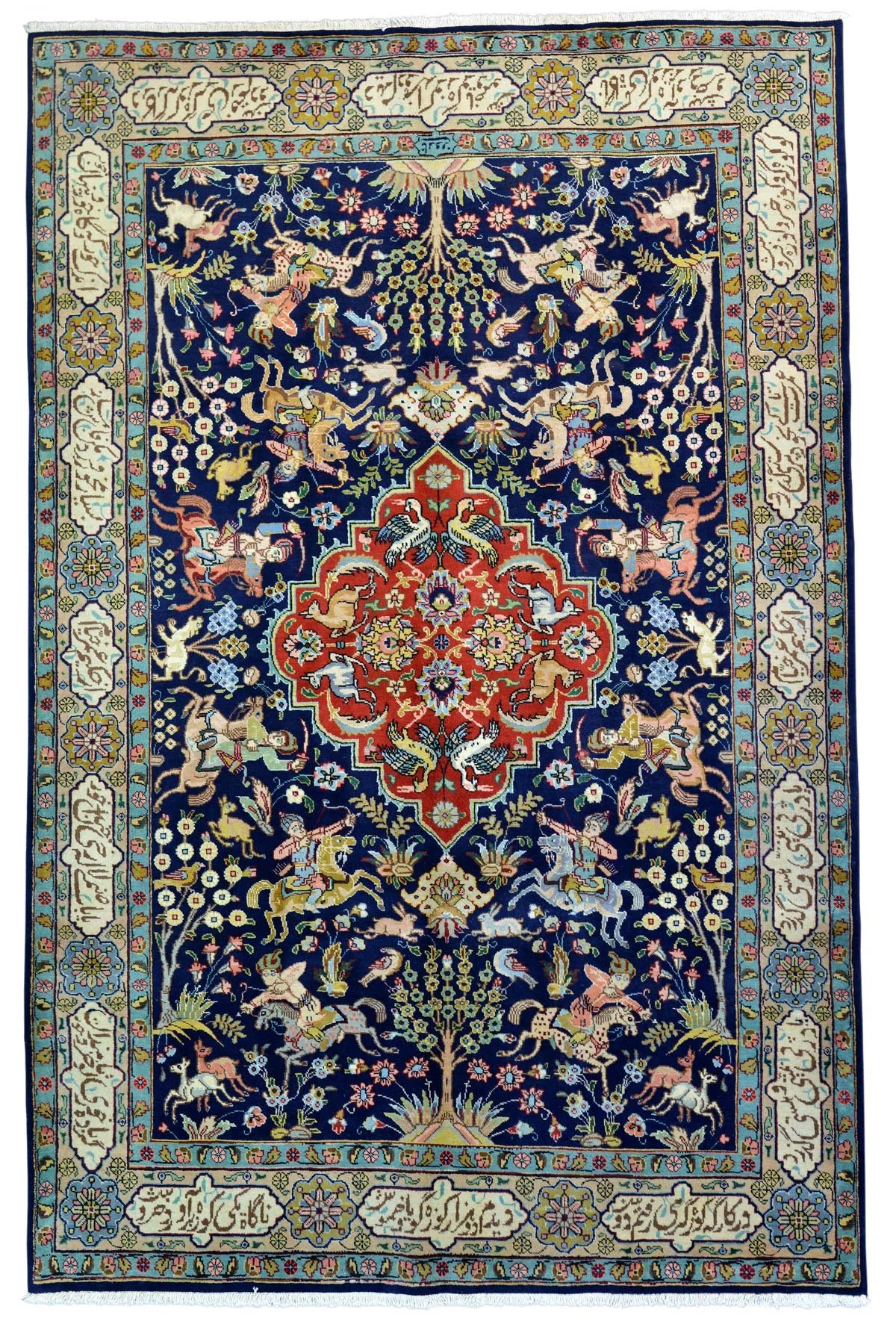
Without a doubt, Omar Khayyam is one of the most celebrated Persian poets in the world. His verses achieved global fame through the 1859 translation of Edward FitzGerald:
"A Book of Verses underneath the Bough,
A Jug of Wine, a Loaf of Bread—and Thou
Beside me singing in the Wilderness—
Oh, Wilderness were Paradise enow!"
Poetry and weaving come together beautifully in this magnificent Tabriz carpet. Running gracefully along its border is the verse, “Drink not but with the wise,” a line attributed to Khayyam. Such inscriptions reflect a long Persian tradition in which poetry, music, and the visual arts existed in close dialogue, enriching one another across generations.
This carpet celebrates Khayyam not only through poetry but also through imagery. At its centre appears one of his favourite historical figures, Bahram the Hunter, the Sasanian king who ruled Persia from 420 to 438 AD. Bahram was renowned for his skill in hunting and was admired by Khayyam and other poets for bringing prosperity and justice to his realm. His legendary character made him a recurring figure in Persian literature and artistic expression.
Also woven into the carpet is one of Khayyam's most famous reflections on the passage of time:
"I went to the potter's shop yesterday,
I saw a thousand pots, mute and shouting, on display.
Suddenly, one roared as if to say,
Gone in clay are the potters, buyers, and sellers today."
The carpet itself was woven in Tabriz during the mid-20th century using fine hand-spun wool, natural dyes, and a cotton foundation. The clarity of the drawing, the balance of colours, and the calm rhythm of the composition reveal the hand of an accomplished master. Decades of careful use have allowed the colours to settle beautifully, while the wool has developed a soft and pleasing texture that only time can create.
The piece bears the signature of Master Narvani, a respected weaver known not only for his refined taste in carpet making but also for his mastery of music. His sensitivity to rhythm, harmony, and balance is evident throughout the composition. The same artistic spirit that guides a musician seems to flow through the design, lending the carpet a composed and contemplative presence.
This distinguished Tabriz carpet is far more than a decorative object. It is a meeting point of poetry, history, music, and craftsmanship, a work that continues to tell its story while bringing elegance, cultural depth, and quiet charm to an interior.
Material: Hand-spun wool pile, natural dyes, cotton foundation
Origin: Tabriz, Iran
Period: Mid 20th century
Signature: Narvani
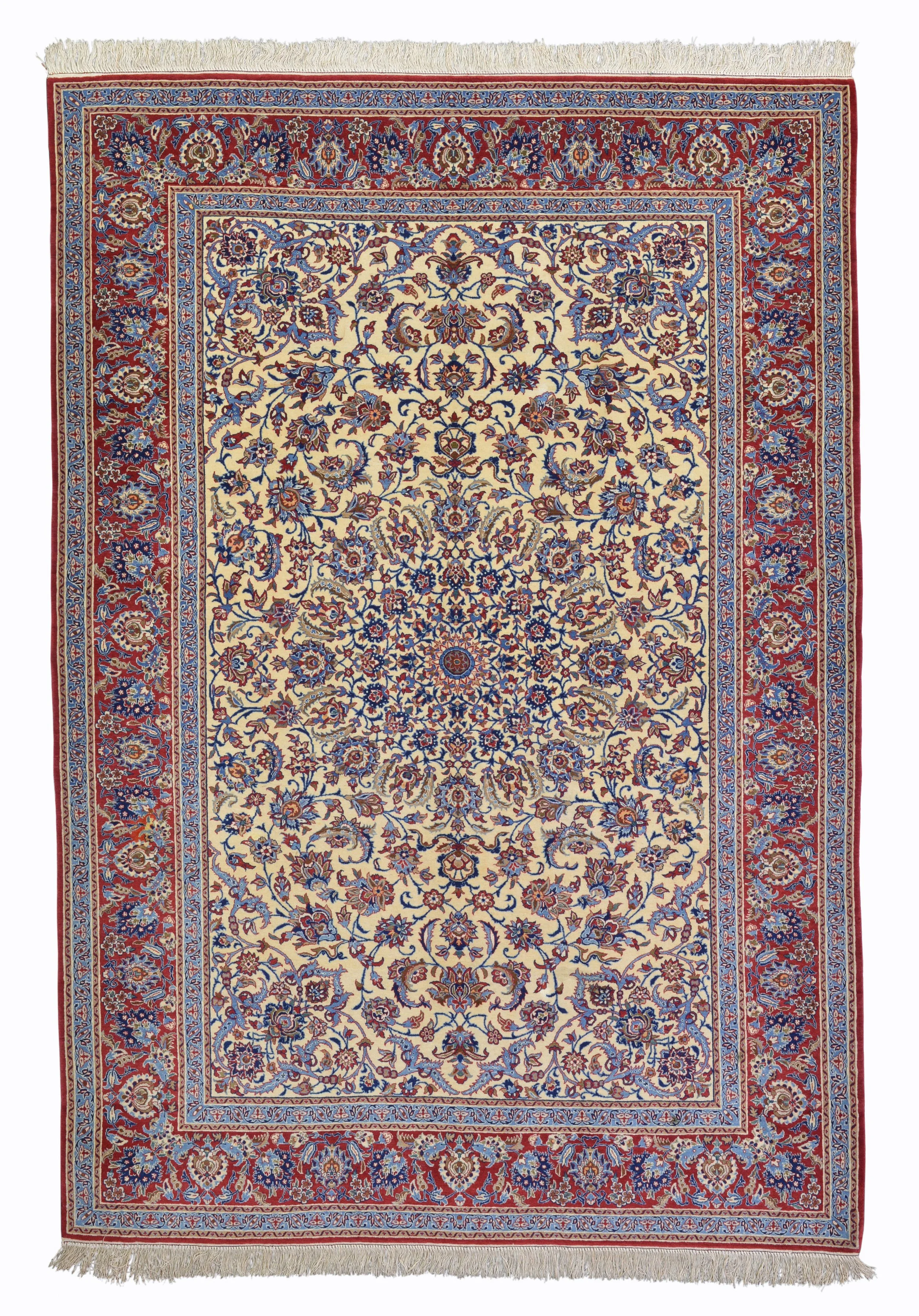
Wool on a cotton base
A century ago, Nain was renowned for producing Aba, a traditional Persian cloak crafted from wool yarn by skilled weavers. However, with the introduction of industrial fabrics from the West in the late 19th and early 20th centuries, which quickly became fashionable, the demand for these local garments declined, leading to the closure of many workshops.
In response, the production of Persian carpets gained momentum, particularly due to rising demand in Europe and America. Local investors, such as the Habibian and Mofidi brothers, seized the opportunity and brought in master weavers from the neighbouring city of Isfahan.
They employed local yarn spinners, dye masters, and former Aba weavers to establish carpet workshops, creating the first generation of Nain rugs. One of the unique characteristics of these rugs was the use of traditional colours—varied shades of blue, tan, beige, and white—colours that had previously been used to dye yarn for the Aba cloaks.
The finest and earliest examples of Nain rugs were produced in the village of Tudashk, on the outskirts of Nain, renowned for their exceptional craftsmanship and quality. The example here is one of the best Nain–Tudashk rugs, showing an exquisite colour combination and the finest quality wool

Have a question?
Do send me a note if you would like more information on any specific rug, whether it is yours or one of the rugs on this website.
(For ethical reasons, I would not comment on rugs other than those that are yours, mine, or in the public domain.)

In the meantime, don’t forget to follow us on Instagram. We have loads of information and pictures there: