
 Image 1 of 2
 Image 2 of 2
Persians have cherished gardens for thousands of years, seeing them not merely as cultivated spaces but as earthly reflections of paradise. From the royal gardens of Pasargadae, created under Cyrus the Great in the sixth century BC, to the great Persian poems and miniature paintings, the garden has remained one of the most enduring symbols of Iranian civilisation. Among the finest woven expressions of this tradition are the celebrated Bakhtiari garden carpets.
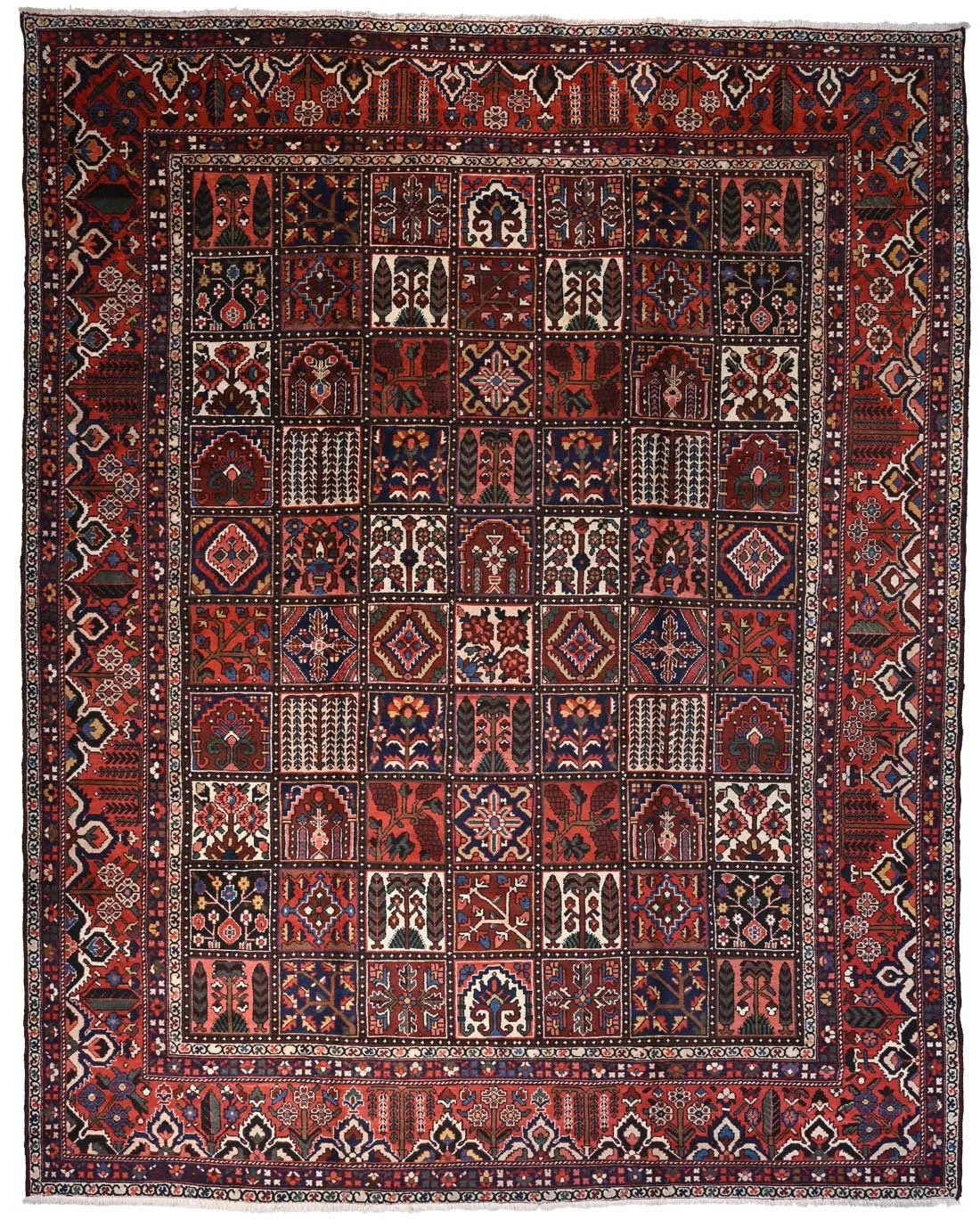
This remarkable example was woven in the 1940s by Armenian weavers living among the Bakhtiari and Lur people of central Iran. Their ancestors were resettled in the region during the reign of Shah Abbas the Great (1587–1629), when many Armenian craftsmen from Julfa were relocated to strengthen the arts, crafts, and commerce of the Safavid Empire. Over the centuries they preserved their exceptional craftsmanship while blending it with the artistic traditions of the Bakhtiari tribes, creating a distinctive group of carpets known for their rich symbolism, bold colours, and remarkable originality.
Unlike workshop carpets, this rug was woven entirely from memory. Every compartment represents an individual expression of the weaver, making the carpet almost an encyclopaedia of Bakhtiari motifs. Each square contains a different composition, yet together they create a harmonious vision of a Persian garden filled with symbols accumulated over centuries.
Among the most important motifs is the ancient cypress tree, a symbol known in Iran since antiquity and depicted on the reliefs of Persepolis more than 2,500 years ago. In Persian literature the sarv, or cypress, became the eternal metaphor for the beloved, admired for its elegant form, evergreen nature, and enduring beauty. Beside it stand graceful weeping willows, another familiar image in Persian poetry, where their flowing branches evoke the beloved's long hair and the longing of love itself.
The vine and its clusters of grapes appear throughout the composition as well. In Persian poetry, grapes, as the source of wine, symbolise joy, celebration, and the pleasures of life. Trees of Life rise among flowering plants, expressing renewal, continuity, and the hope that life flourishes from one generation to the next. Together these motifs transform the carpet into far more than decoration; they become a woven reflection of Persian literature, memory, and philosophy.
The colours possess the unmistakable warmth of traditional vegetable dyes. Madder provides the rich reds, indigo the deep blues, while walnut husks, vine leaves, pomegranate skins, and other local plants contribute the remarkable range of earthy tones. Combined with hand-spun wool, these natural dyes have mellowed beautifully with age, producing the soft lustre and fascinating texture that only decades of gentle use can create.
Woven with hand-spun wool on a strong cotton foundation, this is a carpet of exceptional character. It is both a beautiful decorative piece and a historical document, preserving the artistic dialogue between Armenian craftsmanship and Bakhtiari tradition. Every compartment rewards closer inspection, revealing another symbol, another story, and another glimpse into one of the richest weaving traditions of Iran.
Material: Hand-spun wool on a cotton foundation, natural vegetable dyes.
Persians have cherished gardens for thousands of years, seeing them not merely as cultivated spaces but as earthly reflections of paradise. From the royal gardens of Pasargadae, created under Cyrus the Great in the sixth century BC, to the great Persian poems and miniature paintings, the garden has remained one of the most enduring symbols of Iranian civilisation. Among the finest woven expressions of this tradition are the celebrated Bakhtiari garden carpets.
This remarkable example was woven in the 1940s by Armenian weavers living among the Bakhtiari and Lur people of central Iran. Their ancestors were resettled in the region during the reign of Shah Abbas the Great (1587–1629), when many Armenian craftsmen from Julfa were relocated to strengthen the arts, crafts, and commerce of the Safavid Empire. Over the centuries they preserved their exceptional craftsmanship while blending it with the artistic traditions of the Bakhtiari tribes, creating a distinctive group of carpets known for their rich symbolism, bold colours, and remarkable originality.
Unlike workshop carpets, this rug was woven entirely from memory. Every compartment represents an individual expression of the weaver, making the carpet almost an encyclopaedia of Bakhtiari motifs. Each square contains a different composition, yet together they create a harmonious vision of a Persian garden filled with symbols accumulated over centuries.
Among the most important motifs is the ancient cypress tree, a symbol known in Iran since antiquity and depicted on the reliefs of Persepolis more than 2,500 years ago. In Persian literature the sarv, or cypress, became the eternal metaphor for the beloved, admired for its elegant form, evergreen nature, and enduring beauty. Beside it stand graceful weeping willows, another familiar image in Persian poetry, where their flowing branches evoke the beloved's long hair and the longing of love itself.
The vine and its clusters of grapes appear throughout the composition as well. In Persian poetry, grapes, as the source of wine, symbolise joy, celebration, and the pleasures of life. Trees of Life rise among flowering plants, expressing renewal, continuity, and the hope that life flourishes from one generation to the next. Together these motifs transform the carpet into far more than decoration; they become a woven reflection of Persian literature, memory, and philosophy.
The colours possess the unmistakable warmth of traditional vegetable dyes. Madder provides the rich reds, indigo the deep blues, while walnut husks, vine leaves, pomegranate skins, and other local plants contribute the remarkable range of earthy tones. Combined with hand-spun wool, these natural dyes have mellowed beautifully with age, producing the soft lustre and fascinating texture that only decades of gentle use can create.
Woven with hand-spun wool on a strong cotton foundation, this is a carpet of exceptional character. It is both a beautiful decorative piece and a historical document, preserving the artistic dialogue between Armenian craftsmanship and Bakhtiari tradition. Every compartment rewards closer inspection, revealing another symbol, another story, and another glimpse into one of the richest weaving traditions of Iran.
Material: Hand-spun wool on a cotton foundation, natural vegetable dyes.
