
 Image 1 of 1
Life is like a carpet, and we are the weavers of its pattern. Some follow common motifs, traditions, and norms, crafting their own predictable and ordinary designs, perhaps elegant and refined in their own way.
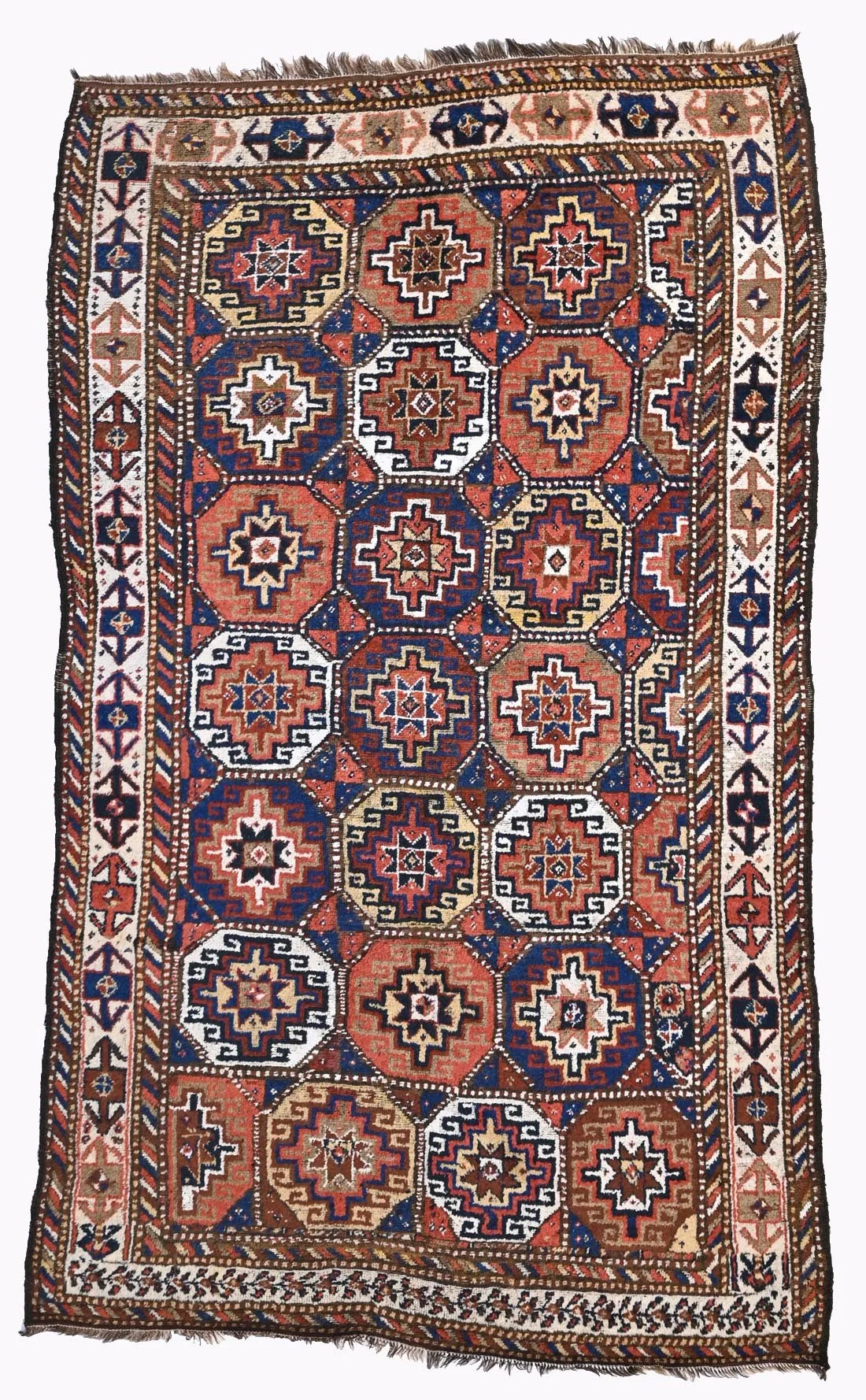
For others, weaving becomes an act of rebellion—a personal adventure, fearlessly moving against the currents, defining their own unique patterns, and living life on their terms. Much like the weaver of this Kordi rug, who created her patterns—bold, distinct, and reflective of her journey.
This tribal rug is the work of a nomadic Kordi girl, whose ancestors were relocated to Khorassan province in the late 16th century. Centuries of coexistence with their Turkoman and Baluch neighbours have profoundly influenced the Kordi weaving style, resulting in designs that differ greatly from those of their cousins in ancestral Kurdistan.
Woven circa 1920s, this rug incorporates cotton as part of the material for the pile. The use of cotton was a rare and expensive choice for the tribe, often practiced when the weaver sought to display her wealth and highlight the premium quality of her creation.
Life is like a carpet, and we are the weavers of its pattern. Some follow common motifs, traditions, and norms, crafting their own predictable and ordinary designs, perhaps elegant and refined in their own way.
For others, weaving becomes an act of rebellion—a personal adventure, fearlessly moving against the currents, defining their own unique patterns, and living life on their terms. Much like the weaver of this Kordi rug, who created her patterns—bold, distinct, and reflective of her journey.
This tribal rug is the work of a nomadic Kordi girl, whose ancestors were relocated to Khorassan province in the late 16th century. Centuries of coexistence with their Turkoman and Baluch neighbours have profoundly influenced the Kordi weaving style, resulting in designs that differ greatly from those of their cousins in ancestral Kurdistan.
Woven circa 1920s, this rug incorporates cotton as part of the material for the pile. The use of cotton was a rare and expensive choice for the tribe, often practiced when the weaver sought to display her wealth and highlight the premium quality of her creation.
