
 Image 1 of 1
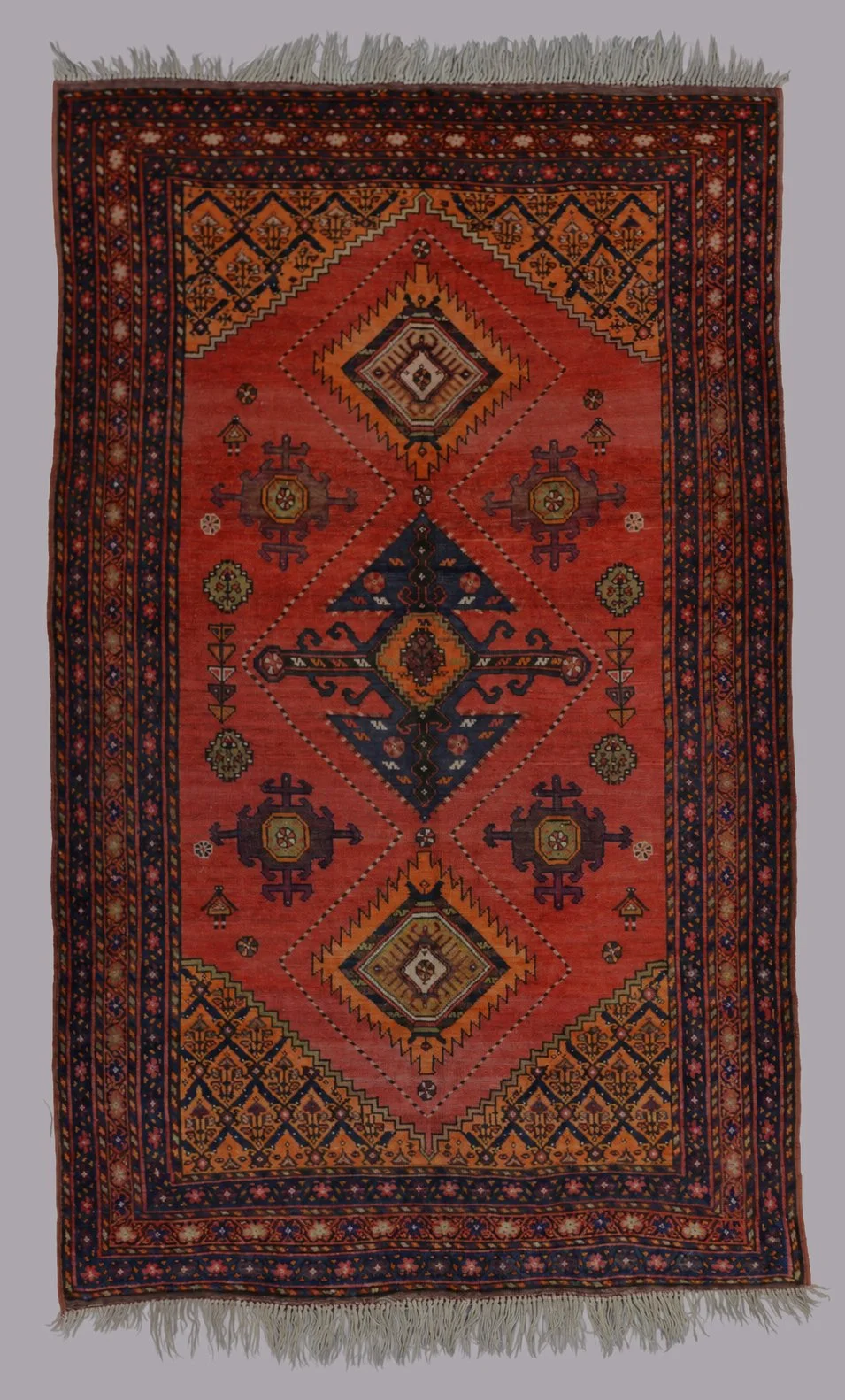
This beautiful Kordi rug from Khorasan dates from the early 20th century and is in fantastic condition. It has very good quality wool, a generous high pile and a fascinating colour combination, with bold geometric motifs standing out against a rich red field.
Many Khorasan Kurds descend from tribes moved from western Persia under the Safavids. Transfers began in the 16th century, with the largest under Shah Abbas I around 1600, to help defend the north-eastern frontier against Uzbek and Turkmen raids. The Zafaranlu, Shadlu and Keyvanlu established communities around Quchan, Shirvan, Bojnurd and Radkan. Other groups arrived later, including the Amarlu, moved under Nader Shah in the 18th century and settled near Nishapur. This history involved several movements over time, rather than one migration shared by every Kurdish community.
They brought their weaving traditions with them, and generations of living alongside Turkmen and Baluch neighbours created opportunities to exchange and adapt designs. Their carpets can carry both a memory of their ancestral lands and the character of the region in which they made their new homes.
Such pieces were woven from memory, and here you will notice that the design is not entirely symmetrical. Those small variations give the rug its individuality and reflect the hand and imagination of its weaver. It is a gorgeous piece that one can use, talk about and decorate with, while enjoying its beauty for many years to come.
Wool on a wool foundation.
This beautiful Kordi rug from Khorasan dates from the early 20th century and is in fantastic condition. It has very good quality wool, a generous high pile and a fascinating colour combination, with bold geometric motifs standing out against a rich red field.
Many Khorasan Kurds descend from tribes moved from western Persia under the Safavids. Transfers began in the 16th century, with the largest under Shah Abbas I around 1600, to help defend the north-eastern frontier against Uzbek and Turkmen raids. The Zafaranlu, Shadlu and Keyvanlu established communities around Quchan, Shirvan, Bojnurd and Radkan. Other groups arrived later, including the Amarlu, moved under Nader Shah in the 18th century and settled near Nishapur. This history involved several movements over time, rather than one migration shared by every Kurdish community.
They brought their weaving traditions with them, and generations of living alongside Turkmen and Baluch neighbours created opportunities to exchange and adapt designs. Their carpets can carry both a memory of their ancestral lands and the character of the region in which they made their new homes.
Such pieces were woven from memory, and here you will notice that the design is not entirely symmetrical. Those small variations give the rug its individuality and reflect the hand and imagination of its weaver. It is a gorgeous piece that one can use, talk about and decorate with, while enjoying its beauty for many years to come.
Wool on a wool foundation.
