For a period in the late twentieth century, the small town of Quchan and the surrounding villages became a centre for the production of village and tribal rugs based on old Caucasian designs. These rugs were often woven from photographs rather than graph-paper patterns and therefore retained their tribal character, the irregularities associated with it, and the charm born of spontaneity and the weaver’s personal interpretation, introduced here and there as she wished.
Many of the weavers were Kurds, descendants of tribes transferred to northern Khorasan around the beginning of the seventeenth century under Shah Abbas I, the Safavid king.
For a period in the late twentieth century, the small town of Quchan and the surrounding villages became a centre for the production of village and tribal rugs based on old Caucasian designs. These rugs were often woven from photographs rather than graph-paper patterns and therefore retained their tribal character, the irregularities associated with it, and the charm born of spontaneity and the weaver’s personal interpretation, introduced here and there as she wished.
Many of the weavers were Kurds, descendants of tribes transferred to northern Khorasan around the beginning of the seventeenth century under Shah Abbas I, the Safavid king.

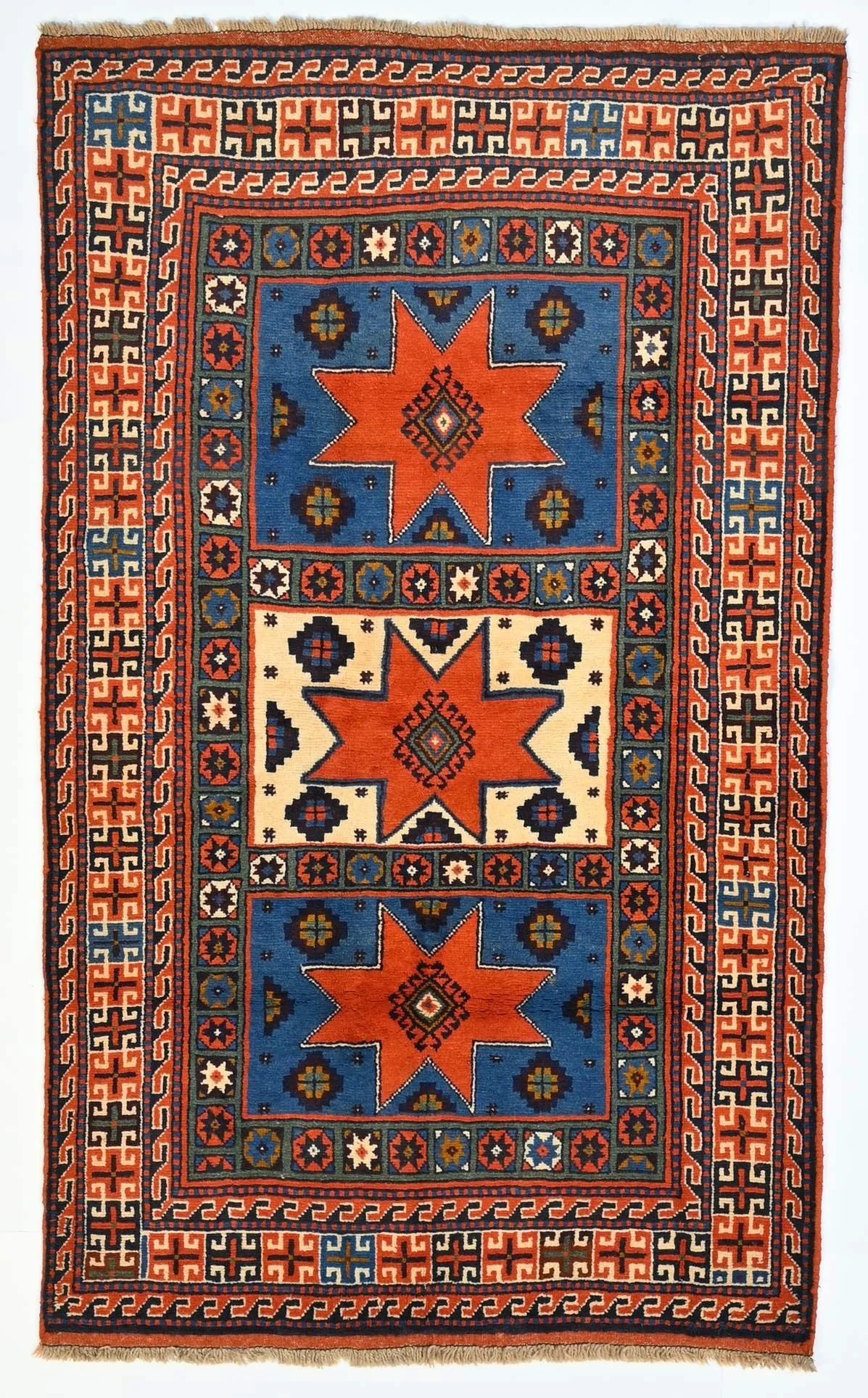 Image 1 of 1
