
 Image 1 of 1
Carpets such as this are woven in and around the city of Andkhoy in northern Afghanistan, close to the borders of Turkmenistan and Uzbekistan. The region has long been home to large Turkmen and Uzbek communities, and their weaving traditions remain deeply embedded in the carpets produced there today.
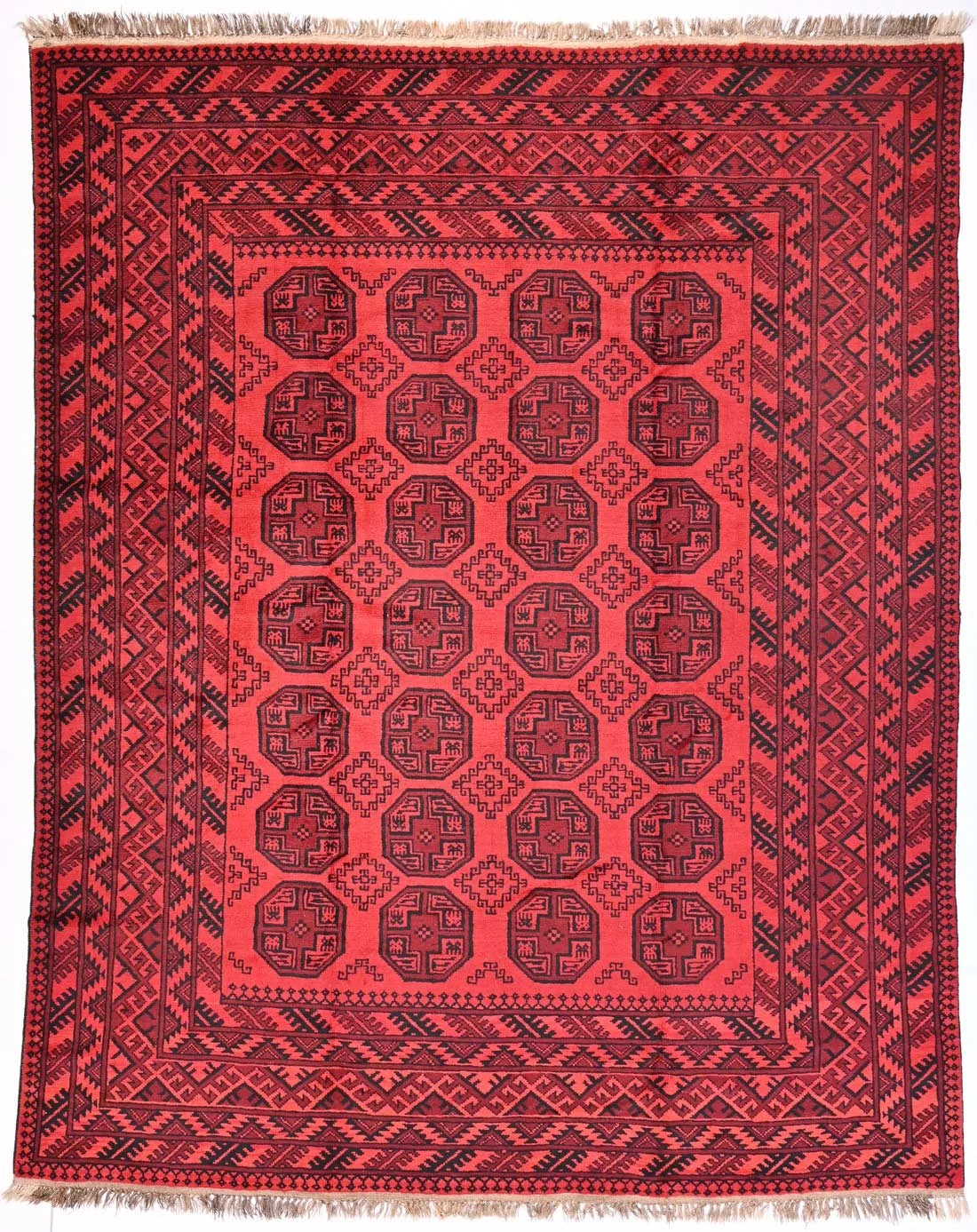
The pattern seen here is composed of repeated guls, the tribal emblems that have become the most recognisable motifs of Turkmen weaving. In local Persian dialects these motifs are often called filpa, literally meaning "elephant foot," a reference to their octagonal shape. Each tribe historically developed its own variation of the gul, using it almost as a woven identity or signature.
The beauty of such rugs lies in their simplicity and confidence. Rather than elaborate floral patterns, the design relies on rhythm, repetition, and harmony. The rich red field, contrasted with deep brown and black motifs, creates a powerful visual presence while maintaining remarkable balance and order.
Woven from wool, these rugs were traditionally made for everyday use by tribal and village families. Their dense construction and practical design have made them famous for durability, often allowing them to serve several generations while retaining their beauty. The natural lustre of the wool and the depth of the colours only improve with age.
Timeless and unmistakable, Andkhoy rugs represent one of the purest expressions of Central Asian weaving culture. Their bold geometry, rich colours, and tribal character have remained fashionable for generations and continue to complement both traditional and contemporary interiors with equal ease.
Carpets such as this are woven in and around the city of Andkhoy in northern Afghanistan, close to the borders of Turkmenistan and Uzbekistan. The region has long been home to large Turkmen and Uzbek communities, and their weaving traditions remain deeply embedded in the carpets produced there today.
The pattern seen here is composed of repeated guls, the tribal emblems that have become the most recognisable motifs of Turkmen weaving. In local Persian dialects these motifs are often called filpa, literally meaning "elephant foot," a reference to their octagonal shape. Each tribe historically developed its own variation of the gul, using it almost as a woven identity or signature.
The beauty of such rugs lies in their simplicity and confidence. Rather than elaborate floral patterns, the design relies on rhythm, repetition, and harmony. The rich red field, contrasted with deep brown and black motifs, creates a powerful visual presence while maintaining remarkable balance and order.
Woven from wool, these rugs were traditionally made for everyday use by tribal and village families. Their dense construction and practical design have made them famous for durability, often allowing them to serve several generations while retaining their beauty. The natural lustre of the wool and the depth of the colours only improve with age.
Timeless and unmistakable, Andkhoy rugs represent one of the purest expressions of Central Asian weaving culture. Their bold geometry, rich colours, and tribal character have remained fashionable for generations and continue to complement both traditional and contemporary interiors with equal ease.
