
 Image 1 of 1
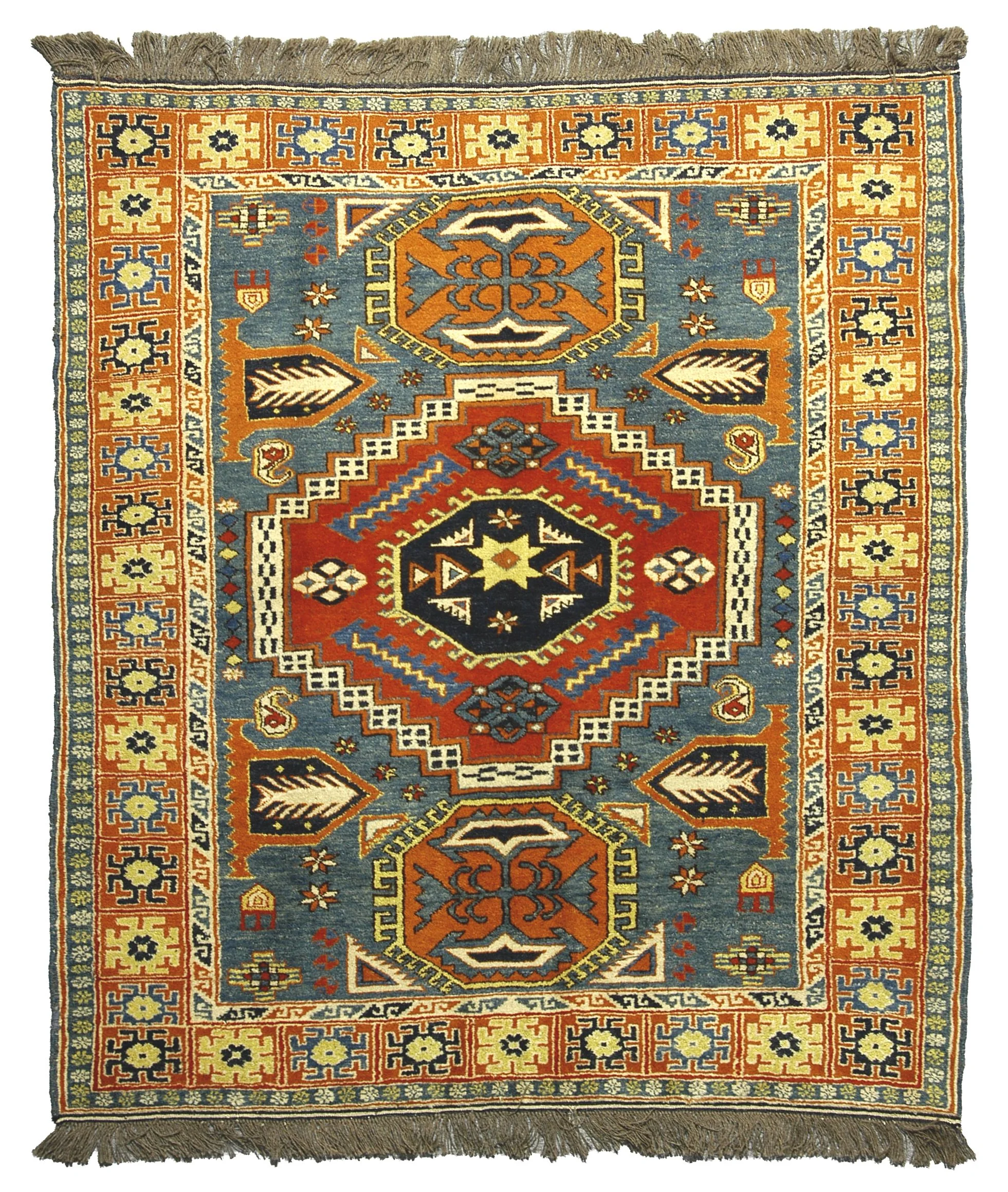
In the early 1980s, at the height of the war in Afghanistan, carpet-making became one of the most important sources of income for Afghan refugees in Pakistan. They produced a series of carpets in refugee camps, one of which is shown here.
At the time, the demand for Caucasian rugs was at its peak, and many of these carpets were therefore woven in old Caucasian designs. Using natural dyes, hand-spun wool, wool foundations, and traditional weaving techniques, the weavers sought to reproduce the look and structure of older Caucasian rugs in an honest and authentic manner.
These carpets are wonderful decorative pieces. While they reflect the traditions of Caucasian weaving, they retain their own character and integrity. Their robust structure makes them exceptionally hard-wearing, and they age beautifully, often becoming more attractive with use and the passage of time.
Beyond their decorative value, these rugs carry a remarkable story. They were woven under difficult circumstances, reflecting the struggle of people living in harsh conditions far from their homeland. Yet they were also woven with hope, hope for a better future. Perhaps it is this same hope that still shines through their charm, character, and vibrant colours today.
In the early 1980s, at the height of the war in Afghanistan, carpet-making became one of the most important sources of income for Afghan refugees in Pakistan. They produced a series of carpets in refugee camps, one of which is shown here.
At the time, the demand for Caucasian rugs was at its peak, and many of these carpets were therefore woven in old Caucasian designs. Using natural dyes, hand-spun wool, wool foundations, and traditional weaving techniques, the weavers sought to reproduce the look and structure of older Caucasian rugs in an honest and authentic manner.
These carpets are wonderful decorative pieces. While they reflect the traditions of Caucasian weaving, they retain their own character and integrity. Their robust structure makes them exceptionally hard-wearing, and they age beautifully, often becoming more attractive with use and the passage of time.
Beyond their decorative value, these rugs carry a remarkable story. They were woven under difficult circumstances, reflecting the struggle of people living in harsh conditions far from their homeland. Yet they were also woven with hope, hope for a better future. Perhaps it is this same hope that still shines through their charm, character, and vibrant colours today.
