
 Image 1 of 1
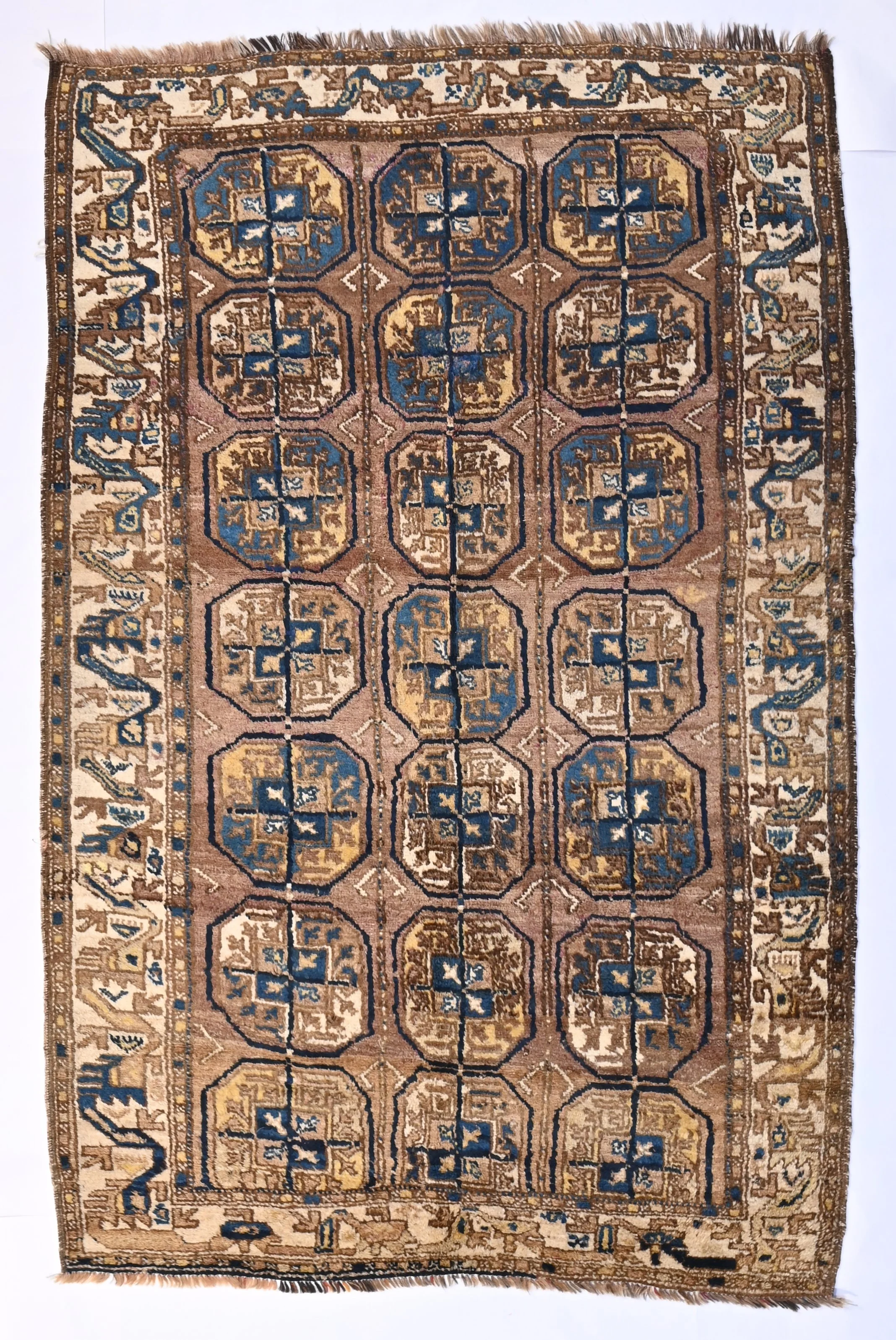
This beautiful Kordi rug from Khorasan dates from the late 19th century. Many of the Kurds of Khorasan descend from tribes resettled from western Persia under Shah Abbas I in the early 17th century to help defend the empire's north-eastern frontier.
Years of living alongside their Turkmen and Baluch neighbours brought an exchange of designs. Here, the beautiful gul motifs recall those neighbouring weaving traditions, and then, all of a sudden, something different appears. The striking border, with forms that can be read as flying dragons, gives the rug a very different character. It suggests a connection with western Persia and the weavers' ancestral lands, a fascinating way of reading the design.
The quality of the wool is very good, and the colours have settled and become more muted over time. The hand-spun yarn and natural dyes have aged beautifully, giving this piece an even more pleasing character.
Such pieces were woven from memory, and the weaver has left her own signs here and there. The guls are not exactly the same, varying in their proportions and small details. That asymmetry is part of the beauty of the rug, reflecting the individual hand behind the inherited pattern.
This beautiful Kordi rug from Khorasan dates from the late 19th century. Many of the Kurds of Khorasan descend from tribes resettled from western Persia under Shah Abbas I in the early 17th century to help defend the empire's north-eastern frontier.
Years of living alongside their Turkmen and Baluch neighbours brought an exchange of designs. Here, the beautiful gul motifs recall those neighbouring weaving traditions, and then, all of a sudden, something different appears. The striking border, with forms that can be read as flying dragons, gives the rug a very different character. It suggests a connection with western Persia and the weavers' ancestral lands, a fascinating way of reading the design.
The quality of the wool is very good, and the colours have settled and become more muted over time. The hand-spun yarn and natural dyes have aged beautifully, giving this piece an even more pleasing character.
Such pieces were woven from memory, and the weaver has left her own signs here and there. The guls are not exactly the same, varying in their proportions and small details. That asymmetry is part of the beauty of the rug, reflecting the individual hand behind the inherited pattern.
