
 Image 1 of 1
We created our Azerbaijan Collection in the Arasbaran region, a beautiful mountainous area in Iranian Azerbaijan with a long, rich tradition of weaving. The idea behind the collection was simple yet ambitious: to reinterpret traditional patterns by adjusting their colours, proportions and orientations, allowing them to retain the spirit of old designs while fitting naturally into contemporary interiors.
Particular emphasis was placed on the quality of the materials. The wool was sourced from the highlands of Kurdistan, where sheep produce exceptionally fine, slightly oily fleece known for its strength and natural sheen. It was hand-spun in Kurdish villages using traditional methods.
Once prepared, the yarn was sent to Shiraz, where it was dyed using natural vegetable dyes under the supervision of Master Abbas Sayyahi, one of the most respected dye masters of recent decades. Sayyahi played an important role in reviving traditional natural dyeing techniques and reintroducing them to contemporary Persian carpet production.
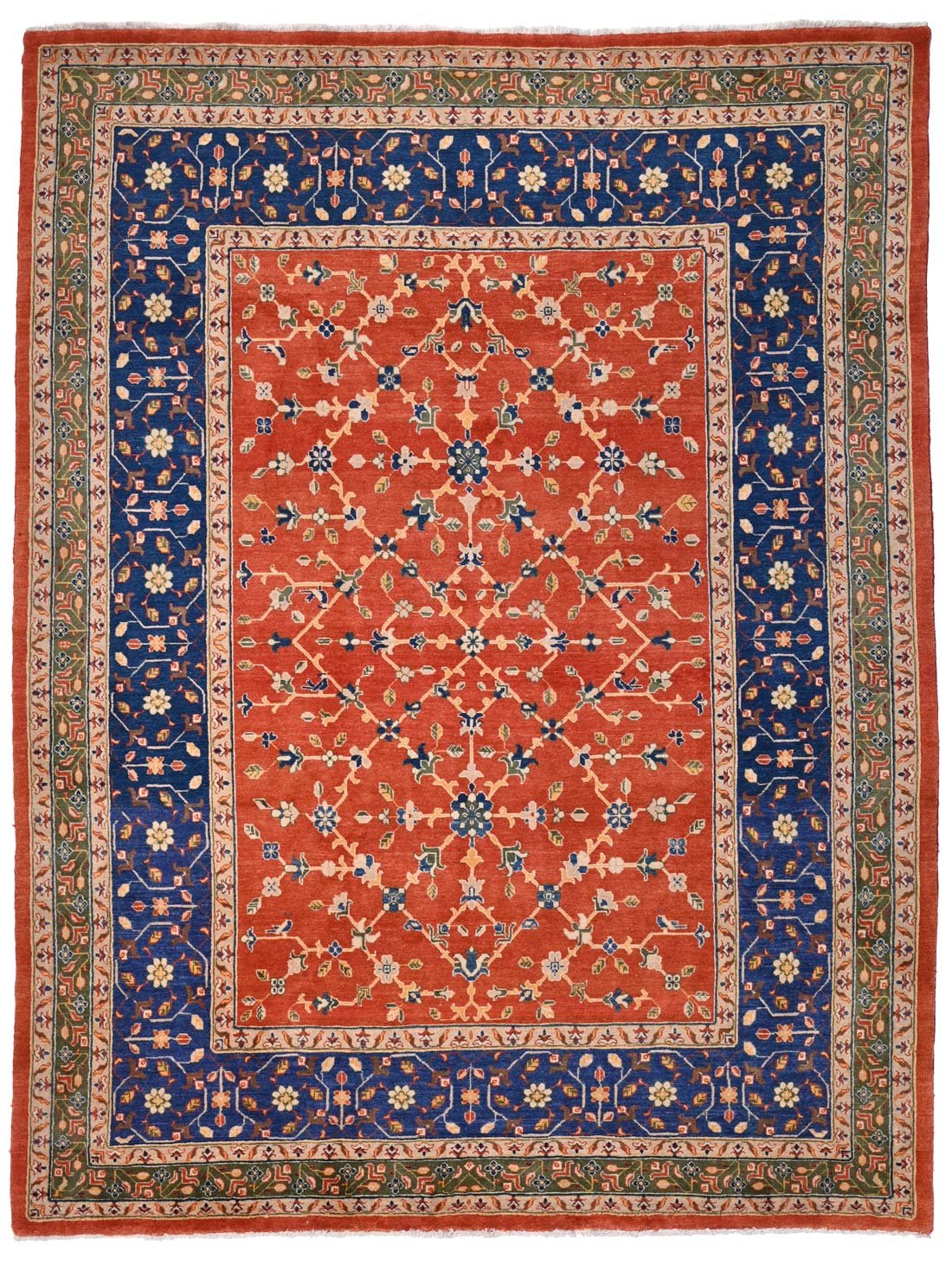
This charming piece was inspired by the Tree of Life, one of the oldest and most enduring symbols in Iranian culture. Its origins reach deep into ancient Iranian mythology. In Zoroastrian tradition, particularly the Bundahishn, we encounter the Tree of All Seeds, growing in the cosmic sea and containing the seeds from which plants are renewed. Over centuries, the image of the tree continued to evolve through Persian art, literature and carpet weaving, becoming associated with life, regeneration and continuity.
There is, however, a practical difficulty with many traditional Tree of Life carpets: the tree grows in one direction. The composition consequently has a definite top and bottom, which can sometimes make the placement and orientation of the rug challenging within an interior.
In this design, we deliberately addressed that problem. The traditional concept was reworked so that the composition can be approached from either direction, giving the carpet greater freedom within a contemporary space while preserving the spirit of the original motif.
This is precisely the philosophy behind our Azerbaijan Collection: not simply to reproduce tradition, but to understand it, reinterpret it and allow it to continue living in the present.
Material: Hand-spun highland wool, naturally dyed and hand-knotted.
We created our Azerbaijan Collection in the Arasbaran region, a beautiful mountainous area in Iranian Azerbaijan with a long, rich tradition of weaving. The idea behind the collection was simple yet ambitious: to reinterpret traditional patterns by adjusting their colours, proportions and orientations, allowing them to retain the spirit of old designs while fitting naturally into contemporary interiors.
Particular emphasis was placed on the quality of the materials. The wool was sourced from the highlands of Kurdistan, where sheep produce exceptionally fine, slightly oily fleece known for its strength and natural sheen. It was hand-spun in Kurdish villages using traditional methods.
Once prepared, the yarn was sent to Shiraz, where it was dyed using natural vegetable dyes under the supervision of Master Abbas Sayyahi, one of the most respected dye masters of recent decades. Sayyahi played an important role in reviving traditional natural dyeing techniques and reintroducing them to contemporary Persian carpet production.
This charming piece was inspired by the Tree of Life, one of the oldest and most enduring symbols in Iranian culture. Its origins reach deep into ancient Iranian mythology. In Zoroastrian tradition, particularly the Bundahishn, we encounter the Tree of All Seeds, growing in the cosmic sea and containing the seeds from which plants are renewed. Over centuries, the image of the tree continued to evolve through Persian art, literature and carpet weaving, becoming associated with life, regeneration and continuity.
There is, however, a practical difficulty with many traditional Tree of Life carpets: the tree grows in one direction. The composition consequently has a definite top and bottom, which can sometimes make the placement and orientation of the rug challenging within an interior.
In this design, we deliberately addressed that problem. The traditional concept was reworked so that the composition can be approached from either direction, giving the carpet greater freedom within a contemporary space while preserving the spirit of the original motif.
This is precisely the philosophy behind our Azerbaijan Collection: not simply to reproduce tradition, but to understand it, reinterpret it and allow it to continue living in the present.
Material: Hand-spun highland wool, naturally dyed and hand-knotted.
