
 Image 1 of 1
Creating a rug comparable in quality to the finest antique pieces is a challenge. Every element must be right: the weaving technique, the quality of the wool, the spinning of the yarn, and the dyeing process. Only when all these come together can a rug uphold the reputation of Persian carpets, like the one you see here.
This rug was woven by the Afshar tribes of Kerman using traditional skills passed down through generations. The Afshars, originally a Turkic tribal group, settled in different parts of Iran over the centuries, with an important community in the Kerman region. Their weaving tradition combines the strength and character of tribal rugs with influences from the refined floral designs of Persian city carpets.
To recreate the quality admired in older weavings, exceptional hand-spun wool was prepared and dyed using natural materials. The slow process of spinning and dyeing preserves the character of the fibre, allowing the wool to keep its natural lustre, softness, and resilience.
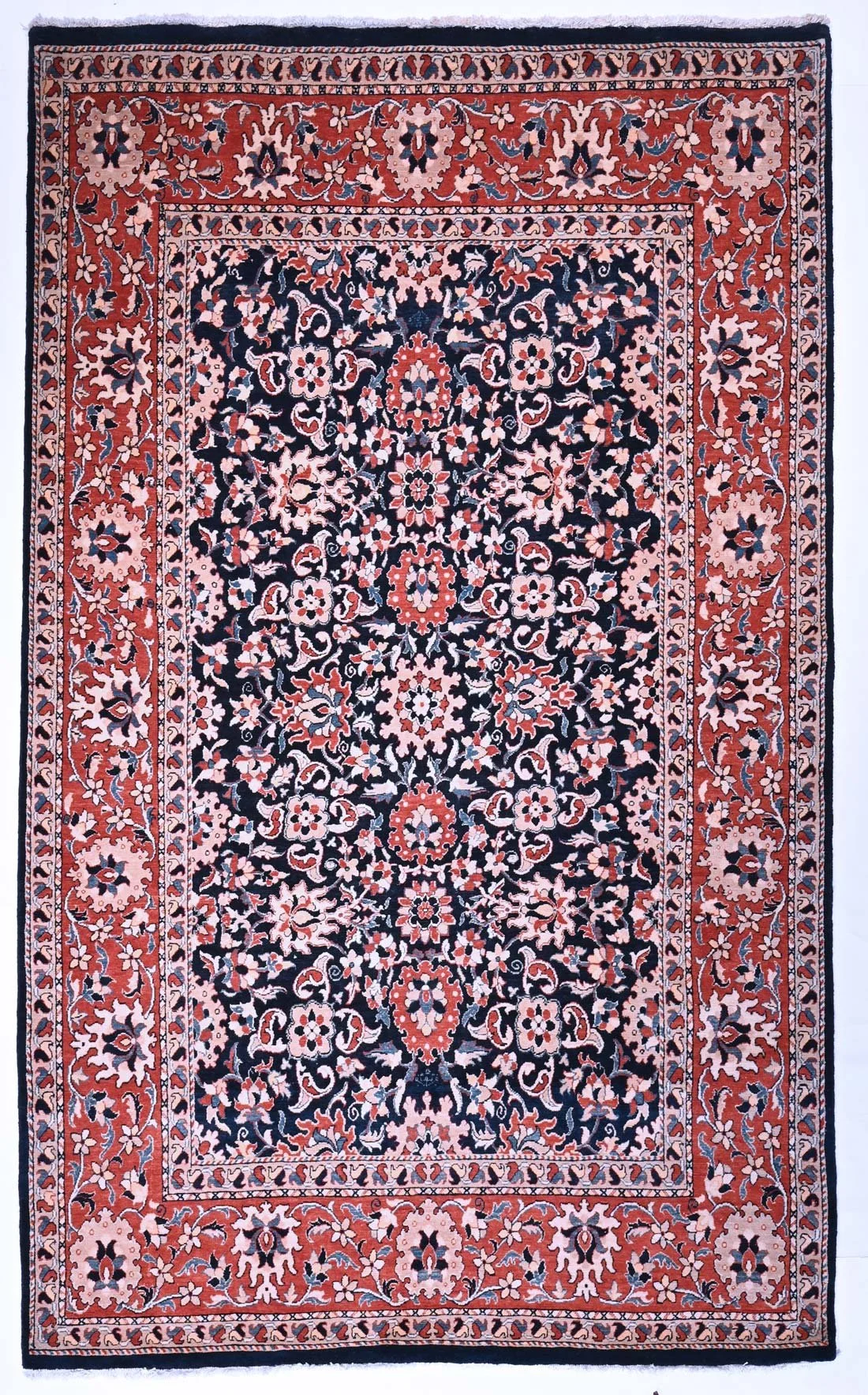
The design of this piece beautifully demonstrates the meeting point between tribal craftsmanship and classical Persian aesthetics. The deep indigo field creates a dramatic background for the flowing floral pattern, while the warm madder tones of the border bring balance and harmony. The colours have a depth and variation that only naturally dyed hand-spun wool can achieve, giving the rug a living surface that changes with light.
The result is a rug with the richness, texture, and soul often associated with antique pieces, yet created for contemporary living. It is a continuation of a centuries-old tradition, proof that when knowledge, patience, and the finest materials come together, carpets of exceptional beauty can still be woven today.
Creating a rug comparable in quality to the finest antique pieces is a challenge. Every element must be right: the weaving technique, the quality of the wool, the spinning of the yarn, and the dyeing process. Only when all these come together can a rug uphold the reputation of Persian carpets, like the one you see here.
This rug was woven by the Afshar tribes of Kerman using traditional skills passed down through generations. The Afshars, originally a Turkic tribal group, settled in different parts of Iran over the centuries, with an important community in the Kerman region. Their weaving tradition combines the strength and character of tribal rugs with influences from the refined floral designs of Persian city carpets.
To recreate the quality admired in older weavings, exceptional hand-spun wool was prepared and dyed using natural materials. The slow process of spinning and dyeing preserves the character of the fibre, allowing the wool to keep its natural lustre, softness, and resilience.
The design of this piece beautifully demonstrates the meeting point between tribal craftsmanship and classical Persian aesthetics. The deep indigo field creates a dramatic background for the flowing floral pattern, while the warm madder tones of the border bring balance and harmony. The colours have a depth and variation that only naturally dyed hand-spun wool can achieve, giving the rug a living surface that changes with light.
The result is a rug with the richness, texture, and soul often associated with antique pieces, yet created for contemporary living. It is a continuation of a centuries-old tradition, proof that when knowledge, patience, and the finest materials come together, carpets of exceptional beauty can still be woven today.
