850099-198 x 136 cm | Mirzapur sumak, northern India
SGD 0.00
The weavers in the town of Mirzapur and the villages around it, in Uttar Pradesh in northern India, have developed great skills in producing kilims and sumaks like the example here for decades. Situated on the banks of the Ganges, not far from Varanasi, Mirzapur has long been an important trading and weaving centre, benefiting from its position on the routes connecting northern and eastern India.
Carpet weaving became particularly important in the wider Mirzapur region during the nineteenth and twentieth centuries, and over time the area developed into one of India's important centres for handmade carpets and flatweaves. Generations of weavers in the town and surrounding villages acquired considerable skill in working with wool and in adapting traditional weaving techniques and patterns to different designs and markets.
Kilims and sumaks are particularly suited to this tradition. Unlike piled carpets, their patterns are created through the structure of the weave itself, producing a lighter and flatter textile while retaining considerable strength.
These are rugs that are decorative, practical and durable, made to be used rather than merely admired. With their strong construction and the skill of the Mirzapur weavers behind them, they can serve their owners well for many years.
The weavers in the town of Mirzapur and the villages around it, in Uttar Pradesh in northern India, have developed great skills in producing kilims and sumaks like the example here for decades. Situated on the banks of the Ganges, not far from Varanasi, Mirzapur has long been an important trading and weaving centre, benefiting from its position on the routes connecting northern and eastern India.
Carpet weaving became particularly important in the wider Mirzapur region during the nineteenth and twentieth centuries, and over time the area developed into one of India's important centres for handmade carpets and flatweaves. Generations of weavers in the town and surrounding villages acquired considerable skill in working with wool and in adapting traditional weaving techniques and patterns to different designs and markets.
Kilims and sumaks are particularly suited to this tradition. Unlike piled carpets, their patterns are created through the structure of the weave itself, producing a lighter and flatter textile while retaining considerable strength.
These are rugs that are decorative, practical and durable, made to be used rather than merely admired. With their strong construction and the skill of the Mirzapur weavers behind them, they can serve their owners well for many years.

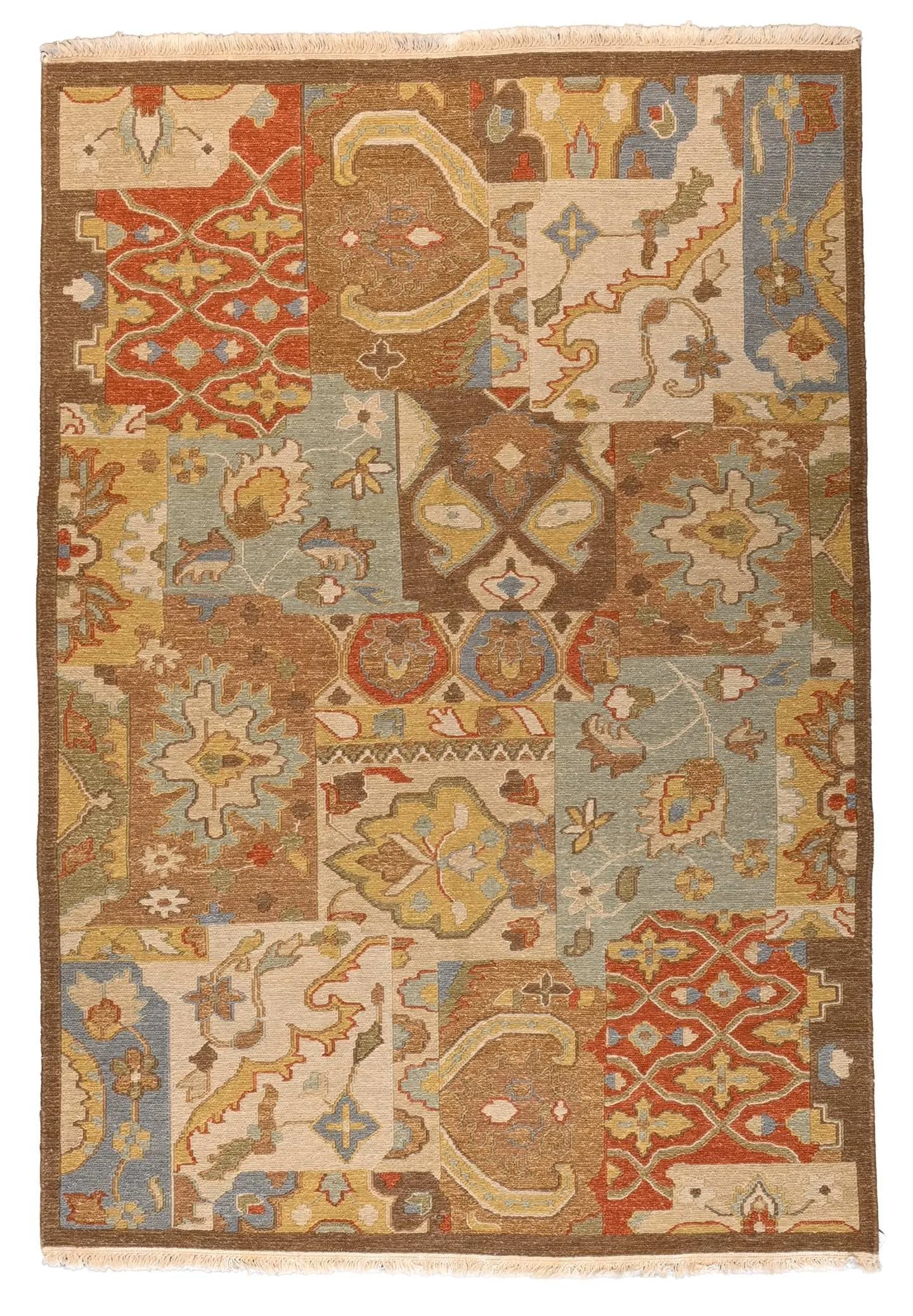 Image 1 of 1
