
 Image 1 of 1
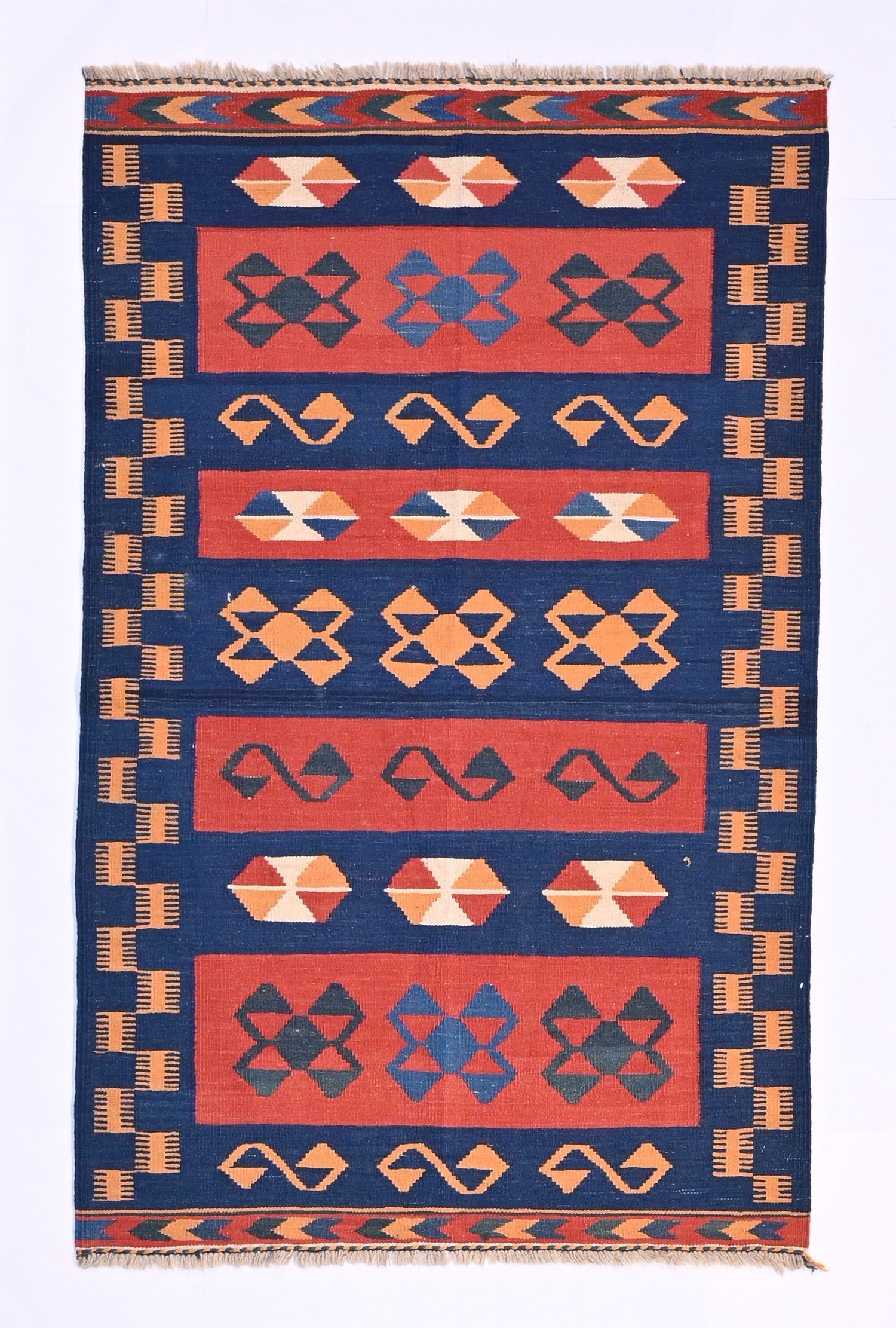
This is a Qashqai kilim from southwest Persia. The motifs that attract attention are the stylised double-headed animals, repeated in a couple of forms across the field. More interesting still is the comb design in the border, which can be read as a symbol of marriage and reunion. Perhaps a young Qashqai weaver made this piece with the hope of marrying her lover.
Paired animals have a long history in Persian art. At Persepolis, back-to-back bulls crown the columns of the royal audience hall. It is an interesting comparison for these double-headed forms, although the meaning intended by this kilim's weaver is not recorded.
This is a Qashqai kilim from southwest Persia. The motifs that attract attention are the stylised double-headed animals, repeated in a couple of forms across the field. More interesting still is the comb design in the border, which can be read as a symbol of marriage and reunion. Perhaps a young Qashqai weaver made this piece with the hope of marrying her lover.
Paired animals have a long history in Persian art. At Persepolis, back-to-back bulls crown the columns of the royal audience hall. It is an interesting comparison for these double-headed forms, although the meaning intended by this kilim's weaver is not recorded.
