
 Image 1 of 1
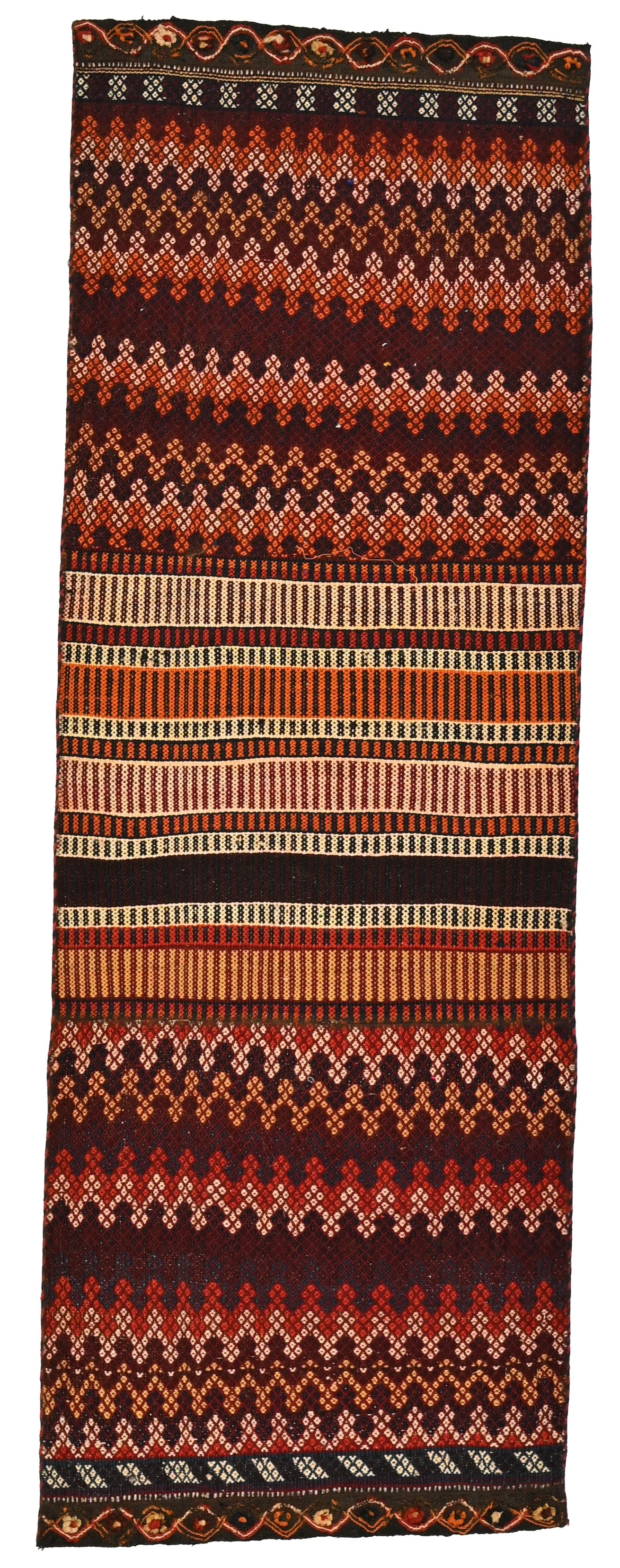
This striking runner carries within it the memory of a nomadic way of life.
Originally, pieces like this were part of large tribal storage bags known as Mafash, woven in the sumac technique by nomadic tribes to carry and store their belongings, especially bedding and blankets. During migrations, these bags travelled from one grazing ground to another on animals. By day, they were arranged around the tents and used as backrests while families sat on their carpets. By night, their contents were taken out and spread across the floor for sleep.
Because of such intense daily use, original mafash bags are often found heavily worn, torn, or fragmented. Very few survive intact.
What makes this piece special is that fragments of such old tribal weavings have been carefully preserved and transformed into a new form through upcycling. The original woven sections, once part of utilitarian nomadic trunks, now live again as a decorative runner filled with history, texture, and character.
The geometric patterns, woven in rich natural colours, still carry the visual rhythm and spontaneity of tribal weaving traditions. There is honesty in these weavings, they were never made as luxury objects, but as part of everyday nomadic life. Yet precisely because of that authenticity, they possess a warmth and soul that cannot easily be replicated.
Pieces like this make wonderful corridor runners, bedside accents, or colourful decorative elements within contemporary interiors. And once one understands their origin and the life they once belonged to, they become far more than decorative textiles, they become fragments of a disappearing world.
This striking runner carries within it the memory of a nomadic way of life.
Originally, pieces like this were part of large tribal storage bags known as Mafash, woven in the sumac technique by nomadic tribes to carry and store their belongings, especially bedding and blankets. During migrations, these bags travelled from one grazing ground to another on animals. By day, they were arranged around the tents and used as backrests while families sat on their carpets. By night, their contents were taken out and spread across the floor for sleep.
Because of such intense daily use, original mafash bags are often found heavily worn, torn, or fragmented. Very few survive intact.
What makes this piece special is that fragments of such old tribal weavings have been carefully preserved and transformed into a new form through upcycling. The original woven sections, once part of utilitarian nomadic trunks, now live again as a decorative runner filled with history, texture, and character.
The geometric patterns, woven in rich natural colours, still carry the visual rhythm and spontaneity of tribal weaving traditions. There is honesty in these weavings, they were never made as luxury objects, but as part of everyday nomadic life. Yet precisely because of that authenticity, they possess a warmth and soul that cannot easily be replicated.
Pieces like this make wonderful corridor runners, bedside accents, or colourful decorative elements within contemporary interiors. And once one understands their origin and the life they once belonged to, they become far more than decorative textiles, they become fragments of a disappearing world.
