
 Image 1 of 1
The Qashqai tribes of southwest Iran have lived a nomadic life for centuries, migrating seasonally in search of fresh grazing grounds for their flocks. Their rugs are not merely household objects but reflections of a way of life deeply connected to nature, movement, and tradition.
Traditionally, the wool comes from the tribe's own sheep. It is hand-spun and dyed in small batches using natural dyes prepared from plants gathered during migration. The artisanal nature of this process creates subtle variations in colour known as abrash, where shades gently shift across the field. Far from being a flaw, abrash brings depth, character, and a sense of life to the rug, much like the changing colours of the landscape itself.
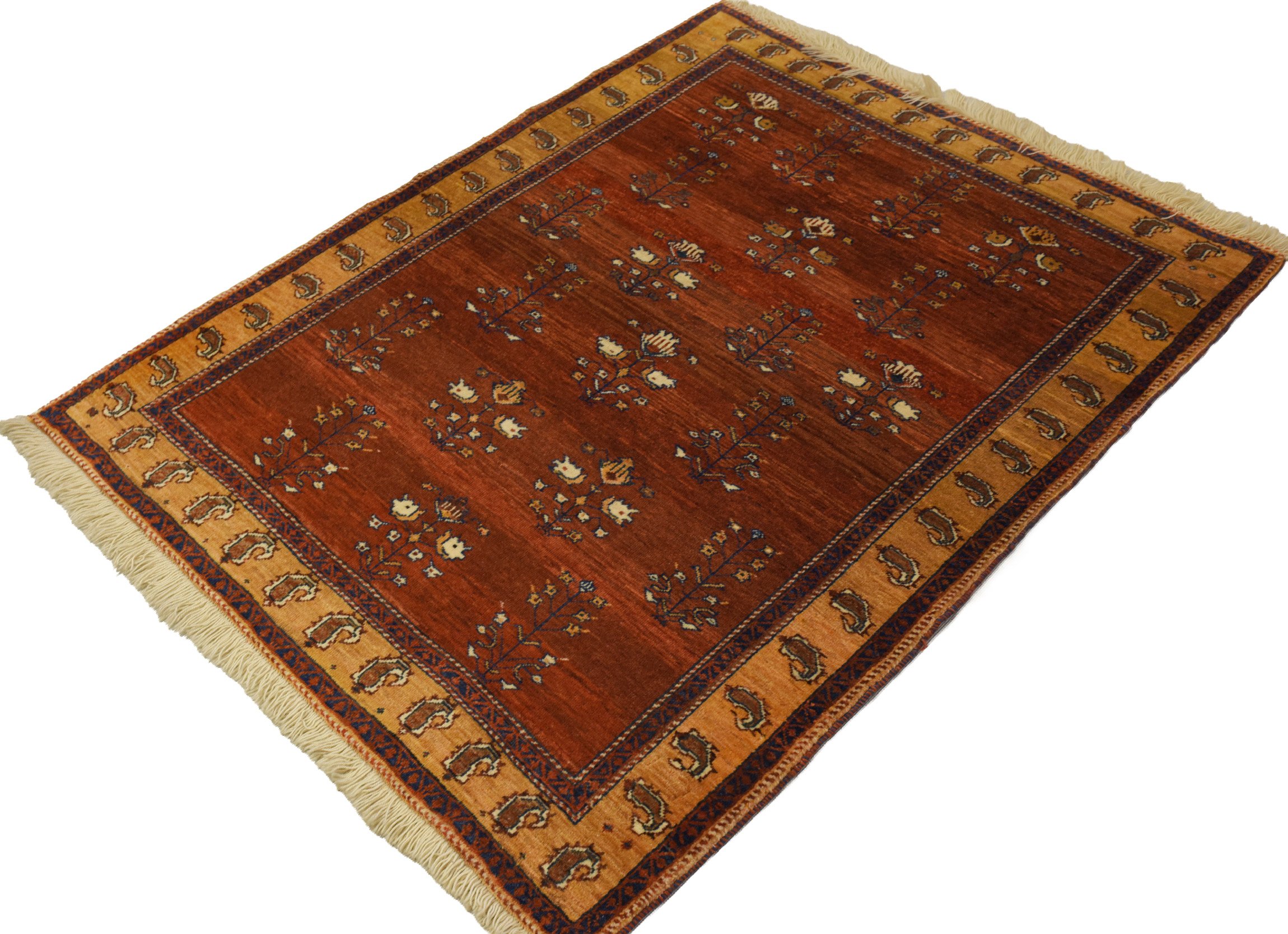
The field of this carpet resembles a flowering meadow, populated with stylised plants and blossoms inspired by the natural surroundings through which the Qashqai travel. Woven entirely from memory, the design is both spontaneous and deeply personal, transforming observation and experience into a visual language.
Particularly fascinating are the motifs in the border, which are believed to represent highly stylised scorpions. Their tails curve forward while their legs extend to the sides, creating a distinctive geometric form. Confined within the border and separated from the floral field, these motifs may be interpreted as protective symbols, keeping harm away from the world of flowers, growth, and abundance within.
Like many tribal rugs, this piece invites contemplation. It is at once a beautiful decorative object, a record of a nomadic culture, and a personal expression by a weaver whose thoughts and experiences remain woven into every knot. Rich in symbolism and craftsmanship, it is a rug that continues to reveal new layers of meaning over time.
The Qashqai tribes of southwest Iran have lived a nomadic life for centuries, migrating seasonally in search of fresh grazing grounds for their flocks. Their rugs are not merely household objects but reflections of a way of life deeply connected to nature, movement, and tradition.
Traditionally, the wool comes from the tribe's own sheep. It is hand-spun and dyed in small batches using natural dyes prepared from plants gathered during migration. The artisanal nature of this process creates subtle variations in colour known as abrash, where shades gently shift across the field. Far from being a flaw, abrash brings depth, character, and a sense of life to the rug, much like the changing colours of the landscape itself.
The field of this carpet resembles a flowering meadow, populated with stylised plants and blossoms inspired by the natural surroundings through which the Qashqai travel. Woven entirely from memory, the design is both spontaneous and deeply personal, transforming observation and experience into a visual language.
Particularly fascinating are the motifs in the border, which are believed to represent highly stylised scorpions. Their tails curve forward while their legs extend to the sides, creating a distinctive geometric form. Confined within the border and separated from the floral field, these motifs may be interpreted as protective symbols, keeping harm away from the world of flowers, growth, and abundance within.
Like many tribal rugs, this piece invites contemplation. It is at once a beautiful decorative object, a record of a nomadic culture, and a personal expression by a weaver whose thoughts and experiences remain woven into every knot. Rich in symbolism and craftsmanship, it is a rug that continues to reveal new layers of meaning over time.
