
 Image 1 of 1
Iranian culture has been shaped through centuries of coexistence, exchange, and shared traditions among many peoples. The Armenian communities of central Iran are a remarkable example of this rich cultural tapestry. Living alongside neighbouring weaving groups for generations, they developed a distinctive weaving tradition that blended Armenian symbolism with local Persian village aesthetics.
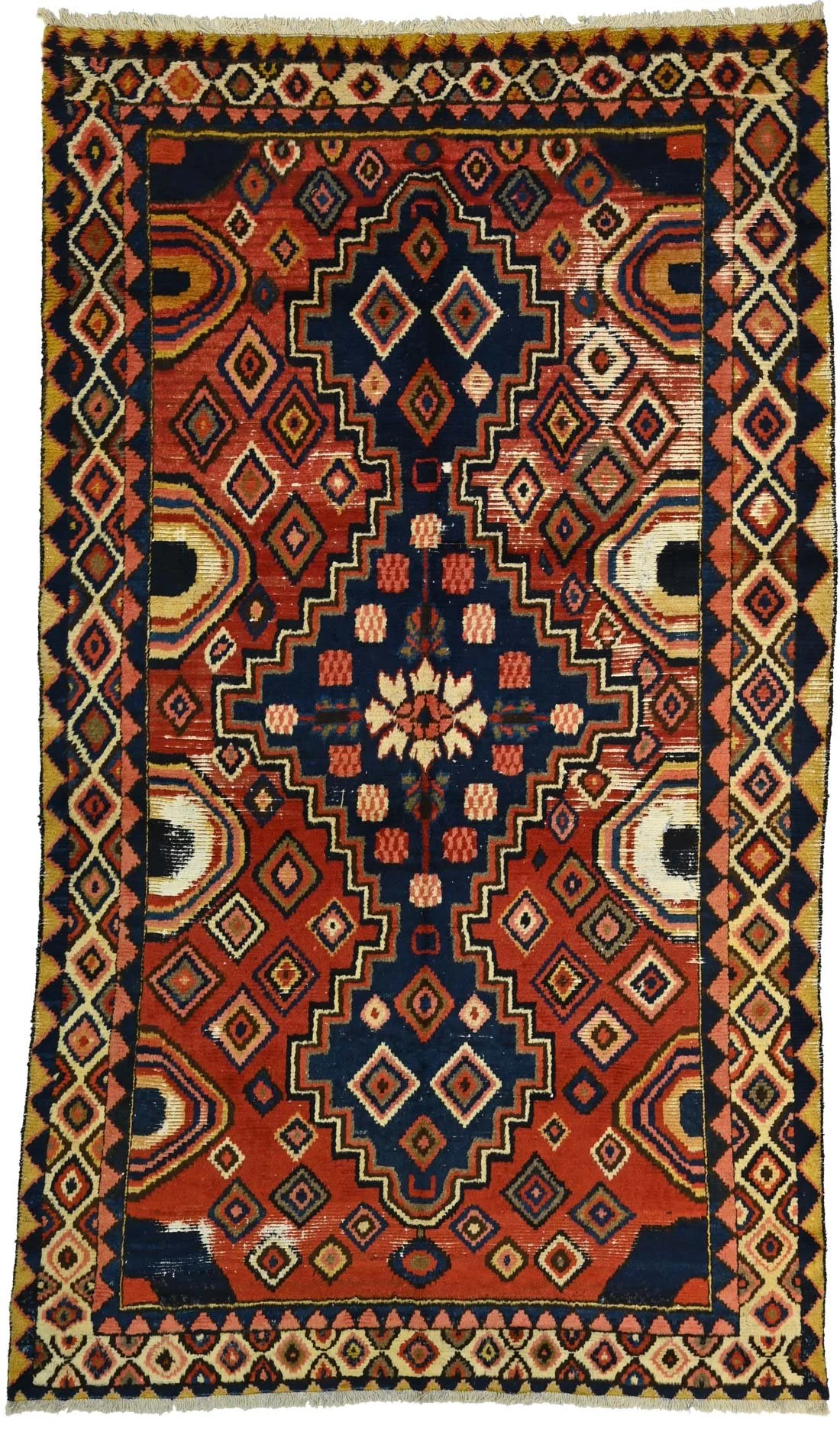
This beautiful rug, most likely woven as a dowry piece by a young Armenian girl, is filled with one of the most important protective symbols of the region, the lozenge. Repeated throughout the field and central medallion, these diamond-shaped motifs are traditionally associated with protection against the evil eye. Known as nazar motifs, they were believed to guard the owner against jealousy, misfortune, and negative intentions.
The abundance of these symbols suggests a deeply personal work. One can imagine the young weaver filling her rug with protective emblems, expressing hopes for happiness, prosperity, and protection for both herself and her future beloved. In this way, the rug becomes more than a decorative object; it becomes a woven blessing.
Over a century of age, this piece has acquired a remarkable texture and character. The natural dyes, bold geometric design, and expressive use of colour reflect the vitality of village weaving traditions. Preserved in excellent condition, it remains both a highly collectable textile and a fascinating cultural document, carrying stories, beliefs, and emotions from another time.
Hand-knotted wool, natural dyes, Armenian village weaving, Iran, circa early 20th century.
Iranian culture has been shaped through centuries of coexistence, exchange, and shared traditions among many peoples. The Armenian communities of central Iran are a remarkable example of this rich cultural tapestry. Living alongside neighbouring weaving groups for generations, they developed a distinctive weaving tradition that blended Armenian symbolism with local Persian village aesthetics.
This beautiful rug, most likely woven as a dowry piece by a young Armenian girl, is filled with one of the most important protective symbols of the region, the lozenge. Repeated throughout the field and central medallion, these diamond-shaped motifs are traditionally associated with protection against the evil eye. Known as nazar motifs, they were believed to guard the owner against jealousy, misfortune, and negative intentions.
The abundance of these symbols suggests a deeply personal work. One can imagine the young weaver filling her rug with protective emblems, expressing hopes for happiness, prosperity, and protection for both herself and her future beloved. In this way, the rug becomes more than a decorative object; it becomes a woven blessing.
Over a century of age, this piece has acquired a remarkable texture and character. The natural dyes, bold geometric design, and expressive use of colour reflect the vitality of village weaving traditions. Preserved in excellent condition, it remains both a highly collectable textile and a fascinating cultural document, carrying stories, beliefs, and emotions from another time.
Hand-knotted wool, natural dyes, Armenian village weaving, Iran, circa early 20th century.
