
 Image 1 of 1
The beauty of a carpet is not measured solely by its colours and design. Its story, the people who made it, and the traditions it carries can make it even more meaningful. This striking rug from Kalardasht is a fine example of a weaving tradition shaped by both history and culture.
The Kurds living in Kalardasht today are descendants of communities that were relocated during the Safavid period under Shah Abbas I. Over time, they carried with them the weaving traditions, motifs, and visual language of their ancestral homeland, preserving them across vast distances and generations. The result is a distinctive group of carpets that share deep connections with the weaving traditions of Kurdistan while developing a character of their own.
Woven from memory by women of the same family, these rugs are often created on looms set up outdoors, where mothers, daughters, and relatives work side by side. The designs are passed down through practice rather than written patterns, making each rug both a continuation of tradition and a personal expression of its weaver.
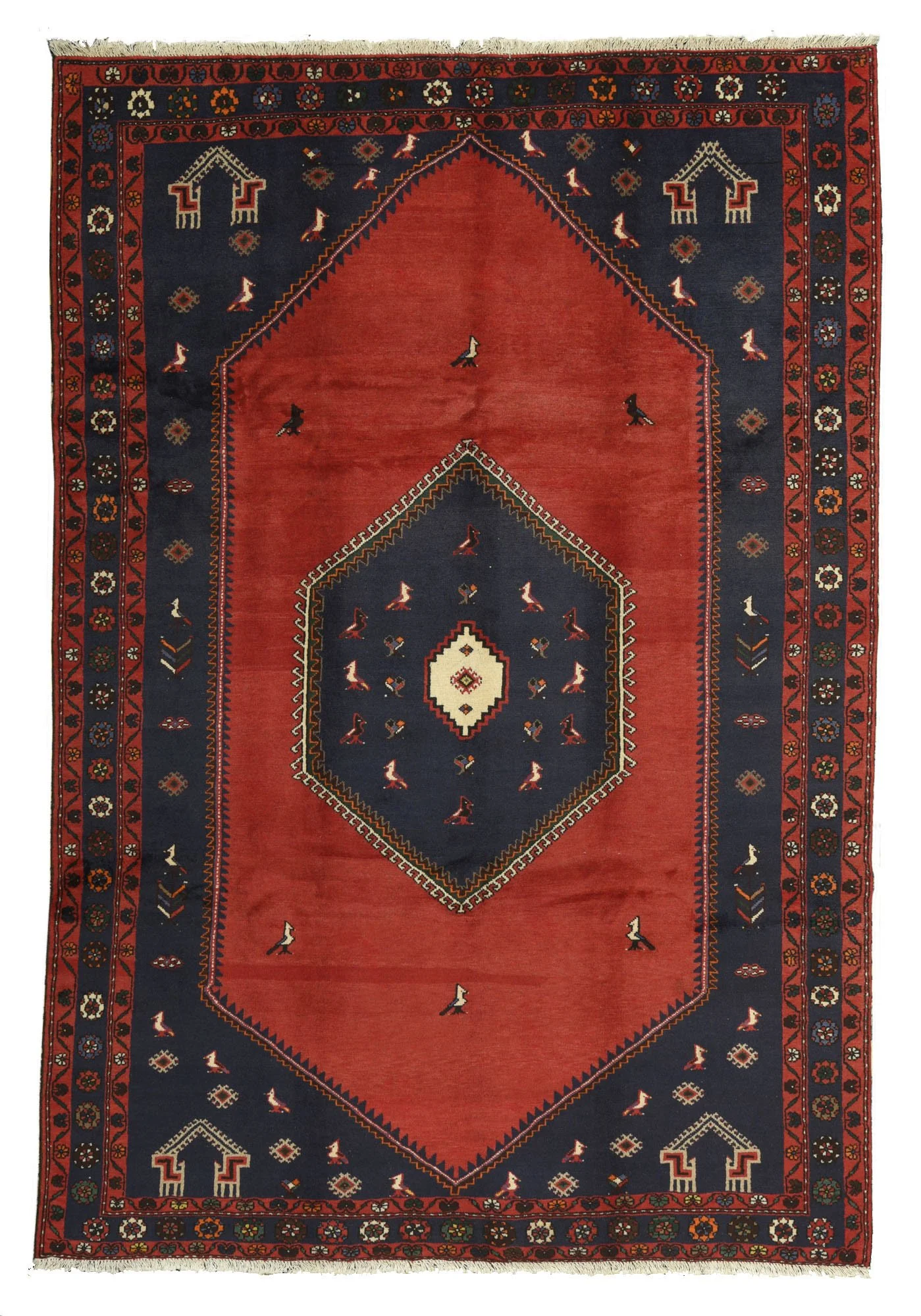
The bold geometry, spacious composition, and rich natural colours give this carpet a powerful presence. Birds, protective motifs, and symbolic forms appear throughout the design, creating a visual language that has survived for centuries. Beyond its decorative appeal, the rug serves as a reminder of the resilience, creativity, and cultural heritage of the people who made it.
A beautiful carpet in its own right, it is also a fascinating window into one of Iran's most enduring weaving traditions.
The beauty of a carpet is not measured solely by its colours and design. Its story, the people who made it, and the traditions it carries can make it even more meaningful. This striking rug from Kalardasht is a fine example of a weaving tradition shaped by both history and culture.
The Kurds living in Kalardasht today are descendants of communities that were relocated during the Safavid period under Shah Abbas I. Over time, they carried with them the weaving traditions, motifs, and visual language of their ancestral homeland, preserving them across vast distances and generations. The result is a distinctive group of carpets that share deep connections with the weaving traditions of Kurdistan while developing a character of their own.
Woven from memory by women of the same family, these rugs are often created on looms set up outdoors, where mothers, daughters, and relatives work side by side. The designs are passed down through practice rather than written patterns, making each rug both a continuation of tradition and a personal expression of its weaver.
The bold geometry, spacious composition, and rich natural colours give this carpet a powerful presence. Birds, protective motifs, and symbolic forms appear throughout the design, creating a visual language that has survived for centuries. Beyond its decorative appeal, the rug serves as a reminder of the resilience, creativity, and cultural heritage of the people who made it.
A beautiful carpet in its own right, it is also a fascinating window into one of Iran's most enduring weaving traditions.
