
 Image 1 of 1
The Shahsavan tribes were once among the most influential nomadic groups of Iran, ranging across vast areas from central to northwestern Iran. Their support played an important role in the rise of the Safavid dynasty, one of the great patrons of Persian art and culture. Although many Shahsavan families eventually settled in villages, they preserved a rich weaving tradition rooted in tribal memory and symbolism.
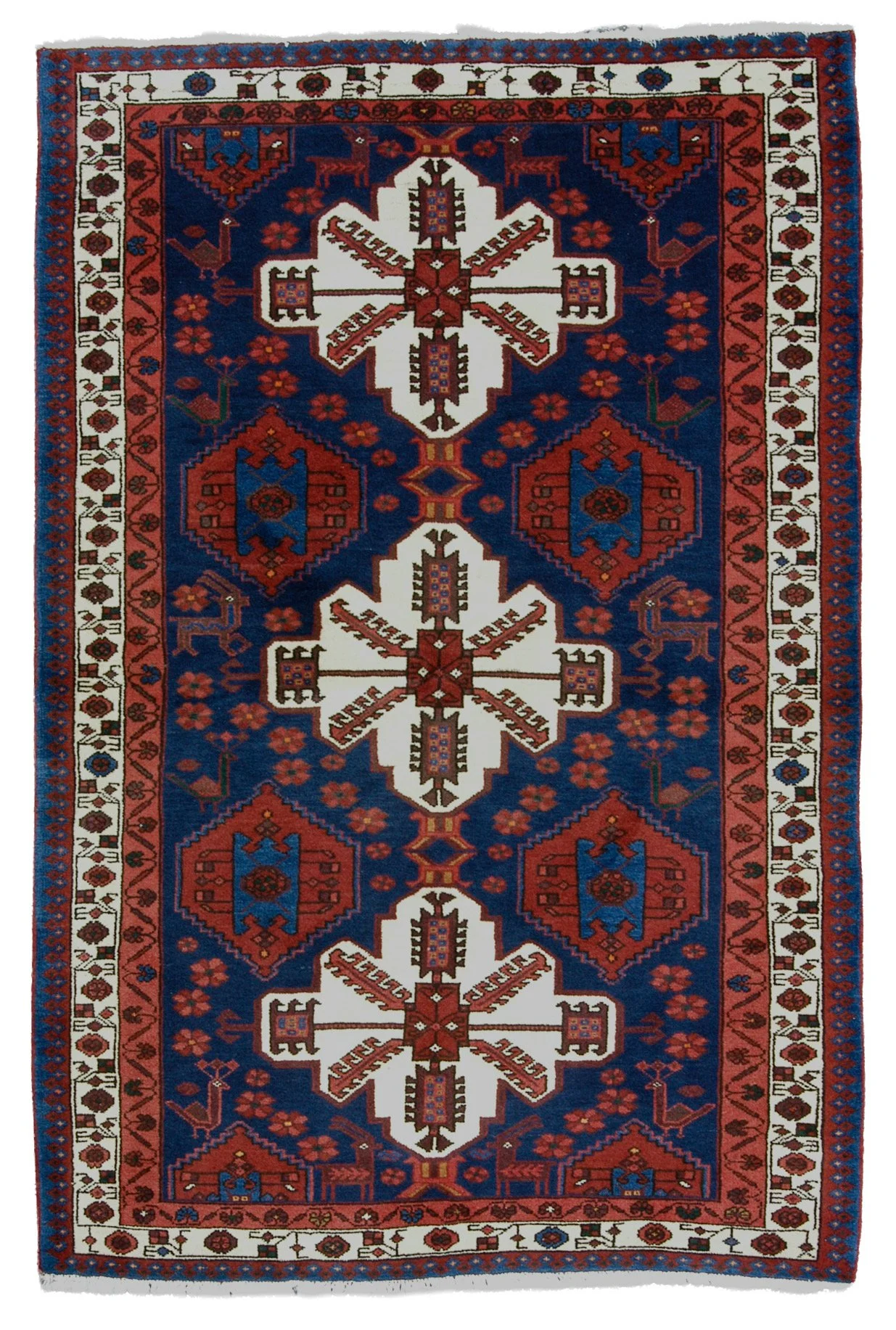
This rug was woven in the vicinity of Savé and displays the bold geometry and vibrant colours for which Shahsavan weavings are admired. All the colours are derived from natural sources, creating a lively palette that has retained its beauty over the decades.
The most striking feature of the design is the series of three large medallions. These are believed to derive from an ancient bird motif, formed by mirrored wings arranged into a powerful geometric symbol. Birds occupy a special place in Persian culture and literature, often representing aspiration, excellence, and the pursuit of higher ideals. Their transformation into abstract tribal forms is one of the most fascinating aspects of nomadic weaving.
Woven around the 1960s and preserved in remarkable, virtually unused condition, this rug combines cultural depth, decorative beauty, and collectability. It is a piece that can enrich an interior while offering a glimpse into the visual language of one of Iran's most celebrated tribal traditions.
Hand-knotted wool, natural dyes, Shahsavan weaving, Savé region, Iran, circa 1960s.
The Shahsavan tribes were once among the most influential nomadic groups of Iran, ranging across vast areas from central to northwestern Iran. Their support played an important role in the rise of the Safavid dynasty, one of the great patrons of Persian art and culture. Although many Shahsavan families eventually settled in villages, they preserved a rich weaving tradition rooted in tribal memory and symbolism.
This rug was woven in the vicinity of Savé and displays the bold geometry and vibrant colours for which Shahsavan weavings are admired. All the colours are derived from natural sources, creating a lively palette that has retained its beauty over the decades.
The most striking feature of the design is the series of three large medallions. These are believed to derive from an ancient bird motif, formed by mirrored wings arranged into a powerful geometric symbol. Birds occupy a special place in Persian culture and literature, often representing aspiration, excellence, and the pursuit of higher ideals. Their transformation into abstract tribal forms is one of the most fascinating aspects of nomadic weaving.
Woven around the 1960s and preserved in remarkable, virtually unused condition, this rug combines cultural depth, decorative beauty, and collectability. It is a piece that can enrich an interior while offering a glimpse into the visual language of one of Iran's most celebrated tribal traditions.
Hand-knotted wool, natural dyes, Shahsavan weaving, Savé region, Iran, circa 1960s.
