
 Image 1 of 2
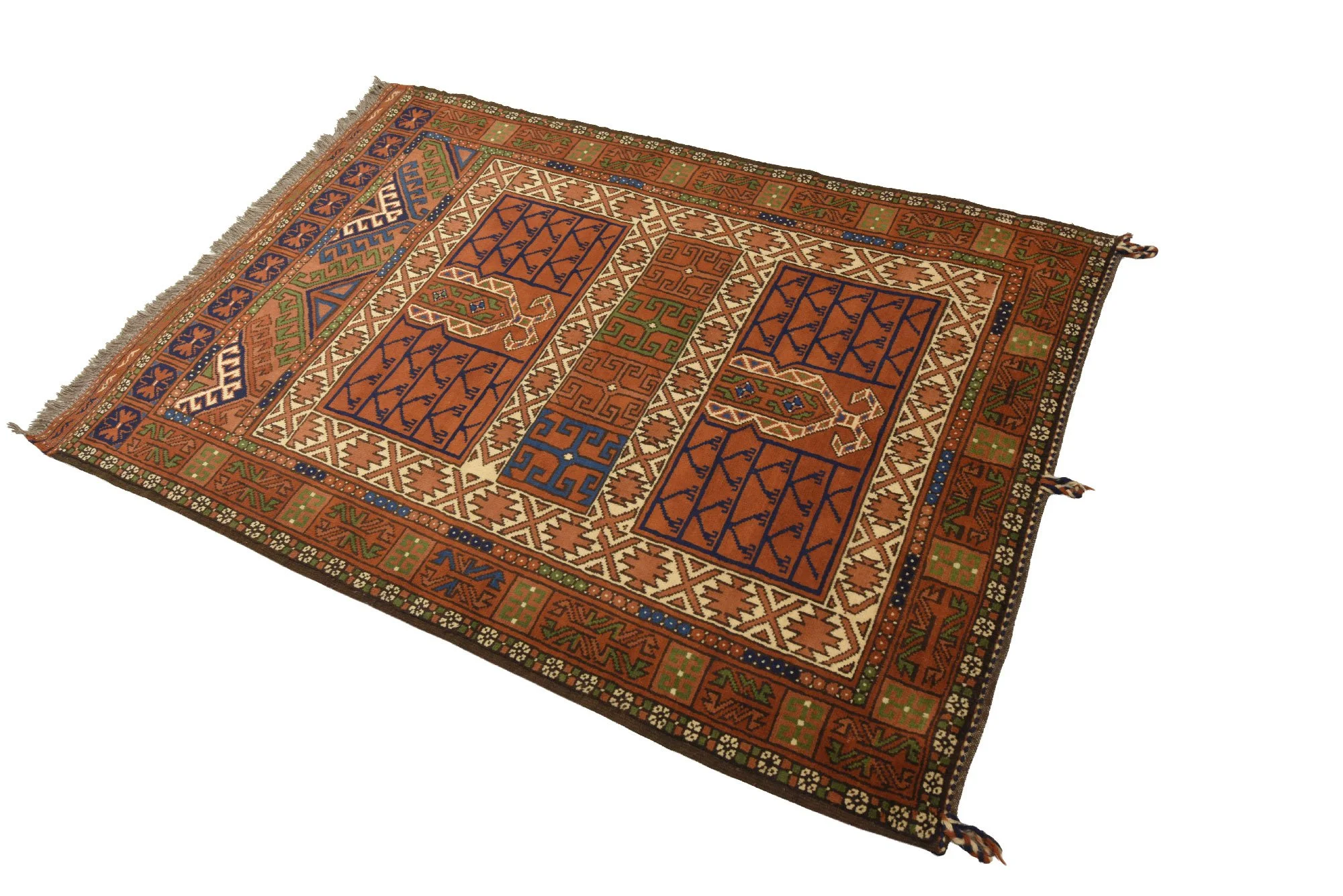 Image 2 of 2
The beauty of tribal weaving lies in the ability of weavers to transform the most ordinary objects of daily life into pieces of remarkable beauty. What begins as a practical necessity often becomes a work of art, carrying within it the culture, traditions, and personality of its maker.
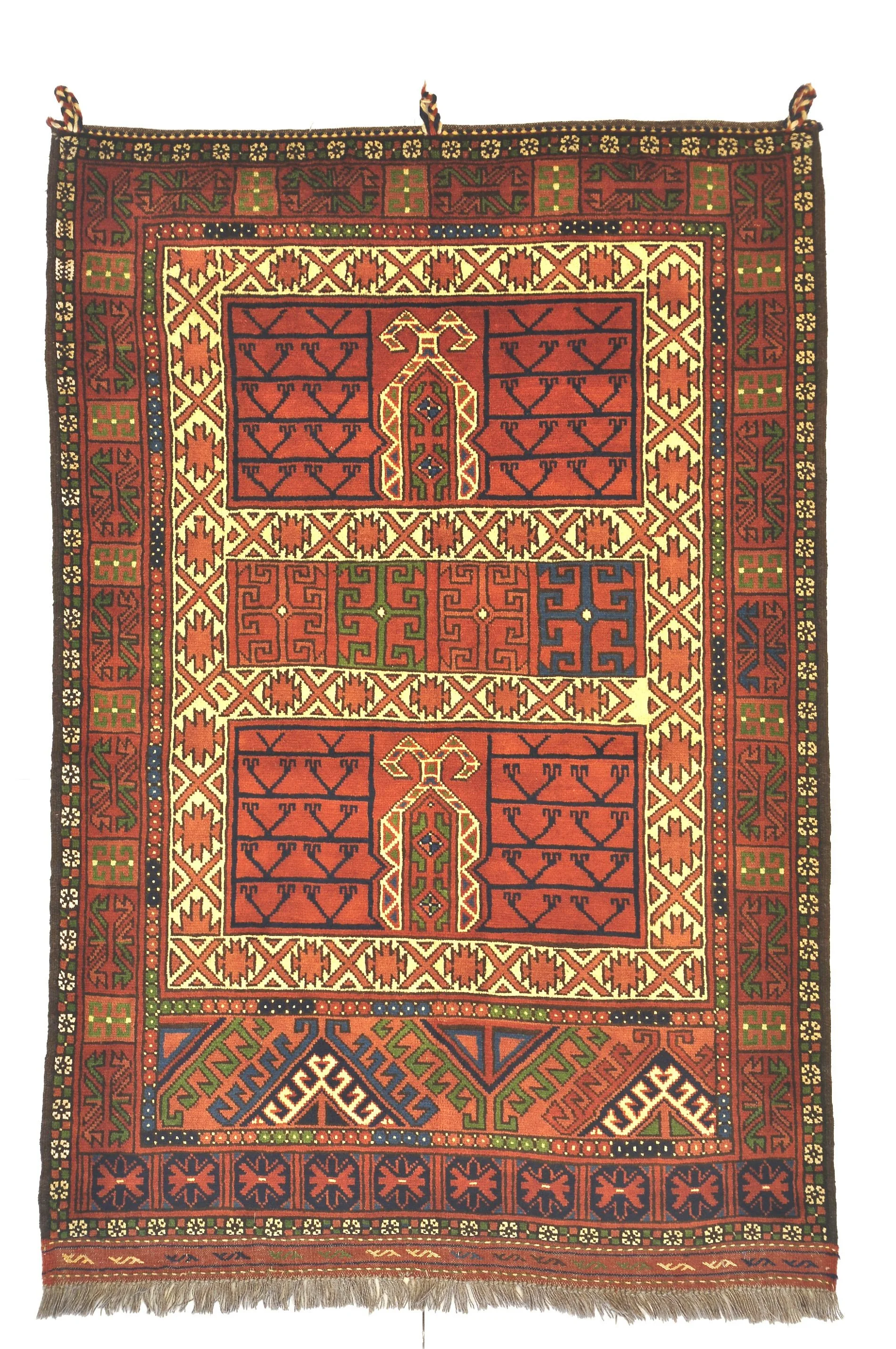
The piece shown here is a tent door cover, a type of weaving traditionally made by Turkmen tribes for use at the entrance of their tents. Portable and versatile, such covers provided privacy, protection from wind, dust, and sunlight, while also adding beauty and dignity to the family dwelling. The loops along the top were made for hanging, while one end is neatly finished and the other left with fringes, reflecting its intended function.
Door covers such as these were often used on special occasions or associated with the tents of respected elders and prominent women of the community. Beyond their practical purpose, they served as a quiet display of skill, taste, and tribal identity.
This example was woven in Afghanistan around the 1980s, using good-quality wool on a wool foundation. Although not an antique, it represents a tradition that reaches back generations, preserving forms and customs that were once an integral part of nomadic life. Today, it can be appreciated both as a decorative textile and as a reminder of a culture in which beauty was woven into even the most utilitarian objects.
The beauty of tribal weaving lies in the ability of weavers to transform the most ordinary objects of daily life into pieces of remarkable beauty. What begins as a practical necessity often becomes a work of art, carrying within it the culture, traditions, and personality of its maker.
The piece shown here is a tent door cover, a type of weaving traditionally made by Turkmen tribes for use at the entrance of their tents. Portable and versatile, such covers provided privacy, protection from wind, dust, and sunlight, while also adding beauty and dignity to the family dwelling. The loops along the top were made for hanging, while one end is neatly finished and the other left with fringes, reflecting its intended function.
Door covers such as these were often used on special occasions or associated with the tents of respected elders and prominent women of the community. Beyond their practical purpose, they served as a quiet display of skill, taste, and tribal identity.
This example was woven in Afghanistan around the 1980s, using good-quality wool on a wool foundation. Although not an antique, it represents a tradition that reaches back generations, preserving forms and customs that were once an integral part of nomadic life. Today, it can be appreciated both as a decorative textile and as a reminder of a culture in which beauty was woven into even the most utilitarian objects.
