
 Image 1 of 1
In Iran, Kerman carpets are often used as a metaphor for something that becomes more beautiful with age. The comparison is well deserved. The finest Kerman rugs possess an extraordinary ability to mature gracefully, their colours settling and harmonising over time while their wool develops a rich and lustrous character.
This magnificent example bears the signature of Master Rashid Farrokhi, one of the distinguished designers and producers associated with the golden period of twentieth-century Kerman weaving. Its exceptional drawing, refined colour palette, and remarkable attention to detail reflect both the skill of its makers and the artistic vision of its designer.
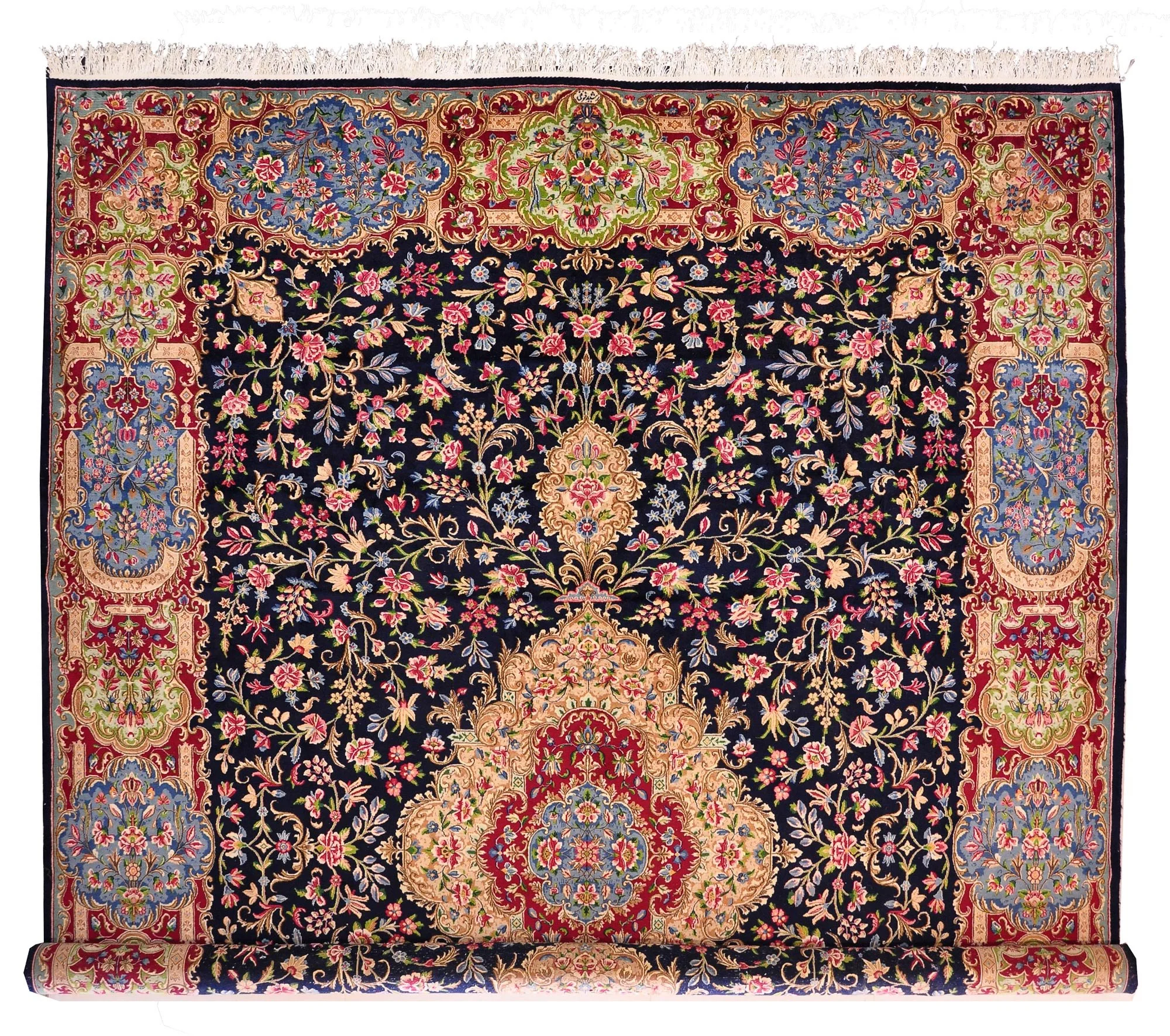
Unlike many Persian carpets that rely on highly stylised Shah Abbasi floral motifs, this design is filled with more naturalistic blossoms and delicate flowering branches. Set against a rich navy field and organised around an elegant medallion, the composition creates a sense of movement, balance, and refinement. The style reflects the influence of European decorative arts that found their way into Kerman designs during the late nineteenth and early twentieth centuries, particularly following the travels of Naser al-Din Shah, the Qajar king, to Europe.
Woven in the mid-twentieth century using high-quality wool and natural dyes, this carpet has been preserved in exceptional condition. Despite being nearly eighty years old, it retains an unusually thick pile, suggesting very limited use throughout its life.
Combining artistic sophistication, superb craftsmanship, and remarkable preservation, this is a carpet capable of enriching an interior for generations to come while continuing to grow in beauty with the passing of time.
In Iran, Kerman carpets are often used as a metaphor for something that becomes more beautiful with age. The comparison is well deserved. The finest Kerman rugs possess an extraordinary ability to mature gracefully, their colours settling and harmonising over time while their wool develops a rich and lustrous character.
This magnificent example bears the signature of Master Rashid Farrokhi, one of the distinguished designers and producers associated with the golden period of twentieth-century Kerman weaving. Its exceptional drawing, refined colour palette, and remarkable attention to detail reflect both the skill of its makers and the artistic vision of its designer.
Unlike many Persian carpets that rely on highly stylised Shah Abbasi floral motifs, this design is filled with more naturalistic blossoms and delicate flowering branches. Set against a rich navy field and organised around an elegant medallion, the composition creates a sense of movement, balance, and refinement. The style reflects the influence of European decorative arts that found their way into Kerman designs during the late nineteenth and early twentieth centuries, particularly following the travels of Naser al-Din Shah, the Qajar king, to Europe.
Woven in the mid-twentieth century using high-quality wool and natural dyes, this carpet has been preserved in exceptional condition. Despite being nearly eighty years old, it retains an unusually thick pile, suggesting very limited use throughout its life.
Combining artistic sophistication, superb craftsmanship, and remarkable preservation, this is a carpet capable of enriching an interior for generations to come while continuing to grow in beauty with the passing of time.
