
 Image 1 of 1
Iranian culture has been shaped over thousands of years through the meeting of peoples, traditions, and ideas. One fascinating example is the Armenian communities that settled in central Iran during the Safavid period. Encouraged to relocate to the region around Isfahan, they established villages, churches, and thriving communities. Over generations of living alongside Persian-speaking and tribal groups, artistic traditions merged and influenced one another, giving rise to distinctive forms of weaving such as the Armenian Bakhtiari rugs.
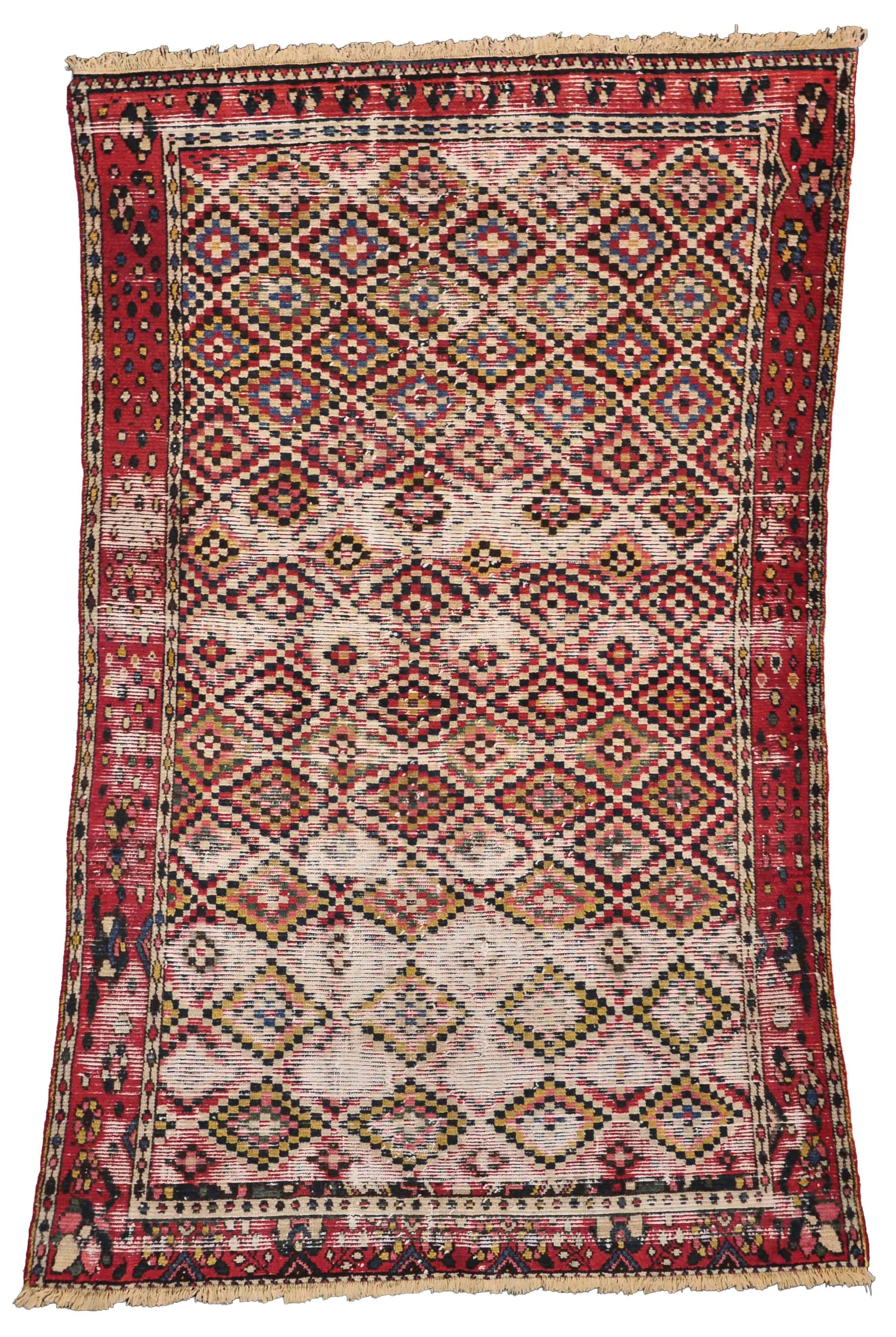
This remarkable example, now over a century old, has survived in beautiful condition. Its simple geometric design reflects a village aesthetic shaped by generations of weavers working from memory, while its colours, derived from natural dyes, have mellowed gracefully with time, all working beautifully well to reflect the beautiful mind of the creator.
Particularly appealing is the texture created by age, use, and the coarse knotting typical of village rugs. The softened surface, subtle abrasions, and gentle irregularities give the carpet a depth and character that cannot be reproduced. These qualities tell the story of a textile that has lived a long and useful life.
The rug was woven on a primitive village loom consisting of little more than wooden poles fixed into the ground. The irregularities in shape and proportion are not flaws but reminders of the humble conditions under which it was created and the human hands that brought it into being.
Rare, authentic, and deeply evocative, this Armenian Bakhtiari is more than a decorative object. It is a piece of cultural history, carrying within it the story of migration, cultural exchange, craftsmanship, and time itself.
Iranian culture has been shaped over thousands of years through the meeting of peoples, traditions, and ideas. One fascinating example is the Armenian communities that settled in central Iran during the Safavid period. Encouraged to relocate to the region around Isfahan, they established villages, churches, and thriving communities. Over generations of living alongside Persian-speaking and tribal groups, artistic traditions merged and influenced one another, giving rise to distinctive forms of weaving such as the Armenian Bakhtiari rugs.
This remarkable example, now over a century old, has survived in beautiful condition. Its simple geometric design reflects a village aesthetic shaped by generations of weavers working from memory, while its colours, derived from natural dyes, have mellowed gracefully with time, all working beautifully well to reflect the beautiful mind of the creator.
Particularly appealing is the texture created by age, use, and the coarse knotting typical of village rugs. The softened surface, subtle abrasions, and gentle irregularities give the carpet a depth and character that cannot be reproduced. These qualities tell the story of a textile that has lived a long and useful life.
The rug was woven on a primitive village loom consisting of little more than wooden poles fixed into the ground. The irregularities in shape and proportion are not flaws but reminders of the humble conditions under which it was created and the human hands that brought it into being.
Rare, authentic, and deeply evocative, this Armenian Bakhtiari is more than a decorative object. It is a piece of cultural history, carrying within it the story of migration, cultural exchange, craftsmanship, and time itself.
