
 Image 1 of 2
 Image 2 of 2
The mountainous region of Tuyserkan, in the western province of Hamadan, is renowned for its walnut orchards, cold winters, and a long tradition of carpet weaving. The villages of this area have preserved distinctive weaving traditions for generations, producing rugs that are immediately recognisable for their bold geometry, vibrant colours, and highly individual character.
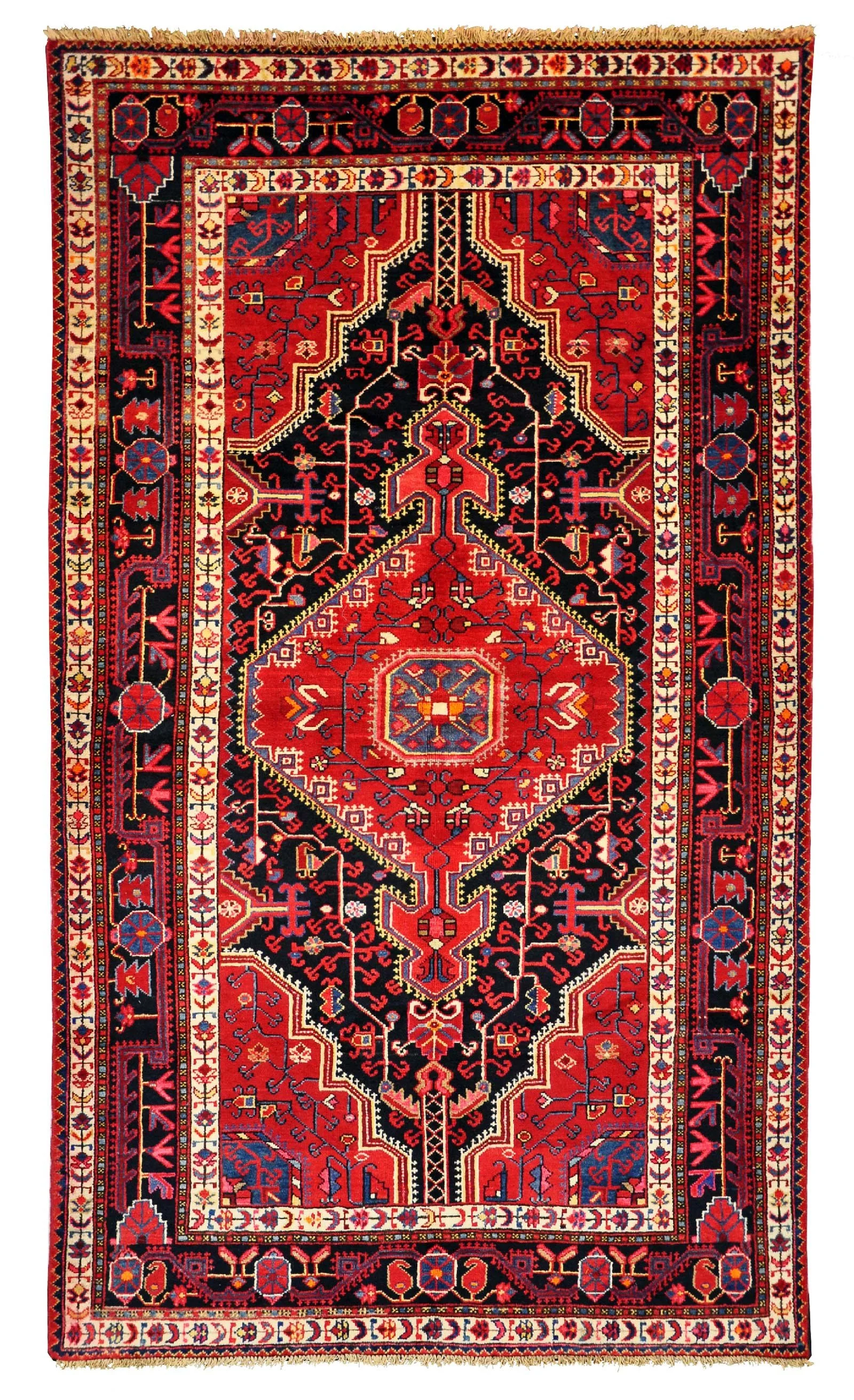
Unlike rugs woven from a prepared naqsha, pieces such as this are often created largely from memory. As a result, each carpet becomes both a continuation of inherited tradition and a personal expression of the weaver. The overall design follows familiar local conventions, yet the countless small details reveal the imagination and personality of the individual who brought it to life.
The longer one studies this rug, the more it reveals. Abstract motifs emerge from every corner of the composition. Some may see birds, fishes, dogs, or fantastic double-headed creatures. Others may discover entirely different forms. Such ambiguity is part of the charm of village weaving, where motifs evolve over generations and remain open to interpretation.
Particularly striking is the rich colour palette, dominated by vibrant reds and deep blues, creating a powerful visual presence. The borders are adorned with stylised lotus motifs, a symbol with ancient roots that can be traced back thousands of years and is frequently encountered in Iran's artistic heritage, including the reliefs of Persepolis, which symbolise rebirth and spiritual ascendance.
This is a rug that rewards attention. What first appears as a bold geometric composition gradually unfolds into a world of symbols, stories, and imagination, offering its owner new discoveries with every viewing.
The mountainous region of Tuyserkan, in the western province of Hamadan, is renowned for its walnut orchards, cold winters, and a long tradition of carpet weaving. The villages of this area have preserved distinctive weaving traditions for generations, producing rugs that are immediately recognisable for their bold geometry, vibrant colours, and highly individual character.
Unlike rugs woven from a prepared naqsha, pieces such as this are often created largely from memory. As a result, each carpet becomes both a continuation of inherited tradition and a personal expression of the weaver. The overall design follows familiar local conventions, yet the countless small details reveal the imagination and personality of the individual who brought it to life.
The longer one studies this rug, the more it reveals. Abstract motifs emerge from every corner of the composition. Some may see birds, fishes, dogs, or fantastic double-headed creatures. Others may discover entirely different forms. Such ambiguity is part of the charm of village weaving, where motifs evolve over generations and remain open to interpretation.
Particularly striking is the rich colour palette, dominated by vibrant reds and deep blues, creating a powerful visual presence. The borders are adorned with stylised lotus motifs, a symbol with ancient roots that can be traced back thousands of years and is frequently encountered in Iran's artistic heritage, including the reliefs of Persepolis, which symbolise rebirth and spiritual ascendance.
This is a rug that rewards attention. What first appears as a bold geometric composition gradually unfolds into a world of symbols, stories, and imagination, offering its owner new discoveries with every viewing.
