
 Image 1 of 1
Sumak is one of the most sophisticated flatweaving techniques of the tribal world. Unlike kilims, where patterns are created through interlocking coloured wefts, Sumaks are formed by wrapping coloured yarns around the foundation threads before securing them with wefts. The result is a textile of remarkable detail, strength, and texture.
The Shahsavan tribes of northwestern Iran are among the finest practitioners of this art. Working largely from memory, their weavers create compositions filled with symbols, animals, and geometric forms inherited through generations. Each piece becomes both a personal expression and a vessel of the tribe's collective memory.
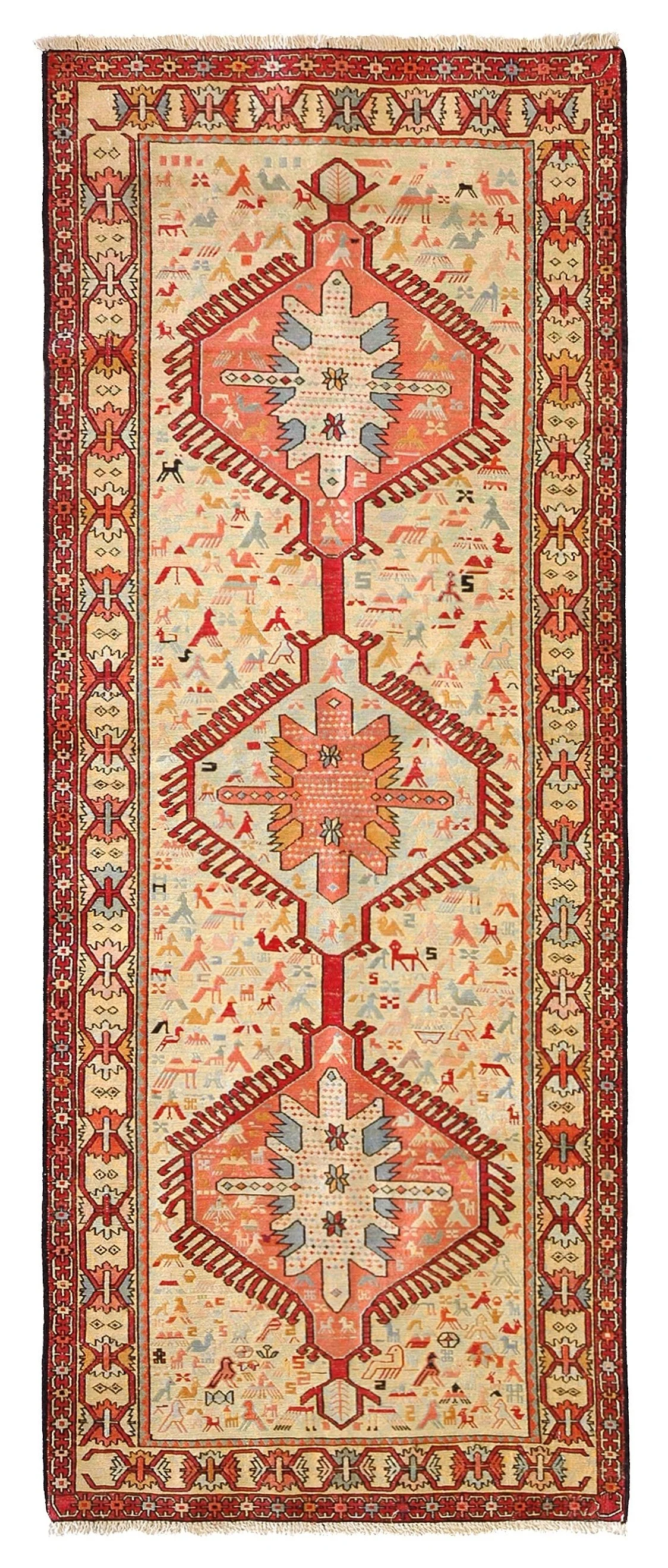
This exceptional silk Sumak is rich with motifs that invite endless exploration. Among them is the fascinating image of the three-legged donkey, a mythical creature known from Zoroastrian tradition. Associated with Tishtrya, the divinity of rainfall and fertility, the creature is described in ancient texts as a guardian whose presence purifies the waters of the world. Such motifs connect the weaving to layers of mythology, belief, and cultural memory that reach back thousands of years.
The abundance of symbols scattered throughout the field rewards careful observation, revealing new details with every viewing. Woven in silk, the piece possesses a softness and luminosity that enhance both its visual appeal and tactile pleasure, making it as enjoyable to study as it is to live with.
Sumak is one of the most sophisticated flatweaving techniques of the tribal world. Unlike kilims, where patterns are created through interlocking coloured wefts, Sumaks are formed by wrapping coloured yarns around the foundation threads before securing them with wefts. The result is a textile of remarkable detail, strength, and texture.
The Shahsavan tribes of northwestern Iran are among the finest practitioners of this art. Working largely from memory, their weavers create compositions filled with symbols, animals, and geometric forms inherited through generations. Each piece becomes both a personal expression and a vessel of the tribe's collective memory.
This exceptional silk Sumak is rich with motifs that invite endless exploration. Among them is the fascinating image of the three-legged donkey, a mythical creature known from Zoroastrian tradition. Associated with Tishtrya, the divinity of rainfall and fertility, the creature is described in ancient texts as a guardian whose presence purifies the waters of the world. Such motifs connect the weaving to layers of mythology, belief, and cultural memory that reach back thousands of years.
The abundance of symbols scattered throughout the field rewards careful observation, revealing new details with every viewing. Woven in silk, the piece possesses a softness and luminosity that enhance both its visual appeal and tactile pleasure, making it as enjoyable to study as it is to live with.
