
 Image 1 of 1
Wool on a cotton base
A century ago, Nain was renowned for producing Aba, a traditional Persian cloak crafted from wool yarn by skilled weavers. However, with the introduction of industrial fabrics from the West in the late 19th and early 20th centuries, which quickly became fashionable, the demand for these local garments declined, leading to the closure of many workshops.
In response, the production of Persian carpets gained momentum, particularly due to rising demand in Europe and America. Local investors, such as the Habibian and Mofidi brothers, seized the opportunity and brought in master weavers from the neighbouring city of Isfahan.
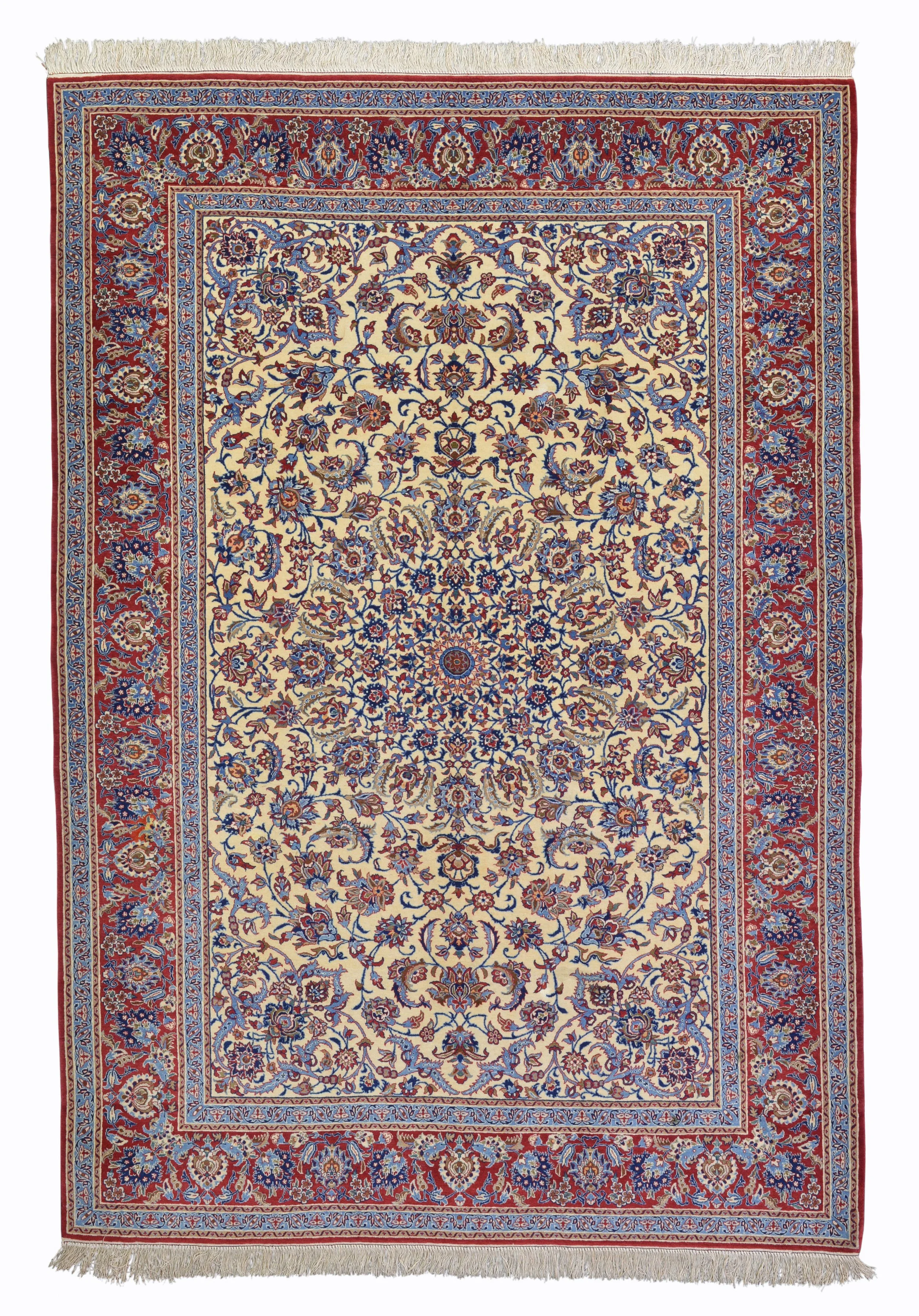
They employed local yarn spinners, dye masters, and former Aba weavers to establish carpet workshops, creating the first generation of Nain rugs. One of the unique characteristics of these rugs was the use of traditional colours—varied shades of blue, tan, beige, and white—colours that had previously been used to dye yarn for the Aba cloaks.
The finest and earliest examples of Nain rugs were produced in the village of Tudashk, on the outskirts of Nain, renowned for their exceptional craftsmanship and quality. The example here is one of the best Nain–Tudashk rugs, showing an exquisite colour combination and the finest quality wool
Wool on a cotton base
A century ago, Nain was renowned for producing Aba, a traditional Persian cloak crafted from wool yarn by skilled weavers. However, with the introduction of industrial fabrics from the West in the late 19th and early 20th centuries, which quickly became fashionable, the demand for these local garments declined, leading to the closure of many workshops.
In response, the production of Persian carpets gained momentum, particularly due to rising demand in Europe and America. Local investors, such as the Habibian and Mofidi brothers, seized the opportunity and brought in master weavers from the neighbouring city of Isfahan.
They employed local yarn spinners, dye masters, and former Aba weavers to establish carpet workshops, creating the first generation of Nain rugs. One of the unique characteristics of these rugs was the use of traditional colours—varied shades of blue, tan, beige, and white—colours that had previously been used to dye yarn for the Aba cloaks.
The finest and earliest examples of Nain rugs were produced in the village of Tudashk, on the outskirts of Nain, renowned for their exceptional craftsmanship and quality. The example here is one of the best Nain–Tudashk rugs, showing an exquisite colour combination and the finest quality wool