
 Image 1 of 1
Persians have held gardens in exceptionally high regard for thousands of years. The remains of the royal gardens of Pasargadae, dating back to the 6th century BC, testify to a long cultural fascination with creating earthly reflections of paradise. This admiration found its way into poetry, architecture, and naturally into the art of carpet weaving.
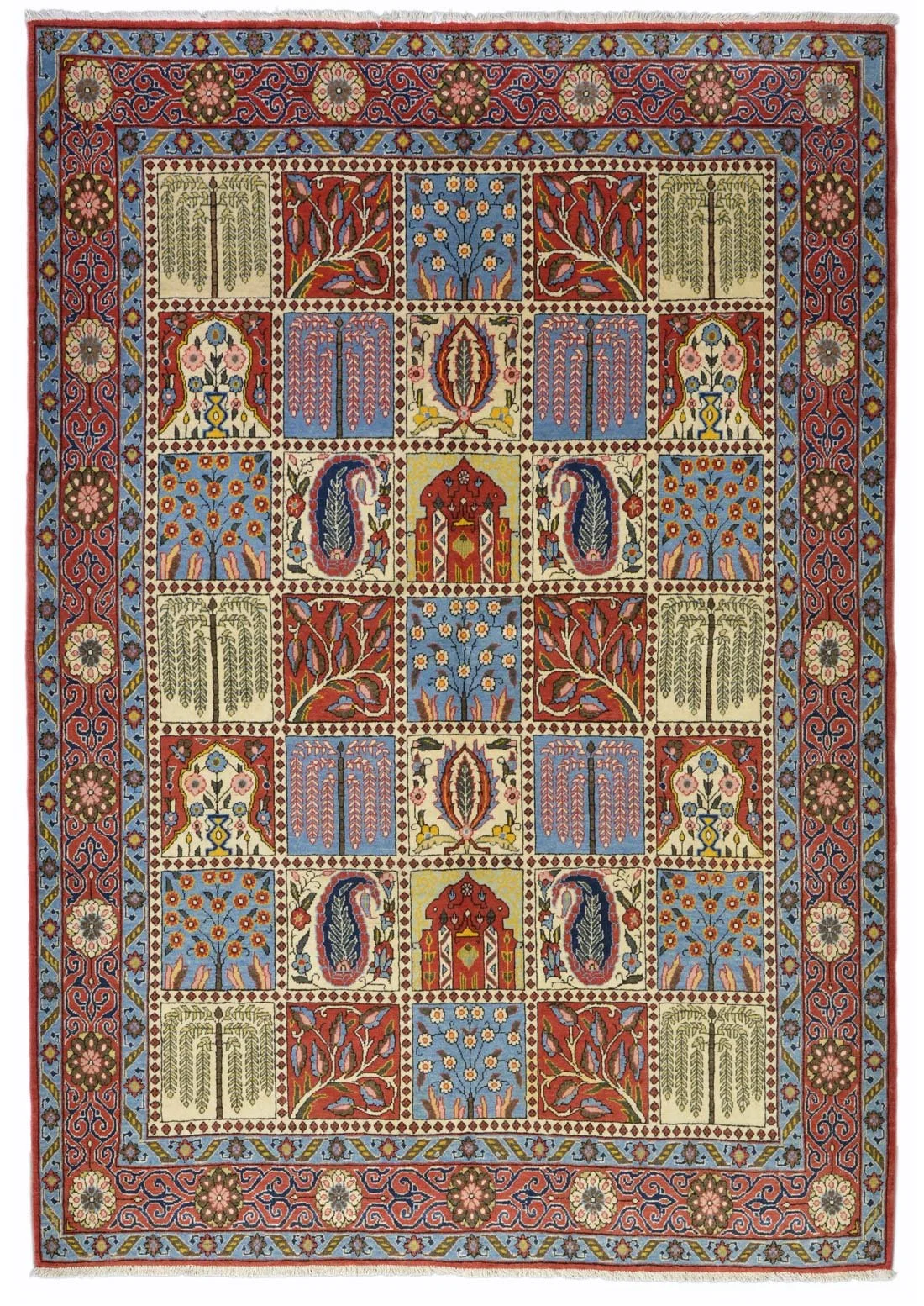
This beautiful Qum carpet, woven around the 1930s, is a wonderful example of the Persian garden theme. The designer has organised the field into orderly compartments, each containing a stylised representation of trees, flowers, and plants, together creating an idealised garden in full bloom.
Among the most notable motifs are the cypress and the weeping willow. In Persian literature, the cypress often serves as a metaphor for the graceful figure of the beloved, while the weeping willow evokes the beauty and flowing charm of the beloved's hair. These symbolic trees appear alongside a rich variety of flowers, all rendered in elegant stylised forms.
Such garden carpets often carried deeply personal meanings. One can easily imagine a young girl weaving or commissioning such imagery for her dowry, filling the design with symbols of beauty, love, hope, and aspiration.
Woven in the city of Qum using fine materials and high-quality yarns dyed from natural sources, this carpet reflects both artistic refinement and cultural depth. Beyond its decorative beauty, it is a celebration of the Persian love of gardens, poetry, and the enduring relationship between nature and art.
Persians have held gardens in exceptionally high regard for thousands of years. The remains of the royal gardens of Pasargadae, dating back to the 6th century BC, testify to a long cultural fascination with creating earthly reflections of paradise. This admiration found its way into poetry, architecture, and naturally into the art of carpet weaving.
This beautiful Qum carpet, woven around the 1930s, is a wonderful example of the Persian garden theme. The designer has organised the field into orderly compartments, each containing a stylised representation of trees, flowers, and plants, together creating an idealised garden in full bloom.
Among the most notable motifs are the cypress and the weeping willow. In Persian literature, the cypress often serves as a metaphor for the graceful figure of the beloved, while the weeping willow evokes the beauty and flowing charm of the beloved's hair. These symbolic trees appear alongside a rich variety of flowers, all rendered in elegant stylised forms.
Such garden carpets often carried deeply personal meanings. One can easily imagine a young girl weaving or commissioning such imagery for her dowry, filling the design with symbols of beauty, love, hope, and aspiration.
Woven in the city of Qum using fine materials and high-quality yarns dyed from natural sources, this carpet reflects both artistic refinement and cultural depth. Beyond its decorative beauty, it is a celebration of the Persian love of gardens, poetry, and the enduring relationship between nature and art.