
 Image 1 of 1
An early work from Qum’s emerging weaving tradition, shaped in the years when masters from neighbouring Kashan established workshops in the city and introduced their refined aesthetic. Though new to rug weaving at the time, Qum drew upon the millenary tradition of Persian carpet art that surrounded it, allowing its craftsmen to absorb, reinterpret and elevate centuries of knowledge. Woven in the 1930s with exceptionally fine silk cultivated in the Gorgan plains near the Caspian Sea, this piece reflects the creative dawn of carpet art in Qum, when the city's pioneering artists began shaping a new visual language inspired by the finest classical Persian designs.
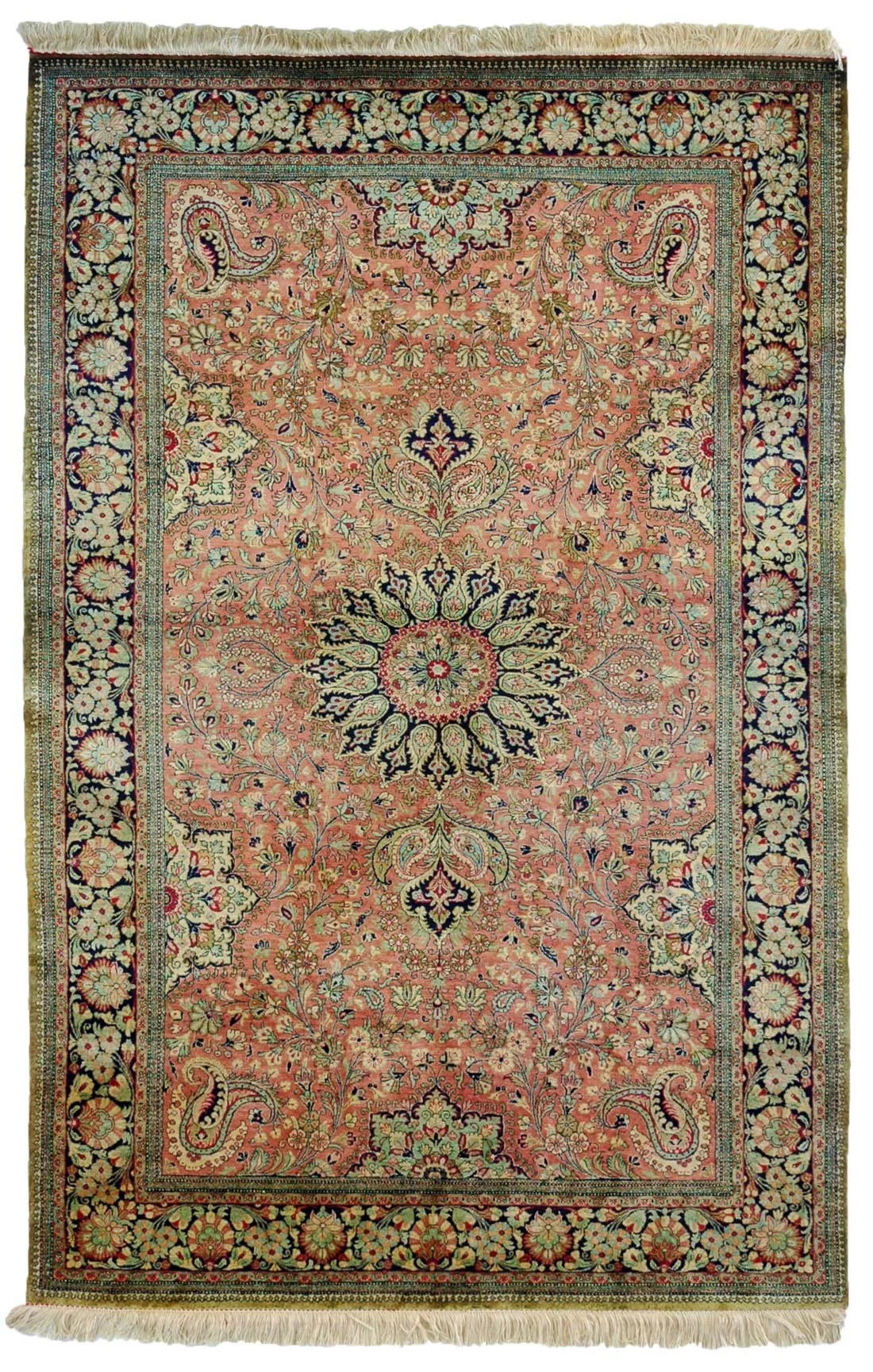
The delicately drawn medallion, graceful floral sprays and luminous palette express the artistic sensibility that came to define Qum’s celebrated silk weaving. A rare example from this formative era, it continues to enchant with its quiet sophistication, sheen and meticulous beauty.
An early work from Qum’s emerging weaving tradition, shaped in the years when masters from neighbouring Kashan established workshops in the city and introduced their refined aesthetic. Though new to rug weaving at the time, Qum drew upon the millenary tradition of Persian carpet art that surrounded it, allowing its craftsmen to absorb, reinterpret and elevate centuries of knowledge. Woven in the 1930s with exceptionally fine silk cultivated in the Gorgan plains near the Caspian Sea, this piece reflects the creative dawn of carpet art in Qum, when the city's pioneering artists began shaping a new visual language inspired by the finest classical Persian designs.
The delicately drawn medallion, graceful floral sprays and luminous palette express the artistic sensibility that came to define Qum’s celebrated silk weaving. A rare example from this formative era, it continues to enchant with its quiet sophistication, sheen and meticulous beauty.