
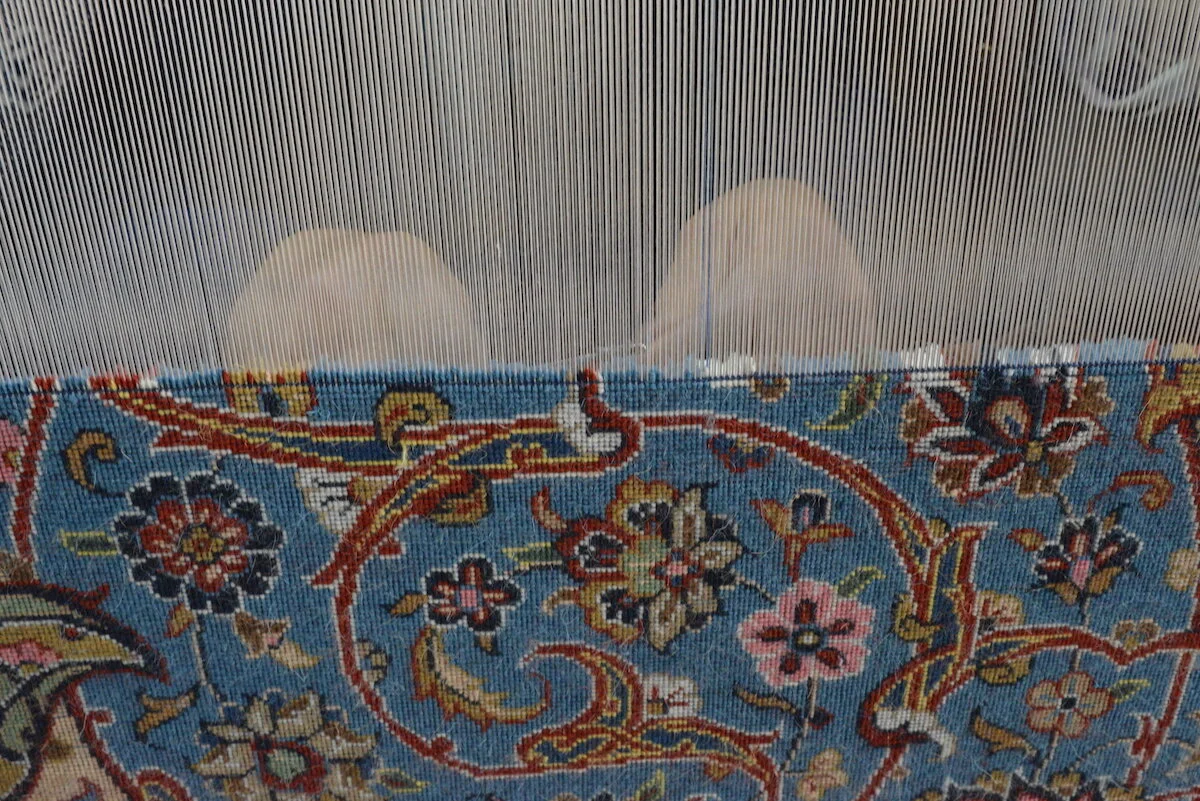
Classic rugs are the result of centuries of refinement in weaving traditions. While rug making began as a simple need for comfort in the home, the rise of urban societies and noble patronage cultivated a taste for elegance and artistic sophistication. In these settings, carpets became essential elements of luxurious interior space. The creation of a classic rug involves planning and precision. The spontaneity found in nomadic or village weavings gives way to carefully designed compositions. A master weaver supervises the process, while artists draft the naqsha on graph paper with mathematical accuracy, assigning each coloured square to a specific knot. The weavers follow this detailed map over months, and sometimes years, to complete a rug that meets the expectation of harmony, proportion, and refinement. Classic rugs are admired for their craftsmanship, balanced designs, and the meticulous skill required to bring them to life.
When a Rug Becomes an
Orchestra
Village and tribal rugs are often the work of a single weaver or family. City carpets are different. They are the result of many minds and many hands working in harmony.
Before a single knot is tied, a designer spends weeks or months drafting a naqsha. Master dyers prepare dozens, sometimes hundreds, of colours. Wool merchants select the finest fibres. Spinners transform wool into yarn. Weavers spend months, and occasionally years, translating the design knot by knot into a finished carpet.
A city carpet is therefore not simply woven. It is orchestrated.
Every participant contributes a chapter to the final work. The designer determines the rhythm of the composition. The dyer creates its palette. The weaver gives it life. What finally appears on the loom is the result of a remarkable synchrony of skills refined through generations.
Perhaps this is why great city carpets possess a sense of balance that is difficult to describe. Every element appears exactly where it belongs. Every colour supports another. Every curve flows naturally into the next.
Like a symphony, one may admire the whole without immediately noticing the many artists behind it.
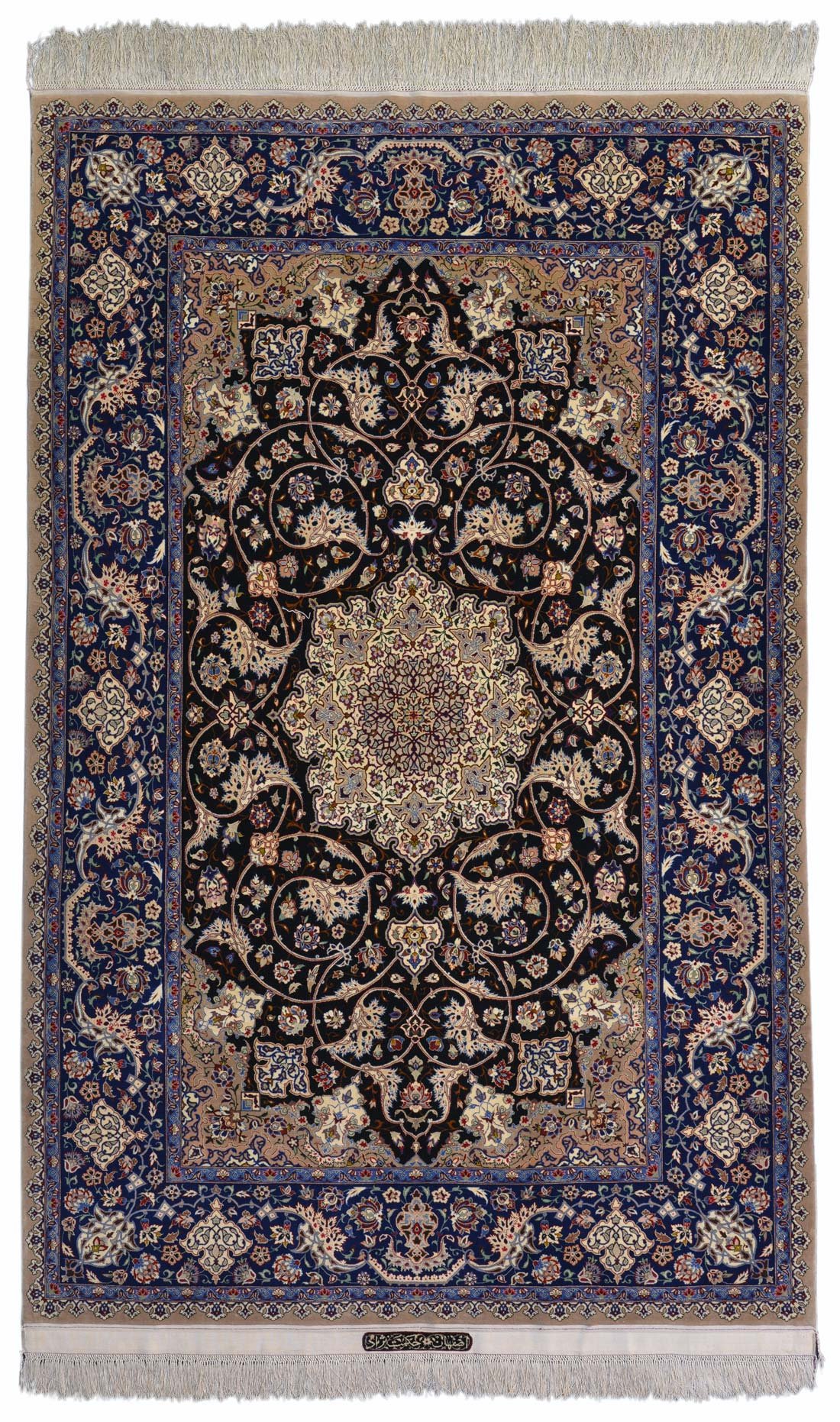
4361 – 241 × 152 cm
Wool and silk on silk foundation | Circa 1950s
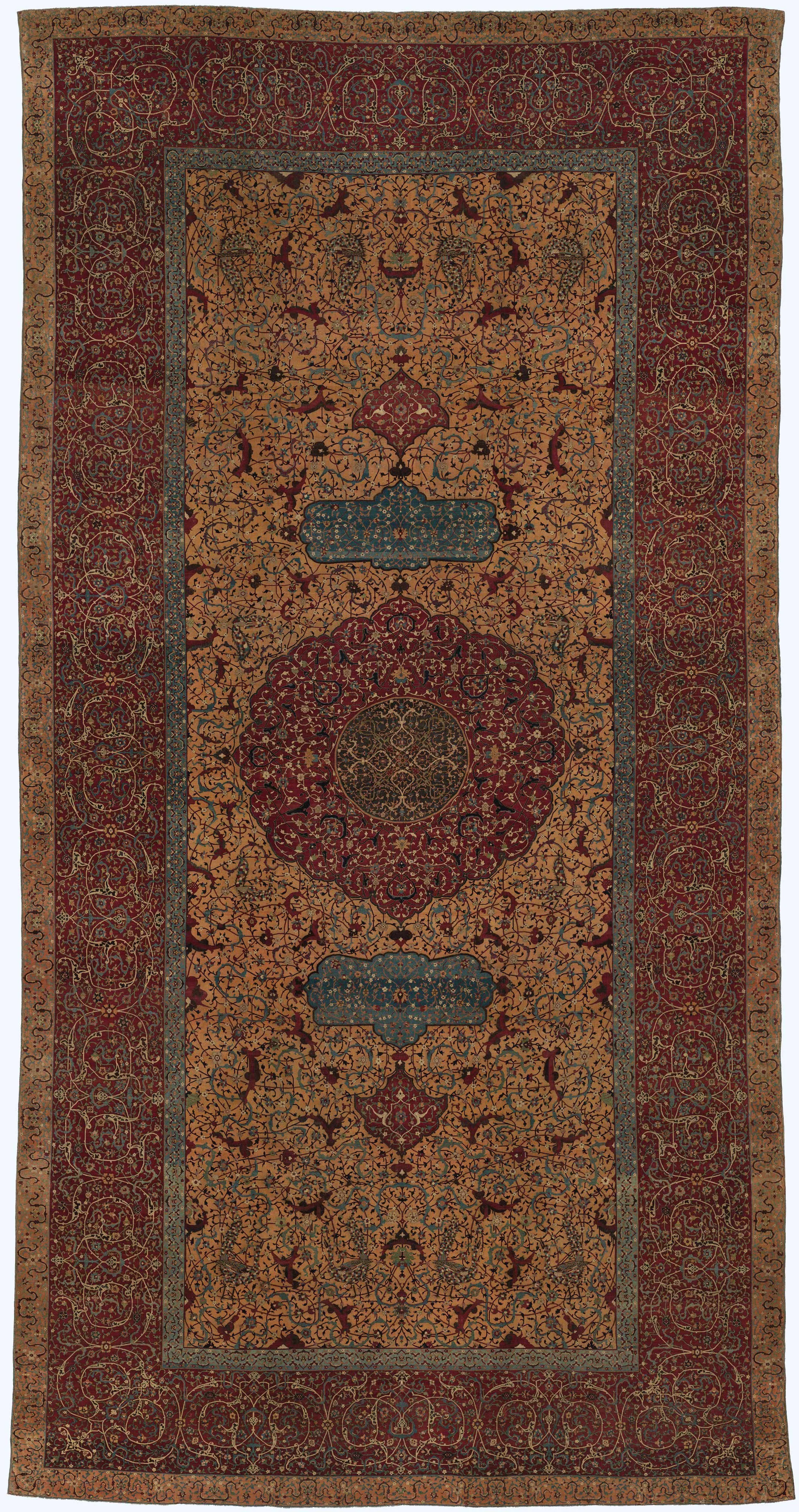
During the Safavid Dynasty (1501–1736), mysticism and Sufi teachings rooted in the works of Hallaj, Attar, and Rumi reached their peak. Shah Ismail, the dynasty's founder, was a devoted Sufi who laid the foundation for a flourishing era in Persian art and culture—including carpet weaving, which saw its golden age in this period.
Among his successors, Shah Abbas I (1571–1629), known as Abbas the Great, had a particular passion for carpets. He introduced a now-iconic design named after him—“Shah Abbasi”—still woven today. At the heart of these carpets lies a fully blossomed central medallion symbolising the journey toward spiritual purity. The surrounding half-bloomed floral elements all lead inward, representing the path toward the divine or the self-realised form.
This stunning Isfahan carpet is a work by the master designer Hekmat Nezhad, one of the most celebrated names in 20th-century Persian weaving. Known for his distinctive contours and compositions, his rugs are recognisable even without his signature. Woven circa the 1950s, this piece is a true testament to the refinement of Isfahan artistry, marrying mystic symbolism with supreme craftsmanship.
Drawing Infinity on Graph Paper
Every city carpet begins long before the loom.
Traditionally, the design is first drafted on graph paper, known as a naqsha. Each square represents a knot. A single large carpet may contain hundreds of thousands, sometimes millions, of these tiny squares.
The remarkable thing is that the designer is not merely drawing flowers, leaves, or medallions. He/she is creating a visual language that must survive translation through the hands of weavers.
Curves become rows of knots. Shadows become colours. Motion becomes pattern.
In cities such as Tabriz, Isfahan, Kashan, Qum and Nain, generations of designers refined this language to extraordinary levels of sophistication. Some patterns have been passed from master to apprentice for centuries, while others emerged from the imagination of individual artists.
The finished carpet may appear effortless, but hidden beneath its surface are countless decisions concerning proportion, symmetry, colour, and movement.
A city carpet is therefore more than a textile. It is a drawing translated into wool and silk.


The Cities That Wove Their Identity
Certain cities became so closely associated with carpet weaving that their names eventually became synonymous with entire schools of design.
The elegance of Isfahan, the refinement of Qum, the architectural precision of Tabriz, the poetic floral compositions of Kashan, the strength of Bijar, each developed a distinct personality over centuries.
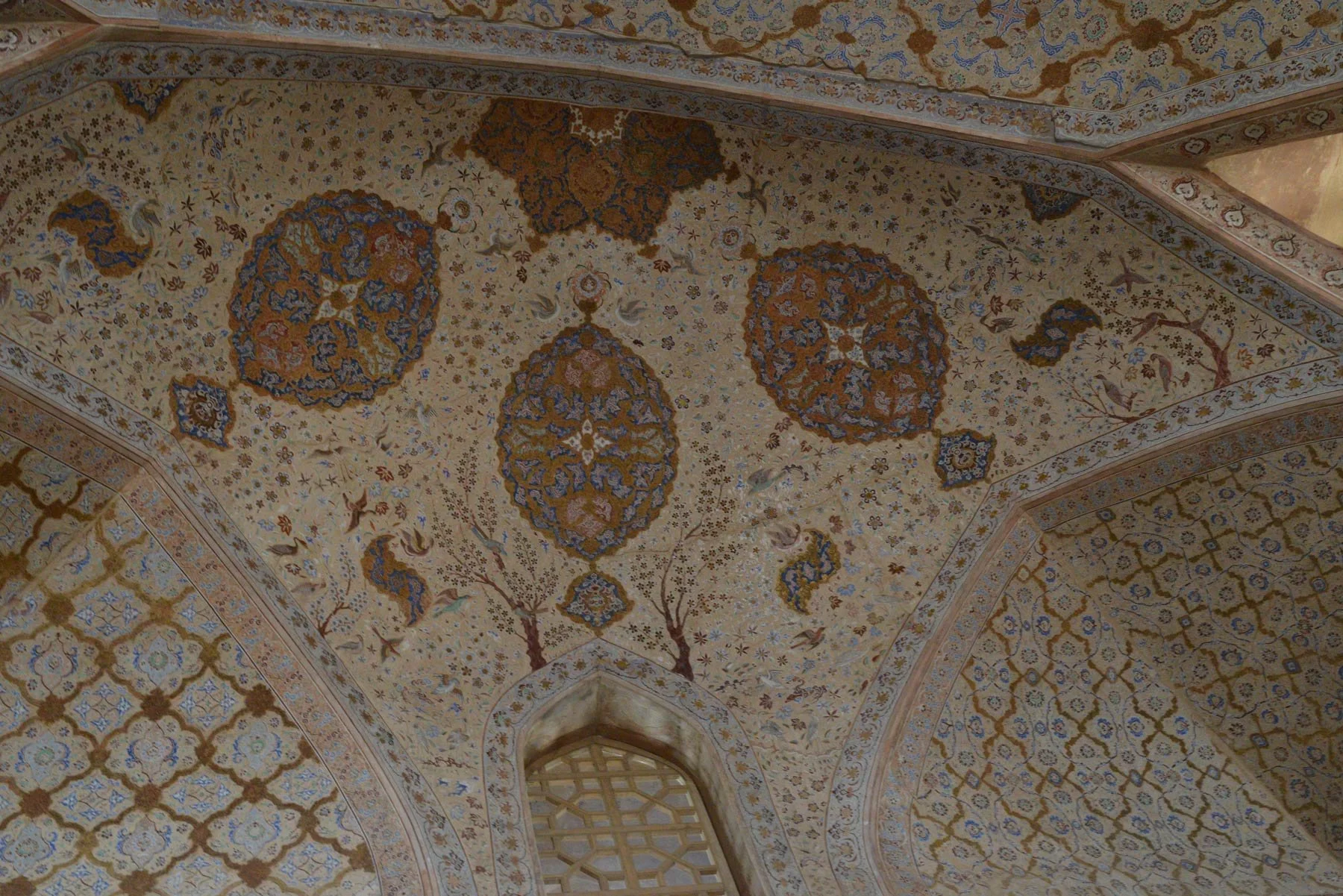
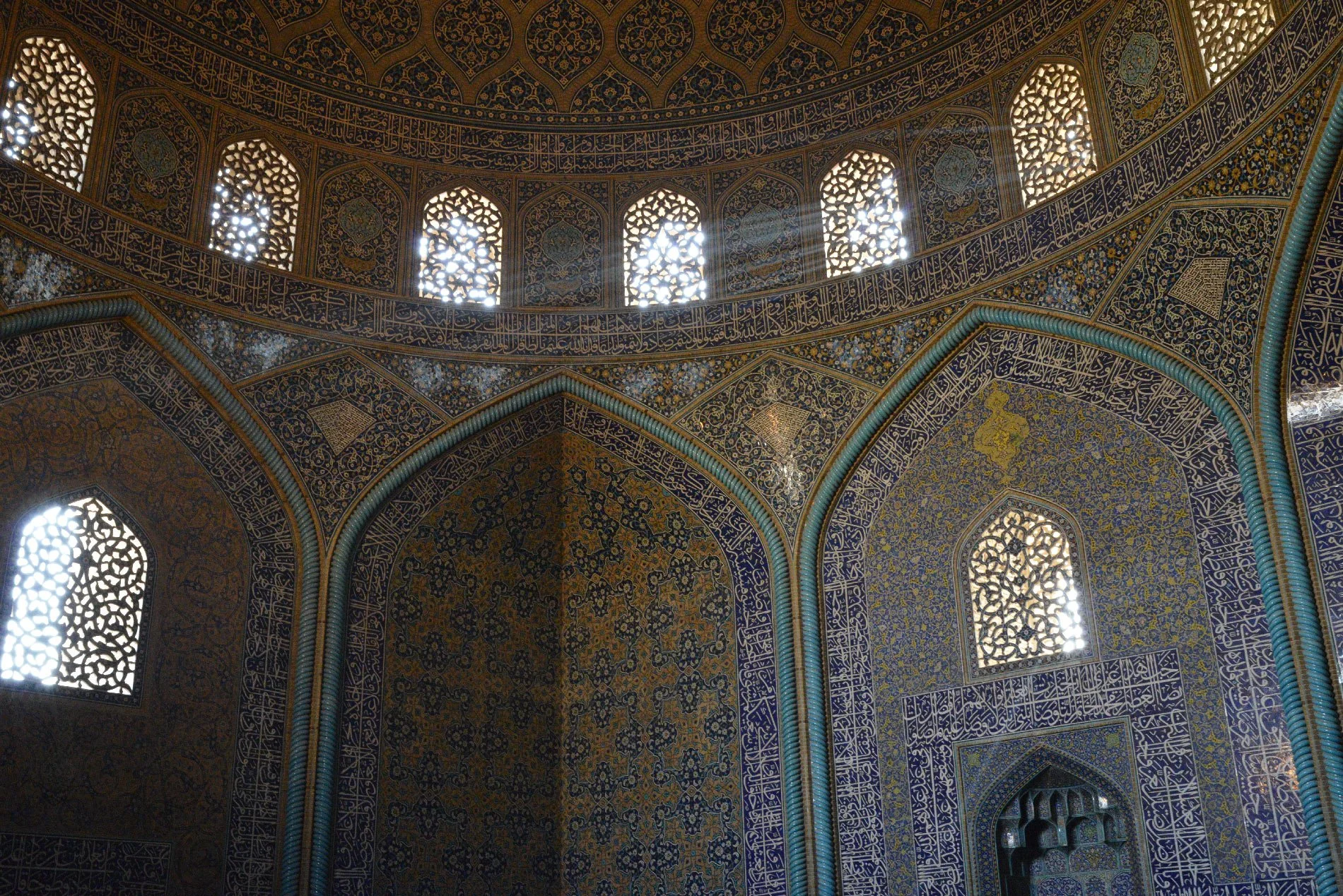
These carpets were shaped by the culture surrounding them. Architecture influenced their patterns. Gardens inspired their compositions. Poetry informed their sense of beauty. Even the colours reflected regional preferences and traditions.
To study city carpets is therefore to study cities themselves.
Their designs preserve fragments of history. They reveal changing tastes, artistic movements, and the ambitions of patrons who commissioned them. In some ways they function as visual archives, carrying memories from one generation to the next.
The great weaving centres of Persia were not merely producing floor coverings. They were creating a form of cultural memory.
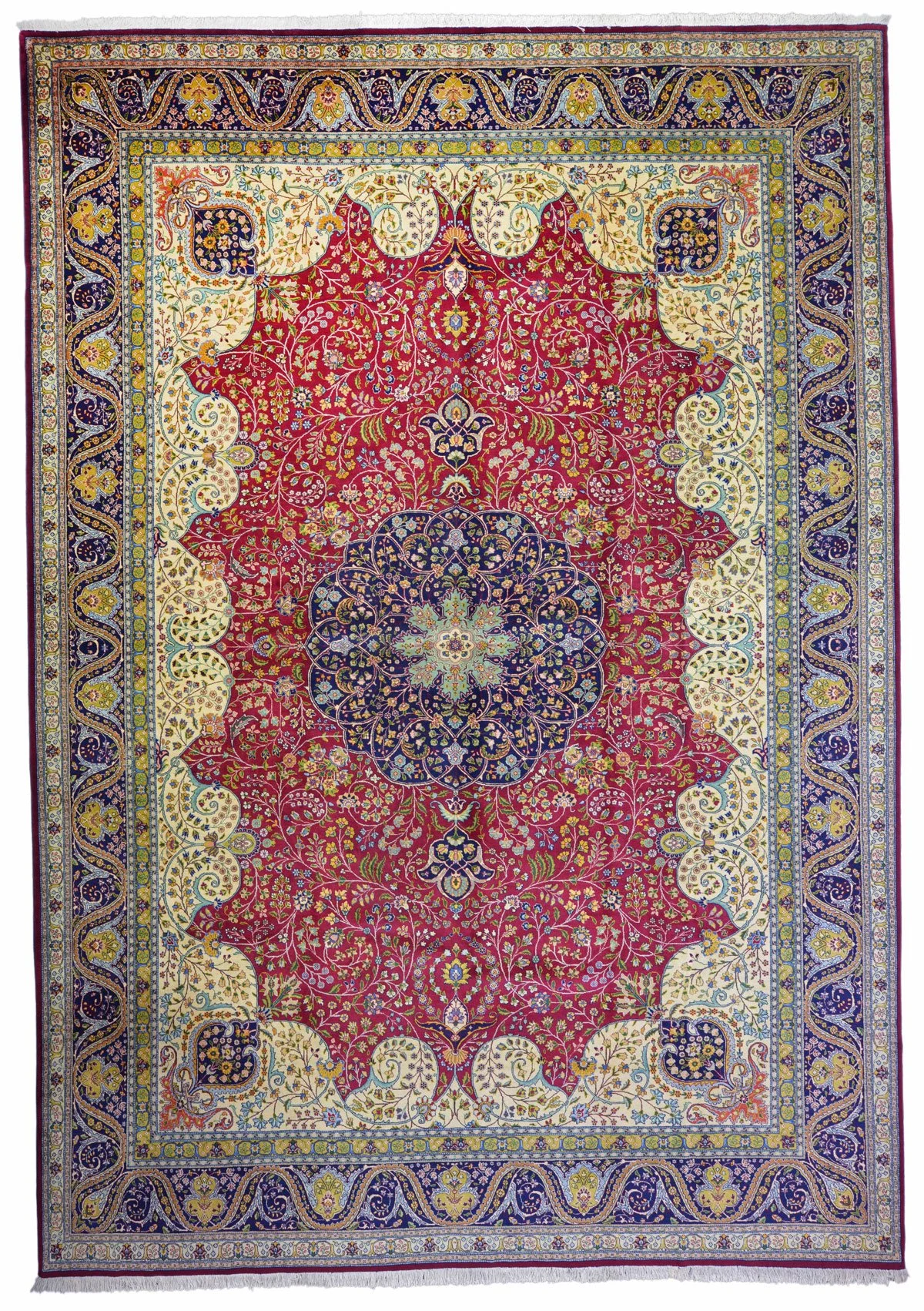
The weavers of Tabriz are responsible for creating some of the most remarkable carpets in the world. For centuries, they have combined technical mastery with a willingness to innovate, constantly reinterpreting classical themes through new designs and colour combinations. This spirit of creativity has given rise to an extraordinary diversity of carpets, each reflecting the artistic vision of its designers and weavers.
This carpet is a beautiful example of that tradition. The magnificent field of deep red, enriched by a sophisticated palette of blues, ivories, and subtle accent colours, immediately captures the eye. The harmonious movement of the scrolling vines, flowering branches, and elegant medallion reveals the imagination and skill of the designer, while the richness and balance of the colours testify to the expertise of the dye master.
Yet a design remains only an idea until it reaches the loom. It is the skilled hands of the weaver that bring the pattern to life, knot by knot, transforming a drawing into a lasting work of art.
The result is a carpet that embodies the collaboration of designer, dyer, and weaver alike, a timeless expression of Tabriz craftsmanship, capable of enriching an interior space with beauty, elegance, and cultural depth for generations to come.
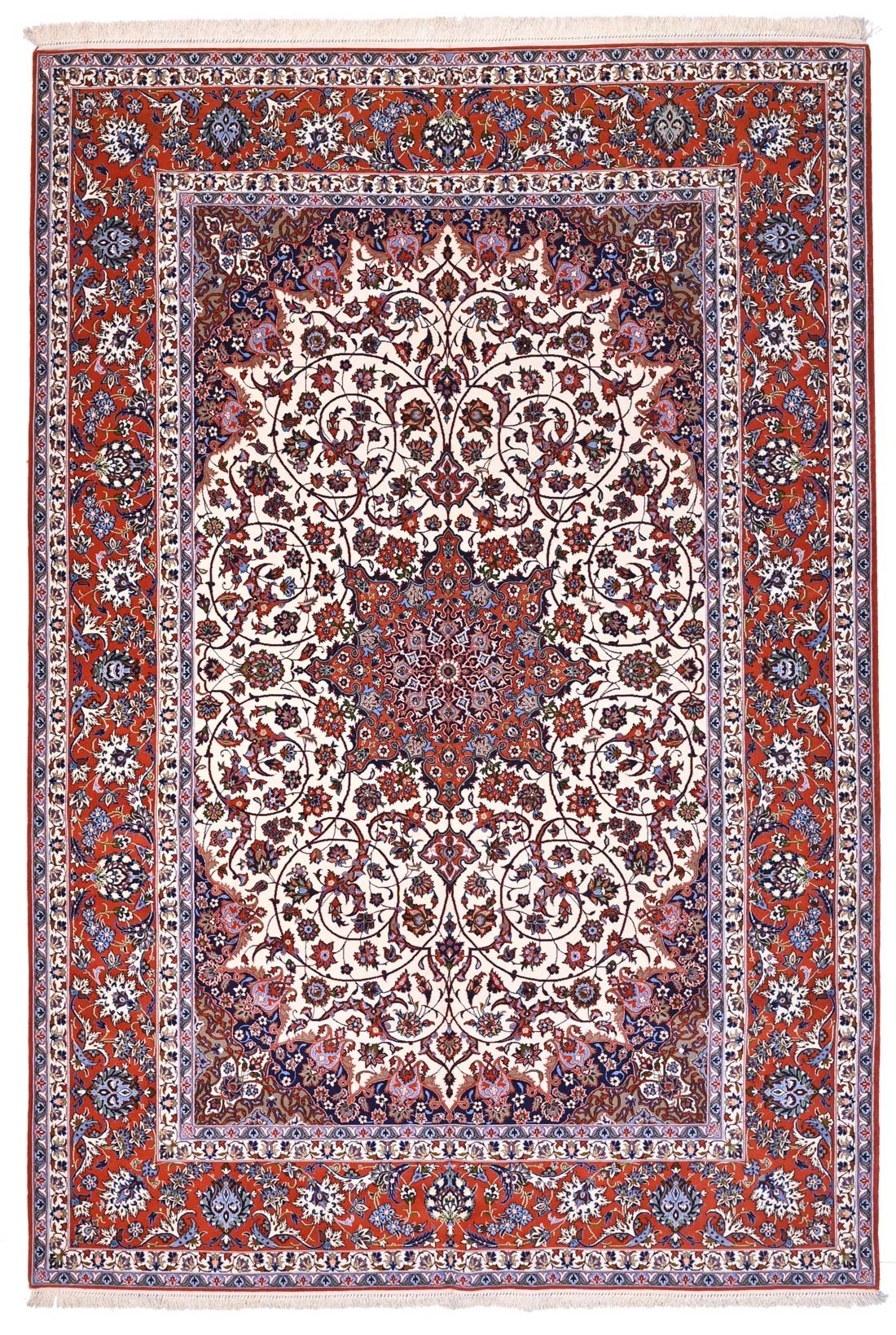
Isfahan, the crown jewel of Persian art and culture, is renowned for its magnificent palaces, intricate tile work, and timeless architectural wonders, a legacy born during the opulent Safavid era of the 16th and 17th centuries. Under the enlightened reign of kings like Shah Abbas I, art and craftsmanship flourished like never before. Among the most enduring achievements of this golden age are the breathtaking carpets that continue to inspire awe centuries later.
This exceptional piece is a masterfully woven, contemporary homage to that storied past. Inspired by a design originally commissioned by Shah Abbas himself, hence the revered "Shah Abbasi" motif, the carpet embodies the refinement and prestige of classical Persian artistry.
Meticulously handcrafted with over three million knots on a foundation of fine silk, this creation took more than a year to complete. Every detail reflects an extraordinary level of skill, passion, and heritage, making it not just a floor covering, but a true work of art.
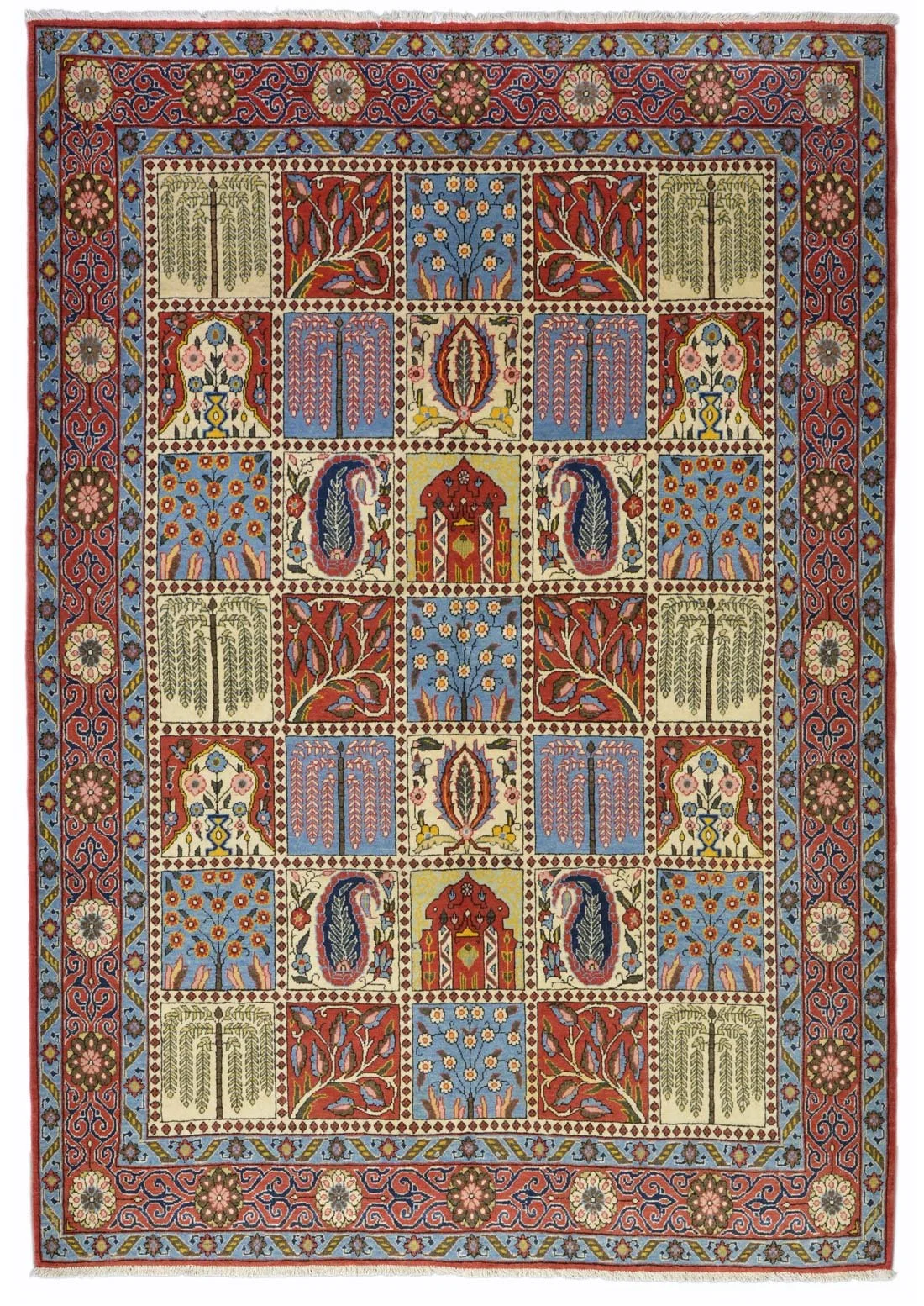
Persians have held gardens in exceptionally high regard for thousands of years. The remains of the royal gardens of Pasargadae, dating back to the 6th century BC, testify to a long cultural fascination with creating earthly reflections of paradise. This admiration found its way into poetry, architecture, and naturally into the art of carpet weaving.
This beautiful Qum carpet, woven around the 1930s, is a wonderful example of the Persian garden theme. The designer has organised the field into orderly compartments, each containing a stylised representation of trees, flowers, and plants, together creating an idealised garden in full bloom.
Among the most notable motifs are the cypress and the weeping willow. In Persian literature, the cypress often serves as a metaphor for the graceful figure of the beloved, while the weeping willow evokes the beauty and flowing charm of the beloved's hair. These symbolic trees appear alongside a rich variety of flowers, all rendered in elegant stylised forms.
Such garden carpets often carried deeply personal meanings. One can easily imagine a young girl weaving or commissioning such imagery for her dowry, filling the design with symbols of beauty, love, hope, and aspiration.
Woven in the city of Qum using fine materials and high-quality yarns dyed from natural sources, this carpet reflects both artistic refinement and cultural depth. Beyond its decorative beauty, it is a celebration of the Persian love of gardens, poetry, and the enduring relationship between nature and art.

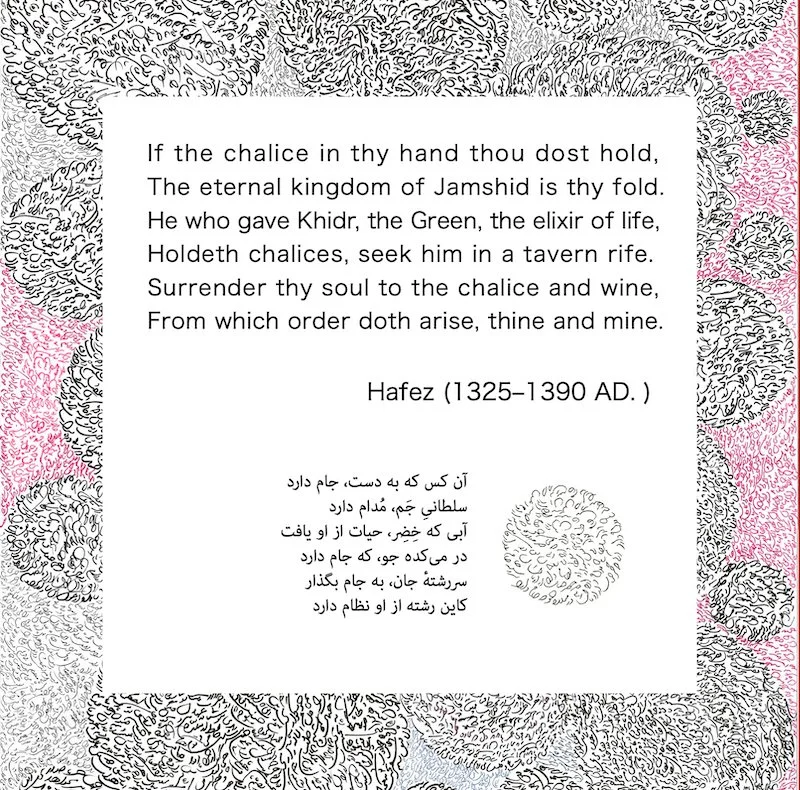
"I once asked a bird, how is it that you fly in this gravity of darkness? The bird responded love lifts me.'"
Hafez (1350-1390 AD)
Persian poems and mystic scripts abound with metaphors, where birds, trees, wine, and more serve as analogies to describe profound subjects like mystical transcendence. Many weavers and designers from the past were raised within a deeply spiritual culture. The recitation of poems by Hafez, Rumi, Khayyam, and other eminent Persian poets was a cornerstone of entertainment at any gathering.
The enduring influence of this rich cultural backdrop is a fundamental element that defines antique Persian carpets as they are: timeless works of art that sing and dance for those who can comprehend their language.
The Tehran rug here is a fascinating example of such carpets from the late 19th century, beautifully arousing a feeling of an upward movement.
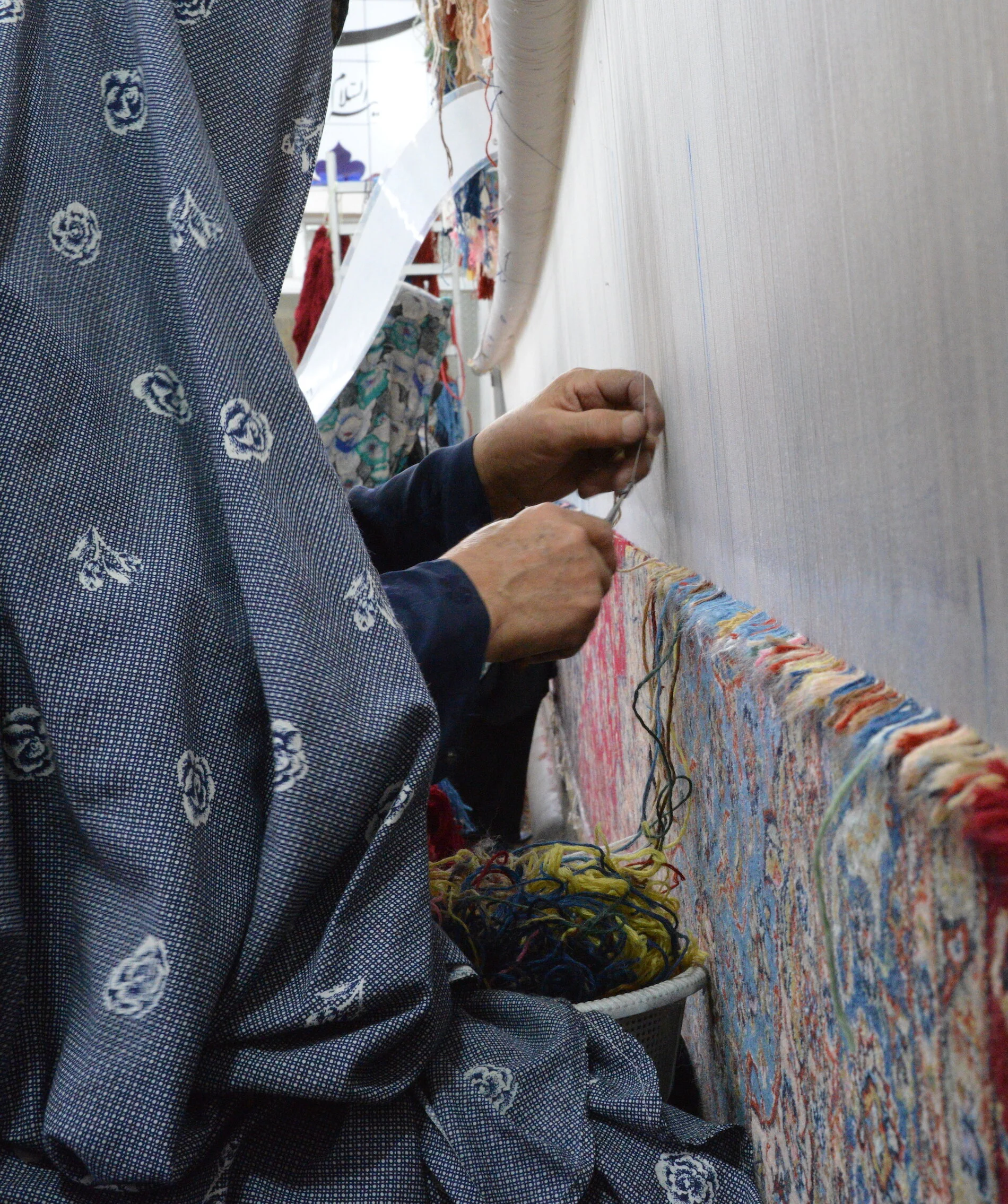
Weaving a classic rug could take years!
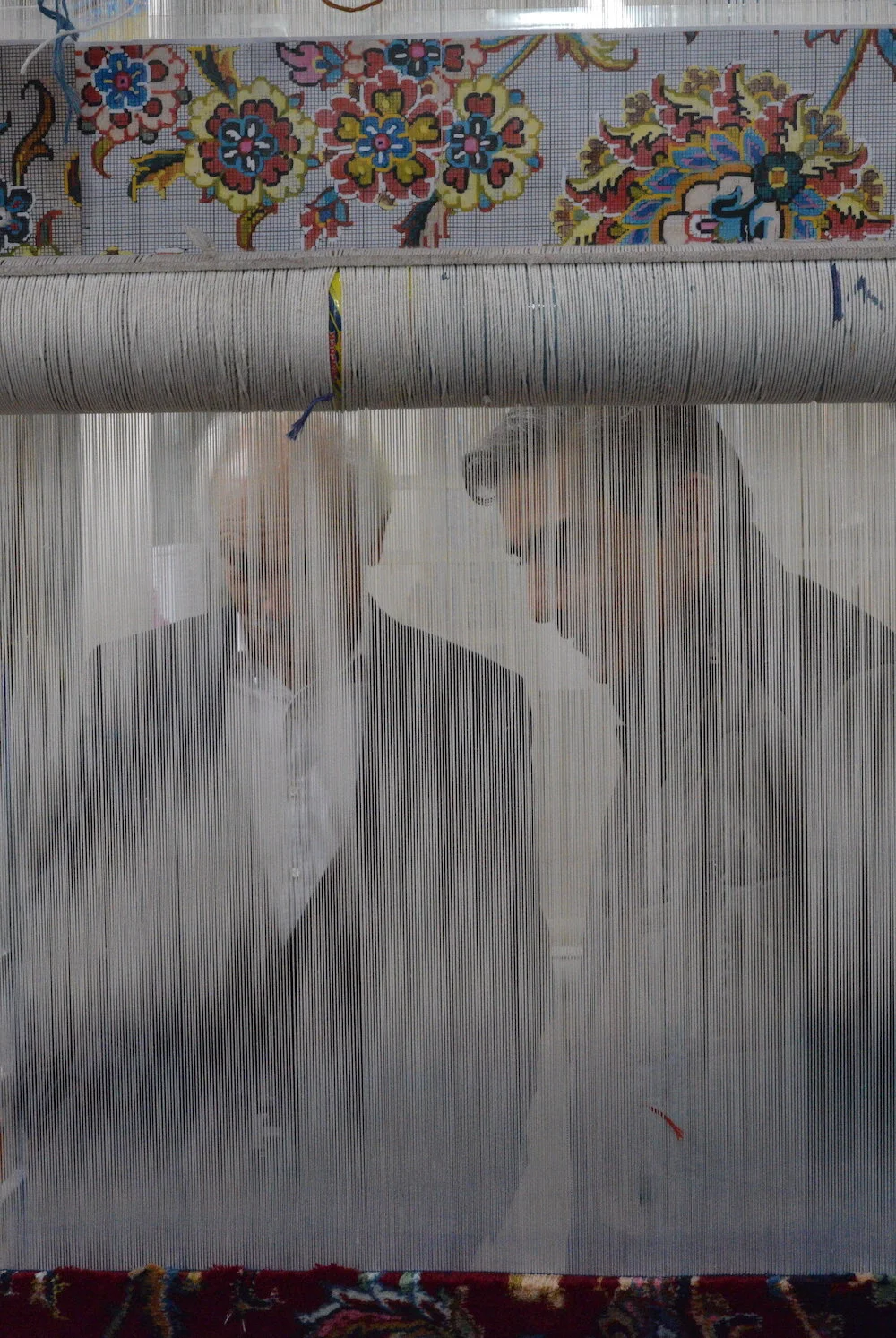
Weaving a rug is a meticulous and time-consuming task. Weavers must tie hundreds of thousands, and sometimes even millions, of knots over an extended period. To achieve perfection, each knot must be identical in shape and form. The skilled hands of the weavers, moving with symphonic precision, create enchanting designs.
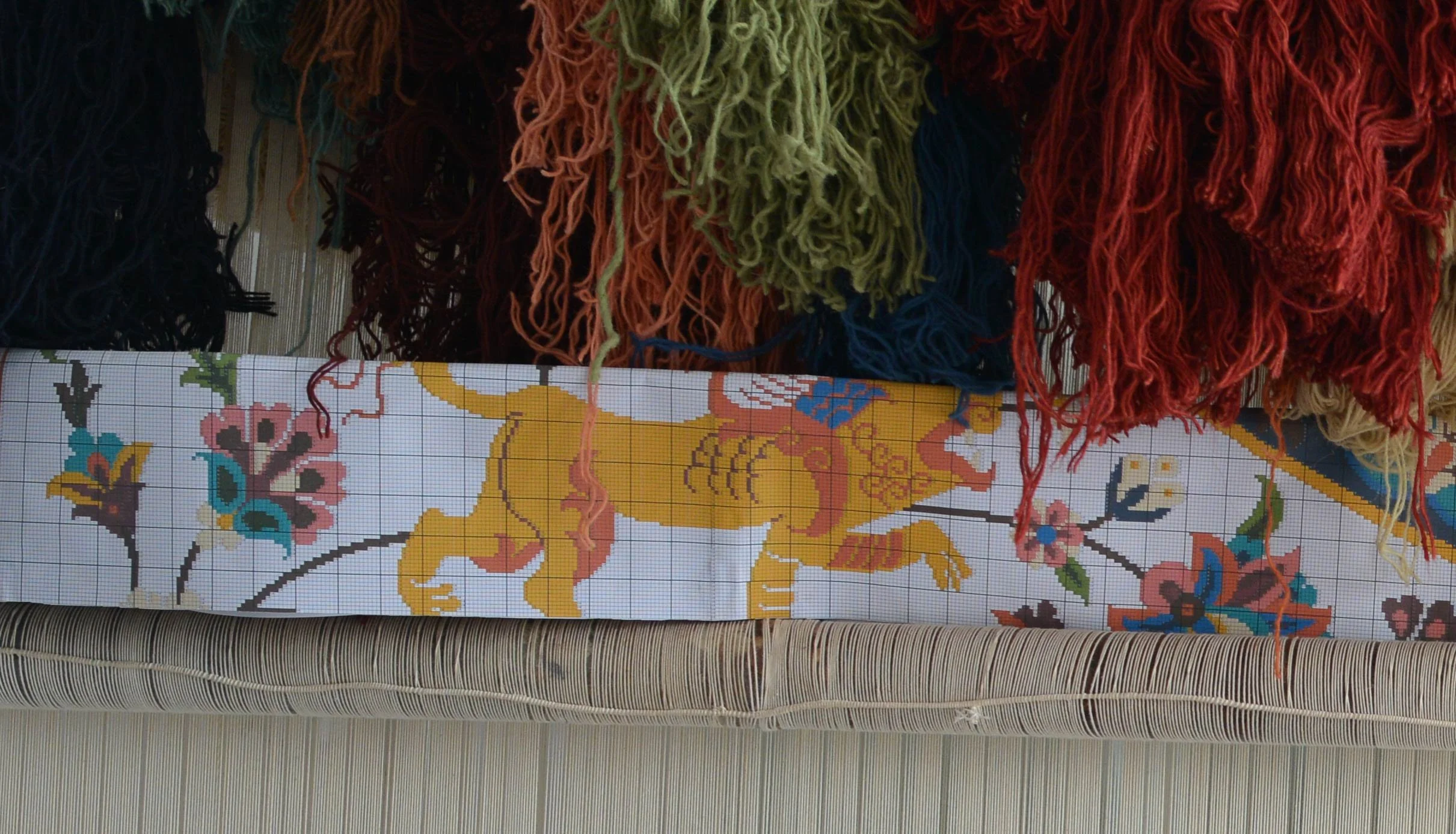
Colours and squares turn into knots!
Designers draft the pattern on graph paper for the weavers to follow. The weavers translate each square into a knot in the corresponding colour. The process of designing a rug can take weeks, and sometimes even months.
8250 A Tbriz in an unusual design and clour combination. 274x172cm
No. 8250 - 274x172cm. Circa 1970s
An unusual Tabriz - Wool and silk on a cotton base
Tabriz, an ancient city in north-west Iran, long served as a major trading gateway between Europe and the Persian Empire. Tabriz carpets are renowned for both their quality and their wide range of designs. The city’s designers often move beyond traditional symmetrical patterns and the conservative colour schemes seen in other centres like Isfahan, creating a distinctive artistic diversity. Tabriz weavers use symmetric knots and are known for producing very fine rugs. Silk may be used in the warps, wefts, or floral details. With proper techniques, fine knots, and good quality wool and dyes, Tabriz carpets are durable and age gracefully.
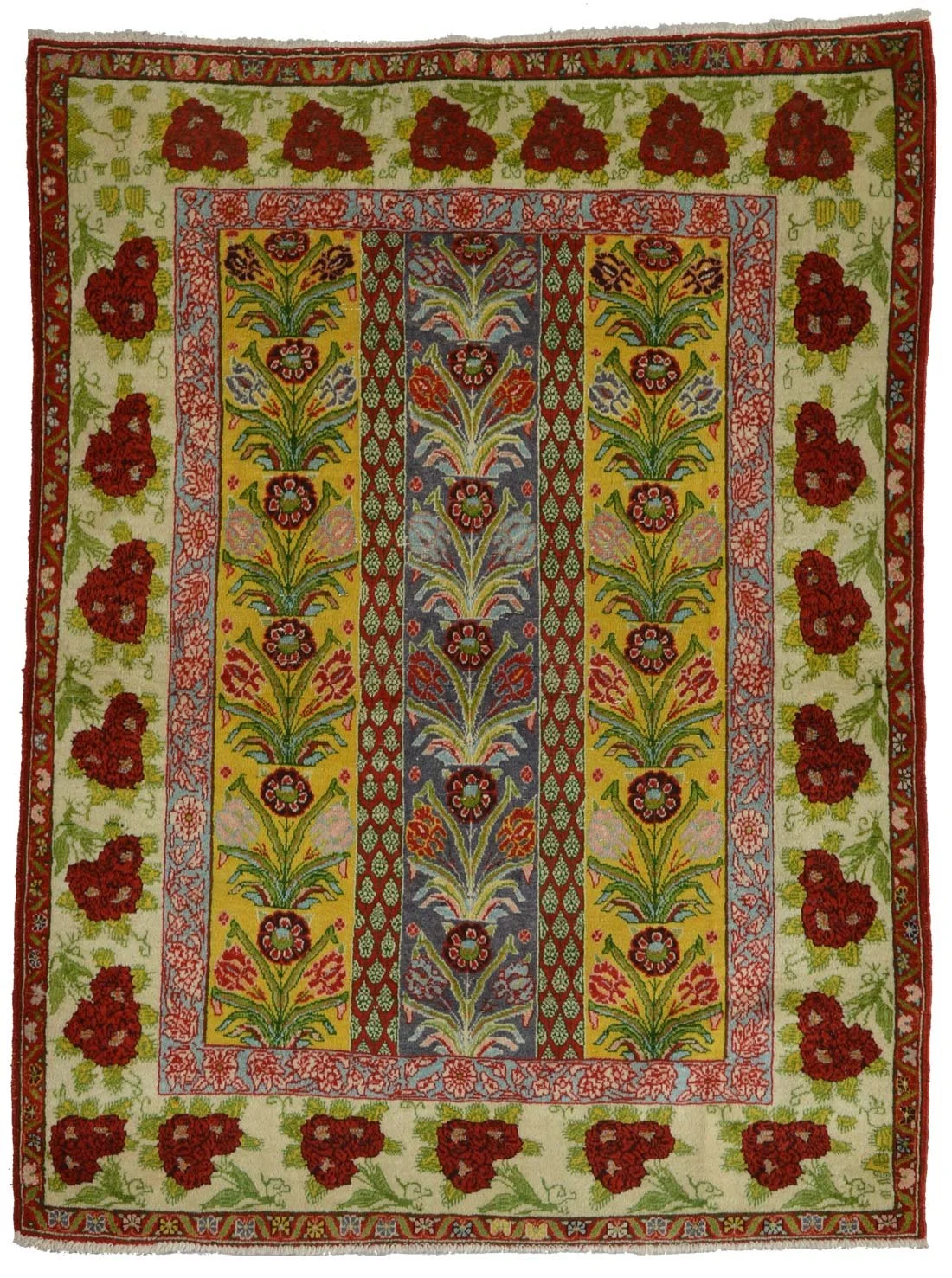
1169622
Ordobadi–Shiraz Rug, No. 169622
Early 20th Century, 146 × 106 cm
Wool on Cotton
The workshop of Ordobadi in Shiraz operated from the late 19th century to the early decades of the 20th century, producing a limited number of rugs now known as Ordobadi–Shiraz pieces. These carpets are celebrated not only for their rarity but also for their distinctive harmony of colour and design.
Master Ordoubadi, an aesthete originally from the Azerbaijani city of Ordubad, brought together an extraordinary blend of skills. He appointed a master-weaver from Yazd to oversee the workshop, while the weaving itself was carried out by artisans of Qashqai descent. This fusion of artistic traditions, Azerbaijani taste, Yazdi technical refinement, and Qashqai weaving heritage resulted in rugs of exceptional individuality.
This early 20th-century example reflects that unique blend perfectly, standing as a testament to a short-lived but remarkable chapter in Persian carpet making.

12492- A nain-Tudashk rug. Ca. early 20the century 220x152cm
No. 12492 - 220x152cm. Circa early 20th century
A Nain Tudashk - Wool on a cotton base
A century ago, Nain was renowned for producing Aba, a traditional Persian cloak crafted from wool yarn by skilled weavers. However, with the introduction of industrial fabrics from the West in the late 19th and early 20th centuries, which quickly became fashionable, the demand for these local garments declined, leading to the closure of many workshops.
In response, the production of Persian carpets gained momentum, particularly due to rising demand in Europe and America. Local investors, such as the Habibian and Mofidi brothers, seized the opportunity and brought in master weavers from the neighbouring city of Isfahan.
They employed local yarn spinners, dye masters, and former Aba weavers to establish carpet workshops, creating the first generation of Nain rugs. One of the unique characteristics of these rugs was the use of traditional colours—varied shades of blue, tan, beige, and white—colours that had previously been used to dye yarn for the Aba cloaks.
The finest and earliest examples of Nain rugs were produced in the village of Tudashk, on the outskirts of Nain, renowned for their exceptional craftsmanship and quality. The example here is one of the best Nain–Tudashk rugs, showing an exquisite colour combination and the finest quality wool.

No. 166271 - 284x196cm. Circa 1960s
Tabriz, signed Narvani - Wool on cotton base
Without a doubt, Khayyam is one of the most famous Persian poets in the world, with his profound poetry translated by Edward Fitzgerald into English in 1859:
"A Book of verses underneath the bough,
A Jug of Wine, a Loaf of Bread – and Thou
Beside me singing in the Wilderness –
Oh, Wilderness were Paradise enow!"
This carpet celebrates Omar Khayyam by depicting one of his favourite historical figures, Bahram the Hunter, who reigned over the Persian Empire from 420 to 438 AD. Known for his exceptional hunting skills, Bahram was, according to Khayyam, unparalleled in his time, with none like him before or after. He is also celebrated by Khayyam and other poets for spreading prosperity and justice throughout his land.
The poetry surrounding the carpet includes one of Khayyam's most famous verses:
"I went to the potter’s shop yesterday,
I saw a thousand pots, mute and shouting, on display.
Suddenly, one roared as if to say,
Gone in clay are the potters, buyers, and sellers today."
The designer, Mr. Narvani, was celebrated for his refined sense of colour and uncompromising choice of high-quality materials—hallmarks that are clearly embodied in this piece.
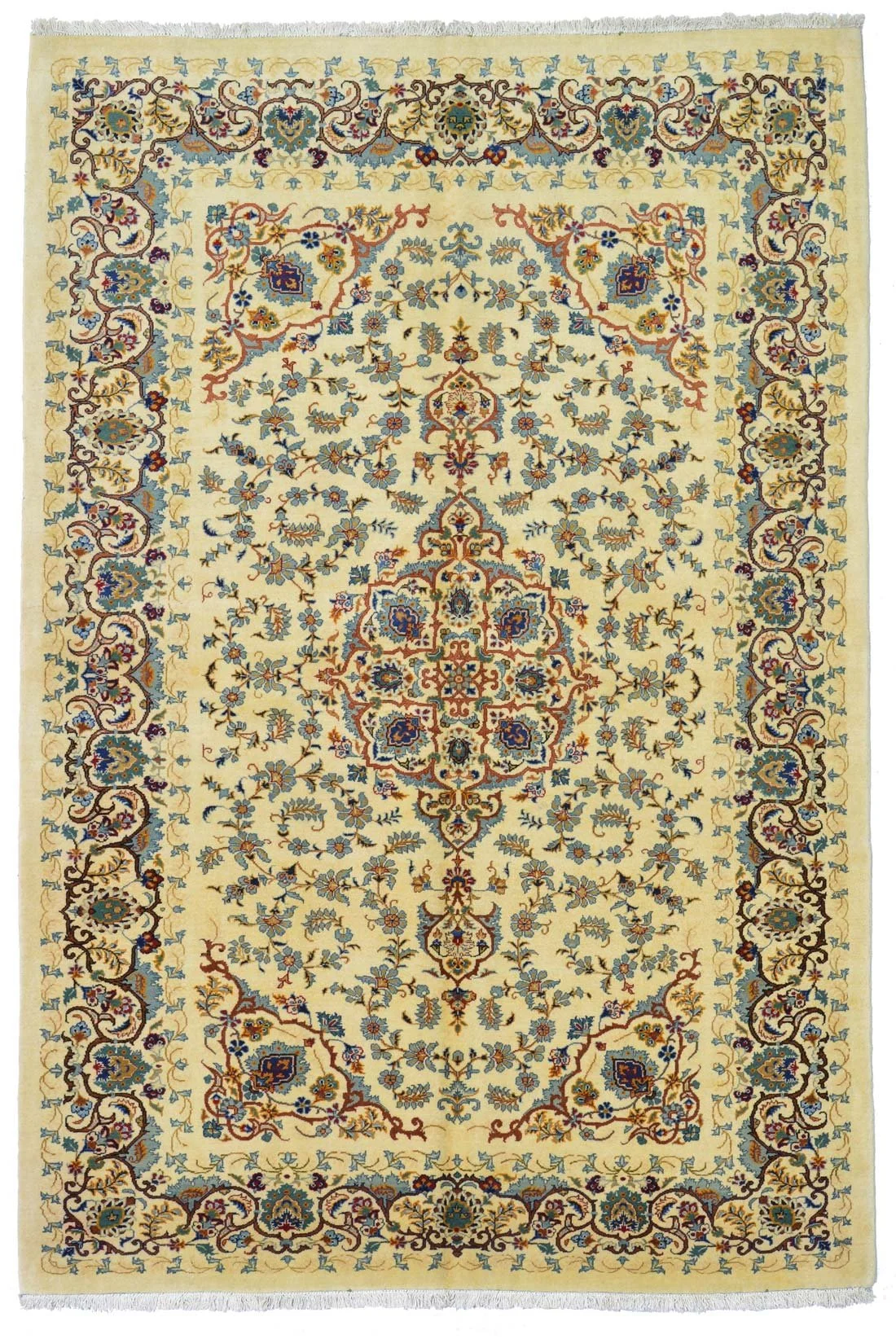
147920 212x137cn
A Kashan Rug, No. 147876
First Half of the 20th Century, 206 × 138 cm
Wool on Cotton
In the long history of Persian carpet art, the greatest designers have created works so remarkable that they transcend time and become the very tradition that others follow. Their influence has shaped generations, making it rare to encounter a rug that moves beyond these established forms.
This exceptional Kashan from the first half of the 20th century is one such rarity. Here, the designer works with unusual freedom, allowing the composition to breathe in ways that gently challenge the structure expected of a classic rug. The borders seem to emerge from within the field itself, creating a visual rhythm that feels both familiar and quietly defiant.
Its fluid drawing, expressive palette and confident reinterpretation of form give the piece a distinctive presence—one that stands out effortlessly in even the most discerning collection. A true collector’s delight, it carries an added charm: it comes with an identical twin, offering the rare pleasure of appreciating this remarkable vision in double measure.


59901 425x315
No. 59901 - 425x315cm. Circa 1950s
Isfahan - Wool on cotton base
Isfahan was the seat of several Persian royal dynasties, the last of them being the Safavids, who made the city their capital in 1598. Originating in Azerbaijan, the Safavids unified Iran under their rule and contributed to a renaissance of art and science for two centuries. Many classic carpet designs, particularly those from the city, are inspired by patterns from the 16th and 17th centuries. The carpet here is a beautiful example of such rugs. The flowers in its design are attributed to King Abbas the Great (reigned 1588 to 1629). Hence, the motif is known as the Shah Abbasi design.
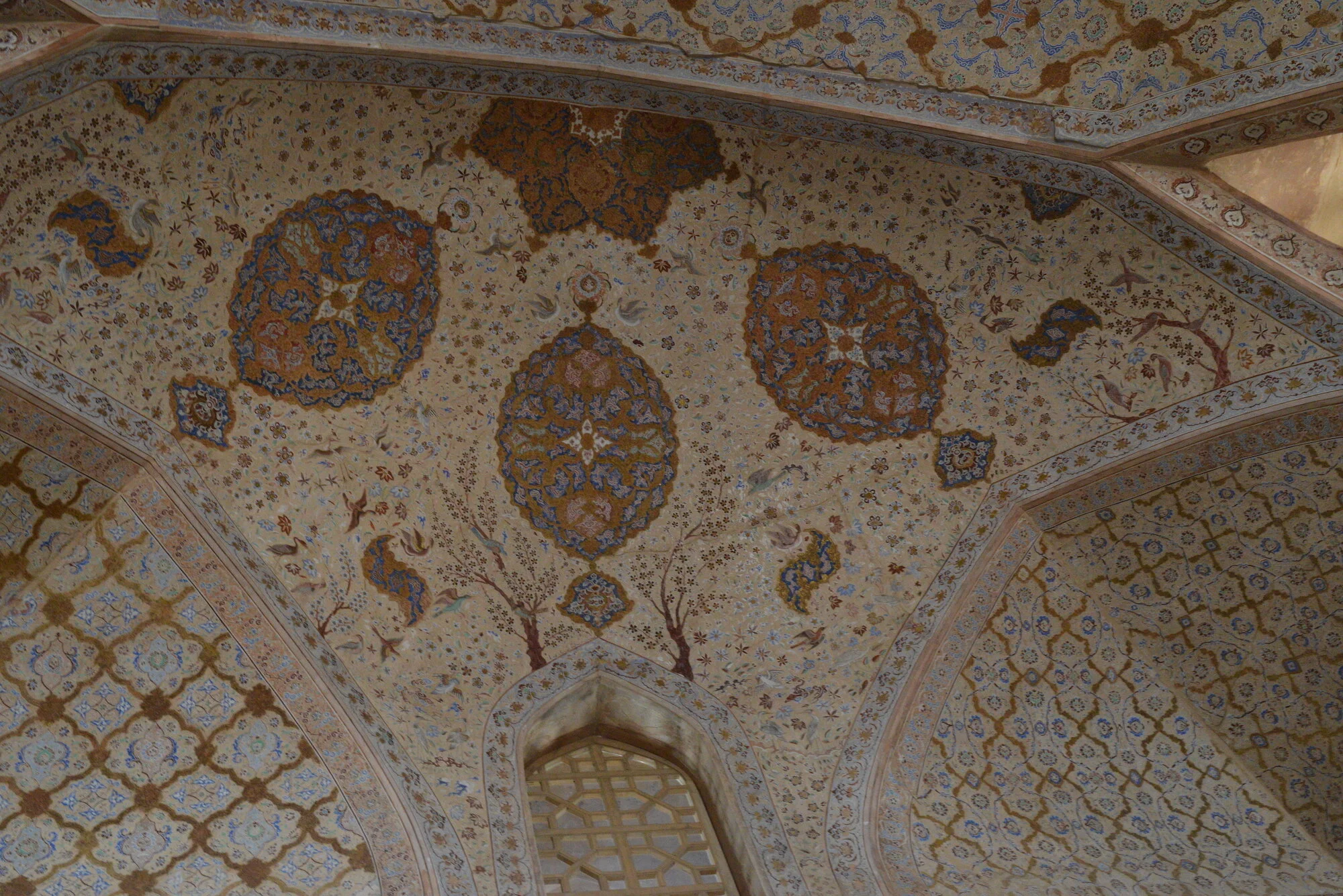
Safavid Art remains inspiring and very relevant to the world of classic rugs.
Safavid artists elevated Persian art to new heights that continue to stun viewers to this day. They built magnificent architecture with elaborate murals, glamorous ceramic work, and stunning structures, as well as splendid rugs to cover their floors. Urban rug designs are still influenced by the Safavid era, from which it has proven difficult to deviate, even after four centuries.
137565 394x206
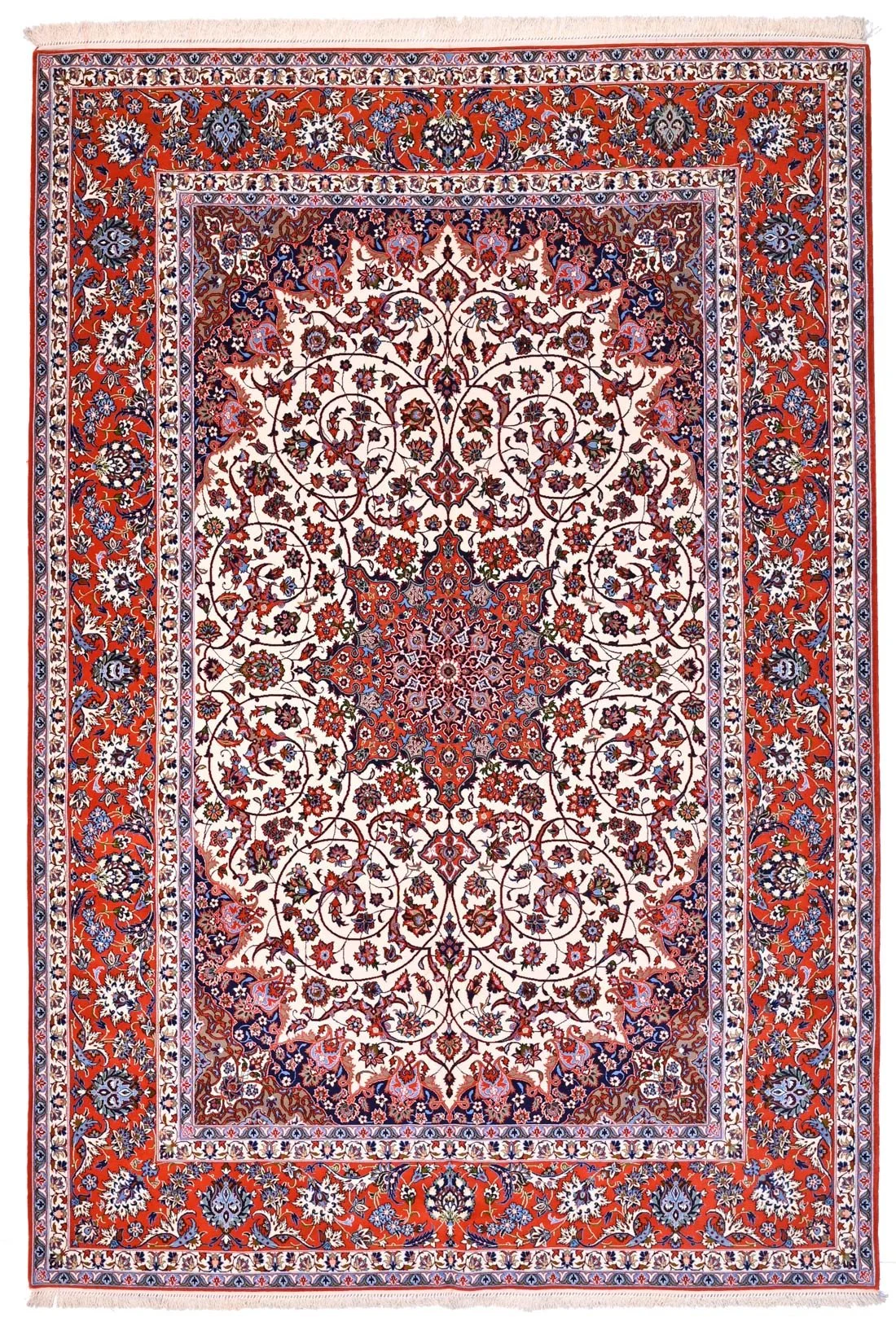
No. 137565 - 304x206cm. Contemporary
Isfahan - Wool on cotton base
“Isfahan is half the world!” So goes the popular proverb among the people of Isfahan. They are proud of their history as the capital of the Iranian empire during one of the most glorious periods of its existence from 1501 to 1736 AD, and of the extent and beauty of the architecture and art that remain from those days, as well as the artistry and traditions that continue to this day. The artisans, and particularly the weavers of the city, are world-famous for a variety of arts including carpet making. Designs of Isfahan rugs are mostly drafted with mathematical precision and woven with care, generally in fine knots and often on silk bases, such as the example above. The knots used in Isfahan rugs are proper asymmetric knots that are popular in central and eastern Iran.

58009-500x355
No. 58009 - 500x355 cm. Circa early 20th century
A Tabriz - Wool on a cotton base
Weavers of Tabriz are responsible for creating some of the most astonishing carpets in the world. They are always free-spirited and eager to innovate new designs. Such enthusiasm for creativity has made the carpets from Tabriz and the surrounding areas vastly diverse. Countless designs and colour combinations are reflections of numerous artistic minds.
The one here is one of such rugs. The beautiful shade of red and other mesmerising hues demonstrate the skill of the dye master. The harmonious dancing of the scrolls and flowers demonstrates the designer's artistic mind. Finally, it is the skilled hands of the weaver who have transformed the design into a carpet.
147876-206x138
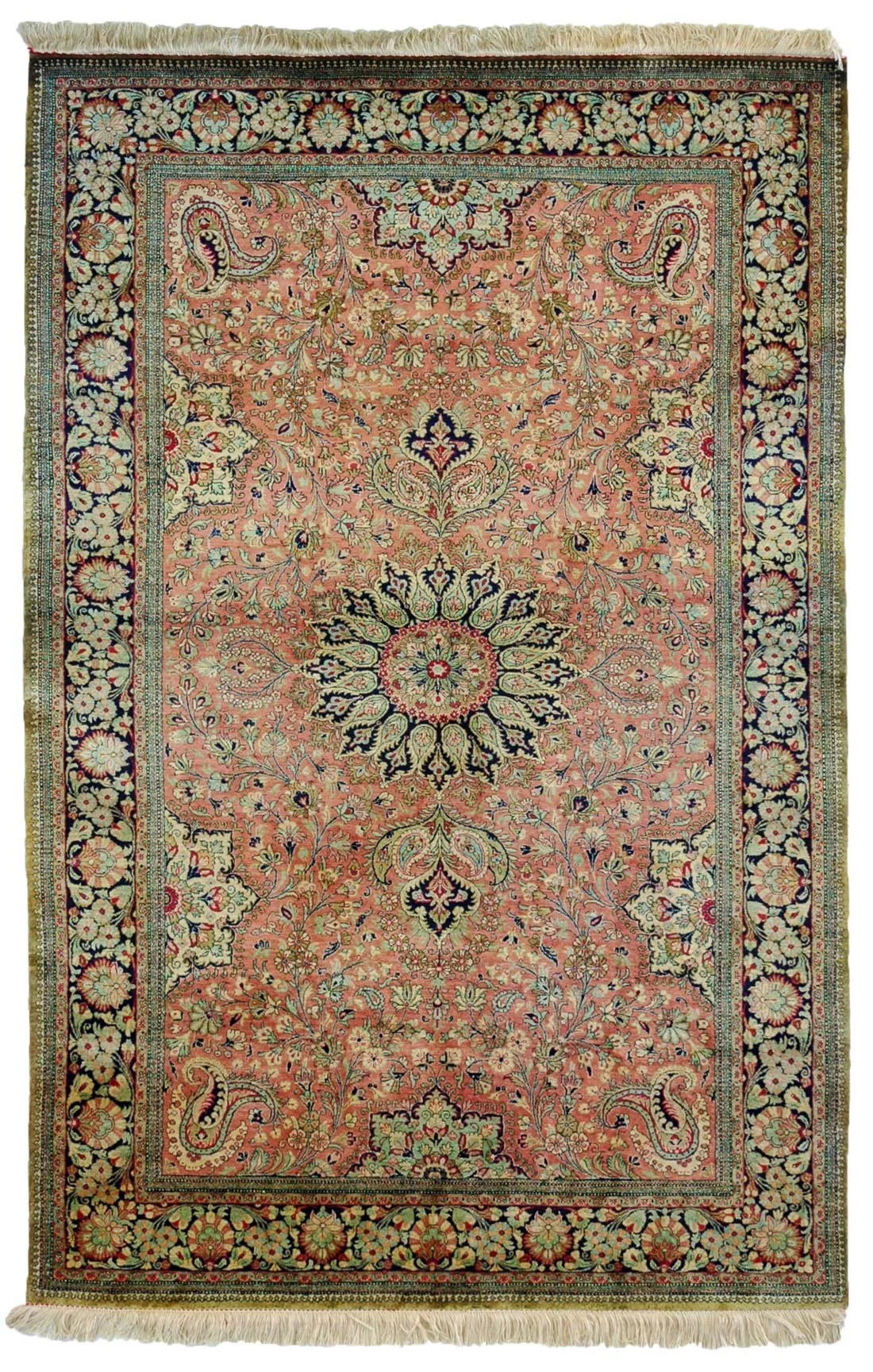
Qum Silk Rug, No. 147876
1930s, 206 × 138 cm
Silk on Cotton
An early work from Qum’s emerging weaving tradition, shaped in the years when masters from neighbouring Kashan established workshops in the city and introduced their refined aesthetic. Though new to rug weaving at the time, Qum drew upon the millenary tradition of Persian carpet art that surrounded it, allowing its craftsmen to absorb, reinterpret and elevate centuries of knowledge. Woven in the 1930s with exceptionally fine silk cultivated in the Gorgan plains near the Caspian Sea, this piece reflects the creative dawn of carpet art in Qum, when the pioneer artists of the city began shaping a new visual language inspired by the finest classical Persian designs.
The delicately drawn medallion, graceful floral sprays and luminous palette express the artistic sensibility that came to define Qum’s celebrated silk weaving. A rare example from this formative era, it continues to enchant with its quiet sophistication, sheen and meticulous beauty.

62177-400x304

The essential step in creating a carpet that could stand higher than the others is a designers' audacity—the courage to break the traditions to be creative and disregard the norms. The beautiful Nain here is one of such extraordinary rugs. Circa 1980. Wool and silk on cotton. 204x315cm.


A designer laboriously drafts the design on paper before the weavers translate it into an intricate classic carpet.


158910 302x413

71169 247x248


162313 361 x 275
8250 274x172cm

More Than a Carpet!
One of the most remarkable aspects of city carpets is the precision with which they can be made.
The knotting technique and the fineness of the knots allow the weaver to render graceful curves, delicate flowers, and intricate details with remarkable clarity. Some contain millions of knots and require years to complete.
However, the true achievement is not the knot count itself.
The real marvel lies in the patience: the slowness with which the work is done, and the way this measured pace allows the emotions of both designer and weaver to settle into the process, intertwining with the warp and weft and giving the carpet its sense of grace.
Day after day, month after month, the weaver sits before the loom, repeating movements learned through years of practice. Progress is made slowly. Entire weeks may pass while only a small section of the carpet emerges.
What begins as a few coloured threads gradually reveals itself as a flower, a medallion, a garden, or a world imagined long before the first knot was tied.
In a time increasingly defined by speed, city carpets remind us that some forms of beauty cannot be hurried; they need time to develop and take shape.
Their existence depends upon time, concentration, and quiet dedication.
Every knot is a small act of faith, tied in the belief that the final vision will one day emerge in its full splendour.