
 Image 1 of 3
 Image 2 of 3
 Image 3 of 3
Nurturing beauty is most impressive when it comes naturally and spontaneously, often arising from the subconscious. Such an innate taste points to the depth of a culture among the Baluchi weavers that stretches back thousands of years, perhaps as far as the ruins of the nearby Shahri Sokhta (The Burnt City), circa 3200 BC.
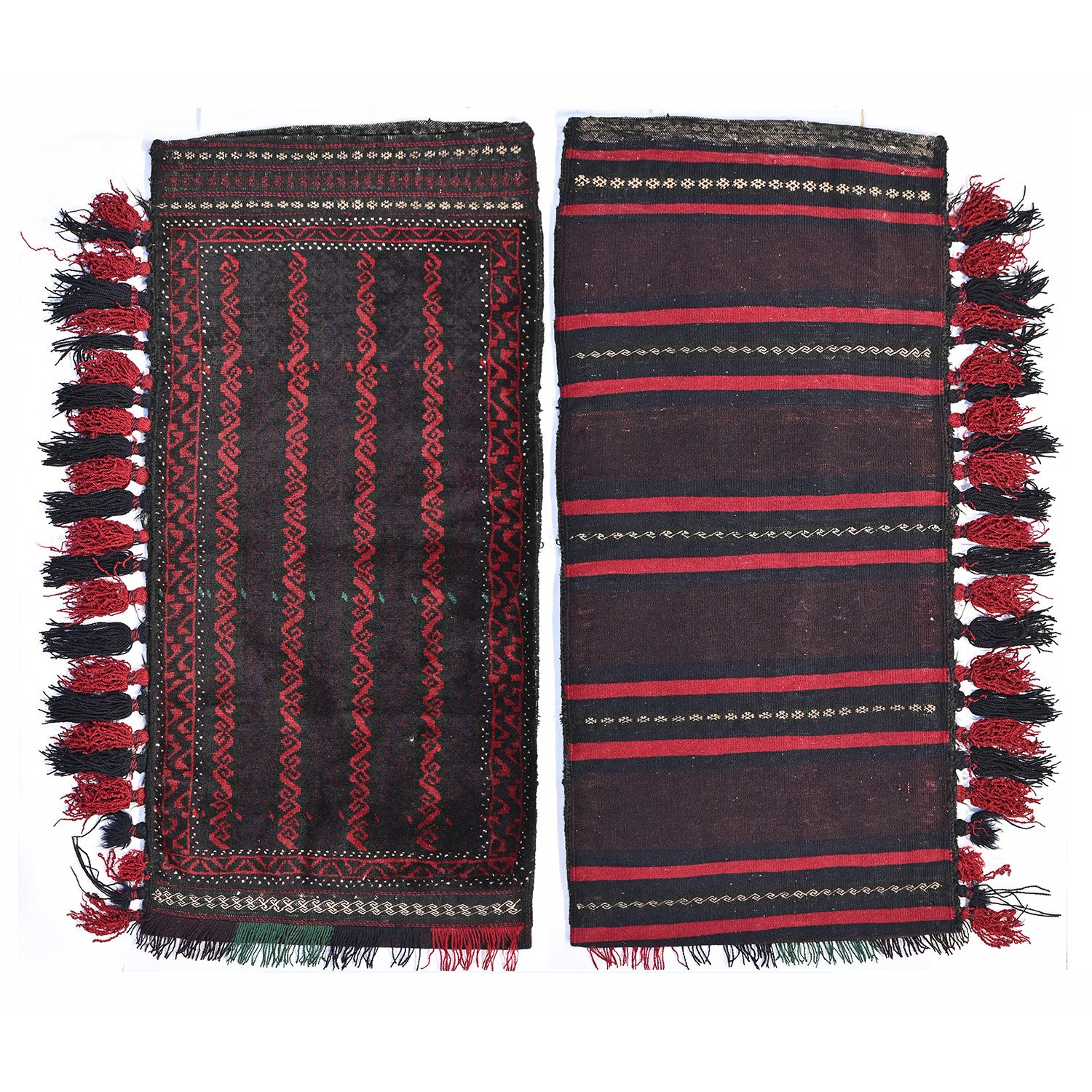
It is therefore no surprise to encounter such charm in an everyday utility item such as this tribal Baluch baleshti (pillow), circa 1930s.
Equally striking is the contrast between men and women. The men, remembered as warriors—tough, pragmatic, and inflexible—were bound to the harsher demands of survival and conflict. The women—the weavers—sheltered within tents and traditions, remained the quiet artists and creators. Through their hands, beauty was woven into necessity; art was not an ornament but a natural and inseparable part of life.
Though echoes of this way of life can still be found among a few today, the making of such pieces has largely ceased. This baleshti stands as a reminder of a time when beauty and utility were one, and when art was inseparably bound to daily living.
Baluch Baleshti, ca. 1930s. Wool. 115x55cm
Nurturing beauty is most impressive when it comes naturally and spontaneously, often arising from the subconscious. Such an innate taste points to the depth of a culture among the Baluchi weavers that stretches back thousands of years, perhaps as far as the ruins of the nearby Shahri Sokhta (The Burnt City), circa 3200 BC.
It is therefore no surprise to encounter such charm in an everyday utility item such as this tribal Baluch baleshti (pillow), circa 1930s.
Equally striking is the contrast between men and women. The men, remembered as warriors—tough, pragmatic, and inflexible—were bound to the harsher demands of survival and conflict. The women—the weavers—sheltered within tents and traditions, remained the quiet artists and creators. Through their hands, beauty was woven into necessity; art was not an ornament but a natural and inseparable part of life.
Though echoes of this way of life can still be found among a few today, the making of such pieces has largely ceased. This baleshti stands as a reminder of a time when beauty and utility were one, and when art was inseparably bound to daily living.
Baluch Baleshti, ca. 1930s. Wool. 115x55cm