The Qashqai are nomads. Their sheep are their livelihood, their wool their own, and the land they migrate through their colour palette. During their seasonal journeys across the Zagros, they gather roots, leaves, fruits, plants, indigo, madder, and whatever nature offers, and dye their hand-spun yarn in small batches over charcoal fires, as their ancestors taught them. The inconsistencies this creates, in the weight of the yarn, in the subtlety of the tones, are precisely what give their wool its warmth, its sheen, and its extraordinary tactile beauty. No chemical has touched it. The natural oils remain. You can feel the difference.
Gabbehs are woven without a pattern. The weaver sits at her loom and reflects on what surrounds her: the landscape, the animals, the sky, and the movements of her daily life. What emerges is not a design but a state of mind. This is why gabbehs from the Qashqai are among the most free and alive of all Persian weavings.
This piece is woven in a deep, enveloping indigo. Across it drift abstract forms, saffron, rust, ivory, black, that one could read as clouds, or as land seen from above, or simply as what they are: the weaver's feeling translated into colour.
Look more carefully, and you will find her. At the bottom of the rug, a small human figure, and beside her, two or three goats. She has woven herself into her own rug, alongside the animals she tends. It was done spontaneously, without calculation. That is what makes it so moving.
This is a small, very personal piece. It carries the personality, lifestyle, and spirit of the person who made it. It is also a conversation piece — and an invitation, for those curious enough to follow it, into the history and culture of one of Iran's most fascinating peoples.
One never tires of looking at pieces like this. Nor of wondering about the woman who made it.
The Qashqai are nomads. Their sheep are their livelihood, their wool their own, and the land they migrate through their colour palette. During their seasonal journeys across the Zagros, they gather roots, leaves, fruits, plants, indigo, madder, and whatever nature offers, and dye their hand-spun yarn in small batches over charcoal fires, as their ancestors taught them. The inconsistencies this creates, in the weight of the yarn, in the subtlety of the tones, are precisely what give their wool its warmth, its sheen, and its extraordinary tactile beauty. No chemical has touched it. The natural oils remain. You can feel the difference.
Gabbehs are woven without a pattern. The weaver sits at her loom and reflects on what surrounds her: the landscape, the animals, the sky, and the movements of her daily life. What emerges is not a design but a state of mind. This is why gabbehs from the Qashqai are among the most free and alive of all Persian weavings.
This piece is woven in a deep, enveloping indigo. Across it drift abstract forms, saffron, rust, ivory, black, that one could read as clouds, or as land seen from above, or simply as what they are: the weaver's feeling translated into colour.
Look more carefully, and you will find her. At the bottom of the rug, a small human figure, and beside her, two or three goats. She has woven herself into her own rug, alongside the animals she tends. It was done spontaneously, without calculation. That is what makes it so moving.
This is a small, very personal piece. It carries the personality, lifestyle, and spirit of the person who made it. It is also a conversation piece — and an invitation, for those curious enough to follow it, into the history and culture of one of Iran's most fascinating peoples.
One never tires of looking at pieces like this. Nor of wondering about the woman who made it.

 Image 1 of 8
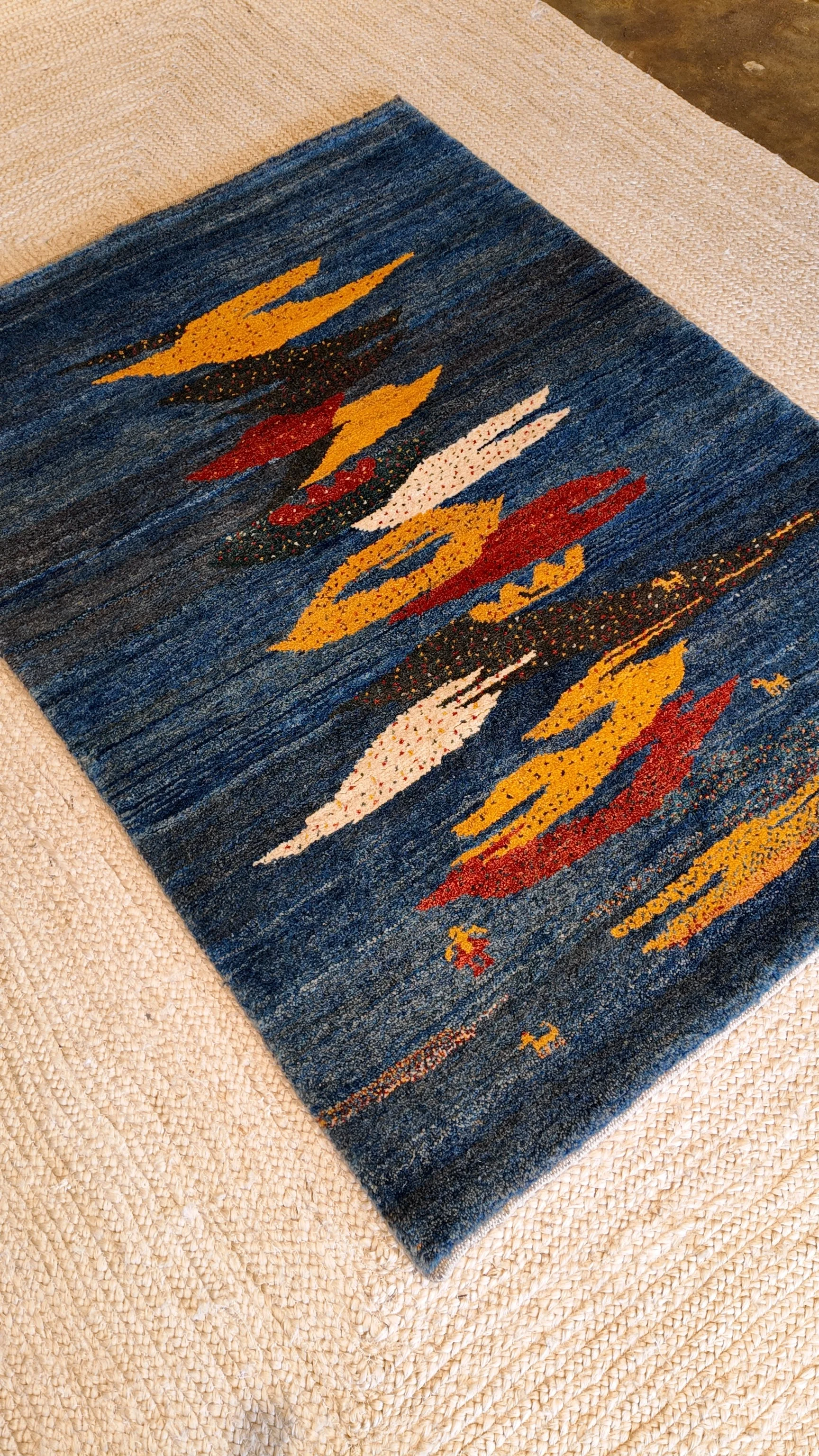 Image 2 of 8
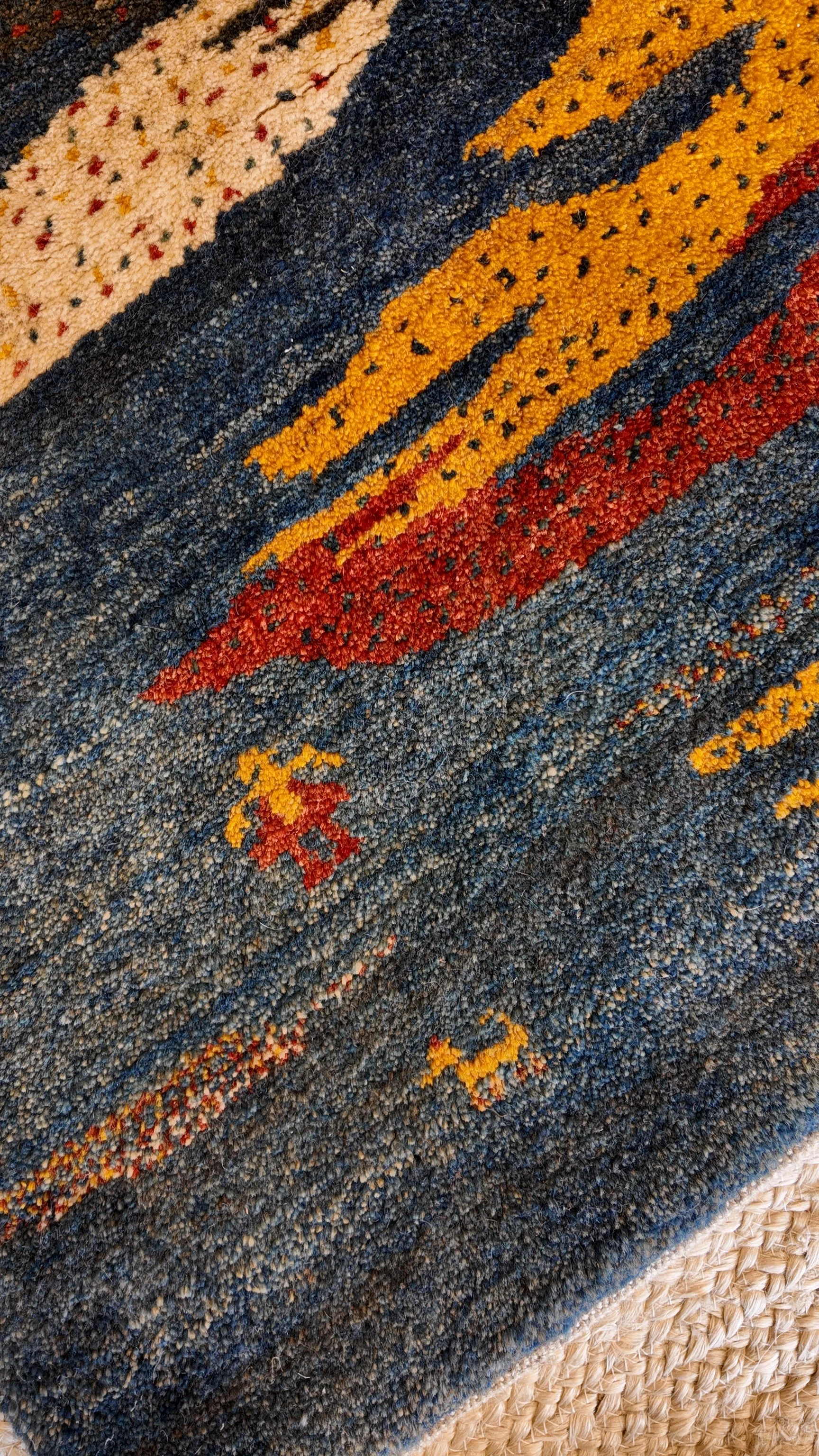 Image 3 of 8
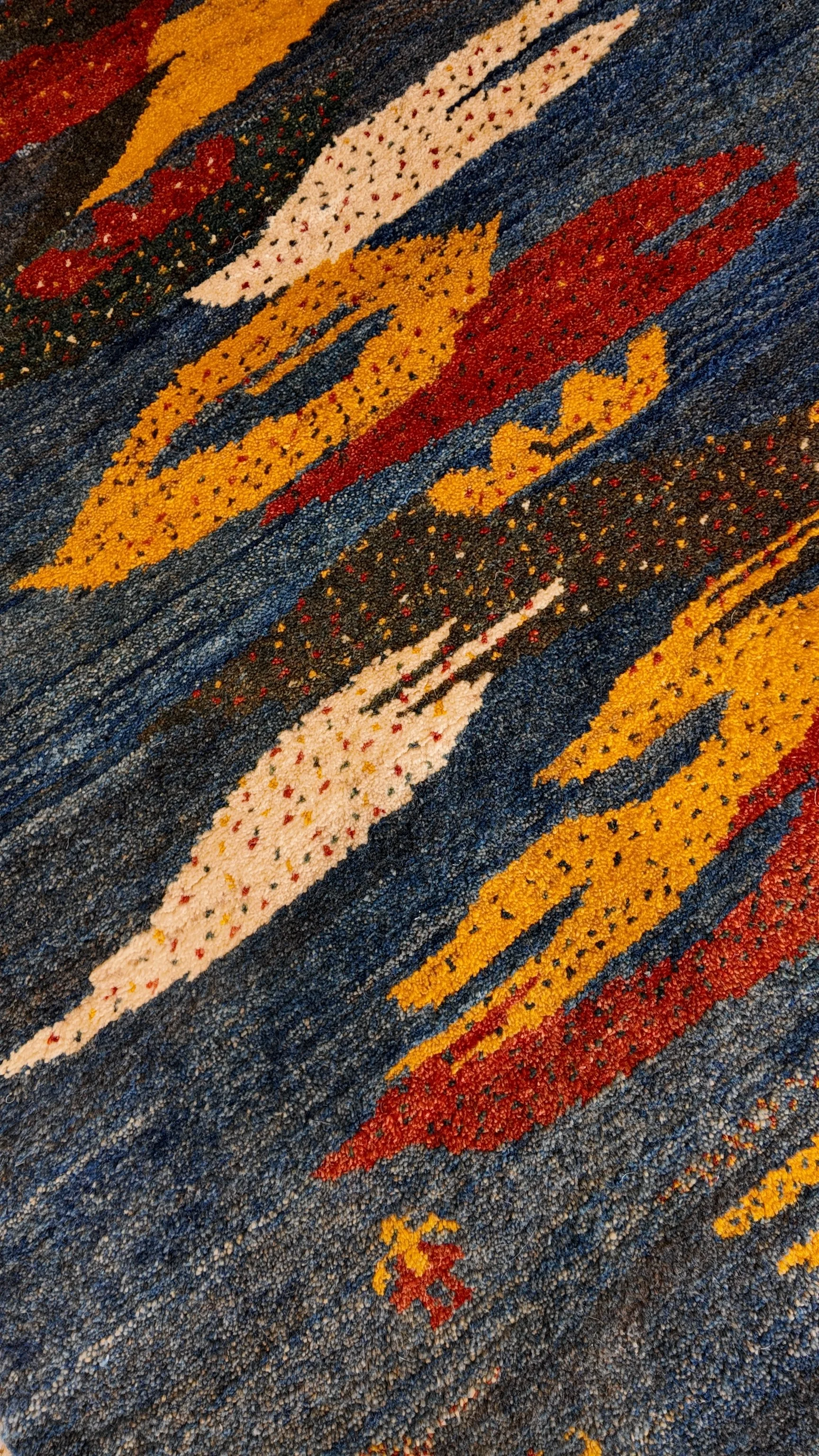 Image 4 of 8
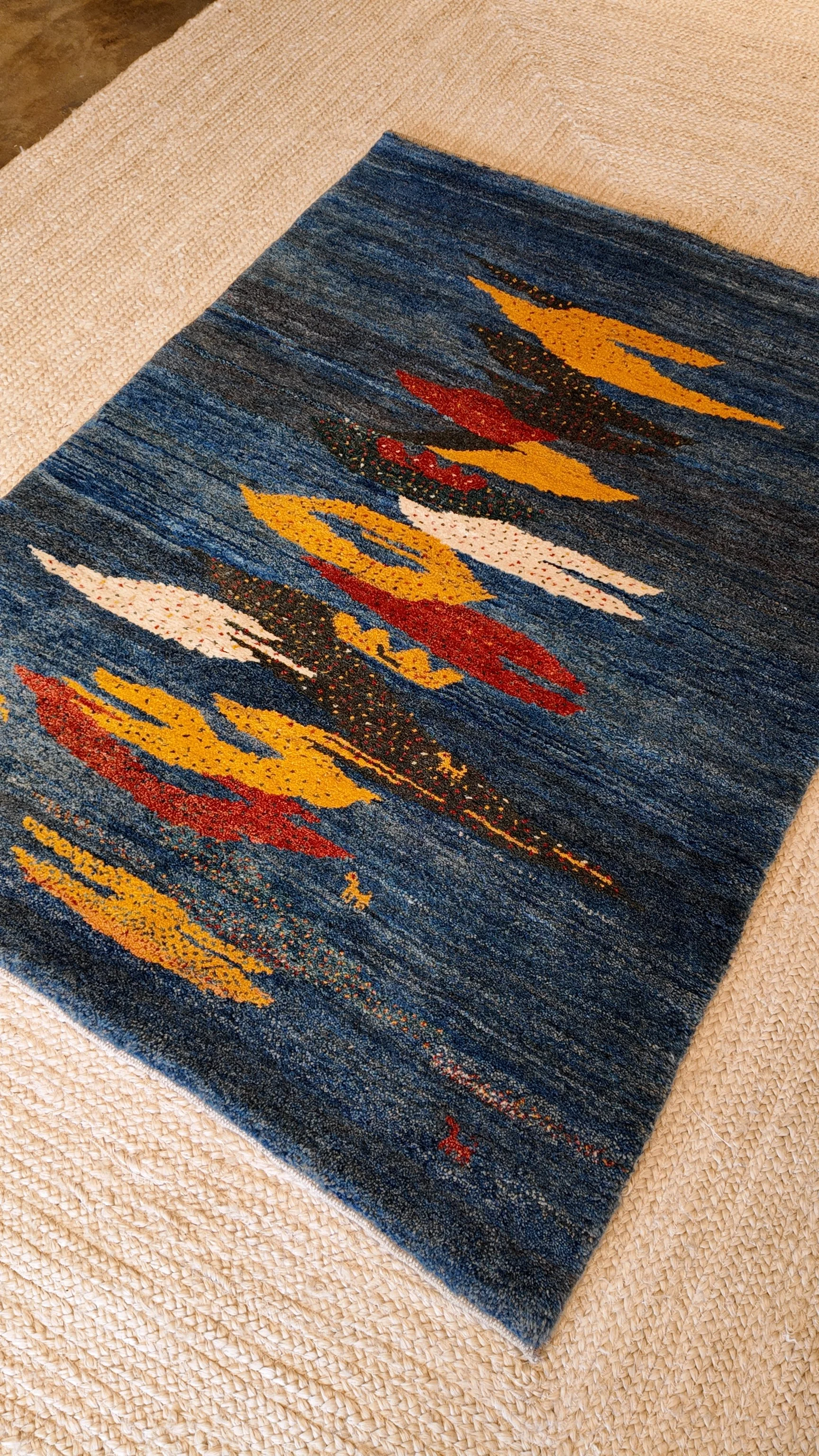 Image 5 of 8
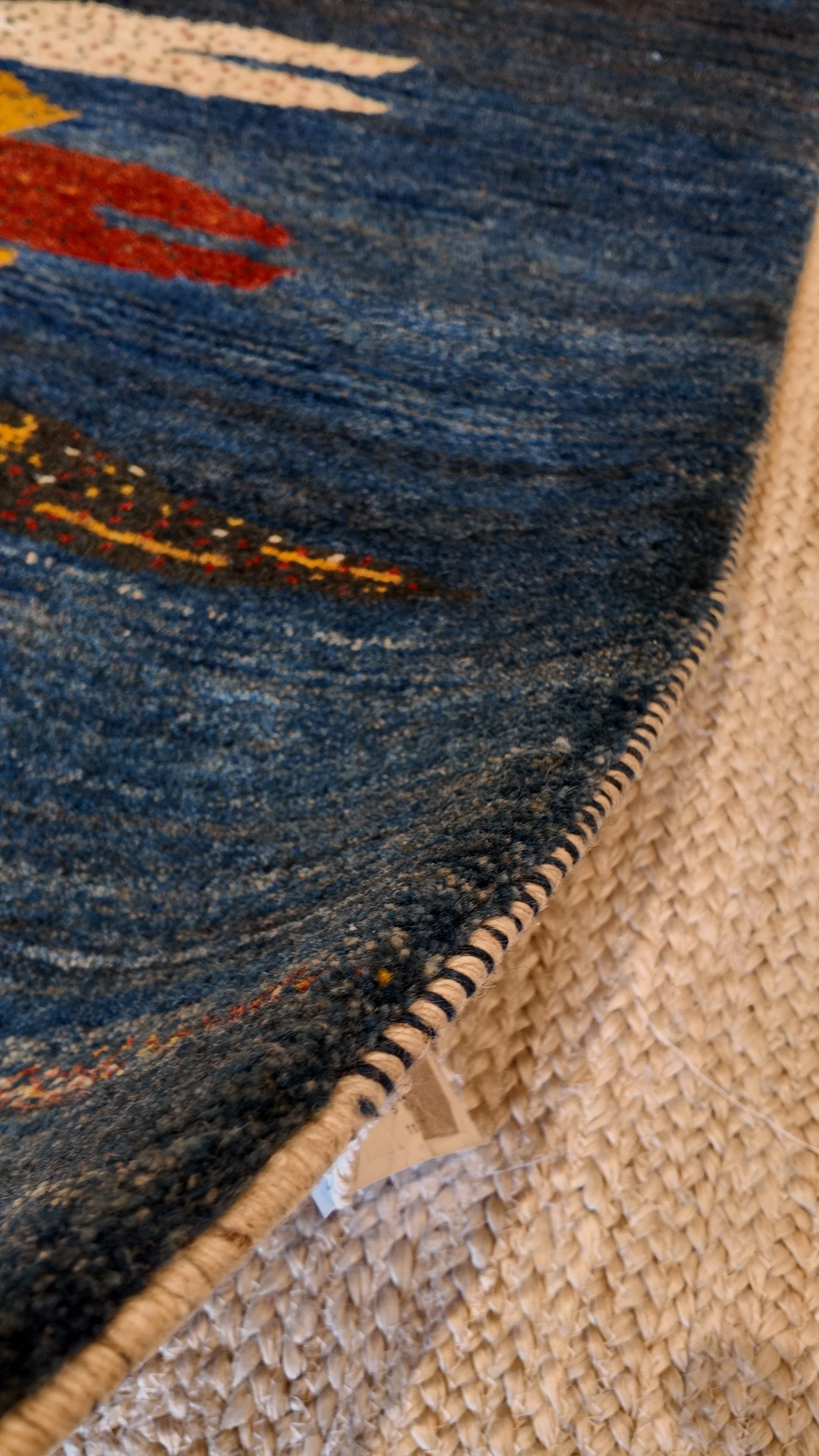 Image 6 of 8
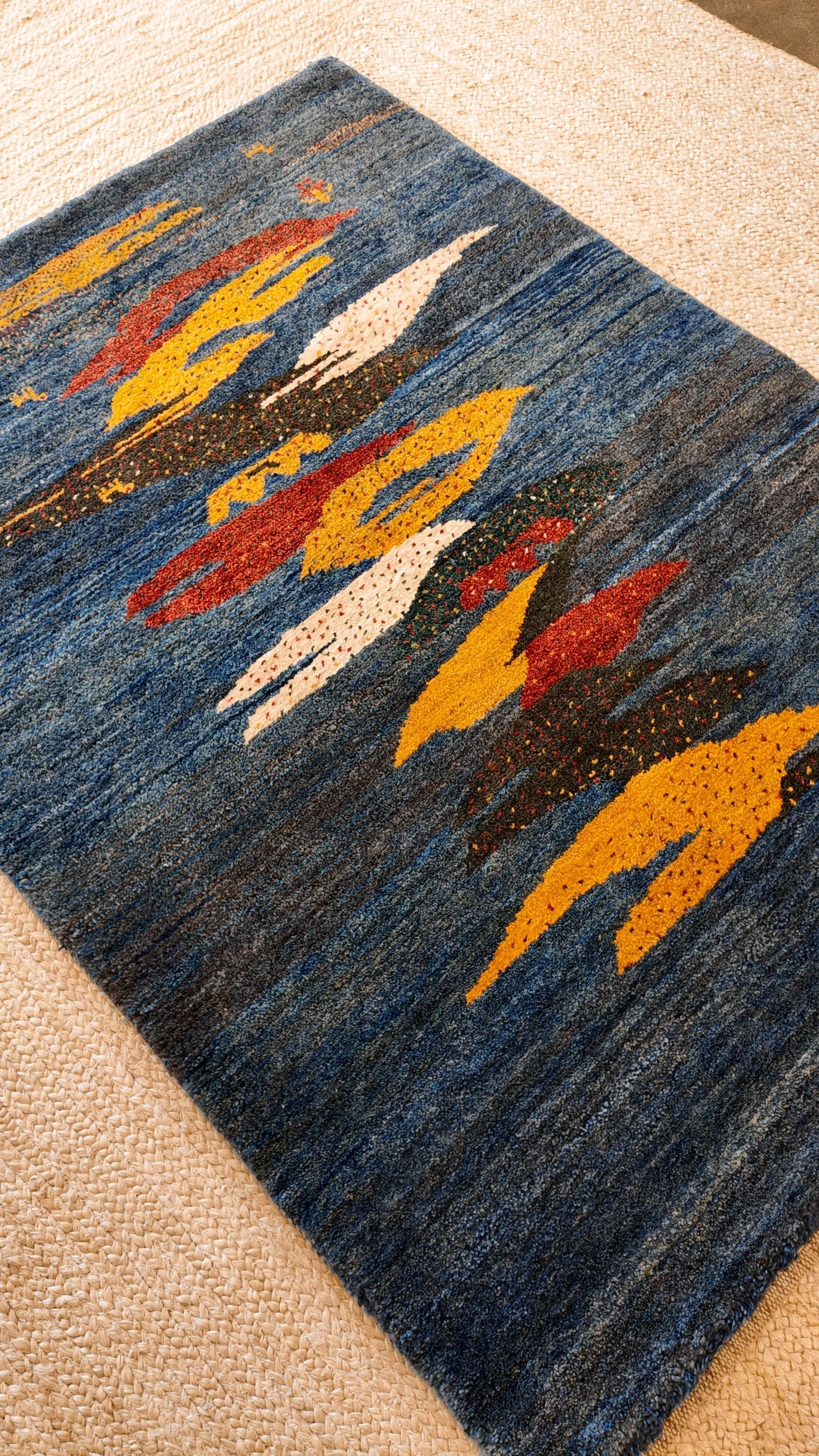 Image 7 of 8
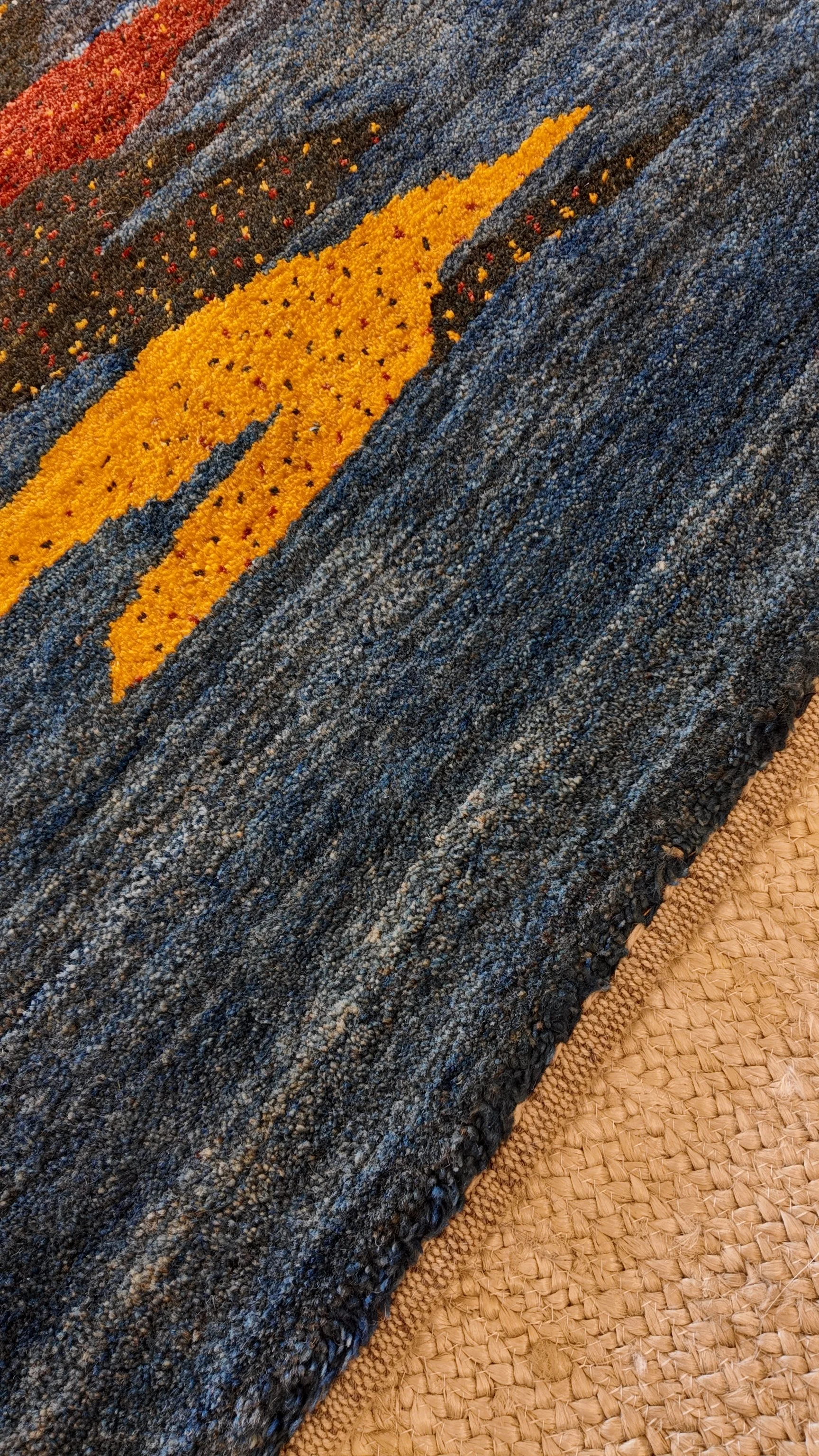 Image 8 of 8