

Musel Village Rug from Abhar, Zanjan–Hamadan Region, Circa 1940s | 62954 213x107cm
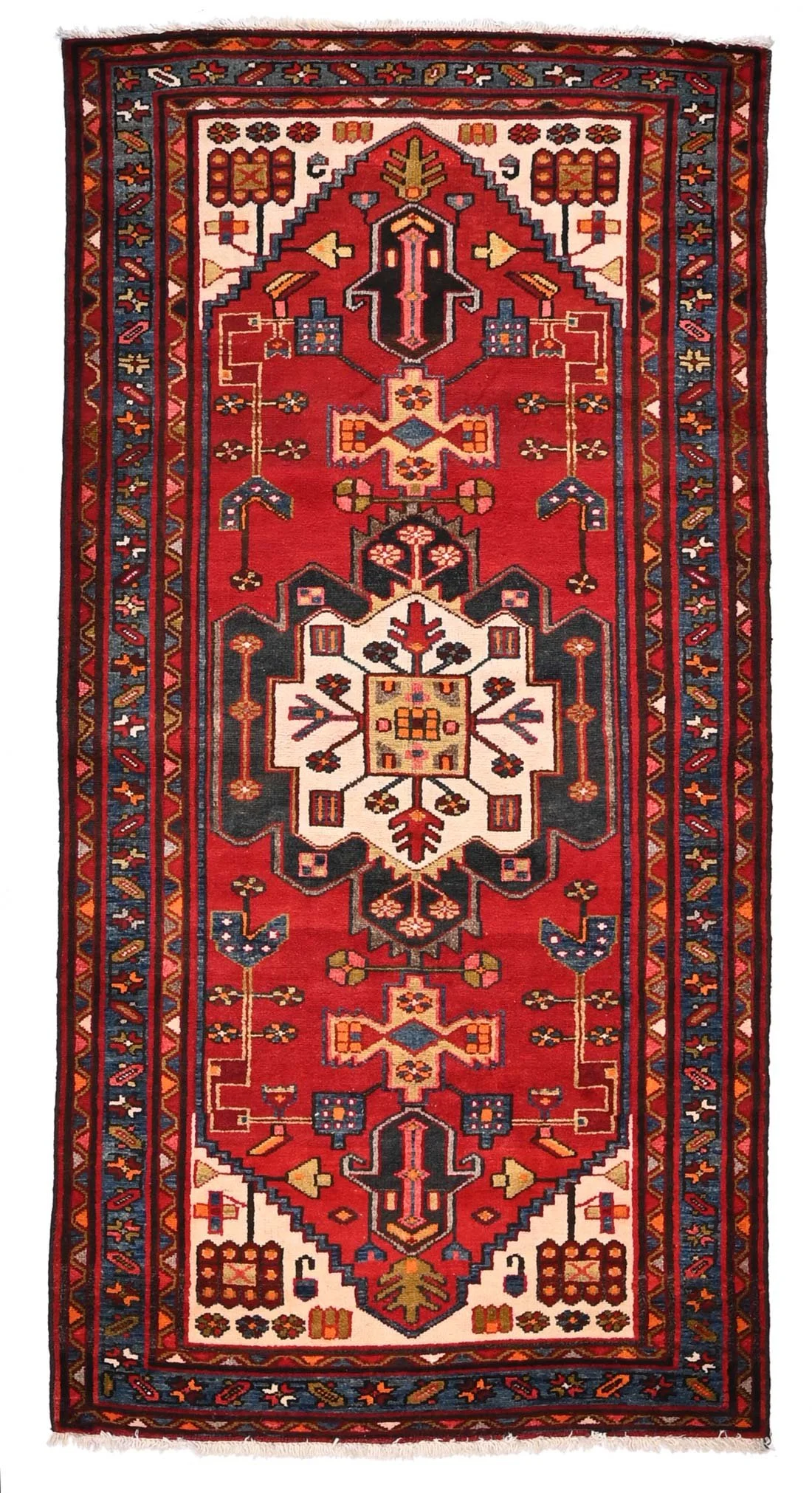
Musel Village Rug from Abhar, Zanjan–Hamadan Region, Circa 1940s | 62954 213x107cm
Hundreds of villages between the provinces of Zanjan and Hamadan are the birthplace of a broad category of rugs generally known as Musel. These rugs appear in a wide variety of styles and colour combinations, each closely following the local traditions, materials, and visual language of the village in which they were woven.
Musel rugs are typically produced in elongated formats, most commonly around 200 × 100 cm, known as Musel Barik, and up to approximately 200 × 145 cm, referred to simply as Musel. Their proportions and practical size made them suitable for everyday village life, while still allowing for strong decorative expression.
The example shown here comes from a village on the outskirts of the small town of Abhar and dates to around the 1940s. It is woven using hand-spun wool and natural dyes, resulting in a lively texture and a palette that has matured gracefully over time. The drawing is confident and honest, reflecting a weaving tradition guided by memory rather than formal naqsha.
A genuine village rug with regional character, cultural depth, and lasting appeal.
Material: Hand-spun wool pile, natural dyes, cotton foundation
Origin: Abhar area, Zanjan–Hamadan region
Period: Circa 1940s